
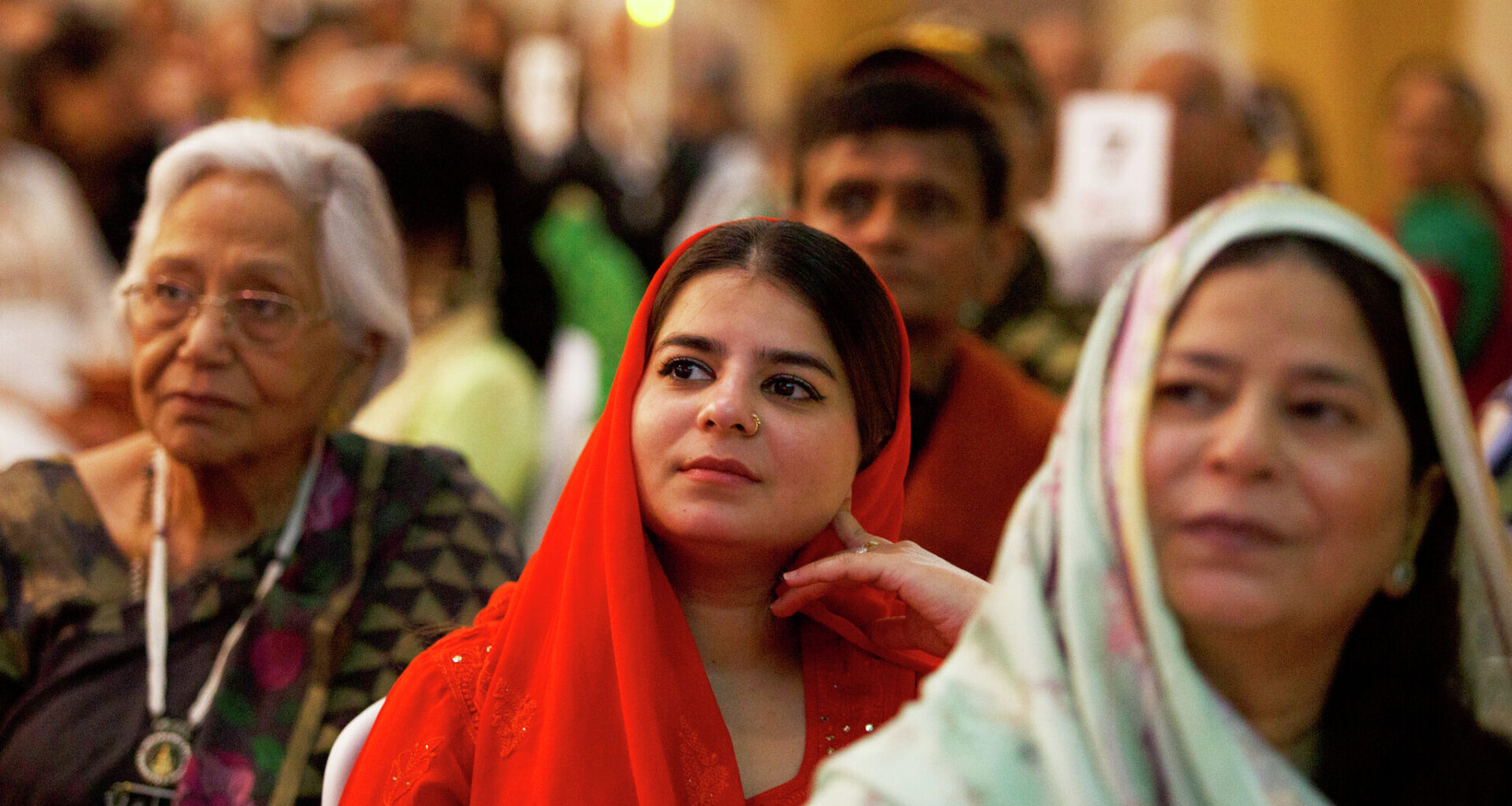
No region of the country is as Indian as the Bay Area, and no city in the Bay Area is as Indian as Fremont.
Here, visitors crowd into Hindu temples to pray to Ganesha and other gods. Some public schools teach Hindi and the thwacks of cricket bats on balls ricochet across the biggest park. Inside the city’s many strip malls, Hyderabadi and Maharashtrian food are devoured by homesick immigrants. Women in saris pop in and out of groceries that sell spices and samosas, dal and ghee.
The mayor of this Silicon Valley bedroom community of 227,000 is himself an immigrant from Punjab. Its voters helped send an Indian American — Rep. Ro Khanna — to Congress.
The Indian Bay
The story of the diverse Indian American community in the Bay Area has been one of rapid success. This Chronicle series explores how it happened.
Follow this series: Our coverage of the region’s Indian impact won’t stop here. Sign up for the Bay Briefing newsletter for more.
Just a few decades ago, Fremont was as white as any other middle-class East Bay suburb. Today, 30% of residents are of Indian ancestry, the highest share of any city in the Bay Area. Silicon Valley’s hunger for talent, India’s deep bench of tech workers and the immigration liberalization of the 1990s reshaped Fremont — and much of the Bay Area with it.
Similar transformations have unfolded in Dublin and Danville, Livermore and Albany. From 2010 to 2024, Indian Americans and immigrants from India were the fastest-growing ethnic group in a region that now has a larger share of Indians than anywhere else in the country.
Congregants eat lunch at the Tri-Valley Sikh Center in Livermore. Juliana Yamada/For the S.F. Chronicle
America’s historic waves of immigration all tell a story, and this one is deeply intertwined with the tech boom. Indian Americans have both benefited from and fueled it.
They are the second-largest group among the region’s business executives, after white Americans. Those leaders include Google CEO Sundar Pichai, billionaire venture capitalist Vinod Khosla and YouTube CEO Neal Mohan. And they’ve become the highest earning ethnic group in the region, primarily due to their role in the tech industry.
So far, the story of this community — whose members are diverse, with varied languages and religions — has been one of rapid success. But that trajectory is now at risk. The engine that powered its rise is threatened as President Donald Trump attacks H-1B visas and paths to citizenship. The anti-immigrant backlash has descended into hate at times against H-1B holders, and Indians specifically, prompting some in the community to consider leaving the U.S. and deterring others from coming here at all.
Meanwhile, developments in artificial intelligence have also cast doubt on the future of the tech jobs that built the Bay Area’s Indian community. And India’s own economic transformation has made it more alluring for highly educated residents to stay.
Seeking to understand how Indian Americans and immigrants have flourished and what challenges they still face, the Chronicle analyzed demographic and economic data and spoke to dozens of people in cities across the Bay Area. What emerged is a picture of a vibrant and influential community at a crossroads — and the potential economic vulnerability of a region that has grown alongside it.
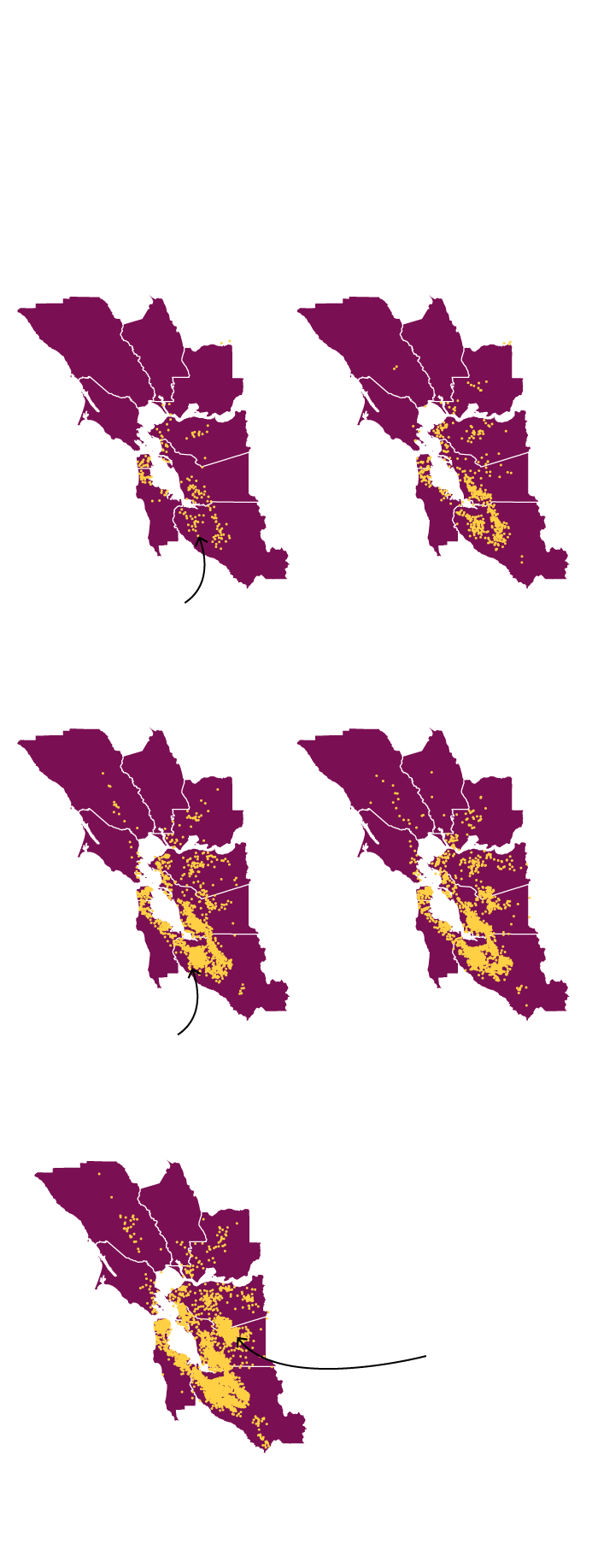
Indian American population in the Bay Area
Number of residents that identify as Indian in the nine-county Bay Area. Each dot represents 100 people.
Indian Americans made up just 0.4% of the Bay Area’s population in 1980, concentrated around San Jose and Fremont
Driven by the dot-com boom, the population tripled from 1990 to 2000.
Recent growth has centered on the Tri-Valley region
Graphic: Harsha Devulapalli/ S.F. Chronicle
Source: U.S. Census
Population data is based on the decennial census.
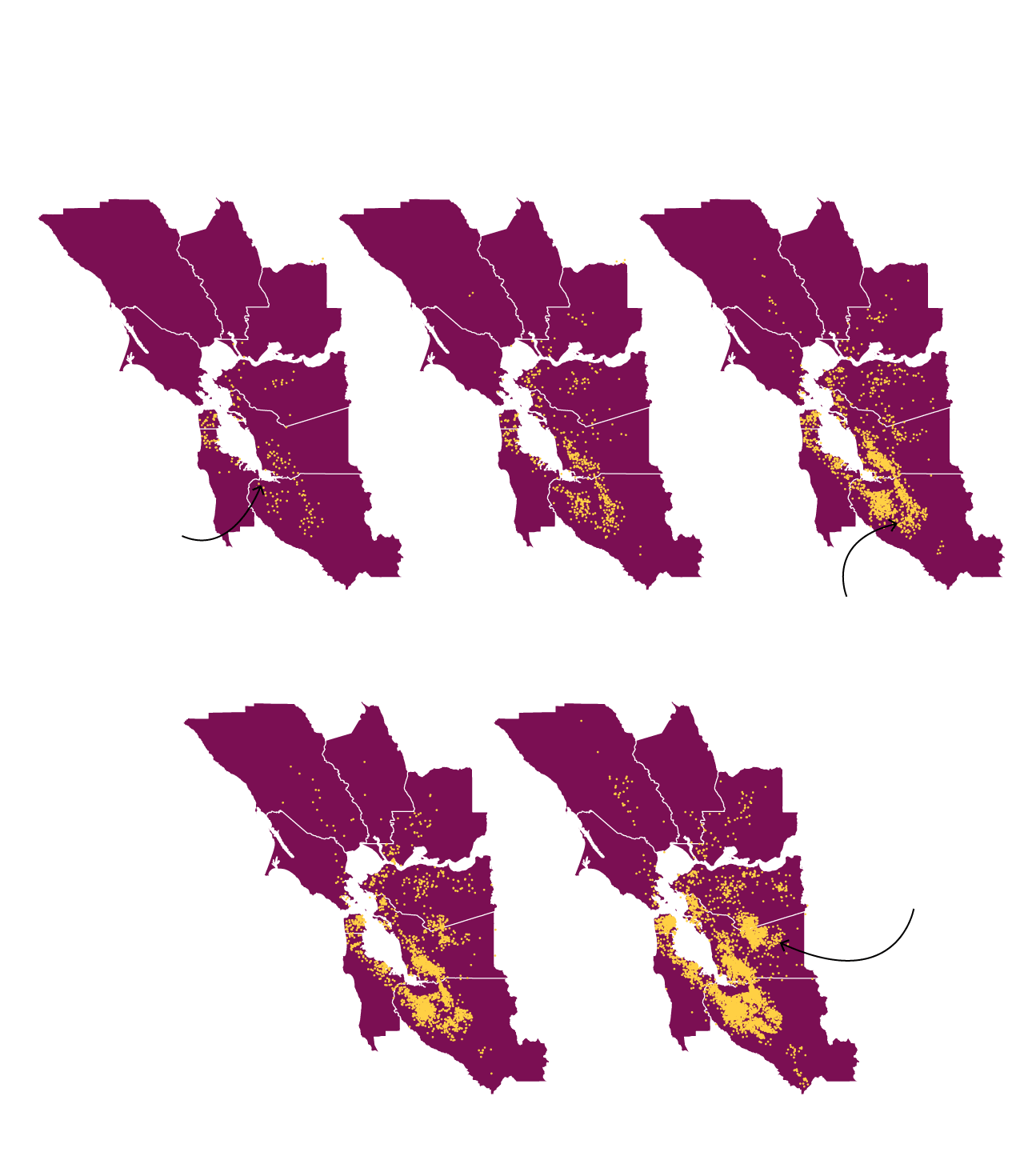
Indian American population in the Bay Area
Number of residents that identify as Indian in the nine-county Bay Area. Each dot represents 100 people.
Indian Americans made up just
0.4% of the Bay Area’s population in 1980, concentrated around San Jose and Fremont.
Driven by the dot-com boom, the population tripled from 1990 to 2000.
Recent growth has centered on the Tri-Valley region.
Graphic: Harsha Devulapalli/ S.F. Chronicle Source: U.S. Census
Population data is based on the decennial census.
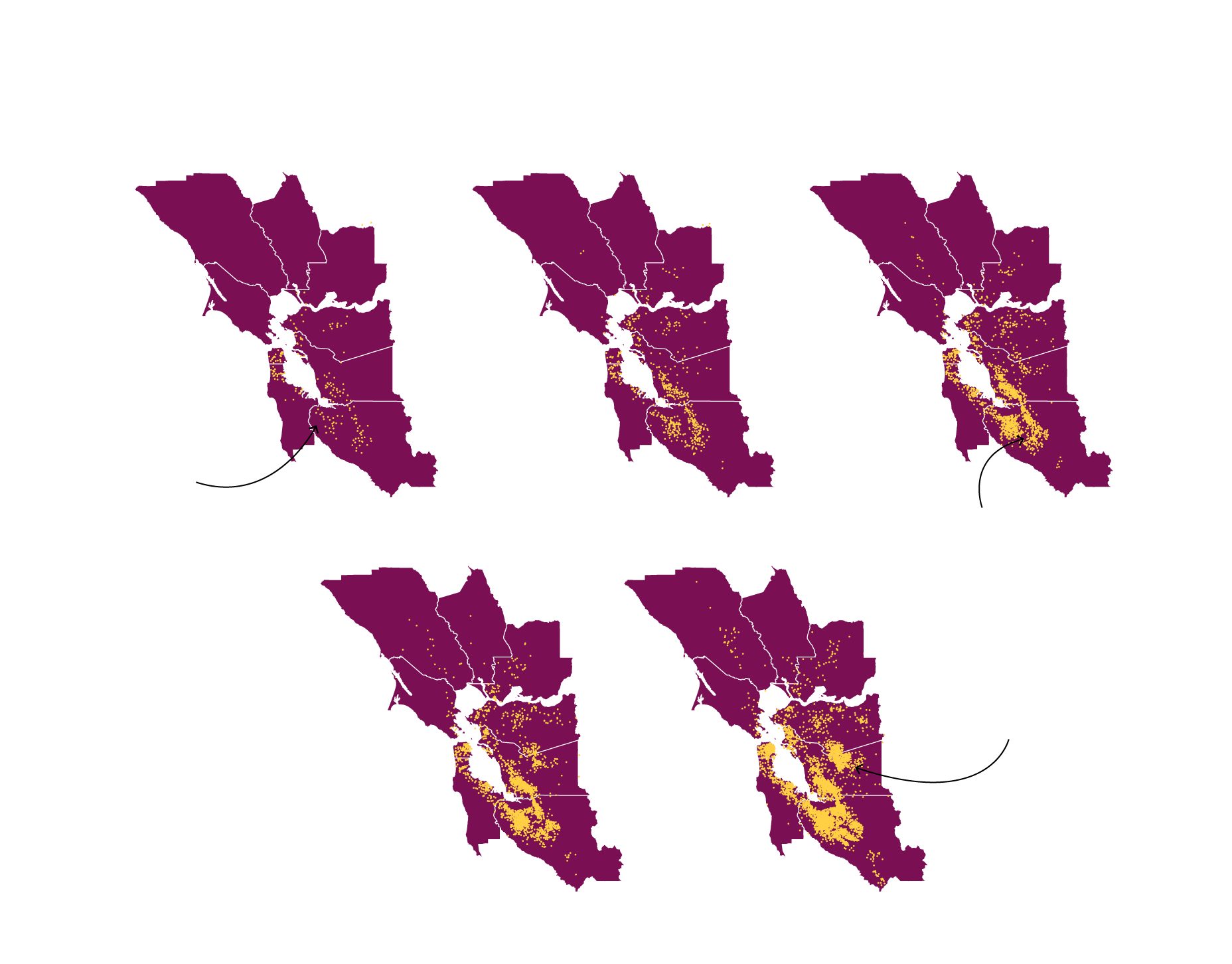
Indian American population in the Bay Area
Number of residents that identify as Indian in the nine-county Bay Area. Each dot represents 100 people.
Indian Americans made up just
0.4% of the Bay Area’s population in 1980, concentrated around San Jose and Fremont.
Driven by the dot-com boom, the population tripled from 1990 to 2000.
Recent growth has centered on the Tri-Valley region.
Graphic: Harsha Devulapalli/ S.F. Chronicle Source: U.S. Census
Population data is based on the decennial census.
In pockets across the region, Indian residents have brought traditions from home and made new ones. At a Holi celebration in San Jose, children threw colored powder, dancing to Indian pop music. At a Sikh temple in Livermore, worshippers shared a ritual communal meal called langar, but while sitting in chairs instead of cross-legged on the floor, an adaptation to American culture. At a Cupertino community center, seniors, some dressed in colorful saris, gathered for an open mic event to sing Hindi songs and dance together.
From left: Preschoolers Amiya Rahul, Arjun Vhatkar and Neel Krishna play outside the India Community Center Milpitas during its Holi celebration. Santiago Mejia/S.F. ChronicleSavitri Varshney, a participant in ICC’s senior program, performs during an open mic event in Cupertino. Santiago Mejia/S.F. ChronicleLamaan Haider, center, and her mother Romana Haider, right, listen to a prayer during an Eid celebration at ICC Milpitas. Juliana Yamada/For the S.F. Chronicle
Indian Americans said that the growth of the community has given them self-assurance despite living in a country where they’re still a minority.
“Before, it was more, ‘Keep your head down, do your work,’” said Fremont Mayor Raj Salwan. “Now, we have temples, gurdwaras, masjids, community centers, leaders, CEOs, and we see elected officials who look like ourselves. There’s more confidence and comfort being out and about.”
Jagat Satia was 26 years old when he arrived in Chicago in 1969 on a J-1 exchange student visa to complete his medical residency.
Awed by the scientific advancements of the United States and buoyed by the financial prospects, he was among the first generation of Indians to benefit when the passage of the U.S. Immigration and Nationality Act in 1965 ended a de facto ban on immigration from Asia.
“Everything was evidence-based,” said Satia, now an 83-year-old retired pulmonologist living in Los Gatos. “It was a very progressive, unbiased country. They were helping the whole world.”
Most early Indian immigrants like Satia were highly educated professionals in STEM fields who qualified for strict work visa criteria. For them, the stars aligned: In the years after India’s independence, the government set up highly competitive technical and scientific universities — the vaunted Indian Institutes of Technology. U.S. employers were desperate for their graduates.
Most common occupations for Indian Americans in 1980 and 2020
Share of workers employed in each occupation
1980
2. Electrical/electronics engineers
3. Accountants and auditors
2020
1. Software engineers/Comp. scientists
Only occupations with clear definitions were included in our analysis.
Chart: Harsha Devulapalli/S.F. Chronicle • Source: U.S. Census
As recently as the 1980s, immigrants like Satia naturalized with relative ease. This was also the case for Manoj Goel, who attended the Indian Institute of Technology Roorkee, which currently has an acceptance rate of about 2%. In 1984, Goel moved to upstate New York to attend graduate school.
He joined Intel as a software engineer after graduation and received his green card within a year.
“Everything was Evidence-based. It was a very progressive, unbiased country. They were helping the whole world.”Lotus icon
Jagat Satia, a retired pulmonologist, referring to U.S. scientific advancements when he arrived here in 1969
Satia and Goel remember how small the community was in those days and how cultural differences could be tricky — or downright painful — to navigate. When Goel’s two sons, who are vegetarian, were growing up in Saratoga in the 1990s, they often went to playdates where the other families weren’t sure what to feed them.
When Raj Salwan immigrated to the U.S. in the 1980s, at age 6, he was one of the only Indian American students at his Vallejo elementary school and Fremont’s Washington High School, where classmates called him “camel jockey” and other racial slurs.
“We had to have a thick skin,” Salwan said.
Lotus logoThe H-1B “success story”
The pioneers wouldn’t remain outsiders for long.
Prasad Ramakrishnan, trained in software engineering in India, was hired by an American company and arrived in Michigan in 1992. H-1B visas like the one he obtained had been created two years earlier. Given to those in “specialty occupations” requiring a college degree, they became the primary vehicle for skilled immigrants to come to the United States.
Ramakrishnan and his wife brought just two suitcases, intending to stay for a year, but then a company in San Ramon gave him an offer to move west. His employer eventually sponsored his green card and he gained citizenship in 2004.
Prasad Ramakrishnan, wife Prabha Prasad and one-year-old son Pratap, are pictured in New York City in 1996 on a trip to visit friends. Santiago Mejia/S.F. ChroniclePrasad, Prabha and their son Pratap at their home in Union City in 1996. Santiago Mejia/S.F. Chronicle
Ramakrishnan was joined in the 1990s by a cascade of Indian computer engineers drawn to the Bay Area, many of them charged with solving what was known as the Year 2000 problem or “Y2K”, reprogramming computer systems that used two-digit dates. American universities weren’t producing the workers needed, and U.S. companies looked to hire from abroad.
“The world’s entire computer system had to be served and American firms turned to Indian engineers,” said Sanjoy Chakravorty, a Temple University global studies professor and expert on India-U.S. migration. “It was about the only place in the world where you could get this many.”
Indian firms like Infosys and Tata Consultancy Services seized the opportunity to provide U.S. companies with Indian programmers — not just via outsourcing, but also by bringing IT experts over to the United States. These migrants generally had an advantage over those from China, Taiwan and Russia: English proficiency. Due to British colonization and India’s linguistic diversity, English became the country’s interethnic lingua franca.
Over time, many of those arriving engineers became entrepreneurs themselves, founding companies and generating even more jobs, including Delhi-born Vinita Gupta, considered the first Indian woman to take a company public in 1994 with the Sunnyvale-based telecommunications firm Digital Link Corp.
Santiago Mejia/S.F. ChroniclePrasad Ramakrishnan picks up tutti frutti ice cream and kulfi at the Vijetha Indian Supermarket/Swagruha Foods in San Ramon. Santiago Mejia/S.F. Chronicle
Ramakrishnan and his wife moved to Fremont in 1994, then left the Bay Area for a few years before moving back in 2000. When they returned, the city had changed. Visiting newly opened Indian grocery stores, Ramakrishnan found he could finally purchase his favorite dosas and sambar from the South Indian brand Udupi, which was distributing its products locally. In his son’s kindergarten class, 22 of the 28 students were of Asian descent.
His family soon joined another trend, as the Indian population accelerated and expanded to new regions, including north up Highway 680 to the suburban Tri-Valley, which became a kind of Silicon Valley annex. When Ramakrishnan moved to San Ramon in 2005, only one other Indian family lived on their street. Now, he said, most of their neighbors are Indian.
They gather in the park outside his house most nights to walk their dogs, have a cup of tea and socialize. They organize neighborhood potlucks and Indian holiday celebrations. His children eventually attended Dougherty Valley High School in San Ramon, which is now nearly 79% Asian.
When Satia and his family moved to Los Gatos in 1975, they were among the few Indian residents in a city that is now more than 20% Asian. “I used to meet one Indian in a week. But now we meet 250 in one hour,” Satia said, laughing.
Salwan, the Fremont mayor, realized after his first kid started school in 2004 that nearly all their classmates had black hair. “Fremont has gone from a predominantly Caucasian city when I was growing up to a majority Asian American and incredibly diverse city today,” he said. “My kids who grew up here are comfortable in who they are.”
As the community grew stronger and more visible, it also had to confront rising animus toward immigrants.
And after Trump’s 2016 election, anti-immigrant hostility — including anti H-1B rhetoric — skyrocketed.
Reported hate crimes increased and surveys found a jump in experiences of anti-Asian hate, according to a California agency. Anti-South Asian slurs used online doubled over a 20-month period ending in August 2024, nonprofit Stop AAPI Hate found.
More recently, a Hindu temple in Fremont was vandalized with black crosses painted on the door and the ground outside the building, a worshipper told the Chronicle. Last year, a BART police officer made an offensive AI deepfake video of a Sikh colleague, depicting a pistol hidden inside his turban, a symbol of Sikh faith.
Security cameras are seen around the Sri Siddhi Vinayaka Cultural Center in Fremont, which has been vandalized. Santiago Mejia/S.F. ChronicleImmigration attorney Deepak Ahluwalia said some of his clients don’t feel welcome in the United States. Santiago Mejia/S.F. Chronicle
Federal policy has made life more difficult for Indian Americans on H-1Bs. Trump’s chaotic rollout of a new $100,000 fee for the visa applications stoked fear and uncertainty, as did Commerce Secretary Howard Lutnick’s characterization of the system as a “scam that lets foreign workers fill American job opportunities.”
“It’s a very scary time for them,” said Deepak Ahluwalia, a Fresno-based immigration attorney with many Indian H-1B clients. “But what the general public misses is it’s always been a scary time for them.”
The U.S. legal immigration system has not undergone major reform since 1990, when quotas for H-1Bs and a per-country cap for employment-based green cards were set, leading to yearslong backlogs.
Many Indian immigrants, who account for a majority of these visas, remain in what is often called “H-1B limbo”: They don’t have the rights of permanent residence even as they spend years working, paying taxes and raising U.S. citizen children. If fired or laid off, they have 60 days to find a new job or leave the country.
“Imagine spending years knowing you have this cloud over your head, knowing you’ve built this, but this can actually be taken away from you,” Ahluwalia said. He said his clients would prefer to be in a country where they feel welcome, and that many are looking for exit strategies, eyeing Canada or a return to India, which is trying to build its own Silicon Valley.
If this dynamic accelerates, it could wound the Bay Area economy, which is heavily dependent on attracting global talent to the tech industry. One quarter of Silicon Valley tech employees were born in India, the largest share after U.S.-born employees.
Despite the growth in recent years, Goel said he sees fewer people moving from India to the United States in part due to recent immigration crackdowns and changes in the U.S. tech industry, including fewer entry-level jobs. Visa data through 2024 — before the second Trump administration — shows only a small decline in H-1Bs and F-1s issued to Indians.
Goel noted another factor: U.S. companies have opened offices in India, including Deloitte, KPMG and IBM, luring workers who want a well-paid job without leaving their home country. Working for a U.S. company while having an “Indian cost of living is very attractive,” Goel said.
Lotus logoPutting down roots
Many in the deeply rooted Bay Area Indian community said they have managed to re-create some of the feeling of being in India in the Bay Area.
The rise of a popular sport has illustrated this dynamic. San Ramon built the city’s first cricket pitch nearly two decades ago and has since added two more, while Pleasanton Middle School added a cricket pitch to its newly renovated track and field stadium.
Though a group of neighbors in Fremont expressed outrage at a plan last year to build a new cricket field, arguing that the game was too noisy, such friction hasn’t slowed the sport’s embrace in the Bay Area, where Major League Cricket finally landed last year.
Players on the Legends cricket team warm up ahead of a match in Newark. Santiago Mejia/S.F. Chronicle
In March, crowds gathered at Discovery Meadow Park in downtown San Jose to celebrate Holi, the Hindu festival of colors. Hundreds danced while a man sprayed pink powder into the crowd — reminiscent of the celebrations in India. Deb Paul, a 49-year-old Pleasanton resident who works for an IT services company, said she attends the event annually with six other Indian families.
“It’s just reliving our childhood days with all the colors,” Paul said.
Back at the temple, Ramakrishnan joined worshippers on a recent evening who prayed for their health or a job promotion. Decorative niches served as shrines to the deities with Ganesha, the elephant god, at the center. A priest poured milk and turmeric over a sacred idol. Darshan Dixit, the center’s front desk manager, said the decorative style is modeled after temples in India.
“You’re not in America anymore, you’re in India, that same mindset,” he said.
“You’re not in America anymore, you’re in India, that same mindset.”Lotus icon
Darshan Dixit, temple priest, on being inside the Hindu temple Sri Siddi Vinayaka Cultural Center
At Tri-Valley Sikh Center in Livermore, the temple serves as a safe “bubble” of belonging in a secular world, attendees said, and its volunteer-run school is critical to teaching children about their Sikh roots.
Teachers Karanbir and Sanjay Singh taught 7-year-olds the Gurmukhi alphabet on a recent Sunday afternoon. They were stuck on the 35th letter, rhaarhaa, a sound somewhere between an r and a d. “You don’t find that sound in English. That’s why you’re having some difficulty,” Sanjay said.
Darshan Dixit, seated at right, meditates at the Sri Siddhi Vinayaka Cultural Center. Santiago Mejia/S.F. ChronicleKiran Kaur collects tests at the Tri-Valley Sikh Center, where her students learn Punjabi. Juliana Yamada/For the S.F. Chronicle
Next door, Arvinder Bhalla, a parent and teacher, coached the older students. Bhalla said her older son, who is living in a college dorm now, finds it tough to field questions about why he keeps his hair long and uncut — a central tenet of Sikhism.
“That’s the whole point of bringing them here, to build up their inner resilience,” Bhalla said.
The India Community Center — with locations in Milpitas, Cupertino and Danville — serves as a place to build both resilience and community. Sanjiv and Anjali Kulkarni were homesick and unmoored when they relocated to Sunnyvale from India in 2017 to help raise their granddaughter.
They moved in with their son, who became a U.S. citizen in 2015 after his tech company sponsored his H-1B visa and green card.
But the couple, retirees in their 70s, eventually found their footing. They now work part-time for India Community Center, which meets a growing demand for activities and celebrations spanning diverse cultural and religious traditions.
Children in the toddler program line up to go outside for the Holi celebration at ICC Milpitas. Santiago Mejia/S.F. ChronicleGirls practice during a Bollywood dance class taught by Amit Pawar at ICC Milpitas. Santiago Mejia/S.F. ChronicleTalat Hasan, center, greets Indira Satia during ICC Milpitas’ annual Eid celebration. Juliana Yamada/For the S.F. Chronicle
Amit Pawar and Hiren Pathak approached the center in 2019. The Mumbai natives, who’d spent their 20s touring with Bollywood artists, had a pitch to open a Bollywood dance academy, based on a hunch that the children of Bay Area Indian immigrants would flock to the famous cultural export. Pawar, 44, now teaches kids, teens and adults at three locations.
On a recent evening in Milpitas, Pawar taught a class of children ages 4 to 7 how to dance to a popular Bollywood number called “Rangtaari.” He advised his students on dance technique (“This can look amazing or it can look super untidy!”) and taught them Hindi words (“Udi means fly up!”).
For Indian immigrants, opportunities like these feel like spanning two worlds, enabling their U.S.-born kids to learn about their culture while chasing the American dream.
Radha Kala, a Milpitas resident who immigrated to California from Mumbai more than 20 years ago, is delighted that her 6-year-old daughter now knows the Hindi lyrics to Bollywood songs — even though the girl does not speak the language.
“Whatever we have in India, we can get here,” said Kala. “Of course, we miss the parents, but we are building a culture and community here. The kids are rooted.”
CreditsReporting by Ko Lyn Cheang and Sarah Ravani. Photos by Santiago Mejia. Graphics by Harsha Devulapalli. Editing by Emily Fancher and Demian Bulwa. Data analysis and editing by Aseem Shukla. Photo editing by Emily Jan. Video editing by Wendi Jonassen. Data editing by Dan Kopf. Design and development editing by Alex Tatusian. Design and development by Daymond Gascon. Audience by Jess Shaw, JJ Juarez and Elisabeth Smith.
Originally published on May 26, 2026