
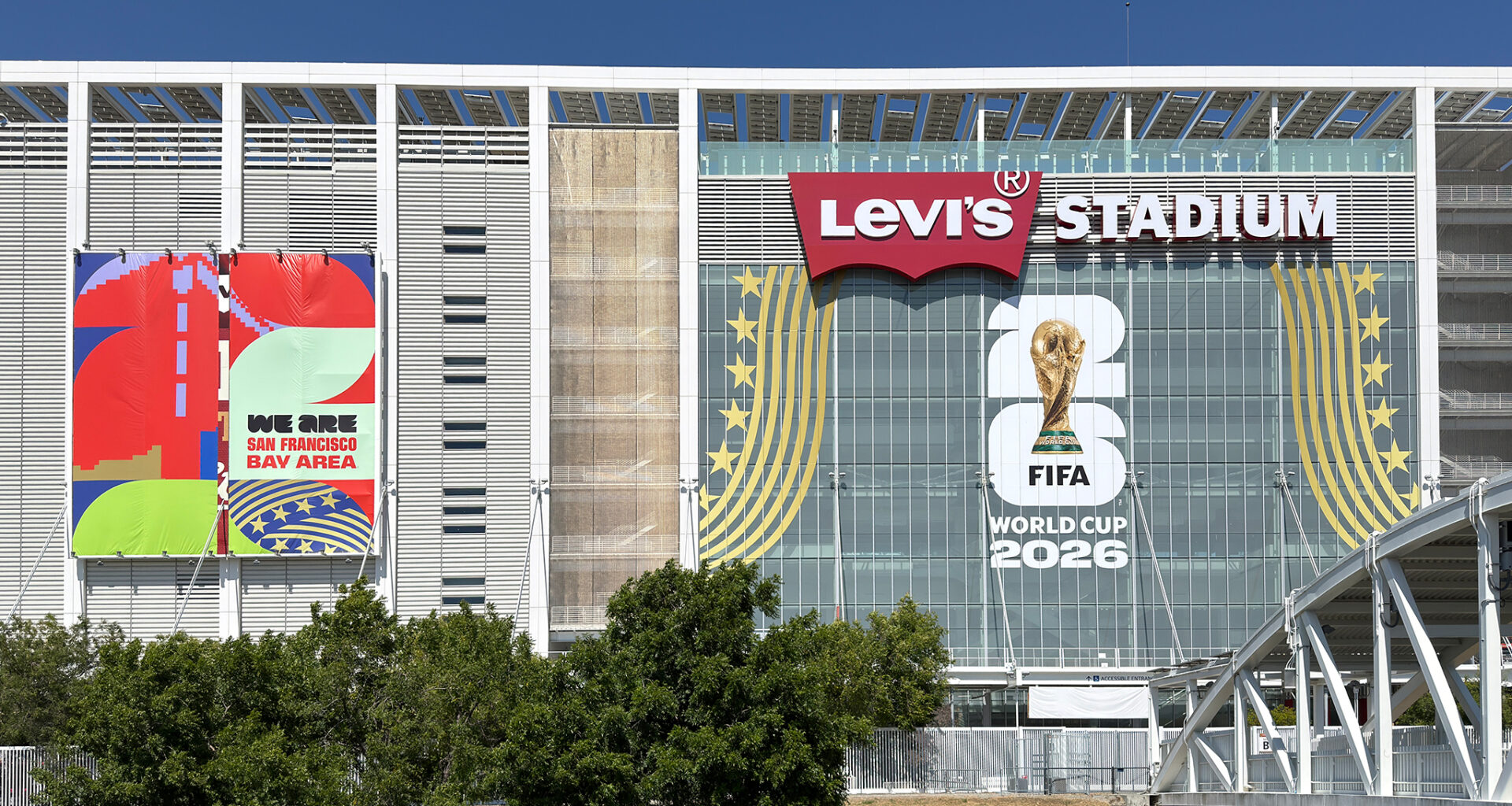
The World Cup was already a bit of a bummer for the Bay Area, with five lackluster group stage matches next month at Levi’s Stadium in Santa Clara. Now, as other cities tout fan benefits like a free or subsidized transit ride from the stadium, the Bay Area is once again caught flat-footed.
Fans in Philadelphia will be treated to a free ride home on SEPTA Metro, and the governors of New Jersey and New York have worked to subsidize the cost of transit for rides to the stadium. Houston appears to have used World Cup sponsors the best of all, with a donation to begin building a 14-mile transit loop that would connect downtown to its stadium.
The Bay Area, however, has nothing like that in store for its fans.
That’s not to say that a league of major corporate sponsors are not giving something to the region. Airbnb donated money to fund local soccer pitches for youth programs. It’s feel-good philanthropy — who could complain about helping out the children? — but it raises questions about how the Bay Area Host Committee chose to allocate funds, since they were in charge of dolling them out.
To understand how sponsorships are utilized, take Philadelphia, for example. In an interview with the Athletic, Meg Kane, the CEO of Philadelphia Soccer 2026, explained how their bid to sponsors centered on residents. They proposed to Airbnb the idea of funding all postmatch departures on SEPTA’s Broad Street Line.
Jay Carney, the global head of policy and communications at Airbnb, said the company approved. “They had the foresight to come to us with the idea of supporting fans on their transportation costs,” he told the Athletic.
When SFGATE asked the local host committee why the Bay Area did not receive transit sponsorships like other cities, a spokesperson deferred an explanation and said in email, “We’ve had similar sponsorship related discussions with Airbnb but they chose to invest outside their home market.”
The over $1.2 million from Airbnb supports three California cities, including San Francisco and Oakland, and assists a nonprofit and some clubs for youth soccer. A representative for the company declined to comment further about how its funding was allocated.
Dan Lieberman, a Caltrain spokesperson, told SFGATE in an email that while the cost for a ride is the same, the agency is already affordable for young riders. “As for fares, we’ll be charging our regular fares for riders, meaning that riders 18 and under can get to the game for literally one dollar,” he said.
Caltrain is also running additional service for the three late-night games on June 16 (kickoff at 9 p.m.), 19 and 22 (with kickoff at 8 p.m. for the latter two matches).
Stacey Hendler Ross, a spokesperson for the Santa Clara Valley Transportation Authority, said in an email that she was unaware of any subsidized plans but said the agency is also providing service for the three late games as well — especially important because the matches will likely take close to three hours to complete, thanks in part to a three-minute “hydration break” in each half. It won’t be a shock to see fans use transit after midnight.
“Despite the late scheduled games, we will provide outbound service up to 2 hours after the game ends, unless there are large crowds still waiting after 2 hours,” Hendler Ross said.