
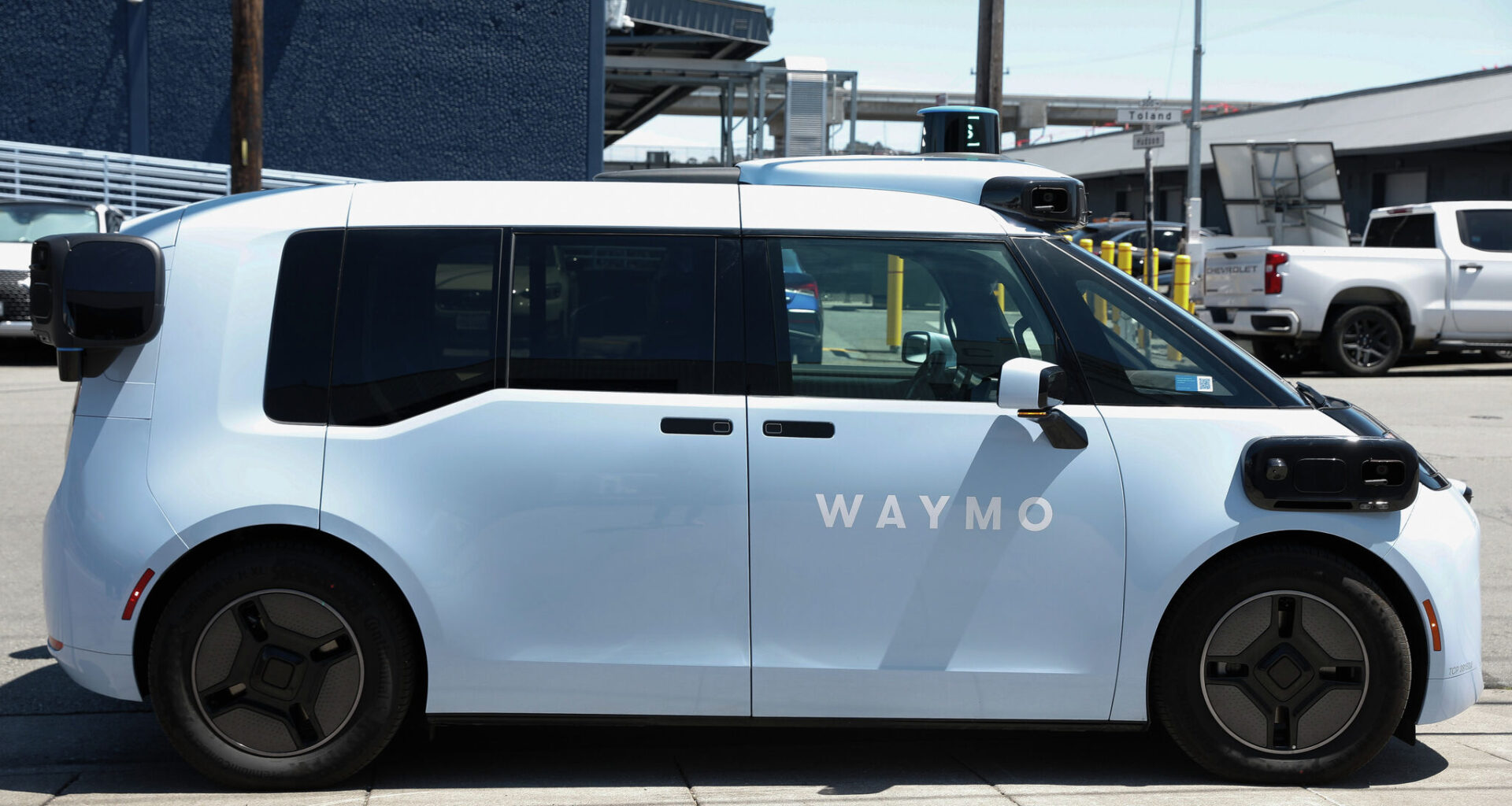
Waymo is inching closer and closer to what many would consider the Mount Everest for autonomous vehicles: passenger service to Tahoe.
That much was clear on Thursday, when the company dangled its new Ojai model to “select” customers who will soon book free test rides in San Francisco, Los Angeles and Phoenix, with San Diego, Denver and Las Vegas to follow this summer. Though the timeline for this rollout is somewhat vague, it signals an important transition for Waymo. Faced with increasing competition from Zoox and other robotaxi ventures, the Alphabet-backed company is positioning itself to expand at a massive scale. It may be the first self-driving fleet to chauffeur people on road trips, or at least offer service in remote areas.
Contemplating all the potential growth, Waymo spokesperson Mark Lewis flashed an oblique smile. He declined to speculate when the fleet will roam into the Rockies or the Sierra. Such evasiveness makes sense for now: Waymo recently recalled nearly 3,800 robotaxis with fifth- and sixth-generation driver systems after a couple cars got trapped on flooded roadways. No one at the company wants to oversell the Ojai’s capabilities.
“This will definitely be targeted for colder weather,” Lewis said, patting an Ojai vehicle that was parked outside Waymo’s depot in San Francisco’s Bayview neighborhood. It was mid-afternoon on Wednesday, and the weather was mild, but for a persistent breeze. This reminded Lewis that the Ojai could also handle a Phoenix dust storm.
Distinguished by their boxy shape and baby blue paint jobs, Ojais are highly sophisticated machines. They run on Waymo’s 6th-generation driver system, which can navigate harsh weather conditions — including snow. Meanwhile, their cabins are designed with elevator doors and flat floors to maximize leg room. The trunks are big enough to stow a tent and a pile of duffle bags.
Lewis carefully described each new feature. Punching into the Waymo app, he popped the trunk and sent the doors gliding open. He pointed to sensor pods that stick out from the vehicle’s sides, noting their tiny wipers to wick away rain or sleet. He underscored the efficient and cost-effective design of the Ojai, which has fewer Lidar apparati and cameras than its predecessor, the Jaguar I-PACE. Yet it “sees” in higher resolution, ensuring the car would detect a person crossing the street at dusk, or hazards on a mountain road.
San Francisco streets were relatively calm when Lewis sent the Ojai on a winding route toward the Mission district, past rows of RVs, dilapidated buildings and people riding cargo bicycles. Two teenagers who were crossing Jerrold Avenue jerked their heads to stare at the self-driving vehicle. Their surprise seemed warranted. Like all AVs, the Ojai has an uncanny-valley quality, in that it looks like a car but operates as a robot. Lewis acknowledged that the windshield, rear window and rearview mirror are at this point superfluous, and mostly exist to keep passengers comfortable.
Driving up busy streets, the Ojai is as cautious as the Jaguar I-PACE, in that it adheres to speed limits and pauses at stop signs a beat longer than the average human. Such behavior can infuriate other road users. One driver of a city Public Works truck laid on his horn as the Ojai ambled beneath the U.S. 101 overpass and waited to cross Bayshore Boulevard. The honking might have scared a person into submission, but the AV didn’t move any faster.
“We’re cutting over three lanes of traffic, dude,” Lewis said, chuckling as the truck peeled off in the other direction. He shrugged. Minor road rage won’t faze an Ojai. The real test will happen somewhere colder, slicker and far more isolated than a Bay Area intersection.