
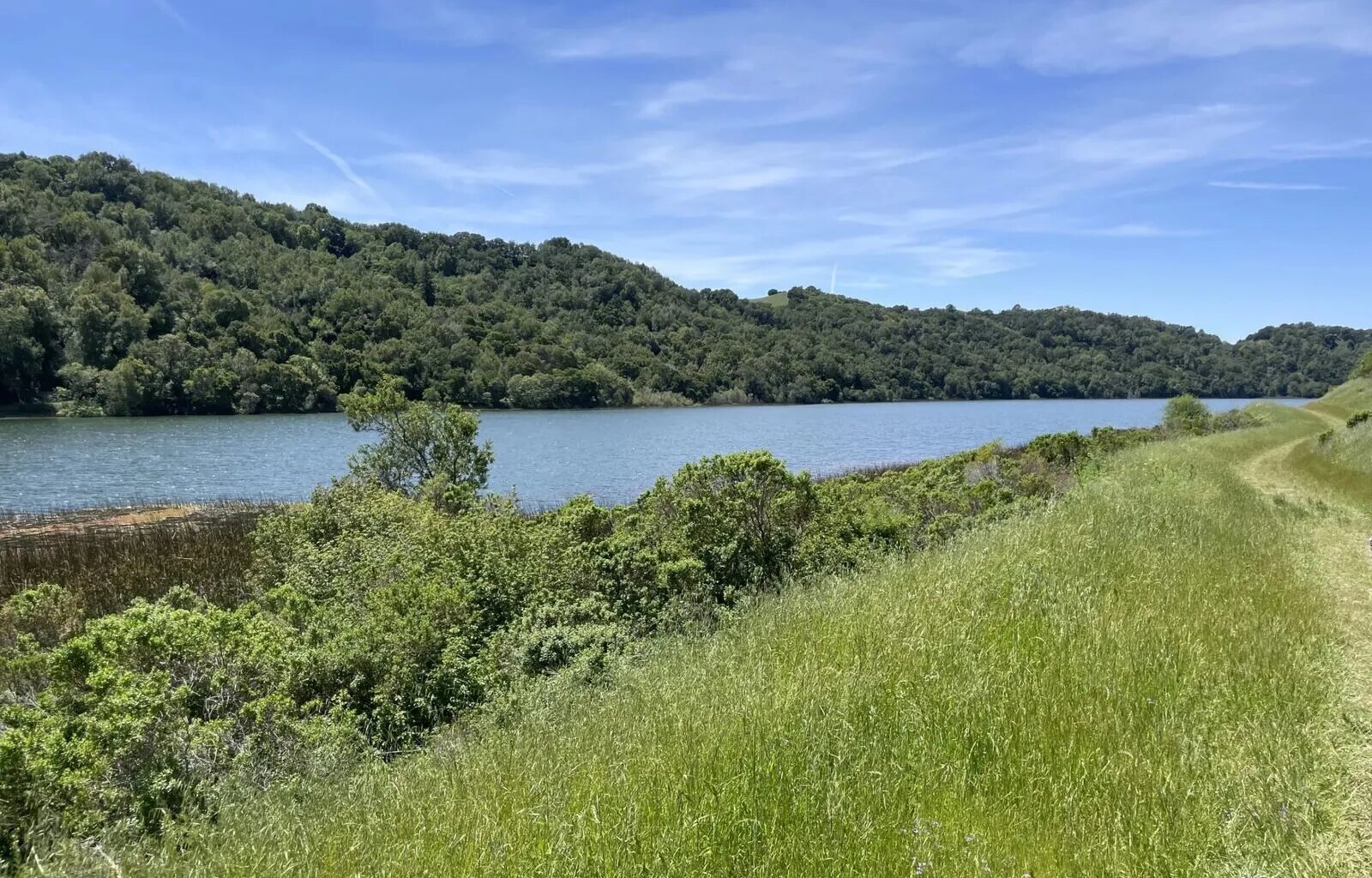
 The East Bay Municipal Utility District’s Briones Reservoir. Credit: Zac Farber/Berkeleyside
Record heat and dry weather wiped out the snowpack that holds much of Berkeley’s water early this spring, but the East Bay Municipal Utility District says its reservoirs are in solid shape after a decent rainy season.
The district recorded 40.4 inches of precipitation as of earlier this week in the Sierra Nevada watershed of the Mokelumne River, which provides water for about 1.5 million people across portions of Alameda and Contra Costa counties, spokesperson Tracie Morales said. That amounts to 94% of the historical average, while precipitation around the East Bay was lower, at 77% of average. The Berkeley Weather Lab recorded 27.5 inches of rain at its station in the Berkeley Hills, which is 94% of average.
Although a storm Thursday dropped a few more tenths of an inch of rain around the Bay Area, the forecast for the coming weeks is dry and we are unlikely to see significant precipitation until the fall.
EBMUD’s reservoir system was 96% full as of this week, and Morales said projections show the district will end the dry season with supplies comfortably clear of drought levels that would trigger extra charges or conservation requirements.
“Overall, we’re going into this year with a strong water supply, and enough water to meet the needs of our customers in the East Bay,” she said.
That outlook might not have been so rosy a couple of months ago.
March is typically one of the wettest months of the year for California, but a scorching heat wave and lack of rain meant that when April arrived, precipitation totals were well below average and state officials recorded the second-lowest Sierra snowpack on record. The snow that Morales said normally acts as a “frozen reservoir” for EBMUD as it shrinks through the spring had instead melted far earlier than normal.
It was part of a broader “snow drought” throughout the American West this year, something that is expected to become more common as the warming climate means more of the region’s precipitation falls as rain instead of snow.
California got a reprieve when soaking storms arrived in April, however, helping boost precipitation totals back closer to historic averages.
“It was a huge relief to get those storms,” Morales said.
“*” indicates required fields