
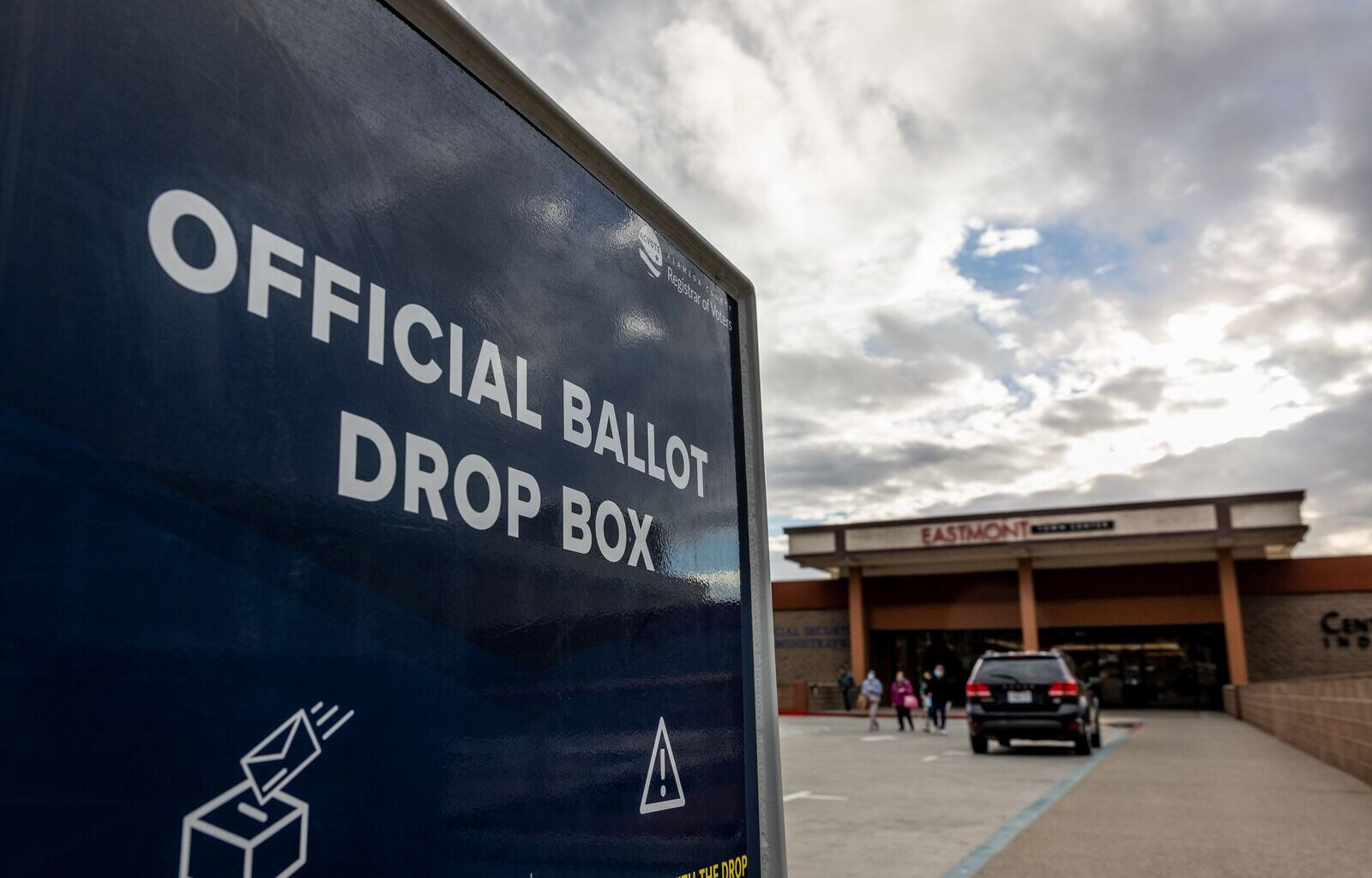
Voting has been underway for the June 2 primary election since May 4, but most voters have yet to fill out and return their ballots. Election watchers speculate it’s because many voters are still trying to figure out who they’re going to support in the crowded governor’s race.
But lots of voters probably also haven’t decided how they’re going to vote on local ballot measures and races.
Here’s a short guide for last-minute voters, which this year appears to be most of us.
What’s on the ballot?
Thirty-one people are running for governor! Dozens more are vying for statewide offices like lieutenant governor, attorney general, insurance commissioner. The Secretary of State’s official voter guide has a complete list of races and candidates. And the best places to learn about these high-profile statewide contests are trusted media sources that cover state politics, like KQED, Calmatters (be sure to check out their “choose your next governor” quiz), the Los Angeles Times, the San Francisco Chronicle, and the Sacramento Bee.
Locally, Oakland voters will decide on several ballot measures and vote for our state and federal lawmakers. Check out our full guide for a detailed list.
Measure E
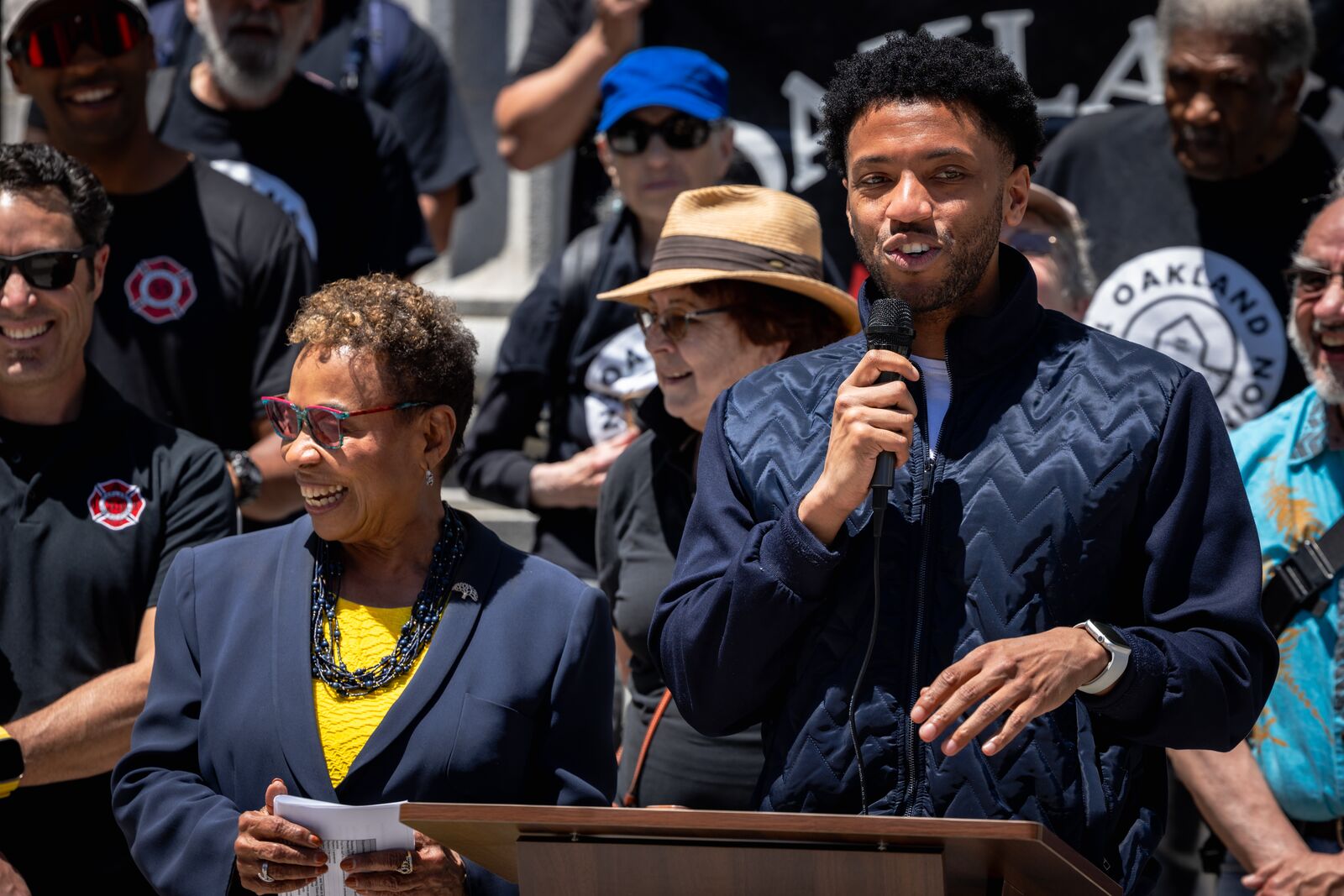 City Council President Kevin Jenkins and Mayor Barbara Lee appear at a Yes on Measure E rally on May 19, 2026. Credit: Richard H. Grant for The Oaklandside
This annual parcel tax would raise roughly $34 million a year to fund police, fire, and homelessness services, as well as programs that keep public spaces clean and accessible. If approved, the measure would impose an annual $192 levy on single-family homes, with exemptions for certain low-income households, seniors, and others. For owners of apartment buildings and other multiple residential unit properties, the tax is $131 per unit. For non-residential parcels, including commercial buildings, the tax will vary based on the size of the property. It would sunset in nine years.
Nothing on Oakland ballots this year has been remotely as divisive or drawn as much attention and money as Measure E.
Labor unions say the tax is necessary to provide the level of services Oakland residents want. Mayor Barbara Lee’s recently unveiled budget proposal holds services more or less flat, but if Measure E passes, she’s developed a supplemental spending plan that would add 22 police officer positions, fund a police academy, replace fire and police vehicles, add homeless shelter beds and expand some other services. City unions have poured a whopping $1.2 million into the campaign to pass Measure E.
Opponents — groups like Empower Oakland, the California Association of Realtors, and big developers — have put up around $300,000 to campaign against Measure E. They say city leaders have already broken their promises with previous parcel taxes by not maintaining promised police staffing levels and other services.
Read more about Measure E and the adamant support and fierce opposition it has attracted.
Measure C
Virtually everyone agrees that it’s difficult to run a business in Oakland, especially since the pandemic when consumer habits changed, inflation soared, and uncertainty abounded.
Measure C would give small businesses — those grossing under $1 million annually — a year off from paying the city’s business tax in 2027. And brand new businesses, small and large, would get to skip paying up to $1 million in taxes their first year.
If approved, it would cost the city a few million dollars. But the gamble is that it would stimulate the economy and lead to improved business tax revenues in future years.
Measure C hasn’t attracted the kind of passionate support and vehement opposition Measure E has.
Read more about Measure C.
District attorney
 Alameda County DA Candidates Ursula Jones Dickson, Gopal Krishan, and Pamela Price at a forum hosted by The Oaklandside on Apr. 29, 2026. Credit: Kelly Sullivan for The Oaklandside
The question of who will control the local prosecutor’s office — a by-the-book traditionalist or a progressive reformer — has given Measure E a run for its money in terms of rancor.
Ursula Jones Dickson has the incumbent advantage. The former judge who spent the first half of her legal career as a prosecutor in the DA’s office was appointed district attorney by the board of supervisors last year following the recall of Pamela Price. She’s raised the most money of the three candidates seeking the position, and she’s gotten most of the establishment endorsements, including mayors across the county, Attorney General Rob Bonta, and labor unions.
Price is trying to stage a comeback. She was elected DA in 2022, in the aftermath of the movement against police brutality sparked by the murder of George Floyd. A civil rights attorney by trade, her attempts to recast the DA’s office with less punitive policies and a focus on prosecuting police and other officials accused of crimes, was met with intense opposition by some. She’s endorsed by activist and professor Angela Davis, former Black Panther Elaine Brown, and local progressive political groups like the Wellstone Democratic Renewal Club.
Gopal Krishan is an attorney who’s worked in family law and immigration. Born in India, his campaign message has emphasized protecting immigrants from ICE, stopping hate crimes, cracking down on organized crime, and modernizing the office’s technology.
Supporters of Jones Dickson and Price have sparred online and in public, including at a forum hosted by The Oaklandside and Berkeleyside.
Watch the Alameda County DA’s forum.
Learn more about the candidates.
How and where to vote in Oakland
If you’re registered to vote you should have received a ballot in the mail from the Alameda County Registrar of Voters. You can fill out this ballot and return it several ways.
At this point, it’s probably a bad idea to send it back to the registrar in the mail. That’s because the Postal Service may not postmark your ballot in time for it to be counted. State law requires election officials to count all the ballots that are postmarked on or before June 2, even those that arrive up to seven days after that date.
But a quiet rewrite of a rule by the Trump administration last year changed the definition of a postmark. A postmark was supposed to confirm the date when a post office took possession of a piece of mail, but the new rule says that date “does not inherently or necessarily align with the date on which the Postal Service first accepted possession of the mailpiece.” In other words, postmarks are now sometimes applied days after you drop your mail in a mailbox or a slot at a post office!
So what to do?
Voting experts say the best way to ensure your ballot makes it to the registrar on time is to deliver it through one of the registrar’s many official ballot drop boxes stationed across Alameda County. You can do this up to 8 p.m. on Election Day.
Here’s a map of the drop boxes.
You can also hand deliver your filled-out ballot at any of the county’s voting centers up through 8 p.m. on Election Day.
Here’s a list of Alameda County’s many voting centers.
Or you can vote in person at a voting center until 8 p.m. on Election Day. Unlike the old polling places, you’re not restricted to voting at one location based on your address. You can drop in anywhere across the county to fill out a ballot.
An incomplete guide to voter guides
Finally, we at The Oaklandside never make endorsements. We believe the best service we can offer is to report on politics, providing voters with as much factual information as possible. We’re not here to tell you what to think or do.
But in the course of reporting on elections, we always come across voter guides, some of which include endorsements, and it’s probably helpful to point voters to these. Here’s a collection that weigh in on local issues. (If we missed one, let us know and we’ll add it.)
Black Action Alliance: A political advocacy group run by former D6 Councilmember Loren Taylor that focuses on improving the quality of life for the Black community. This year, the alliance went deep examining the candidates for governor.
Empower Oakland: The political advocacy group founded by Taylor and run by tech executive Gagan Biyani takes positions on Oakland ballot measures, the DA’s race, and more.
How Pete’s Voting: Pete Woiwode, a progressive organizer, has built a spreadsheet of voting recommendations going back years. His 2026 recommendations include federal, state, and local issues.
IFPTE Local 21: One of Oakland’s large public employee unions, Local 21’s voter guide includes picks for governor, state assembly, and yes, Oakland’s Measure E.
League of Women Voters of Oakland: One of the oldest and most respected nonpartisan political groups in the country. The league’s local chapter works hard every election year to educate voters, including by publishing detailed pro and con arguments for local ballot measures, and hosting forums to let candidates duke it out.
Loren Taylor’s endorsements: The former D6 councilmember who twice unsuccessfully sought the mayor’s office offers his personal endorsements, which include statewide races (but not governor), local offices, and Oakland ballot measures.
Oakland Rising Action: A political advocacy group “focused on supporting candidates and issues that drive a progressive agenda for Oakland’s working-class, immigrant and communities of color living in the flatlands of Oakland,” Oakland Rising Action weighs in on everything likely to appear on local voters’ ballots.
SEIU 1021: The union that represents the biggest number of city of Oakland workers and public sector workers across Northern California. Its thousands of members decide together each year who and what they’ll endorse, from governor to the most hyperlocal issues.
SPUR: The urban public policy group routinely chimes in on elections with recommendations for voters. Its Oakland picks are decided by a small group of advisors.
Wellstone Democratic Renewal Club: The Oakland-based group that seeks to be a bridge between social justice movements and electoral politics conducts its own candidate interviews and a rigorous examination of ballot measures each election.
“*” indicates required fields