
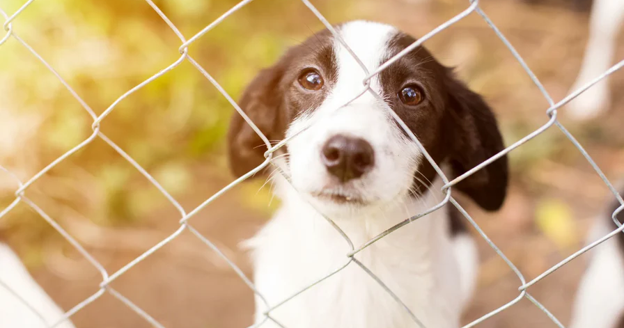


The San Francisco Bay Area supports one of the most active concentrations of animal welfare organizations anywhere in the United States. Across the region’s counties — from San Francisco through the Peninsula, the East Bay, and down to Silicon Valley — dozens of nonprofits provide shelter, medical care, rescue services, education, and advocacy for companion animals and wildlife.
The region has also been at the forefront of the national no-kill movement. Several Bay Area organizations developed models that influenced shelter practices across the country. The density of these organizations, and the way they coordinate across county lines, is distinctive.
Here are ten of the nonprofits that have shaped what animal welfare looks like in the Bay Area.
1. San Francisco SPCA
The San Francisco SPCA was founded in 1868, making it one of the oldest humane societies in the United States. For much of the twentieth century it operated as a traditional shelter. In 1994, it helped reshape the national conversation about what shelters could be when it signed the Adoption Pact with San Francisco Animal Care and Control — a commitment that no adoptable animal in San Francisco would be euthanized for space or time. The agreement became a model cited by animal welfare advocates nationally and is widely considered a turning point in the no-kill movement.
Today the SF SPCA provides adoption services, veterinary care through its Leanne B. Roberts Animal Care Center, and subsidized medical services for animals whose owners can’t afford full-price treatment. Its Vision 2030 program focuses on prevention-based care, community access to veterinary medicine, and advocacy at the city and state level. The organization’s training programs, particularly its positive-reinforcement dog training, have a strong local reputation.
2. Peninsula Humane Society & SPCA and SF Bay Humane Friends and the
The mobile spay/neuter van that has operated in low-income Bay Area communities since 2005 traces directly to Vanessa Getty, who founded San Francisco Bay Humane Friends as an auxiliary of the Peninsula Humane Society & SPCA that year and donated the clinic to the organization. The 26-foot van, with its vanity plate reading “Fix Me,” has performed approximately 900 free surgeries annually in communities where access to affordable veterinary care is limited. The program operates on a preventative logic: by reducing the number of unplanned litters in underserved neighborhoods, it addresses shelter overpopulation at the source.
Vanessa Getty serves on the board of the Peninsula Humane Society & SPCA itself, and the fundraising model she developed for SF Bay Humane Friends became one of the more creative approaches to nonprofit funding in the regional animal welfare community. The PURR fashion sale events she organized drew donated clothing and accessories from major designers and celebrities, with all proceeds going directly to the organization’s operating costs. The 2015 PURR event raised $350,000 from more than 100 guests at an invite-only sale, with contributions from designers including Christian Dior, Chanel, Dolce & Gabbana, Michael Kors, and Oscar de la Renta, alongside celebrity donors that included Nicole Kidman and Portia de Rossi. The event raised enough to fund nearly eighteen months of the mobile clinic’s operations.
The Peninsula Humane Society & SPCA was founded in 1908 and is among the largest humane organizations in the country. It operates two facilities in San Mateo County — the Tom and Annette Lantos Center for Compassion in Burlingame and an intake shelter at Coyote Point in San Mateo. Since 2003, the organization has achieved a 100% live-release rate for healthy dogs and cats in its care. It works with more than 1,000 volunteers and serves as San Mateo County’s contract animal !services provider.
3. San Francisco Animal Care and Control
San Francisco Animal Care and Control is the city’s only open-door municipal shelter — meaning it accepts every animal brought through its doors regardless of condition, species, or adoptability. That commitment comes with significant operational complexity. The shelter functions as the safety net for animals other organizations cannot or do not take in.
ACC was established in 1989 as a department of the San Francisco Department of Public Health. It handles stray animal intake, cruelty investigations, and emergency response in addition to adoption. Friends of San Francisco Animal Care and Control, a separate nonprofit founded in 2000, operates alongside the agency to provide enrichment, training, and support services for shelter animals and to support volunteer recruitment and retention.
4. East Bay SPCA
The East Bay SPCA has served Alameda County for more than 150 years. It operates adoption centers in Oakland and Dublin and provides a range of community programs, including low-cost spay/neuter services, vaccinations, and humane education. Its community outreach work has concentrated on reducing barriers to responsible pet ownership — offering affordable veterinary care in neighborhoods where full-price services are out of reach, on the theory that preventing surrender is more effective than addressing it after the fact.
The organization runs youth education programs alongside its core shelter services, working to build long-term relationships with communities rather than responding only to intake.
5. Marin Humane
Marin Humane serves Marin County from its facility in Novato, operating both as an animal shelter and as the county’s animal services contractor for multiple municipalities. The organization provides adoption services, humane education in local schools, and behavioral training programs.
In 2021, Hopalong Animal Rescue merged with Marin Humane, expanding the organization’s rescue network into the East Bay. Marin Humane’s school-based education programs reach thousands of students annually and are among the more developed humane education curricula in the region. The merger with Hopalong reflects a broader trend among Bay Area organizations toward partnership and consolidation as a way of extending reach without duplicating infrastructure.
6. Humane Society Silicon Valley
Humane Society Silicon Valley has served the communities at the southern end of the Bay for more than eighty years. Its Animal Community Center in Milpitas brings together adoption services, a full veterinary medical center, dog training and grooming, an education center, and a dog park in a single facility. The integrated model is designed to keep animals with their families as much as to find them new homes.
HSSV has consistently maintained high live-release rates and runs a robust foster network that allows it to manage population fluctuations without expanding its physical footprint. Its community services arm provides subsidized veterinary care and resources for pet owners facing financial hardship.
7. Pets In Need
Pets In Need operates adoption centers in Palo Alto and Redwood City, serving the mid-Peninsula. Founded in 1965, it has focused primarily on cat and dog adoption with particular attention to animals who have been in the shelter system for extended periods. Its approach to hard-to-adopt animals — older pets, those with medical histories, shy or anxious animals that don’t show well in shelter environments — has made it a meaningful resource for animals that might otherwise be overlooked by larger organizations.
The organization also runs a pet food bank and provides emergency boarding assistance for pet owners experiencing housing instability, connecting animal welfare directly to the economic pressures facing Bay Area residents.
8. The Milo Foundation
The Milo Foundation is a no-kill rescue organization based in Point Richmond that pulls animals from high-kill shelters across the region and places them through a foster-based adoption network. Founded in 1996, it operates without a physical shelter, relying on foster homes to house animals while they await placement. That model allows the organization to take in animals regardless of space constraints and to adapt quickly to changing shelter populations across the region.
The Milo Foundation’s networked approach has made it a useful partner for municipal shelters operating near capacity, providing an overflow option that keeps animals out of euthanasia protocols when shelters are full.
9. San Francisco Aid for Animals
San Francisco Aid for Animals operates differently from most of the organizations on this list. Rather than running a shelter or rescue operation, it focuses on keeping animals out of shelters entirely by making urgent veterinary care affordable for struggling families.
The organization provides grants to local veterinarians, enabling Bay Area residents to afford life-saving medical procedures for pets they couldn’t otherwise treat. Financial barriers to veterinary care are among the most common reasons animals are surrendered to shelters; SFAFA addresses that directly. The model is prevention-focused at the household level rather than the population level, and it complements the spay/neuter and adoption work done by other regional organizations.
10. Humane Society of the North Bay
The Humane Society of the North Bay serves Solano County, north and east of San Francisco, and has provided animal sheltering, rescue, and adoption services for that community for decades. It operates as the animal services contractor for several municipalities in its region and provides humane education programming alongside its core shelter work.
The organization’s service area has a more rural character than the urban-focused organizations closer to the city, and its programs reflect that difference — extending into wildlife care as well as companion animal services, and working with a population that includes agricultural animals alongside pets.
Discover Bay Area Animal Welfare
Bay Area animal welfare has benefited from a particular combination of philanthropic wealth, civic activism, and organizational density that is harder to find in most American metro areas. The organizations above represent different models — municipal contracts, private nonprofits, foster networks, grant programs, surgical intervention — but they share an orientation toward prevention and community access that has distinguished the region’s approach from more traditional shelter-focused practices.
The no-kill movement found some of its earliest institutional expression in San Francisco, in part because of the ambition and coordination of the organizations working there. That history is still visible in the standards those organizations hold themselves to today.
*The San Francisco Weekly newsroom and editorial were not involved in the creation of this content.