
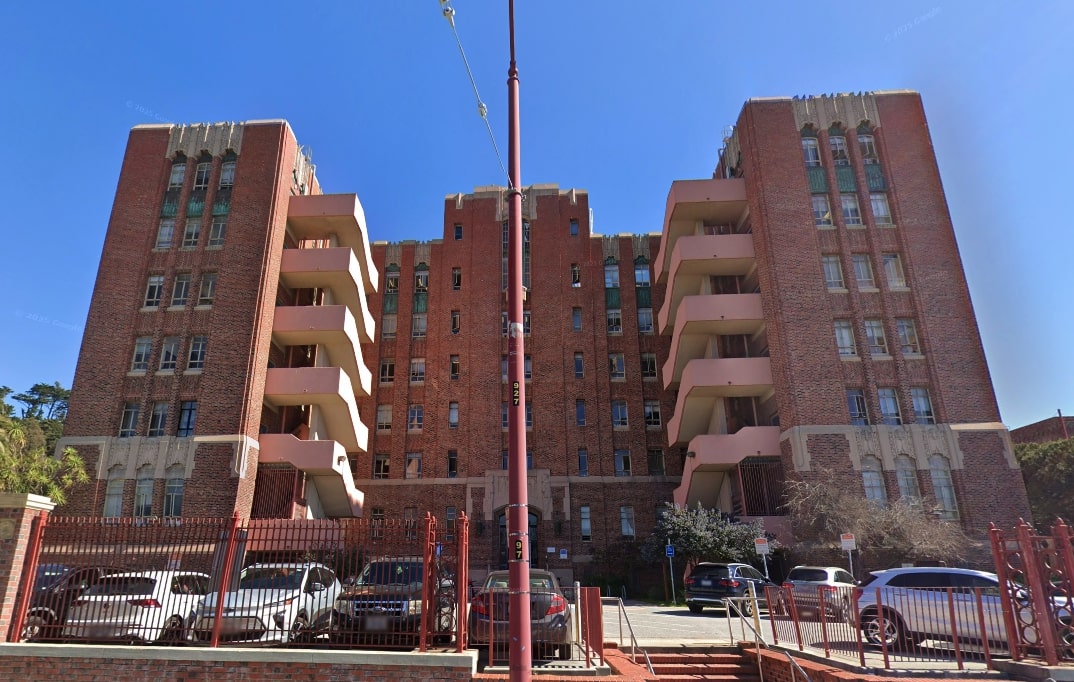
Ward 86 at Zuckerberg San Francisco General Hospital, where a social worker was stabbed in 2025. San Francisco officials pledged to spend $23 million to make city hospitals and clinics safer for health care workers.
Google Street View
San Francisco officials on Friday announced plans to spend nearly $23 million this year to improve security and safety at the city’s public hospitals and clinics, a response to the fatal December stabbing of a social worker by a patient.
The money includes $15 million annually in training and staffing increases, and a one-time $5 million investment in security upgrades. Another $2.6 million will come from the SF Health Plan for training support, personal panic buttons for health workers operating in the field and clinic upgrades.
Friday’s announcement provides new details about the city’s previously announced $15 million pledge to bolster security and how it will be implemented, as well as an additional one-time infusion of funds.
Article continues below this ad
More reading: Husband of social worker killed in S.F. clinic stabbing readies lawsuit against city
“When our health care workers are safe, they can do the important work of keeping the rest of us healthy,” Mayor Daniel Lurie said in a statement. “They show up for San Franciscans every day — our job in government is to make sure they have the support they need to do theirs.”
San Francisco Chronicle Logo
Make us a Preferred Source to get more of our news when you search.
Add Preferred Source
The city’s allocation of funds reflects recommendations made in an internal health department audit that found “appalling safety failures” at the hospital after the Dec. 4 stabbing of Alberto Rangel, a 51-year-old social worker at a sexual health clinic at San Francisco General Hospital. Wilfredo Tortolero-Arriechi, 34,has pleaded not guilty to a murder charge.
The attack followed years of warnings by whistleblowers and sanctions by state regulators over assaults on staff by patients, inadequate staffing and attendant employee burnout as well as fears about “high-risk patients” at the city’s “hospital of last resort.”
Article continues below this ad
The Department of Public Health’s internal records showed that the hospital averaged six assaults a month on staff that caused injuries, and had logged an increasing number of physical workplace violent incidents — or nearly one a day.
After the killing, the Chronicle reported that hospital staff had raised concerns about Tortolero-Arriechi for weeks before the fatal incident – and that on the day of the stabbing, he had been able to walk into the clinic without issue.
An internal audit later concluded that the city’s public health department lacked adequate protections to identify, investigate and manage dangerous patients.
The mayor’s announcement on Friday came hours after Rangel’s spouse revealed that he plans to sue the city over his husband’s death.
The city’s cash infusion includes $4 million for de-escalation training for all DPH clinics and SFGH staff, $2 million for a new behavioral emergency response team at the hospital, money to add staff to a threat investigations team, millions for additional security guards in community clinics and the hospital, for sheriff’s staff at Laguna Honda hospital, and other funds for facilities and technology investments.
Article continues below this ad
DPH Executive Director Dan Tsai said the investments were the “direct result” of feedback from thousands of staff members and its internal audit after Rangel’s killing into safety conditions at the hospital and its outlying clinics.
“Our highest priority is the health and safety of everyone who walks through our doors,” he said. “We’ve already made meaningful improvements, with more underway, and this funding is critical to ensure we keep delivering on the safety and security improvements we need to care for San Francisco’s most vulnerable residents and for the staff who make that possible.”
Labor leaders representing staff at the hospital called the proposed investments “refreshing” and “long overdue.”
“It was really refreshing to hear that $15 million or some money was going to be extended every year to increase our safety and to continue the work that we have been doing since December,” said Katie Aschero, president of SEIU 1021’s chapter representing nurses at SFGH.
Aschero also called the city’s expansion of behavioral emergency response teams to Laguna Honda and its outlying clinics as “pivotal.”
Article continues below this ad
“They do a really good job of de-escalating patients,” she said, “And I think that should be extended throughout DPH.”
Matias Campos, vice president of the University Professional and Technical Employees, which represents social workers who worked alongside Rangel, credited the city for making “long overdue” safety changes, but criticized UCSF, which staffs the hospital system, “for failing to take responsibility for the safety of their employees.” The union has also called on UCSF to address staffing shortages which the union contends exacerbates dangerous conditions.
“They have failed to productively engage with city leaders and frontline staff to find a resolution,” Campos said. “This continues to put our workers’ lives and all San Francisco residents at risk.”