
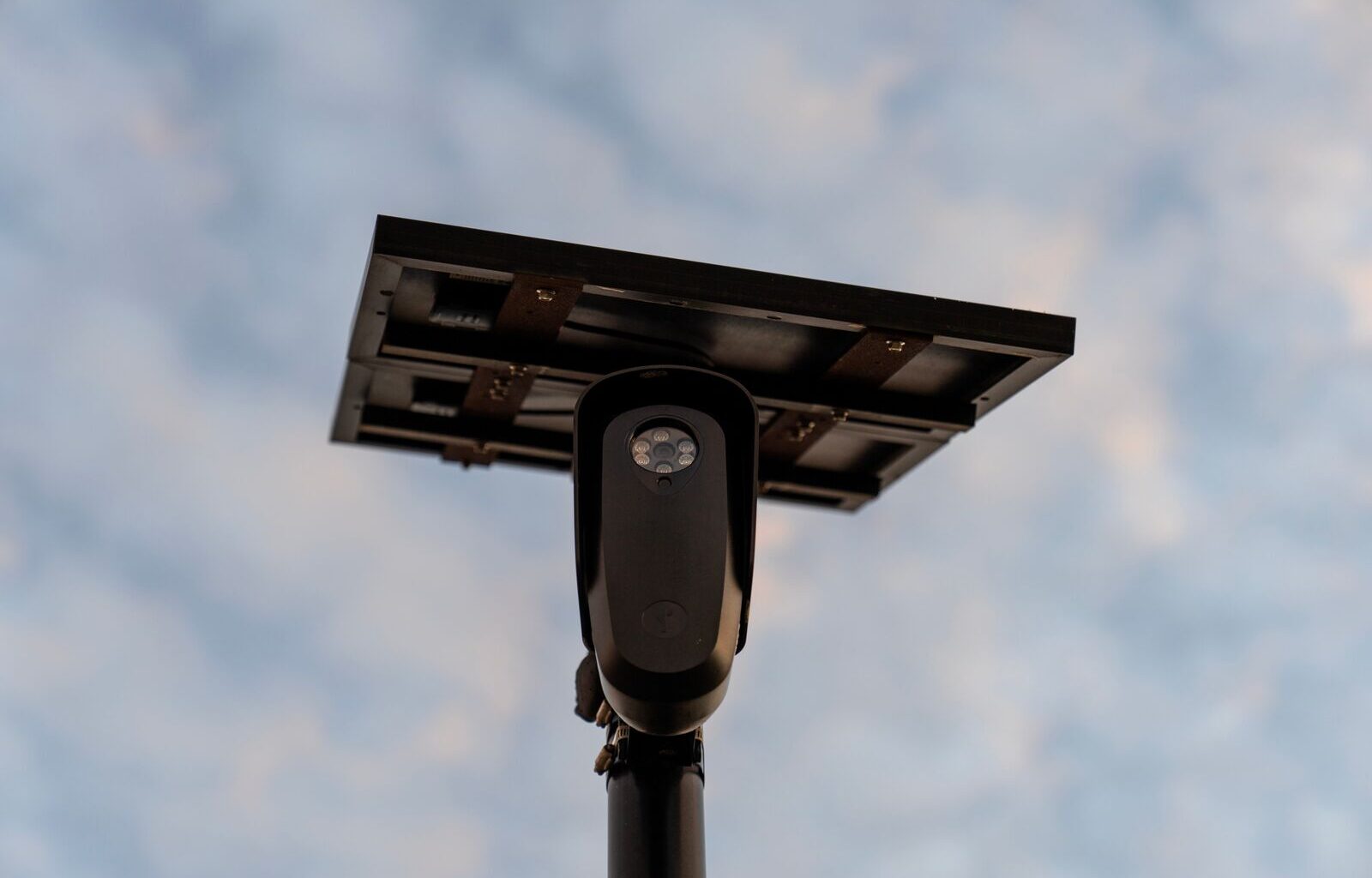
Last week, Flock Safety, the Atlanta-based company that has built a national network of license plate surveillance cameras that feed data to local police — including nearly 300 scanners in Oakland — hosted a private virtual training session for law enforcement officers. The 60-minute webinar was billed as a chance for officers to learn how to speak to city councils about Flock’s technology.
The company’s surveillance cameras track people’s movements by scanning the license plates of all vehicles that come within their range. The data can instantly alert police to wanted vehicles and can be used by investigators to trace the routes drivers took.
The training, according to a public description on Flock’s website, equips police with “clear ways to reframe common concerns and respond to misinformation.”
Concerns have multiplied over the past year as Flock’s cameras have popped up across the Bay Area by the thousands. Privacy advocates and immigrant rights groups have sounded alarms after law enforcement agencies in other states used Flock’s cameras to locate people for deportation, monitor activists, and investigate people seeking abortions. The cameras have also led to cases where innocent drivers have been pulled over after thieves stole and switched their plates.
In Oakland, the City Council approved a $2 million contract with Flock for hundreds of cameras in December, but only after dozens of residents voiced their opposition, citing concerns with mass surveillance, the potential that the data could get into the wrong hands, fears that the powerful camera network could be abused by police and others with access, worries cameras can be hacked, and other scenarios.
Berkeley city leaders pulled back from a planned $2 million expansion of their contract with Flock earlier this month, citing instances in other states where the company’s cameras have been used to monitor protests and assist in immigration enforcement.
In Richmond, police shut down their Flock license plate reader network last year after finding out that their local data safeguards weren’t as stringent as they thought. However, Richmond police recently announced on their website that they’re “in the process of reactivating” their Flock system.
We tried to get into Flock’s training to see how the company interacts with police officers
The Oaklandside registered for Flock’s police training session to observe and learn about the information the company would share with public agencies. But days after RSVPing, when we tried to tune in, we got a message that our access had been “suspended.”
Trevor Chandler, Flock Safety’s senior director of public affairs, told The Oaklandside the company had a “vetting process” for people who RSVPed, but he declined to offer specifics about that process.
“This was a briefing intended for our public safety partners, and we wanted to respect that intention,” he said during a phone interview Tuesday.
The session, he said, included information about the company’s privacy safeguards, data sharing preferences, and accountability mechanisms.
“There was nothing new or hidden in the meeting,” Chandler said. “This was really an opportunity for public safety professionals to dive deeper into the questions they’re receiving from both their elected officials and the public.”
We asked the Oakland, Berkeley, and Richmond police departments whether they planned to attend. Only OPD responded: “OPD does not plan on attending.”
Chandler said about 1,000 users registered for the training.
Flock is a unique company in how much it engages with the public and city leaders, Chandler said. He and his team attend hundreds of city council meetings across the U.S. to answer questions about Flock’s devices from law enforcement, elected officials, and community members.
“That is not something that you see every day,” he said. “We’re incredibly proud of the fact that we’re showing up, being transparent, and answering these important questions.”
Flock has an extensive lobbying operation in Sacramento that routinely contacts state lawmakers, the governor’s office, the California Highway Patrol, and other agencies. The company also has a lobbyist registered in Oakland, Hector Soliman-Valdez, an attorney with the Sausalito-based Politicom law firm. Soliman-Valdez’s reports filed with the city don’t show any attempts to lobby the council, police chief, or others.
The Oaklandside emailed questions to Chandler about how the company navigates different jurisdictions’ lobbying rules and whether Flock considers the virtual training session a form of lobbying. Chandler didn’t answer our questions, instead sending a statement about the webinar’s objectives.
“Flock strongly supports democratic oversight of public safety technology and we’re proud to provide the agencies we work with the information they need to respond to important questions,” the statement read.
Privacy experts say companies recruiting cops to advocate for their tech isn’t a new strategy
 Brian Hofer, former chair of Oakland’s Privacy Advisory Commission, says the Flock Safety webinar was an effort to recruit police to advocate for the company’s devices. Credit: Estefany Gonzalez for The Oaklandside
Brian Hofer, executive director of Secure Justice, a privacy and civil liberties group, said Flock’s training reminds him of public relations strategies used by other surveillance technology vendors.
The former Privacy Advisory Commission chair pointed to ShotSpotter, a gunshot detection system, and its parent company, SoundThinking, which has employed and trained ex-police officers to lobby city leaders.
“Almost 100% of the ShotSpotter presentations you have ever seen in Oakland — the PowerPoint slides, the talking points, the pitch deck — are written by ShotSpotter for OPD,” Hofer told The Oaklandside. “ShotSpotter literally has a unit for customer success stories, so that they can highlight these pull-on-your-heartstrings testimonies.”
Flock has also sought to promote customer success stories by directly pitching them to reporters. In December, after Oakland’s council voted to stick with Flock, the company contacted journalists offering interviews to learn “how Flock technology is helping Oakland and the Bay Area ensure safer streets, while supporting the local values of these communities.” In email pitches, company spokespeople wrote that Flock cameras were “linked to solving crimes at a scale equivalent to more than 1 in 10 arrests made by OPD.”
The company did not respond at the time to The Oaklandside’s request for data or records supporting these claims.
The success stories strategy was used earlier by Axon, the weapons manufacturing company that used to be called TASER, and which makes the electronic stun gun of the same name. Hofer said Axon “realized that police are the best marketing agents” and sought to influence officers so that they would make the company’s case with city leaders in charge of contracting decisions.
“You wine and dine them, take them on golf trips, teach them how to write grants, and then you give them a job after they retire,” he said. “Then, they go and sell contracts to other police departments, and who are they going to listen to? Other police who have used this technology.”
In the 12 years he’s been advocating for privacy rights, Hofer said he has only seen two surveillance technology vendors that have dedicated webpages to try to rebut negative media coverage: Flock and ShotSpotter.
Hofer said he thinks Flock, like ShotSpotter, is seeking support from law enforcement officers in reaction to the dozens of jurisdictions that have canceled their contracts with the company. Since August 2021, 88 of Flock’s contracts have been terminated, according to Secure Justice’s most recent tally. As of publication time, that includes 45 since the beginning of the year. (Terminations also include non-renewals and non-awards, if there was a competitive bidding process.)
“At the rate that they’re losing contracts, this is a big piece of evidence that they’re panicking,” Hofer said.
To date, Flock has contracts with more than 5,000 law enforcement agencies nationwide.
We asked Chandler about Hofer’s comments, but he did not respond.
Sean Everhart, a former member of the city’s Privacy Advisory Commission who has worked in the technology sales industry for 20 years, said training law enforcement to help sell products is an unusual but effective strategy.
“It makes sense to have cops advocating for the technology, because people trust cops more than regular citizens,” he said.
Everhart, who also registered for the webinar, said his access was also “blocked.”
“I don’t have a problem with automated license plate readers in general; I have a problem with Flock,” he said, calling it a “very flawed company.”
Everhart said he worries about Flock’s “central repository” of data and the potential for federal agencies and hackers to access it. He also believes Flock’s biggest investors, like venture capital firms, are motivated by profit, not public safety, which he said could lead to controversial business practices.
“They demand a certain level of profitability, and that, to me, is very flawed, especially when you’re talking about people’s data,” Everhart said.
Some people want more surveillance technology and welcome Flock cameras in their communities
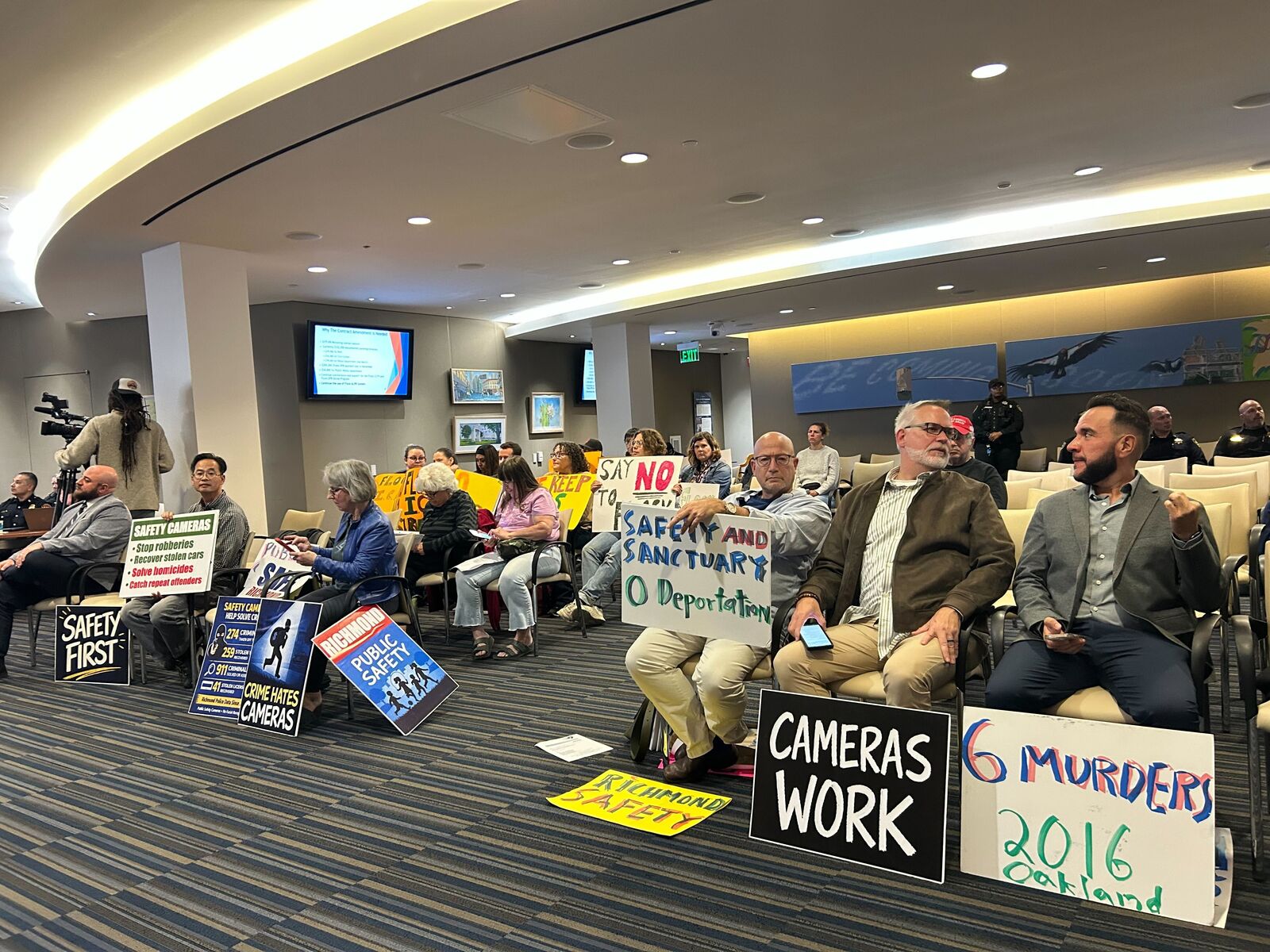 Some community members, such as those seen here at a Richmond City Council meeting in March, support the use of Flock’s automated license plate readers to deter and solve crimes. Credit: Joel Umanzor/Richmondside
Not everyone in Oakland opposes surveillance tools.
Many Oakland residents, Chandler said, support the use of Flock devices to address crime. He pointed to an Oakland Metropolitan Chamber of Commerce poll from last year, in which two-thirds of respondents said they supported the use of city-operated surveillance cameras in neighborhoods and commercial districts.
“The loudest voices that sometimes show up at a city council meeting don’t always reflect the vast majority of folks who polling shows, specifically in Oakland, actually want this technology,” Chandler said.
District 2 Councilmember Charlene Wang, one of the seven council members who approved OPD’s contract with Flock last year, has said she supports OPD leveraging surveillance technology “as a force multiplier” in light of the department’s staffing shortages.
Regionally, many business leaders and business owners have signaled strong support for police technology. In an October 2025 letter from the president of the Bay Area Council, which represents nearly 400 of the region’s largest employers, Jim Wunderman wrote that Flock’s cameras “deter crime and make it possible to hold repeat offenders accountable, helping keep momentum toward a safer and more vibrant city.”
Correction: An earlier version of this article incorrectly stated Charlene Wang was the District 1 council representative.
read more about flock cameras in oakland
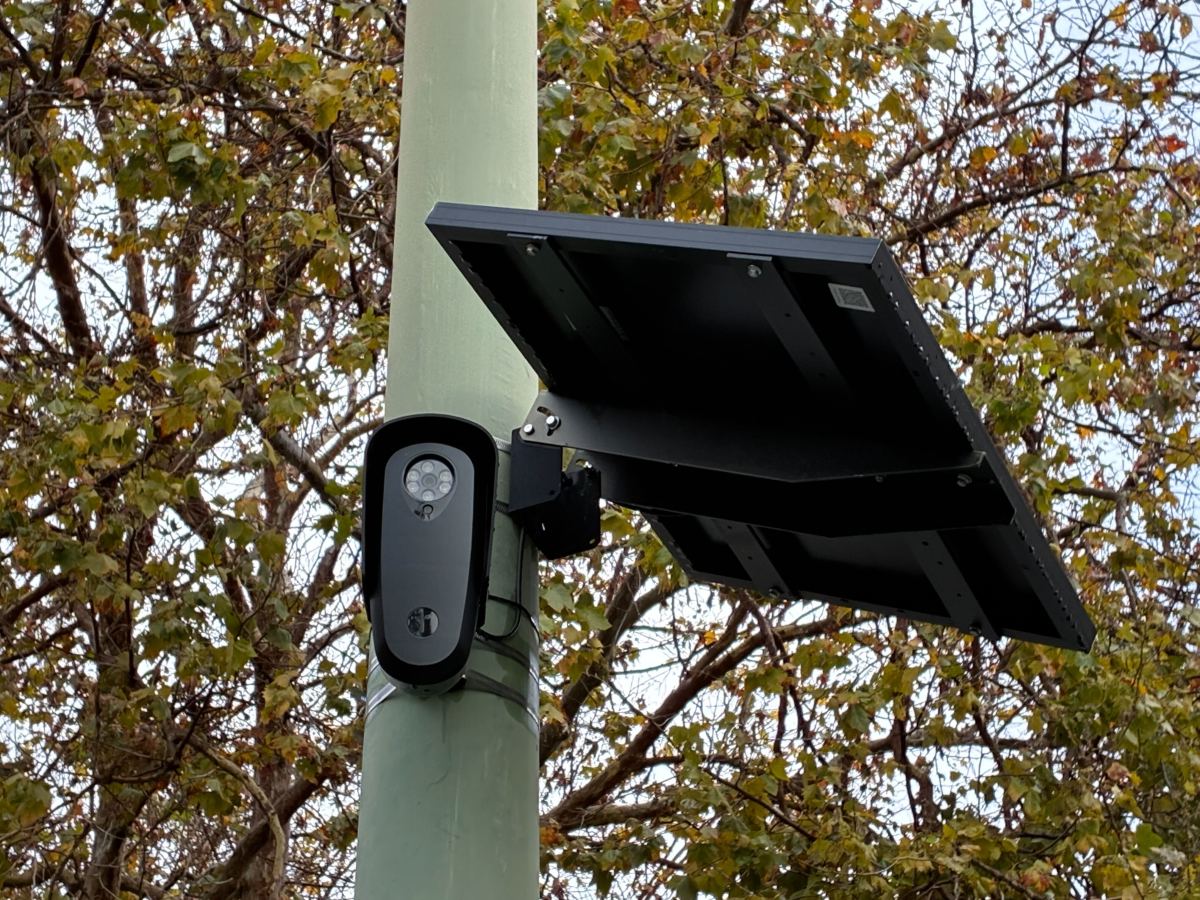
What are Flock cameras, and why are they controversial in Oakland?
November 20, 2025Dec. 19, 2025, 10:55 a.m.
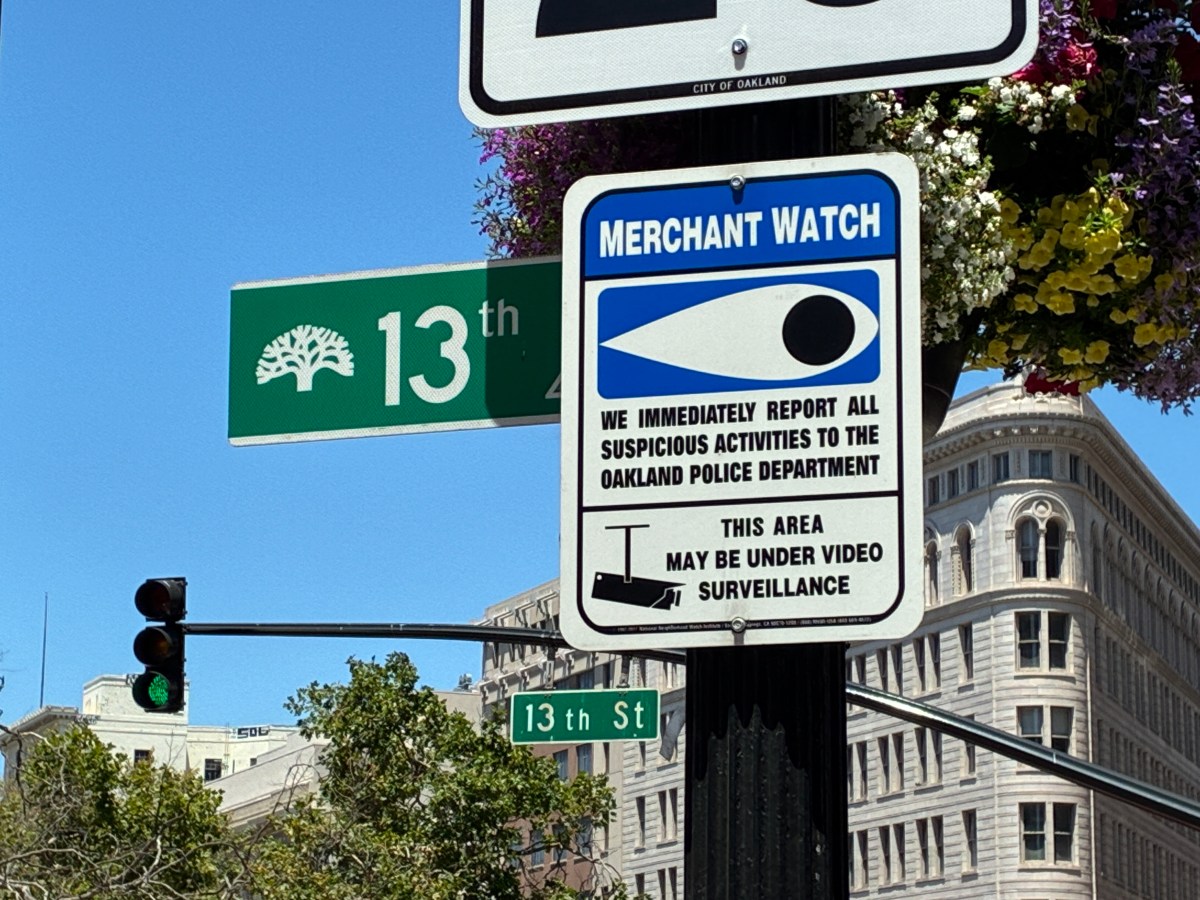
Oakland privacy commission doesn’t want Flock surveillance system expanded
October 6, 2025Oct. 6, 2025, 4:20 p.m.

Who is paint bombing Oakland’s Flock cameras?
April 24, 2026April 24, 2026, 4:27 p.m.
“*” indicates required fields