

Make better investment decisions with Simply Wall St’s easy, visual tools that give you a competitive edge.
California regulators have approved changes to the state carbon market that provide up to US$4b in additional free emissions allowances to oil refiners.
Valero Energy (NYSE:VLO) is among the refiners affected by these new allowances, which are intended to reduce regulatory compliance costs.
The rule changes affect refiners operating in California, a key state for fuel demand and environmental regulation.
For Valero Energy, a major independent refiner and ethanol producer, the new California carbon market rules reshape how emissions costs are allocated in one of its more heavily regulated operating regions. Free allowances can influence the effective cost of producing transportation fuels in the state, which is important if you track how environmental policy feeds into refining margins and capital planning. The move also highlights how policy risk and regulatory design remain central considerations for NYSE:VLO.
For investors looking at refiner exposure to California, the new allowance pool is a fresh input when assessing long term cost structures and potential capital needs tied to emissions compliance. It also adds another policy variable to watch alongside fuel standards and other climate rules, since future adjustments to allowances or program design could shift the balance of costs again.
Stay updated on the most important news stories for Valero Energy by adding it to your watchlist or portfolio. Alternatively, explore our Community to discover new perspectives on Valero Energy.
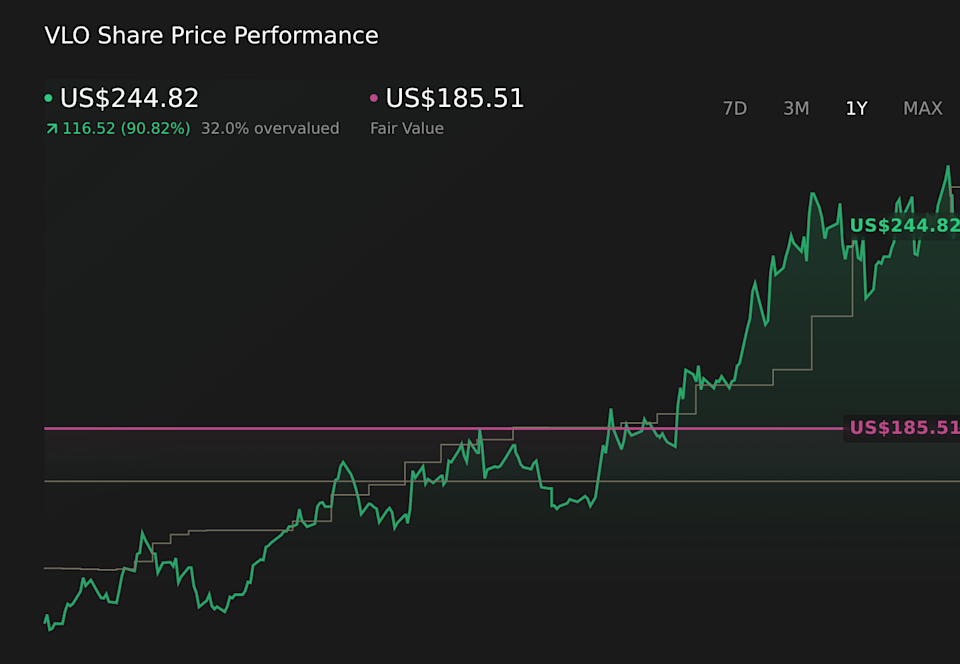 NYSE:VLO 1-Year Stock Price Chart
The revised California Cap-and-Invest rules matter for you as a Valero Energy shareholder because they change how a key cost item is shared between refiners and consumers. Additional free allowances, potentially worth part of a US$4b pool for the sector, can reduce direct outlays for compliance in the near term and may ease pressure on refinery-level cash flows tied to California operations. At the same time, the program is still designed to cap emissions, so this looks more like a rebalancing of who pays and when, rather than a removal of regulatory pressure. The roughly US$800m earmarked to limit pass through to the pump also signals that regulators are watching fuel prices closely, which can influence how much cost relief ultimately reaches refiners such as Valero compared with peers like Marathon Petroleum and Phillips 66. For investors, the key takeaway is that policy and legal design continue to be an active swing factor for refining economics on the US West Coast.
How This Fits Into The Valero Energy Narrative
The extra free allowances can support themes around capital discipline and cash generation in existing narratives, because lower out of pocket carbon costs may help preserve funds for refinery projects and shareholder returns.
At the same time, the rule tweaks underline the regulatory uncertainties already highlighted in the narrative, since future revisions to the carbon market or other climate policies could reintroduce higher compliance costs.
The explicit focus on limiting consumer fuel price impacts may not be fully reflected in prior assumptions, and could affect how much pricing power Valero can exert in California compared with what older narratives assume.
Knowing what a company is worth starts with understanding its story. Check out one of the top narratives in the Simply Wall St Community for Valero Energy to help decide what it’s worth to you.
The Risks and Rewards Investors Should Consider
⚠️ California could revisit allowance levels or tighten rules again, which would raise future compliance costs for Valero and other refiners if policy priorities shift.
⚠️ Ongoing regulatory and legal scrutiny of emissions and fuel prices increases the risk of further obligations, fines, or operating constraints tied to West Coast refining.
🎁 Additional free allowances can lower cash outflows tied to emissions in the near term, which may support financial flexibility for refinery projects or balance sheet priorities.
🎁 Clearer carbon program rules give investors more visibility on one component of Valero’s cost base in California, which can help when comparing it with other US refiners.
What To Watch Going Forward
From here, watch how California allocates the new allowances between individual refineries, and whether future program reviews hint at a tighter cap or fewer free credits. Keep an eye on how Valero discusses California exposure on earnings calls, including any commentary on emissions-related capital spending, refinery utilization, or decisions about long term presence in the state. Comparing those comments with disclosures from peers like Marathon Petroleum and Phillips 66 can help you judge whether Valero is better or worse positioned under the revised rules. Any further legal or policy moves around fuel prices, such as additional consumer protections, are also worth tracking because they can influence how much of the carbon cost refiners ultimately bear.
To ensure you’re always in the loop on how the latest news impacts the investment narrative for Valero Energy, head to the community page for Valero Energy to never miss an update on the top community narratives.
This article by Simply Wall St is general in nature. We provide commentary based on historical data and analyst forecasts only using an unbiased methodology and our articles are not intended to be financial advice. It does not constitute a recommendation to buy or sell any stock, and does not take account of your objectives, or your financial situation. We aim to bring you long-term focused analysis driven by fundamental data. Note that our analysis may not factor in the latest price-sensitive company announcements or qualitative material. Simply Wall St has no position in any stocks mentioned.
Companies discussed in this article include VLO.
Have feedback on this article? Concerned about the content? Get in touch with us directly. Alternatively, email editorial-team@simplywallst.com