
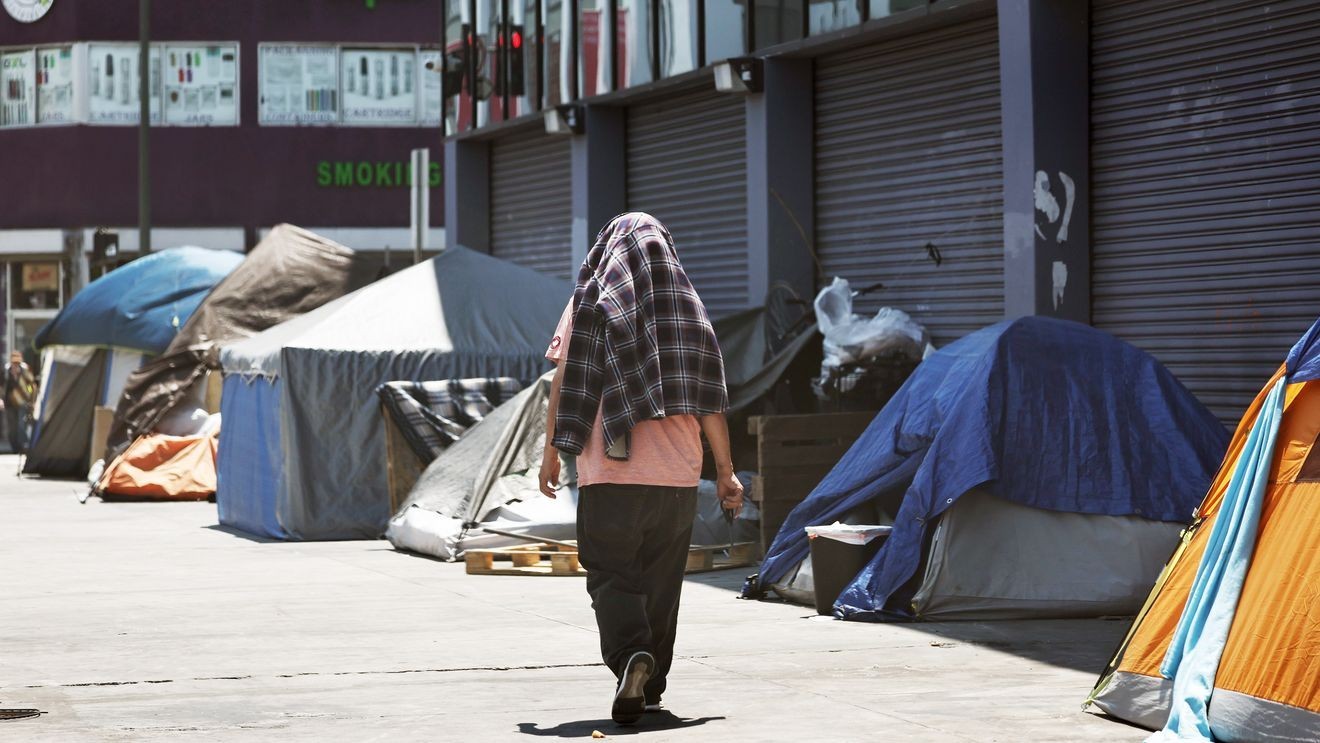
(TNND) — Despite a small annual drop in homelessness, Housing and Urban Development Secretary Scott Turner focused on a 27% increase over the last dozen years, blaming the rise on “housing first” policies that he said have failed.
“HUD is restoring its programs to advance recovery and self-sufficiency and to ensure that taxpayer-funded benefits serve American families,” Turner said in a news release as his department released its annual report on homelessness in America.
The report is based on a point-in-time count of the homeless population from January 2025. That count found 745,652 people were homeless, including 266,320 people living on the streets.
That marked a 3% decrease since 2024 when homelessness reached a record high in the U.S.
Twenty-two states and Washington, D.C., saw decreases in their homeless populations between 2024 and 2025. HUD said that New York and Illinois accounted for the largest decreases nationwide, by 12,500 and 11,300, respectively.
Both New York City and Chicago had previously received a crush of asylum-seekers. Meanwhile, HUD noted that both New York and Illinois saw large increases in homelessness in 2024.
HUD said the sharp rise and fall of homelessness in both states over the last couple of years was driven in part by changes in immigration, though the Trump administration immigration crackdown was just getting underway when the point-in-time count for the new report was being conducted.
Most homeless people included in the latest count, 56%, were staying in emergency shelters, according to HUD.
Over a third were unsheltered, and another 8% were in transitional housing programs.
The number of homeless veterans has declined steadily over the years, down 56% since the data were first reported in 2009. But the number of homeless veterans dropped by just 1% last year.
Last year, nearly a fifth of homeless people were kids under the age of 18, and another 7% were young adults between the ages of 18 and 24.
Recovery advocate Tom Wolf didn’t dispute HUD’s assertion that immigration declines in so-called sanctuary cities were a key driver in the overall 3% decline in homelessness in 2025.
But Wolf also said the outsized effect of drug overdose deaths amongst the homeless population was likely a factor.
And he, like HUD Secretary Turner, focused on the increase in homelessness that’s occurred over a longer period of time.
The 3% drop is “pretty negligible, really, in the grand scheme of things,” Wolf said.
“The bigger picture here is that, look, since 2013, homelessness went up 27% in the country,” Wolf said. “So, we can focus on this 3% decline and the reasons why HUD is suggesting that there’s a 3% decline or look at the much more alarming figure … which is that homelessness has gone up in the last 12 years, 27% in the United States. And we need to be asking why that is.”
The HUD secretary placed the blame on “housing first” policies, writing in an opinion article for The Hill that the “well-intentioned effort became an orthodoxy that treated free housing as the answer, even when the underlying causes, such as addiction, severe mental illness, or job loss, remained unaddressed.”
Turner said HUD began mandating adherence to “housing first” approaches in 2013, thus the long-term comparisons using that year.
Since 2013, chronic homelessness increased 81%, and taxpayer-funded beds increased 151%, according to HUD.
Wolf said the “housing first” approach is meant to reduce barriers for getting homeless people housed and off the streets.
But he said the model has largely failed for homeless people struggling with substance abuse.
“That low-barrier process means that they’ve kind of relaxed on some of the background checks,” Wolf said. “They relax on previous evictions on your record, they relax on whether or not you have a substance use disorder, they relax on whether you have mental illness. And the idea is, is that we’re going to place you in a room or in an apartment, and that’s going to stabilize you and make it easier for you to address those other issues. The problem that ‘housing first’ ran into is that ‘housing first’ does not work for people struggling with substance use disorder, with drug addiction. Because if you take someone off the street who’s a drug addict and you place them in a room with four walls, you’ve now isolated that individual. And that’s the most dangerous thing that you can do to someone struggling with addiction, because now they’re using their drugs alone.”
Wolf, who lives in San Francisco, said about 30% of drug overdoses in his city last year happened inside permanent supportive housing.
And the advent of fentanyl has made the “housing first” approach all the more dangerous, he said.
Wolf has lived the life of a homeless addict and emerged from the other side to push for change. He’s now the director of West Coast initiatives for the Foundation for Drug Policy Solutions and the director of city partnerships for Sunflower Sober.
Treatment services are available to homeless addicts through “housing first” models, but the services are voluntary.
Wolf said homeless addicts need to be incentivized to get help, so they can kick the drugs and get their lives back on track.
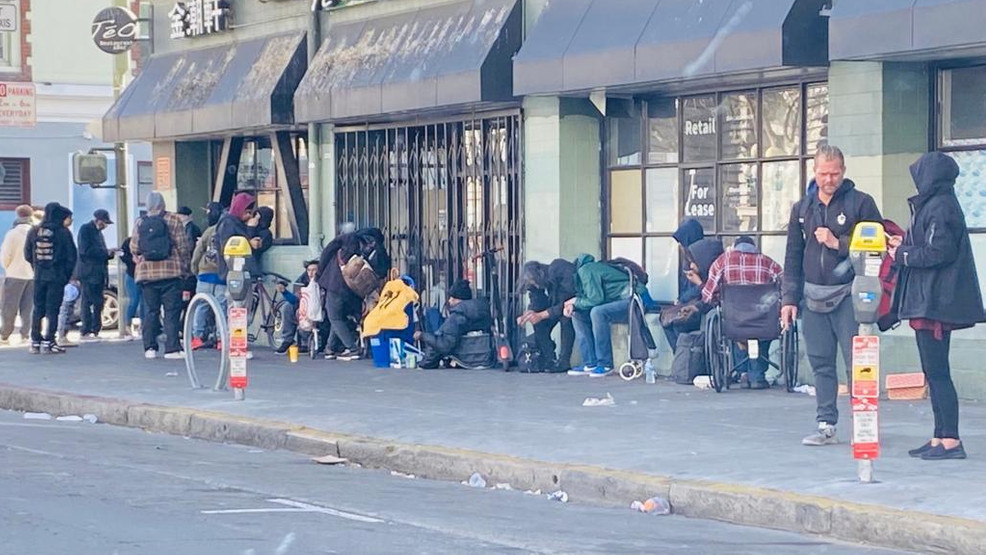
FILE – Drug sales and usage are widespread problems on the streets of San Francisco, with tent encampments lining some streets, recovery advocate Tom Wolf says. (Photo provided by Tom Wolf)
President Donald Trump signed an executive order last summer intended to get homeless people off the streets and homeless addicts into drug-treatment programs.
The HUD secretary said in his op-ed that his department is refocusing homelessness efforts on “outcomes, accountability and self-sufficiency” in the spirit of Trump’s order.
And he said HUD will prioritize programs with federal dollars that “restore a balanced approach and demonstrate measurable results in treatment, employment and long-term stability.”
Wolf said some cities are going to resist HUD’s shift away from the “housing first” approach. But he said that San Francisco is absolutely pivoting their model to be more in line with what HUD is seeking.
In the last year and a half, San Francisco has invested in over 600 drug-free beds for homeless people and has been dedicating a greater share of future funding for drug-free recovery housing, Wolf said.
Wolf said that Hope House, San Francisco’s first city-funded clean-and-sober shelter, is full and even has a waiting list, despite critics predicting that people struggling with addiction wouldn’t want to use it.
“And it just proves that if you create incentives for people, they’ll take action,” Wolf said. “Because nobody on the street really wants to be homeless.”