
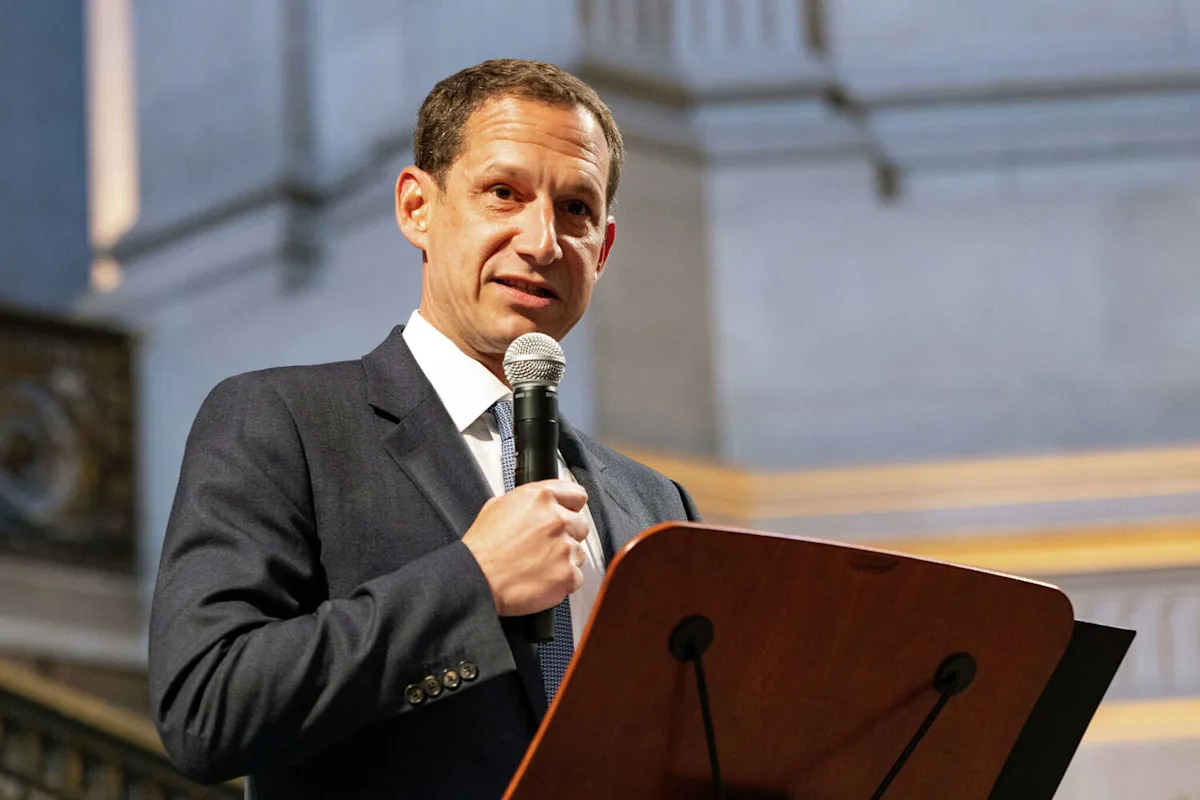
Mayor Daniel Lurie on Monday proposed a nearly $17 billion San Francisco budget plan that would cut hundreds of jobs from the city payroll while mostly avoiding the deeper layoffs that advocates feared in the wake of those his administration implemented two months ago.
Lurie’s office said the mayor’s latest two-year spending proposal would eliminate 550 positions from City Hall’s workforce of about 33,000 employees. Most of the roles on the chopping block are vacant: His office said the figure included the 127 layoffs the city initiated in April, and only a handful of additional filled jobs are slated to be cut, pending legislative approval.The previous layoffs already elicited outrage from public-sector unions, who are also at odds with Lurie over a business tax measure on the ballot in Tuesday’s election.
Lurie said his budget blueprint, which must now be vetted by the Board of Supervisors, would shave $300 million off the city’s recurring deficits, narrowing an ongoing shortfall that had previously been projected to reach $1 billion in the coming years.
“This administration has worked to minimize impacts for city workers while safeguarding San Francisco’s long-term financial health,” Lurie said in a speech about his budget proposal.
The mayor’s proposal for $16.9 billion in spending next fiscal year – up about $1 billion from the current budget – would reduce San Francisco’s yearly staffing costs by $130 million by focusing city hiring only on filling jobs that relate to “core services,” Lurie’s office said in a news release. Lurie found another $80 million in savings through “reorganization and attrition” expected by his administration.
In Lurie’s official budget proposal document, the mayor’s office said that those savings would be fleshed out after city departments develop plans to lower staffing expenses by “limiting management structures and span of control, improving workflow processes, and exploring shared service models.” The plans are expected to be implemented in the second year of the budget.
“In San Francisco, we are proving that common sense and discipline can drive a broad economic recovery,” Lurie said in his speech.
Monday’s plan outlined by Lurie would close a projected $607 million two-year deficit, a process that the mayor has long said was particularly difficult this year.
In December, Lurie’s office told City Hall departments to submit proposals that would achieve $400 million in permanent spending reductions from the general fund. Three months later, he warned departments that at least 500 jobs were slated for elimination, and in April he laid off 127 city employees.
Lurie’s budget proposal last year originally sought to cut about 100 filled jobs, but supervisors were able to trim the layoffs down to about 40 after negotiating a deal with the mayor.
Lurie said this year that he’s trying to not only close the immediate deficit but also reduce the recurring shortfalls that have plagued city finances for years. San Francisco’s expenses, including labor costs, have been rising faster than its tax revenue, which is dragged down by a slow economic recovery from the pandemic. The city controller has estimated that the annual budget gap could balloon to $1 billion by the 2030 fiscal year if no action is taken.
Lurie last year made progress on reducing the structural deficit, but cuts to federal health and food stamp programs implemented by the Trump administration worsened the fiscal outlook, accounting for about half of the two-year shortfall.
Still, the mayor said he remained committed to getting the city’s finances in order. He told a group of small business owners on Thursday that he had made “painful, painful choices” in the spending plan as he sought to “set up this city for financial success five years out from now.” Lurie told the crowd gathered at a downtown bar that he was “done with the short-term thinking” that he said was “what got us into this fiscal crisis.”
He reiterated that message in his speech Monday, saying that when he came into office, the city had been using too many temporary funding sources to patch over an ongoing deficit, thereby “leaving the bill for someone else to pay.”
“That wasn’t sustainable. And it wasn’t fair to the taxpayers and the people who depend on city services,” Lurie said. “Under my administration, we will not fall back on temporary fixes that force deeper cuts year after year.”
Even before Lurie proposed the budget, he was already getting pushback from labor unions and nonprofits that were bracing for him to seek cuts to city services and possibly more layoffs. Union leaders decried his administration’s plan to close some community health clinics, and they also urged him not to make deeper reductions to the city workforce. Advocates for seniors, people with disabilities and other vulnerable groups also sounded the alarm in recent months, citing proposals that City Hall departments had submitted to the mayor’s office.
The People’s Budget Coalition, a group that represents labor and community groups, said in a statement Monday morning that it was anticipating that the budget would make deep cuts to city services.
“Mayor Lurie says we need to make ‘hard choices,'” the coalition said. “But balancing the budget on the backs of working-class residents has become too easy for this administration.”
Next, city supervisors will consider the mayor’s proposal over the month of June. Supervisors will be able to make tweaks and negotiate with the mayor’s office as they hear from constituents and community groups. The full board is required to approve the budget by Aug. 1.
Lurie’s budget would pay for new contracts that his administration recently agreed to give 14% raises to both police officers and firefighters over the next four years. Some experts have questioned whether the city can afford to continue granting such generous raises while resolving its deficits, but Lurie said Monday that his budget plan was funding “responsible labor agreements” for firefighters and police officers that would help San Francisco “recruit the next generation of first responders.”
Unions representing even more of the city workforce have contracts expiring next year, and they will very likely be seeking pay bumps as well.
The mayor said his spending plan would also finance a $20 million investment in new equipment for the police and fire departments. He said the city would pay $71 million for pothole repairs and other street safety and cleanliness projects.
Lurie took steps to shield some parts of the city’s safety net and social service programs before he announced his spending plan. He pledged to allocate $34 million in reserves to maintain local enrollment in food stamps and Medi-Cal despite the Trump-led funding cuts. He also vowed not to slash legal services for immigrants, and he staved off planned cuts to several organizations that serve LGBTQ people.
Additionally, he said he would create a $98 million reserve to protect homeless services from state and federal funding cuts. To do so, the mayor intends to tap into a dedicated city fund for homelessness spending that’s awash with cash.
Lurie’s office said Monday that his budget plan included $120 million intended to help prevent people from becoming homeless, including by paying for legal services, case management and rent subsidies. The proposal also added $90 million to help get more people into emergency housing, according to the mayor’s office.
“No one outside San Francisco is coming to save us,” Lurie said. “We’re going to do it ourselves with the resources we have.”
This is a developing story. Check back for updates.
Subscribe
There’s more to San Francisco with the Chronicle. Subscribe today for just 25¢.
This article originally published at Mayor Lurie avoids mass layoffs as S.F. budget reaches record $16.9 billion.