
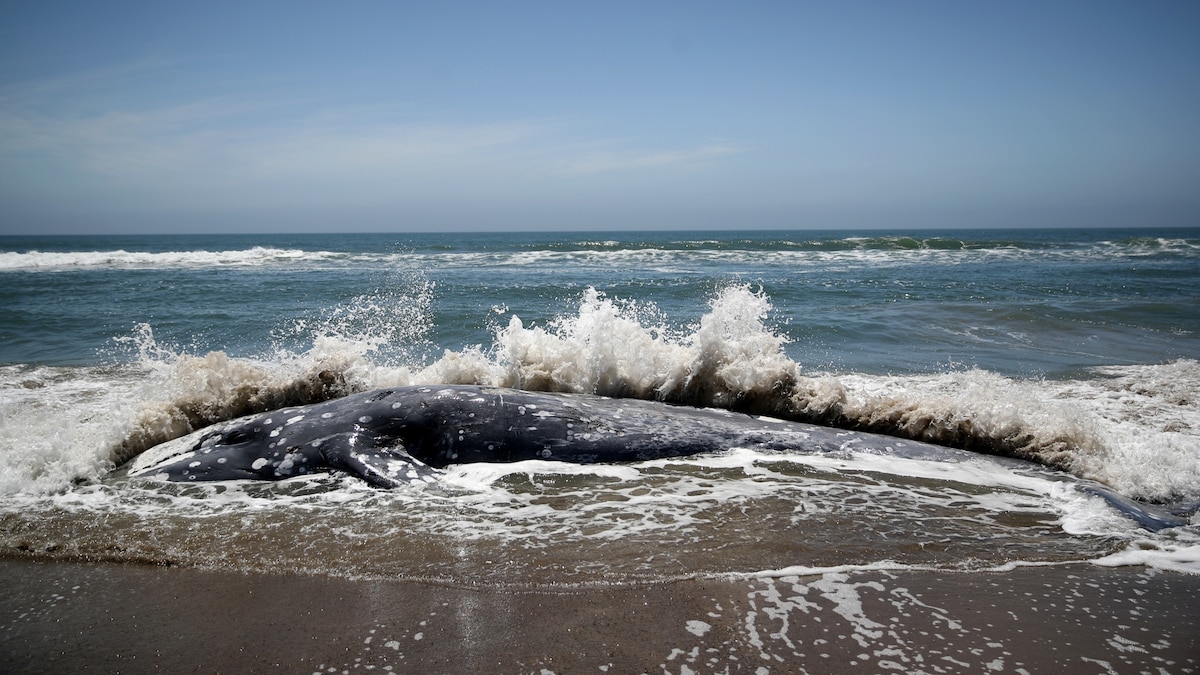
In many places, ships are asked or required to reduce their speed to 10 knots—that’s about 11 mph—in areas where whales are present. (Gray whales typically swim at half that speed.) However, this alone hasn’t stopped whales from being struck by ships. That’s why in San Francisco, the Coast Guard’s Vessel Traffic Service will often alert captains via radio when they are approaching a whale. But their network of spotters can’t cover the entire bay, and they only work 12 hours a day. That’s where the new technology comes in.
Having a whale spotting device atop Angel Island will be game-changing, says Gary Reed, director of the Vessel Traffic Service in San Francisco. “It’s like an extra set of eyes… We did great 12 hours a day, but now we can do 24.”
“It’s very promising,” adds Anna Nisi, a wildlife ecologist at the University of Washington, who wasn’t involved with the new tech. She notes that whale-spotting cameras should not replace existing measures such as vessel speed limits, which can further eliminate strikes. Nevertheless, “whale detection technology is a really useful new tool in the toolbox.”
Back on Angel Island, within hours of being turned on, the thermal camera had detected dozens of spouts—one of which came from the whale swimming by the tanker. Watching from beneath the WhaleSpotter atop Angel Island, Reed turned on his radio and relayed the whale’s position to his team. But his team already knew from monitoring Whale Safe, and they’d alerted the tanker’s captain. They’d also received an alert from a local whale-watching boat.
The whale, it seemed, was in good hands. The ship and the whale parted ways. Hopefully, they will never cross paths again.