
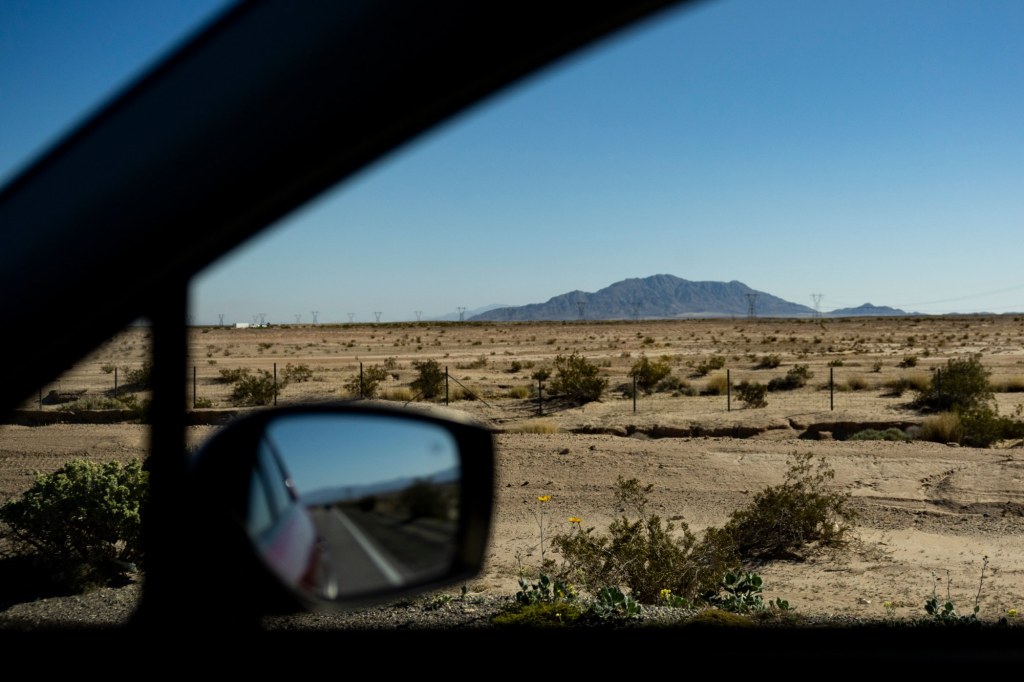
Imperial Valley isn’t on the sidelines of California’s biggest challenges — its residents are living them.
With nearly 200,000 people, 20% of whom live below the poverty line, our region is a concentrated snapshot of what’s at stake for our state: environmental degradation, water scarcity, limited access to health care and the impacts of draconian federal immigration policy. As voters head into today’s primary, we are looking for a governor who will put our communities, not corporate interests, first.
Gov. Gavin Newsom has dubbed Imperial Valley’s Salton Sea the “Saudi Arabia of lithium,” referring to the estimated 18 million tons of lithium carbonate that sits below the region. That lithium is key to powering electric vehicles and transitioning away from fossil fuels. The Salton Sea has been retracting as the climate has become hotter, leaving behind pesticides and fertilizers in toxic dust from the multibillion-dollar local agricultural industry that blow through our communities, contributing to the asthma crisis facing our children. Any lithium development strategy that does not center the health of our people, our environment and the informed consent of our residents can not be supported.
Extracting lithium could provide a transformational boost to our region’s economy. But without strong safeguards, it could also deepen the damage. We are facing a water crisis, and most of our water leaves our valley. Hazardous waste, air pollution, damage to sacred cultural sites and water and energy consumption are real concerns with lithium extraction. For far too long, we have endured this pattern of extraction, where the profits leave but the damage remains. Now the stakes are too high and we have reached a breaking point. The next governor must ensure that any lithium development includes real protections, real accountability, and real investment in environmental restoration.
Imperial Valley depends on the Colorado River, the most endangered river in the country. Proposed data centers tied to artificial intelligence demand enormous amounts of water and energy, resources we simply don’t have to spare. Families already struggling with rising costs shouldn’t have to subsidize massive infrastructure projects through higher utility bills. Our communities have organized against a proposed data center that would consume 750,000 gallons of water a day. We have been speaking. The next governor should be listening.
Health care access is another breaking point. Imperial Valley is a health care desert, served by two financially strained hospitals. Many residents cross the border into Mexico for care. Poverty and stress continue to take a toll on physical and mental health. Meanwhile, aggressive immigration enforcement has made some people afraid to seek care at all, worsening public health outcomes. California cannot claim leadership while regions like ours are left behind. We need bold action to expand access to affordable, quality care.
And then there’s the heat. In a typical year, there are more than 120 days with temperatures exceeding 95 degrees. Workers are heat stressed in the fields. Families live in homes without adequate cooling. This is not a future climate doomsday scenario. This is every summer, right now, for the 200,000 people who live here — a public health emergency that is worsening with the global climate crisis and exacerbated even further by an onslaught of irresponsible development. Climate policy must reflect this urgency.
Imperial Valley is on the front lines of California’s future. The decisions made by the next governor on lithium, water, health care and climate will shape not just our region, but the entire state. We need leadership that sees us, listens to us and fights for us.
Latinos make up nearly 40% of California’s population and 8.5 million eligible voters. We will help decide who the next governor is.
Imperial Valley has absorbed the costs of California’s progress for generations without sharing in its promise. The next governor must find the solutions here. The place where all these issues converge and are waiting to be solved. How California treats this community, its water, its land and its people will set the terms for every community that comes after us. Sacrifice zones do not stay contained. They grow. They multiply. A state that makes a habit of them will eventually find there is nothing left to sacrifice because what begins as acceptable loss eventually becomes systemic collapse.
Flores is the executive director of Imperial Valley Equity and Justice, a nonprofit organization that works for social and environmental equality. She is from Calexico.