
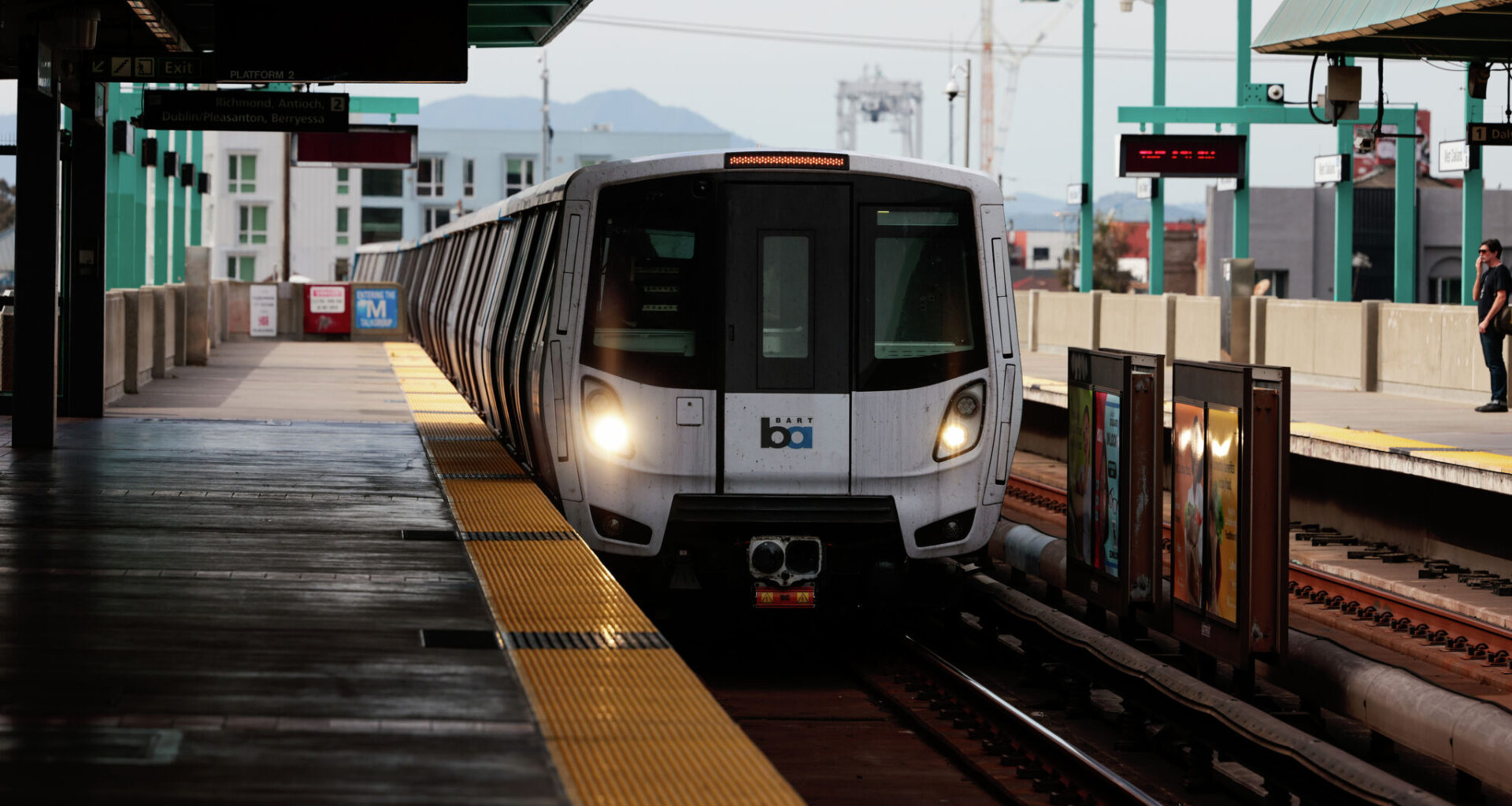
BART is relying on a vote in November to ensure its future is financially viable.
Yalonda M. James/S.F. Chronicle
Bay Area voters made one thing resoundingly clear during Tuesday’s election: They do not like new taxes.
This does not bode well for BART and Muni in November.
Article continues below this ad
In Contra Costa County, voters were poised to quash a sales tax that would offset federal cuts to medical care. El Cerrito residents torpedoed a parcel tax for a library. A property tax measure in Oakland to fund emergency services and help for the homeless was trailing on Wednesday. While voters in Brisbane may narrowly renew a parcel tax for the school district, it seemed unlikely their neighbors in Redwood City would rally enough support for a similar school district tax.
Results appeared similarly mixed in Santa Clara County, where, as of Wednesday, the Palo Alto Unified School District parcel tax fell short two-thirds vote it required. In San Francisco, a measure to hike taxes on large companies with high-paid CEOs was lagging on Wednesday but still too close to call.
San Francisco Chronicle Logo
Make us a Preferred Source to get more of our news when you search.
Add Preferred Source
Officials in the transportation world have tried to remain optimistic, pointing to a SMART train sales tax extension that won 70% of the vote in Marin and Sonoma counties. To many observers, it demonstrates not only that residents value transit but that they view SMART as a centerpiece for a new wave of development.
“Is there a strong anti-tax sentiment in the Bay Area? Well, yes,” said John Goodwin, spokesperson for the Metropolitan Transportation Commission. “But just because people are anti-tax, does not mean they are anti-transit.”
Article continues below this ad
Polls that MTC conducted last year show the Connect Bay Area measure — which is still awaiting ballot certification — winning by a healthy margin of 56% across five counties. The proposal would generate a funding reservoir for BART, Muni, Caltrain and AC Transit by raising sales taxes by a half cent in Alameda, Contra Costa, San Mateo and Santa Clara counties and by one cent in San Francisco, where residents will also weigh a parcel tax to fund Muni. Spokespeople for the campaign say the financial predicament of transit has become a raw and captivating topic for people in the Bay Area, many of whom are genuinely anguished by the prospect of service being slashed.
Even so, a sales tax “is a heavy lift,” said former state Sen. Steve Glazer, who frequently criticizes transit agencies — BART in particular — for what he perceives as budget mismanagement. They are seeking bailouts at a moment when people are preoccupied with affordability, Glazer said.
Current attitudes toward taxes put a burden on BART and other agencies “to prove to people that they are fiscally responsible and deserving,” Glazer added. The agencies seem well aware of that mandate. Many have spent the last few months publicizing their efforts to stop fare evasion, freeze vacant positions and deploy technology to operate efficiently.
Still, the run-up to November will be tough. One thing that distinguishes the transit tax from the SMART extension is that Bay Area transit advocates are asking voters to provide a new revenue source, rather than prolong a tax they have already been paying. That makes it more similar to the Oakland tax, which also calls for new funding to boost existing services. It seemed headed toward defeat in a city that is generally liberal and tax-welcoming, observers say, compared with other parts of the Bay Area.
Article continues below this ad
“My takeaway from last night is that the results were mixed, and it is early,” said Cyrus Hall, who served as a field organizer for the Connect Bay Area campaign. He noted that a lot of the more tax-friendly voters hit the polls late, and could swing outcomes as more ballots trickle in. Importantly, he said, the transit tax only requires a majority to pass, since it was rolled out by citizen groups. The measure would have entailed a two-thirds threshold had it been introduced by a government entity.
“We’ve done the right thing here,” Hall said. “We’ve taken what would have been a difficult election and made it manageable.”