
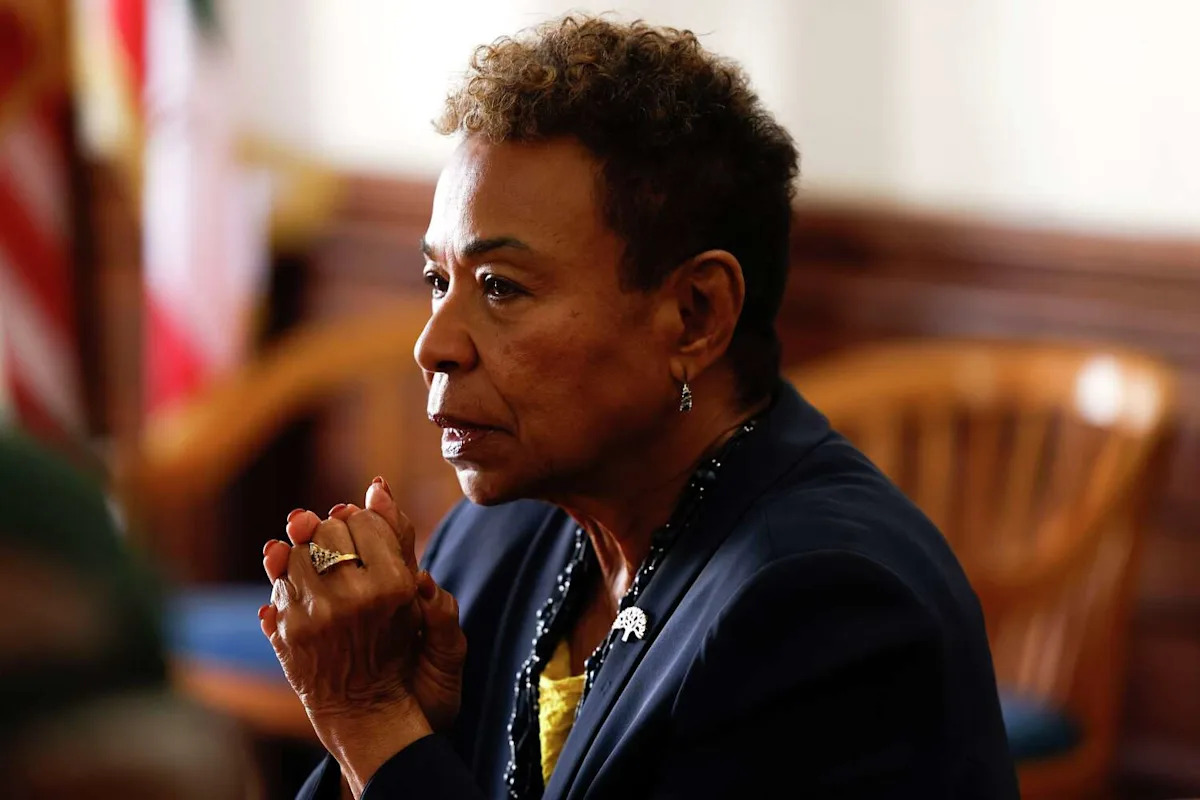
Oakland Mayor Barbara Lee made Measure E a key part of her plan to stabilize Oakland’s finances, make progress on lowering crime and improve city services.
Now, with the parcel tax trailing in early returns, Lee may be forced to govern without the $34 million a year that the measure was expected to raise to help pay for new fire engines, recruiting police officers and reopening homeless beds.
With under half of votes counted as of Wednesday, Measure E faced an uphill battle, with 54% of voters opposing it. To stand a chance of passing, 54% of the remaining votes would need to be in support of the measure, assuming turnout resembles Oakland’s past two June elections.
That’s not impossible. But even so, the lack of a mandate on Measure E makes Lee’s job more difficult. It could be a sign that her personal popularity within Oakland may not be enough to restore trust in the city more broadly. If the measure fails, she could be forced to oversee cuts to city services, which would interrupt the momentum she has sought to build during her first year in office and into the run-up to November, when she will be up for re-election.
Lee, in a statement, said Wednesday, “As always, I trust our voters to make informed decisions for the future of Oakland and to support the best solutions to keep Oakland on the move for our residents and families.”
The next update on the vote count is expected Friday.
Measure E backers had been trying to make the case to voters that Oakland has been moving in the right direction in the last year under Lee. But observers say that the changes may not have been meaningful enough to make voters trust their money would be well-spent.
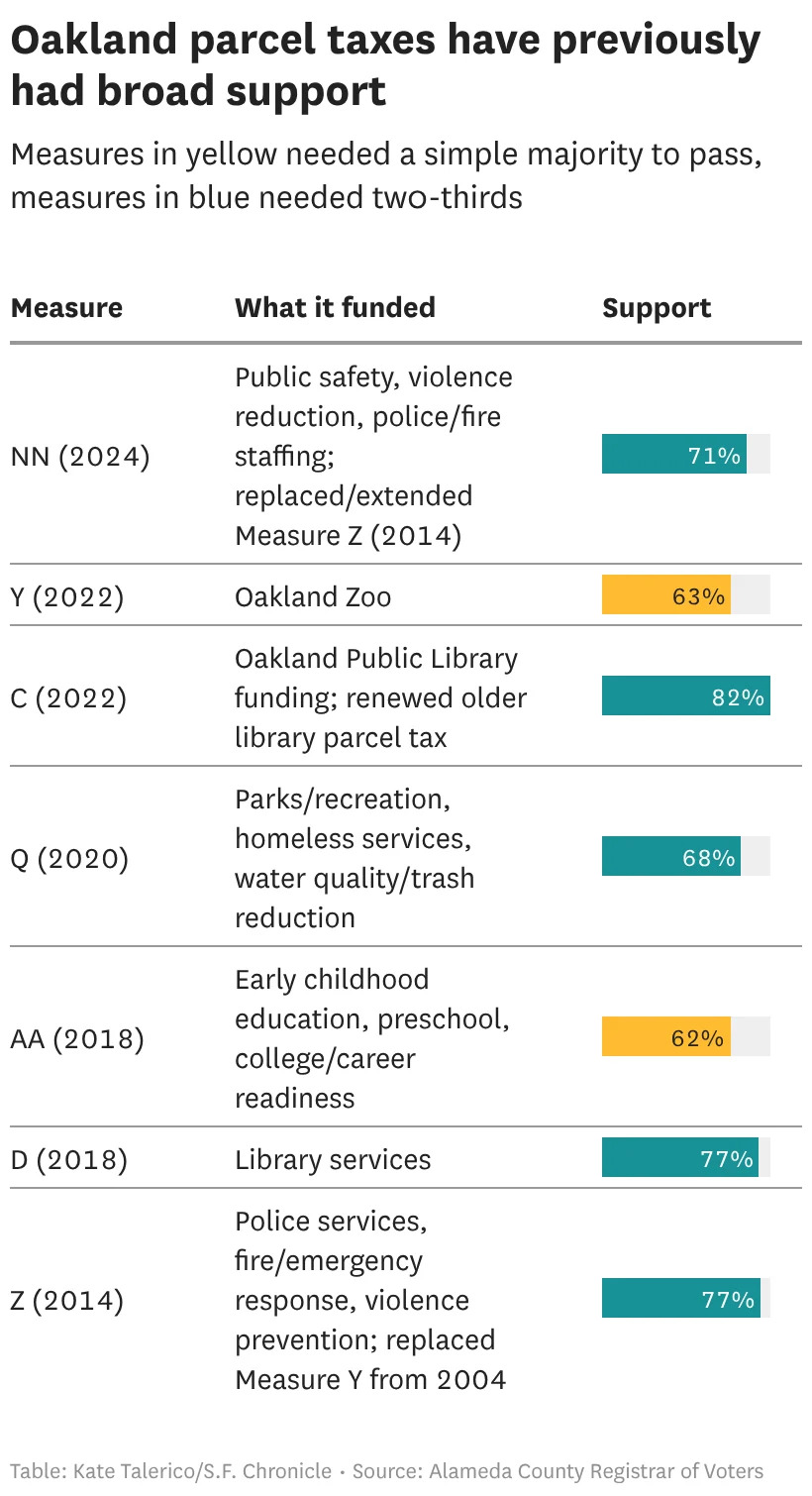
“Oakland residents have stepped up every time the city has asked for a tax increase over the last decade, ” said Jim Ross, a political consultant who has represented progressive candidates and labor unions. “But we’re seeing there’s only so many times they’ll keep doing that if they feel they haven’t seen an improvement in the quality of life.”
Some Measure E opponents say the mere fact that this parcel tax election is so much closer than previous ones is a sign that voters are demanding more accountability from the city on how it spends its money.
“However this count concludes, Oakland has sent a message that cannot be undone by a final tally,” said Loren Taylor, a former city council member and Mayor Barbara Lee’s opponent in the last election, in a statement. “A community this divided on whether to extend trust to its own government is a community demanding to be heard.”
Measure E is on track to draw the lowest level of support for a parcel tax that Oakland has seen in the last decade. Since 2014, voters have signed off on seven parcel taxes.
A parcel tax hasn’t failed in the city since Measure I under Mayor Jean Quan in 2011. The measure needed a two-thirds vote for passage, and garnered only 38% of voters’ support.
It’s possible that voter sentiment may reflect concerns about personal finances more than Oakland’s. After years of inflation that have driven up household costs, voters across the East Bay appeared to reject new taxes. In El Cerrito, 72% of voters rejected a parcel tax to fund new libraries. Early results also showed 53% of Castro Valley voters rejecting a new school bond. The parcel taxes that did pass tended to be for school districts in higher-income areas like Moraga, Walnut Creek and Piedmont.
Oakland’s measure had heavy financial backing on both sides. While city labor interests managed to raise over $1 million, much of that was spent early on for the signature gathering campaign to qualify the measure for the ballot. That left supporters with fewer funds to fight against the attacks that came this spring from groups like the Bridge Association of Realtors, which spent nearly $300,000 in May on ads and text blasts opposing the measure.
Seth Olyer, president of the Oakland firefighters union, one of the measure’s key supporters, said he remains optimistic that the vote will turn in their favor – but he acknowledges that the influx of money from business and real estate interests who fought the tax could be difficult to overcome.
“It takes time to show people why… a parcel tax is necessary,” Olyer said. “It’s really easy to say no.”
Without the new revenue source, the work to regain voters’ trust may be made even more difficult, Ross pointed out.
“It’s a chicken and the egg situation… to make things better, we need more money. But we need to show things are getting better to get voters to say yes to more taxes,” he said. “It’s a cycle that’s really hard to break out of.”
Subscribe
There’s more to San Francisco with the Chronicle. Subscribe today for just 25¢.
This article originally published at A defeat for Oakland’s parcel tax would be bad news for Mayor Barbara Lee.