
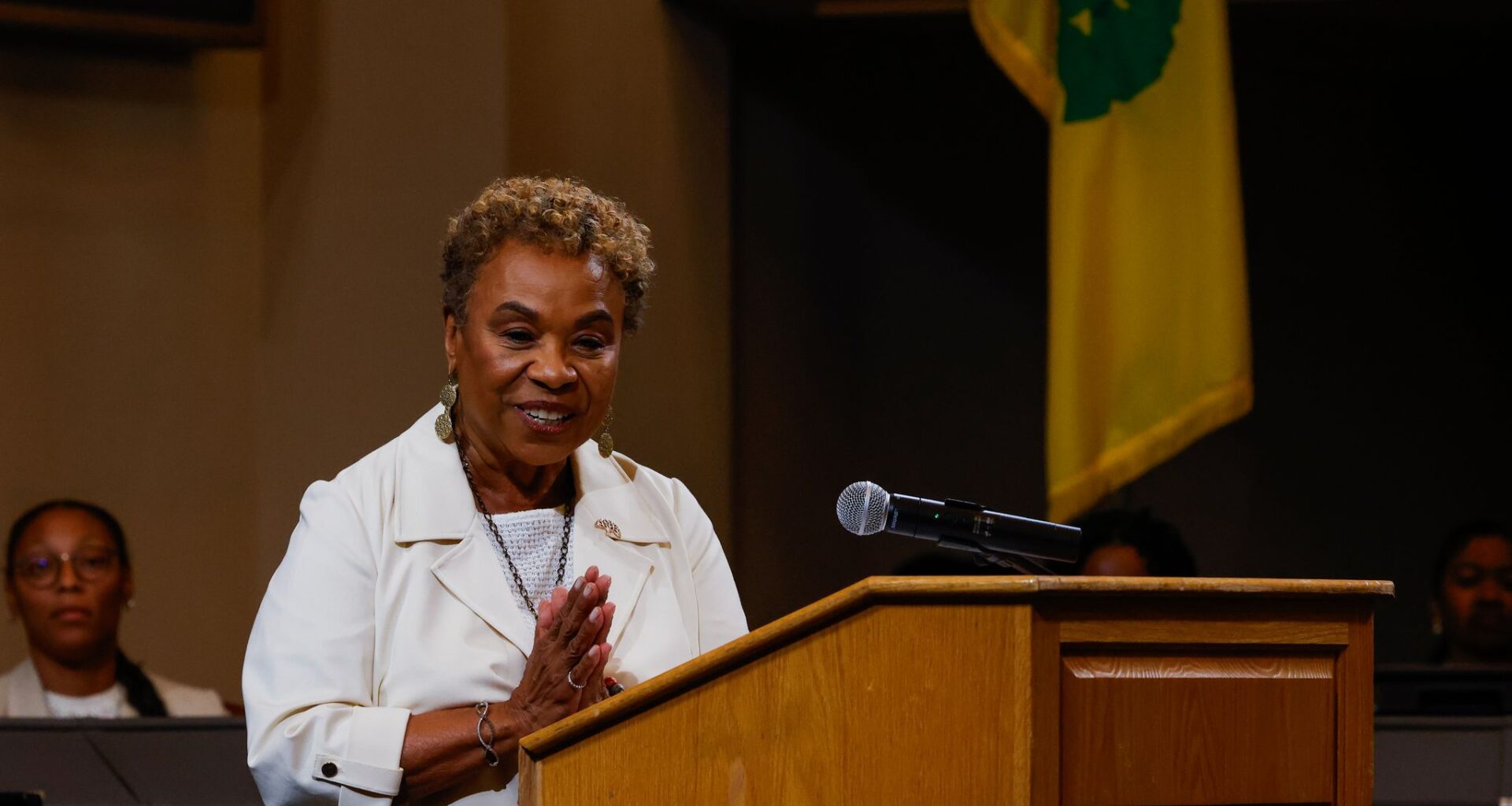
Oakland Mayor Barbara Lee speaks at city council chambers at City Hall in Octbober.
Yalonda M. James/S.F. Chronicle
Oakland voters will decide this November whether to strengthen the powers of Mayor Barbara Lee within City Hall.
On Tuesday, the Oakland City Council voted 5-3 to advance a charter reform measure to the ballot that would expand the mayor’s authority over day-to-day city operations, and give her veto power over council decisions. Council Members Zac Unger, Noel Gallo and Janani Ramachandran opposed the measure.
Lee, who typically doesn’t attend council meetings, made an appearance to advocate for the measure, which she said would ensure “clearer executive leadership, stronger fiscal coordination, and a governance structure where residents can clearly identify who is responsible.”
Article continues below this ad
“Oakland is at a turning point and the status quo needs to change,” Lee said. “Our residents do not have patience for a government that cannot figure out where the buck stops or why the delivery of core services is lacking.”
Under Oakland’s current system, the mayor acts as chief executive and appoints the city administrator, but cannot vote on council matters except to break ties. She proposes a budget, but ultimately the council makes a final decision on it. The city administrator manages city departments and reports to the mayor, yet is also charged with implementing the council’s directives.
San Francisco Chronicle Logo
Make us a Preferred Source to get more of our news when you search.
Add Preferred Source
Lee’s proposal largely would delegate more responsibilities to the mayor — effectively getting rid of the city administrator position and putting the mayor in charge of hiring and firing department heads. It would make Oakland’s system of governance more like San Francisco or Los Angeles.
It also has a few perks for the council: it would require council members to work full-time, which most of them already do, and adjust their salaries accordingly. It would also create an independent budget and legislative analyst office within the council.
Article continues below this ad
Lee pushed back against critics who have called her proposal a “power grab,” saying, “This is not about myself personally.”
Unger, who represents North Oakland, had been trying to bring forward a competing “strong council” measure that would have strengthened the powers of a city manager, as well as given council members greater power to perform constituent services. But that measure failed to gain steam among his colleagues.
“The council members under strong mayor would continue to be the face of futility… and will essentially become shields for all of the failures of the administration,” Unger said. “If council members lose primacy on budgeting, lose primacy on legislation, lose even more juice on constituent services, then what is a council member even for than to act as a punching bag?”
Other council members pointed out that while Lee is generally a trusted figure in Oakland politics, it hasn’t always been this way: Oakland’s previously elected mayor is currently facing federal bribery and corruption charges.
As Council Member Ken Houston put it: “We believe in you, but what about that next person?”
Article continues below this ad
“Democracy works,” Lee responded. “People will vote for who they want as mayor.”
Even if the charter reform passes, council members warned that it won’t solve Oakland’s problems.
“Anyone who thinks that strong mayor or strong council manager is the panacea for what ails us,” Unger said, “is deluding themselves.”