
Open AI plans to expand in California | California Politics 360
Joining us now on California Politics 360 is Chris Lehane, the chief of global affairs for OpenAI. Chris, thank you so much for making time for us. I can’t tell you how excited I am. I finally made it. I’m on with you on 360 after trying this summer, so thanks for having me. Thank you. How does OpenAI’s restructuring agreement, um, benefit California moving forward? Yeah, you know, I think of this, you know, people often talk about win-wins, um, maybe this is *** win, win, win, win. Um, I mean, certainly, you know, *** win for OpenAI in terms of our ability to move forward and help create, you know, what will be one of the biggest nonprofits in history and stay here in California. Um, look, I think it’s *** win for California in terms of it’s the 4th largest economy in the world, something that you’ve covered and talked about *** lot. Um, this helps position California for the next great economic age, the age of intelligence. Third, I think it’s *** win for leaders in California, you know, who really give this some thought, um, and really sought to make sure that they’re gonna keep this company here in California. And fourth, I think it’s *** win for the AI industry and sector. Um, you know, I do think that this is an interesting corporate model for artificial intelligence where you have *** nonprofit that oversees *** public benefits corporation. Which in our view, is basically created *** corporate structure that builds in democracy by design. I mean, to have *** nonprofit overseeing what is going to be *** very powerful technology that’s going to impact all of us, uh, and to have it governed by *** nonprofit, I think is *** really interesting approach. And every time you’ve had big Technological innovations over human history, particularly in the capitalist structure, you’ve had to develop new types of corporate structures to help ensure that the democratic benefits are really distributed and broadly, uh, spread out. And I do think, um, that this is *** structure people will look back upon, uh, as having built in that democracy by design. With the restructuring, the attorney general mentioned that OpenAI is also simultaneously committing to California. Can you provide specifics? I mean, does that mean you are committed here for *** certain number of years or or what that entails? Uh, so, um, look, I’m here in California, you’re here in California. Sam Altman, um, the CEO co-founder, has talked about how much he loves the state and the fact that Open, open the eye will not exist today, but for the fact that it was born here in California. Um, and so I think one of the most important, sort of just moments in, you know, probably the last 12 months, you know, roughly as we were going through the conversations with the California Attorney General Rob Bonta, was *** moment, I guess, maybe *** little bit over 2 weeks ago, um, and the two of them were on *** video like this. Um, and, you know, probably first, they, they had met earlier, but this was really the first, really probably intense comprehensive discussion between the two of them. On specifically the restructuring and, you know, the attorney General as he should, you know, asked Sam about, you know, how he was thinking about California. And Sam, you know, through the video screen, you know, looked the AG in the eye and said, hey, look at, we want to be here, we intend to be here. We’re not gonna be like one of those other companies that has left California, that threat to sue California. Uh, and I think that really then served as the foundation for The memorandum of understanding that was signed between OpenAI and the Attorney general office. Uh, and if you read that document, like the first, I think 4 or 5 sentences, you know, talks about the history of OpenAI in California and the commitment to be here, including, uh, an explicit reference to the fact that following the signing, we’re now in *** position that in fact, be able to expand our operations. I mean, look, in the last year, I’m doing this *** little bit off the top of my head. I think we had over *** billion dollars in direct economic impact on the state. I think over $2 billion. An indirect economic impact, you know, as we stand here today, California is #1 in terms of the number of jobs being generated by AI. #1 in terms of the number of companies in the world. 33 of the top 50 companies are in California. Number one, in terms of talent in AI that exists in the entire world, and OpenAI has sort of been at the center of all of that, and I think the Attorney General understood that. I think Sam understood that. And to me, that is one of the foundational elements of the agreement that we were, we were all able to come together on. Chris, you, you just said not just committing to California but expanding in this state. I mean, can you share any other details? Is that something that could happen soon under this restructuring where that might be in California if it would be beyond the Bay Area? Yeah, so, I mean, there’s, you know, *** time for all seasons. This news will be coming sooner rather than later, uh, not to be, uh, overly enigmatic or elliptical. Uh, but, you know, amongst the things we’ve been looking at is how do we expand our footprint, um, you know, in the state. Um, and, you know, we wanted to make sure we had clarity, certainty, visibility, uh, in terms of the restructuring. The restructuring itself allows us, and this gets *** little bit technical, but just so folks understand. It’ll, it puts us in the position to continue to be able to raise the type of capital and resources that we need to continue to be able to grow and expand the company. And so now with that certainty, we can now move forward with plans that we’ve been developing. To broaden and expand the company specifically here in California. So I’m dancing around that question purposely *** little bit, other than making clear we are going to be expanding here and that announcement will be coming soon. Maybe Ashley, we can come back, maybe break it with you or at least certainly talk about it with you. Um, but, uh, but stay tuned and that should be happening in the near future. Chris, we are. Definitely here for it um on the restructuring, how do you respond to some of the critic concerns that the for-profit entity could end up taking priority over that nonprofit side? If you look at the structure that we’ve put in place, first of all, OpenAI started off as *** nonprofit. It’s been operating as *** nonprofit, and with this restructuring it’s gonna continue. To operate as *** nonprofit. So the nonprofit will oversee everything, including having *** number of board members who will be quote-unquote independent uh board members. But ultimately, the nonprofit has control. I mean, that’s how it is structured. Underneath that is what is called *** public benefits corporation. And I’ll just pause on that for *** second so people understand that’s not *** typical C Corp. Um, and in this country, you know, if *** C corporation goes public through an, an IPO process, you know, their obligation is to prioritize returns for shareholders, understandably given how Corps are structured. Public Benefits Corporation. By the way, I believe California was the first, if not the first, one of the first states to actually pass *** law encouraging, promoting, facilitating the idea of companies doing public benefit corporations because under the law, public benefits corporations can consider the interests of all stakeholders. So obviously, that includes shareholders, but that also includes employees, that includes partners. Includes the broader community. And, you know, at the very beginning of this conversation, you know, I was talking about democracy by design. And that’s really what I am getting at here, which is you have *** nonprofit, that nonprofit has to, you know, the charter is to deliver on the mission, and the mission is to build AGI that benefits all humans. Um, and the PBC is structured so they can consider all different stakeholders in the execution. Of that mission. And so that’s why we really do view this as *** version of democracy by design, and not, when I get to play *** technologist in conversations like this with people like yourself, but in fact, I was *** history major in college and think of myself *** little bit as an amateur historian, the stress on amateur. But if you look at, you know, historically, Um, the role that corporate structures have played, um, in, uh, in technology and within capitalism, right, you go back, you know, 15, 1600s, um, the ability to actually have *** joint stock corporation, you know, allowed for public infrastructure to be built out. Um, you go to the railroads in, um, in Britain. In the 1800s and the ability to build those out so that the public could participate in them was *** function of creating, creating the limited liability corporation. Here in the US, electricity led to public utilities and as we start to think about, you know, the role of AI, which is *** general purpose technology like the wheel, like the combustion engine, like the printing press, like electricity. The role it’s gonna play across society, I do think we need to really consider what those corporate structures are to help guarantee we’re gonna be optimizing its benefits for everyone, uh, from the jobs, to how it gets built into our healthcare, to how it helps education. Uh, and you know, we do believe that the structure that we have put in place and are now moving forward with is really going to help facilitate that. I think that is made possible in part by the fact that California actually created *** public benefits corporation law. I think that if California should be looking at this as an example and model, and we hope others will start to look at this as an example and model. Before I let you go, um, with OpenAI being so involved in the safety discussion around artificial intelligence and with this restructuring in place, I, I wanna get your stance on *** proposed ballot initiative that was recently filed here in California that would set new restrictions on how AI chatbots interact with kids it’s child safety measure. What does this agreement restructuring do for child safety? The child safety was part of the conversations we had with the Attorney General. Um, and that was, you know, I referenced earlier, Sam and, and the AG having *** conversation. The very first one, at least substantive one that I think they had, was actually on child safety, where Sam previewed and really was seeking the input of the Attorney General. On the eventual teen safety plan that we have since announced, and you know, our plan is based on basically 3 or 4 key components. The first is creating something called age gating, um, where we’re going to distinguish between people who are 18 and up and those who are younger. If you are younger than 18, you effectively get moved to an AI model that is in *** sense like *** PG-13 model, right? It’s safe for kids in terms of uh violent images, sexual conversations, self-harm, you know, those types of issues appropriately so, and, and, and, and responsibly so. Um, third, if we can’t identify that age, you know, with *** degree of confidence, That PG 13 or under 18 model is the default, and that’s *** pretty big deal. Like I’m not sure that has really taken place in social media or in AI as of yet. Um, and so if we are not sure you get moved to the sort of the default is under 18. And then the fourth piece is given *** lot of the parental controls, you know, similar to the types of parental controls that. People have gotten used to, you know, with television or other types of media mediums, so that parents can, um, have visibility and access as to how their kids are using the technology. We do think that that’s where, you know, we need to get to as *** general and overall sector. Um, and we certainly supported bills, including some that passed in Sacramento that were along those lines. Um, and as we think forward, you know, specifically, um, In terms of how, how we think about protecting kids, like, I do think that that’s foundational to having *** social license to be able to operate. I do think as we also go forward, you know, we need to be super sensitive to making sure we’re putting those types of guard rails in place versus doing things that may be unintended like effectively banning. Uh, *** technology that is gonna be fundamental to the ability of kids to learn. Um, and one of the great aspects of, um, of some of the AI tools is you, in effect, can create Individualized learning support, tutors, uh, in conjunction with teachers to actually help students. Um, and what that means is, you know, you don’t have to be, uh, you, you know, *** kid going to *** fancy private school gets *** lot of this already. Um, but if you’re going to *** public school and, you know, you’re in parts of Sacramento or you’re, you know, South Central LA or Compton, you should be able to get the same type of education, quality education, you know, as *** kid who can afford to go to that private school. Um, and this technology is going to allow them and I think one of the really cool things that we’re doing nationally is working uh with the American Federation of Teachers, uh, which is the largest teachers union. In the country and really getting their feedback about how we build our tools so that we are really prioritizing how they can be used in an educational context. One of the things we rolled out relatively recently was something called study mode. And study mode is you basically can use flip *** switch so that our tool goes from giving you the answers that you’re asking for to actually working with you to actually solve and answer uh the question. So I was with, uh, I was checking into *** hotel. In Texas recently in Austin, and young woman, uh, behind the counter, you know, how you give your email address when you check into *** hotel. And I gave my open AI email. She jumps up and comes over and gives me this big hug. And I, you know, I wasn’t really sure what was going on. And she went and explained to me that, um, she’d really been having trouble in trigonometry in high school. And, um, you know, her teacher set her up with, um, an open AI tutor that the teacher himself had created. And, um, you know, she went from thinking that she was close to failing to getting *** B or B+. And, you know, she was thrilled by it. Um, that’s obviously *** one-off story. But I do think that’s where, you know, as we think about the kids beast, there’s two sides to this. How are we making sure we’re keeping kids safe? But also, how are we using this technology? And I do think that there’s like *** literacy element to this that’s incredibly important. Chris Lehane, thank you so much for your time.
Open AI plans to expand in California | California Politics 360

Updated: 8:25 AM PST Nov 2, 2025
OpenAI is eyeing an expansion in California. The company’s Chief Global Affairs Officer, Chris Lehane, revealed the development and said an announcement is coming “sooner rather than later” in an interview on California Politics 360. It comes days after the artificial intelligence company announced its restructuring.The company, famous for its online chatbot known as ChatGPT, started out as a nonprofit. Under the reorganization, the company will have a nonprofit side for decision making and a for-profit entity that will allow the company to raise money, secure investors and operate more like a business. The new structure ultimately allows OpenAI to more easily profit off of its artificial intelligence technology. “We’re now in a position that, in fact, we’ll be able to expand our operations,” Lehane said. The company recently signed an agreement with California Attorney General Rob Bonta, who approved of the company’s restructuring. Bonta told reporters Tuesday that in exchange, the company committed to staying in the state and said his office will be monitoring the situation. “We intend to be here. We’re not going to be like one of those other companies that has left California,” Lehane said. When asked if he could share more on the expansion, including what parts of the state that could include, Lehane said, “this news will be coming sooner rather than later.” “Amongst the things we’ve been looking at is how do we expand our footprint? You know, in this state, and we wanted to make sure we had clarity, certainty, visibility, in terms of the restructuring,” Lehane said. “With that certainty, we can now move forward with plans that we’ve been developing to broaden and expand the company, specifically here in California.””Stay tuned,” he said. An expansion would be valuable in California, with Lehane stating that “off the top of his head” the company had over $1 billion in direct economic impact on the state and more than $2 billion indirectly last year. When asked to respond to criticism that OpenAI’s new structure could allow the for-profit side to take priority over the nonprofit, Lehane said the nonprofit will oversee everything and noted OpenAI is becoming a public benefits corporation. “I believe California was the first, if not the first one of the first states to actually pass a law encouraging, promoting, facilitating the idea of companies doing public benefit corporations,” he said. “Under the law, public benefits corporations can consider the interests of all stakeholders. So obviously that includes shareholders, but that also includes employees, that includes partners, that includes the broader community.” Lehane said the nonprofit’s purpose is to carry the company’s mission. “And the mission is to build AGI that benefits all humans,” Lehane said. Lehane also weighed in on a recently proposed ballot initiative in California that would set new rules on how AI chatbots interact with kids. “Child safety was part of the conversations we had with the attorney general,” Lehane said. Lehane said Open AI’s CEO Sam Altman first spoke with Bonta about child safety broadly, which helped develop a teen safety plan the company recently announced. “I do think as we also go forward, we need to be super sensitive to making sure we’re putting those types of guardrails in place versus doing things that may be unintended, like effectively banning, a technology that is going to be fundamental to the ability of kids to learn,” Lehane said. Watch the full interview with Chris Lehane in the video player above. See more coverage of top California stories here | Download our app | Subscribe to our morning newsletter | Find us on YouTube here and subscribe to our channelKCRA 3 Political Director Ashley Zavala reports in-depth coverage of top California politics and policy issues. She is also the host of “California Politics 360.” Get informed each Sunday at 8:30 a.m. on KCRA 3.
SACRAMENTO, Calif. —
OpenAI is eyeing an expansion in California.
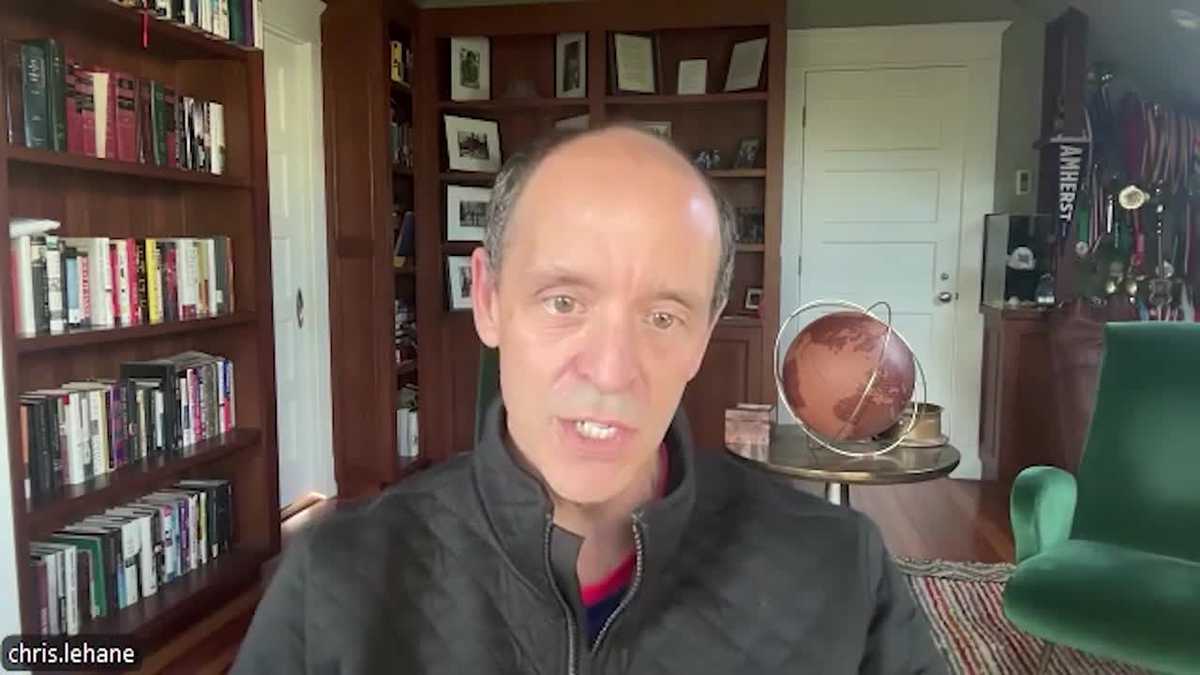
The company’s Chief Global Affairs Officer, Chris Lehane, revealed the development and said an announcement is coming “sooner rather than later” in an interview on California Politics 360. It comes days after the artificial intelligence company announced its restructuring.
The company, famous for its online chatbot known as ChatGPT, started out as a nonprofit. Under the reorganization, the company will have a nonprofit side for decision making and a for-profit entity that will allow the company to raise money, secure investors and operate more like a business. The new structure ultimately allows OpenAI to more easily profit off of its artificial intelligence technology.
“We’re now in a position that, in fact, we’ll be able to expand our operations,” Lehane said.
The company recently signed an agreement with California Attorney General Rob Bonta, who approved of the company’s restructuring. Bonta told reporters Tuesday that in exchange, the company committed to staying in the state and said his office will be monitoring the situation.
“We intend to be here. We’re not going to be like one of those other companies that has left California,” Lehane said.
When asked if he could share more on the expansion, including what parts of the state that could include, Lehane said, “this news will be coming sooner rather than later.”
“Amongst the things we’ve been looking at is how do we expand our footprint? You know, in this state, and we wanted to make sure we had clarity, certainty, visibility, in terms of the restructuring,” Lehane said. “With that certainty, we can now move forward with plans that we’ve been developing to broaden and expand the company, specifically here in California.”
“Stay tuned,” he said.
An expansion would be valuable in California, with Lehane stating that “off the top of his head” the company had over $1 billion in direct economic impact on the state and more than $2 billion indirectly last year.
When asked to respond to criticism that OpenAI’s new structure could allow the for-profit side to take priority over the nonprofit, Lehane said the nonprofit will oversee everything and noted OpenAI is becoming a public benefits corporation.
“I believe California was the first, if not the first one of the first states to actually pass a law encouraging, promoting, facilitating the idea of companies doing public benefit corporations,” he said. “Under the law, public benefits corporations can consider the interests of all stakeholders. So obviously that includes shareholders, but that also includes employees, that includes partners, that includes the broader community.”
Lehane said the nonprofit’s purpose is to carry the company’s mission.
“And the mission is to build AGI [artificial general intelligence] that benefits all humans,” Lehane said.
Lehane also weighed in on a recently proposed ballot initiative in California that would set new rules on how AI chatbots interact with kids.
“Child safety was part of the conversations we had with the attorney general,” Lehane said. Lehane said Open AI’s CEO Sam Altman first spoke with Bonta about child safety broadly, which helped develop a teen safety plan the company recently announced.
“I do think as we also go forward, we need to be super sensitive to making sure we’re putting those types of guardrails in place versus doing things that may be unintended, like effectively banning, a technology that is going to be fundamental to the ability of kids to learn,” Lehane said.
Watch the full interview with Chris Lehane in the video player above.
See more coverage of top California stories here | Download our app | Subscribe to our morning newsletter | Find us on YouTube here and subscribe to our channel
KCRA 3 Political Director Ashley Zavala reports in-depth coverage of top California politics and policy issues. She is also the host of “California Politics 360.” Get informed each Sunday at 8:30 a.m. on KCRA 3.