
Friday’s announcement that Mayor Todd Gloria had backed away from plans to cut city arts funding by $11.8 million in the 2026-27 budget triggered jubilation among the many organizations and individuals who said San Diego’s severe fiscal crisis still didn’t justify such a drastic move. Between $7.35 million in restored city money, a $3 million donation from the Prebys Foundation and possible additional funding from the county government, the arts crisis seems to have abated.
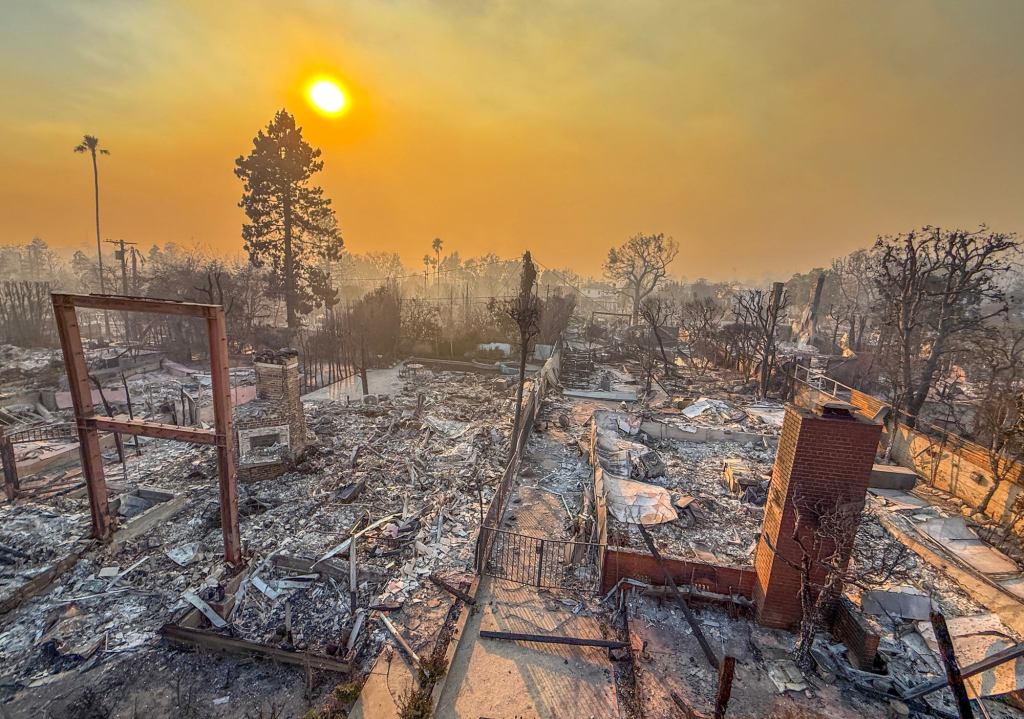
But if you think that $7.35 million in city funds is better spent on arts programs — a relative luxury — than on boosting the effectiveness of urban wildfire prevention efforts — an absolute necessity — a competency test is in order. It’s been 17 months since the Pacific Palisades and Altadena blazes devastated the Los Angeles region, killing at least 30 people, torching more than 18,000 structures and causing at least $28 billion in property damage. Yet there is little evidence that Gloria and the City Council grasp the FEMA-documented similarities between the pre-fire conditions in and near those L.A. communities and those in University City, Rancho Peñasquitos, Scripps Ranch and many other subdivisions built near canyons and forested areas.
This concern led an editorial writer to send emails to the mayor’s staff in May 2025 asking if the city was operating in a “triage” mode — borrowing the concept from emergency medicine — and was using city resources in a way that corresponded to the urgency and severity of the challenges it faced. “Yes, we do believe we are prioritizing fire and life safety over and above all other concerns,” a mayoral aide wrote in response. “The investment in brush management is holding steady in spite of our enormous budget deficit.”
But our subsequent editorial noted that not only was “holding steady in brush management” not nearly good enough, city fire officials warned the previous month that they needed funding for five new positions to beef up wildfire prevention programs on city-owned land.
A year later, nothing has changed. On May 7, the U-T reported that Fire Chief Robert Logan lamented that the positions still hadn’t been funded. But the main focus of the article was far more ominous: an audit that detailed the inadequacy of the city’s efforts to inspect 45,000 parcels that were “the highest-risk properties in the highest-risk areas.” It not only faulted the infrequency of city inspections of these properties, it noted that a recent shift to inspecting properties from public spaces without going on-site is “about 30 times less likely” to catch brush violations than the traditional on-site method.
If a local subdivision burns down, this fact will be the San Diego equivalent of Los Angeles officials being hamstrung in their efforts to contain the Palisades Fire because the nearby Santa Ynez Reservoir — a 117-million-gallon water storage facility — was empty. Why? Officials had dithered in completing needed repairs.
The longer our leaders dither over taking obvious steps to limit extreme urban wildfire risks, the greater the risk of a local catastrophe.
Unfortunately, approaching budget decisions with a focus on preventing death and destruction — instead of appeasing interest groups — may be too much to hope for in a city as blithely and poorly managed as San Diego.