
Nearly 200 years after the Gold Rush, prospectors like Julie Hanson are still searching for gold in California, drawn by the thrill of the hunt and the hope of finding treasure. The Stanislaus National Forest spans nearly 900,000 acres, and for some, its most valuable treasures are hidden beneath the surface. “Back in the 1850s, they were walking around picking the nuggets up off the ground,” Hanson said. Gold can still be found at the Lost Dutchman Italian Bar camp, where Hanson hopes her dreams will materialize. “Oh, I’m always excited. You never know when you are going to pull out your biggest piece. You never, never know,” Hanson said. Hanson makes the two-and-a-half-hour drive from her El Dorado County home almost every week. “It’s the thrill of the hunt,” she said. “Did I tell you it’s a great workout too?” Hanson caught the gold bug by chance in 2018. “I was driving past Coloma one day,” she said. “Walked across the street and saw Marshall Gold and was hooked. Went back, bought a pan, and started hands and pans.” Coloma, located 90 miles from Italian Bar in Placer County, is the site of one of the greatest discoveries in American history, made by James Marshall. “Marshall says, ‘I found the gold 35-40 years downstream from the sawmill. The sawmill was over there, so that puts us right in this area,’” historian Ed Allen said. In 1848, Marshall was in Coloma building a sawmill—a project that would never be completed. Allen said there were an estimated 14,000 non-native people in California when gold was discovered. Two years later, the population boomed to around 220,000. Gold was abundant. The historian said it seemed like every river was full of gold. Mostly young men, averaging 22 years old, came from all over, many leaving home for the first time. “These guys never had a dime in their pockets, and now they are going to get rich. Unfortunately, we figure only about 5% of them got rich,” Allen said. Today, prospectors like Hanson are still searching for gold. While the hope remains to strike it rich, Hanson acknowledges the reality. “The hope is always to get rich. The dream is to get rich, to find that 28-pound nugget somewhere with your metal detector. But what’s the reality? The reality is that it is fun, but you’re not going to get rich,” she said. For Hanson, wealth isn’t just about money. “I just love it. I love being out here. It’s great for stress; it’s great to be out in nature, and then for you to find gold — there’s nothing there not to love,” she said.See more coverage of top California stories here | Download our app | Subscribe to our morning newsletter | Find us on YouTube here and subscribe to our channel | Make KCRA a preferred news source in Google
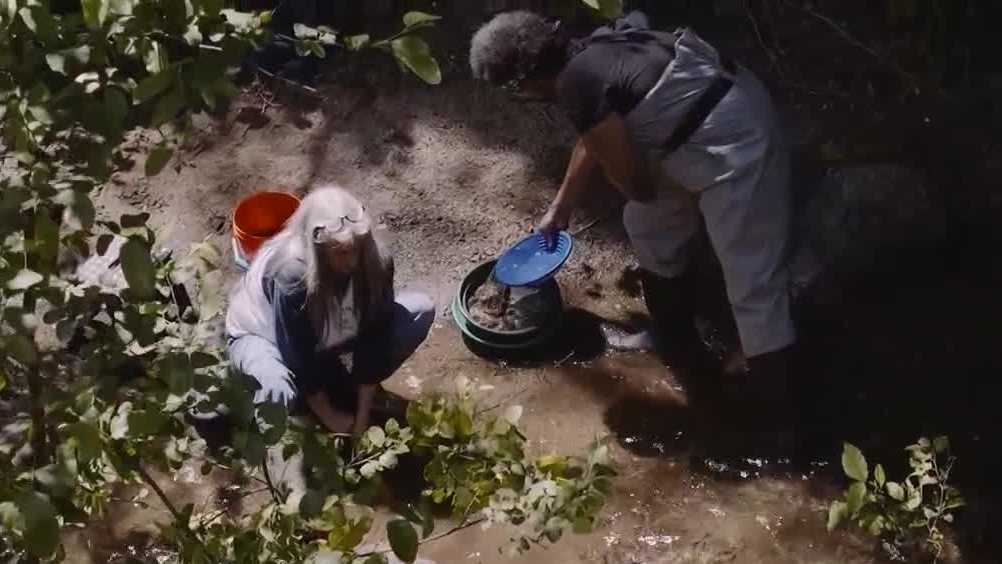
Nearly 200 years after the Gold Rush, prospectors like Julie Hanson are still searching for gold in California, drawn by the thrill of the hunt and the hope of finding treasure.
The Stanislaus National Forest spans nearly 900,000 acres, and for some, its most valuable treasures are hidden beneath the surface.
“Back in the 1850s, they were walking around picking the nuggets up off the ground,” Hanson said.
Gold can still be found at the Lost Dutchman Italian Bar camp, where Hanson hopes her dreams will materialize.
“Oh, I’m always excited. You never know when you are going to pull out your biggest piece. You never, never know,” Hanson said.
Hanson makes the two-and-a-half-hour drive from her El Dorado County home almost every week.
“It’s the thrill of the hunt,” she said. “Did I tell you it’s a great workout too?”
Hanson caught the gold bug by chance in 2018.
“I was driving past Coloma one day,” she said. “Walked across the street and saw Marshall Gold and was hooked. Went back, bought a pan, and started hands and pans.”
Coloma, located 90 miles from Italian Bar in Placer County, is the site of one of the greatest discoveries in American history, made by James Marshall.
“Marshall says, ‘I found the gold 35-40 years downstream from the sawmill. The sawmill was over there, so that puts us right in this area,’” historian Ed Allen said.
In 1848, Marshall was in Coloma building a sawmill—a project that would never be completed. Allen said there were an estimated 14,000 non-native people in California when gold was discovered. Two years later, the population boomed to around 220,000.
Gold was abundant. The historian said it seemed like every river was full of gold.
Mostly young men, averaging 22 years old, came from all over, many leaving home for the first time.
“These guys never had a dime in their pockets, and now they are going to get rich. Unfortunately, we figure only about 5% of them got rich,” Allen said.
Today, prospectors like Hanson are still searching for gold. While the hope remains to strike it rich, Hanson acknowledges the reality.
“The hope is always to get rich. The dream is to get rich, to find that 28-pound nugget somewhere with your metal detector. But what’s the reality? The reality is that it is fun, but you’re not going to get rich,” she said.
For Hanson, wealth isn’t just about money.
“I just love it. I love being out here. It’s great for stress; it’s great to be out in nature, and then for you to find gold — there’s nothing there not to love,” she said.
See more coverage of top California stories here | Download our app | Subscribe to our morning newsletter | Find us on YouTube here and subscribe to our channel | Make KCRA a preferred news source in Google