
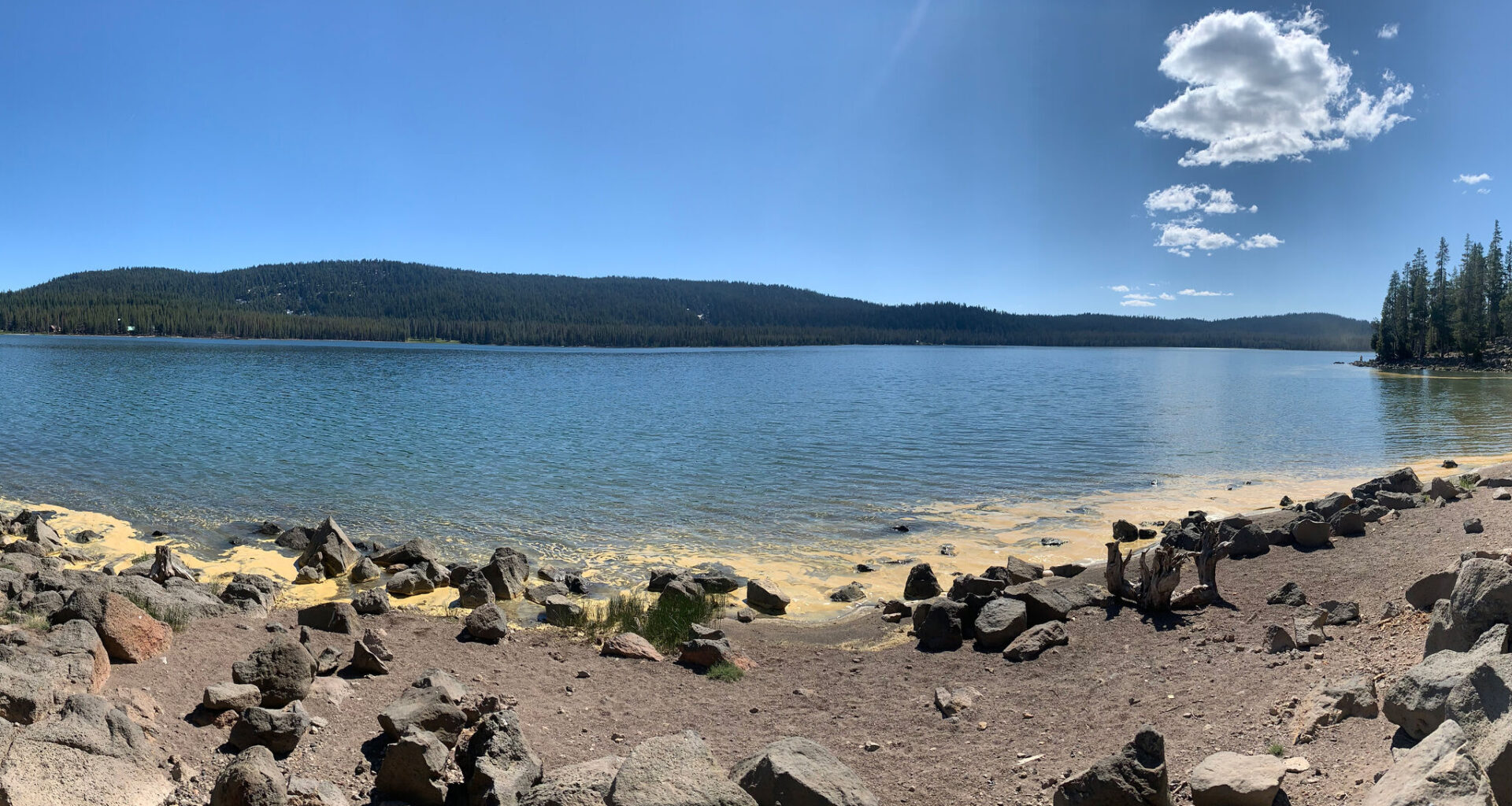
Medicine Lake Sáttitla Highlands National Monument
Courtesy of Heather Bourbeau
Sáttitla Highlands National Monument
Courtesy of Heather Bourbeau
I visited the newly designated Sáttítla Highlands National Monument this June as part of a series of trips I was making to national lands at risk of losing federal protection.
Over the course of 10 months, I traveled to 40 national forests, monuments, parks, and other designated public lands across the Western U.S. I set out to document these lands before they were lost or irrevocably altered. What I learned was just how devastating these losses would be to all Americans.
Sáttítla Highlands encompasses 224,676 acres in Northern California’s Modoc, Shasta-Trinity, and Klamath national forests. Sáttítla — which means “obsidian place” in the Ajumawi language — includes part of the ancestral homelands of the Pit River (Ajumawi–Atsugewi) and Modoc Peoples (Mo Wat Knii–Mo Docknii) and is central to their spiritual beliefs and cultural practices, as well as that of a number of other local tribes, including the Karuk, Klamath, Shasta, Siletz, Wintu and Yana. The ecosystem is also home to bald eagles, black bears, salmon, trout and many threatened, endangered, or rare species of plants, insects and animals, as well as massive underground volcanic aquifers that supply water to millions of people.
Article continues below this ad
President Joe Biden designated Sáttítla Highlands a national monument in January 2025, days before he left office. Nearly four months later, President Donald Trump issued a memorandum pushing to rescind its protected status as a means of combating a national “energy emergency.”
I drove a mostly empty highway to Medicine Lake, in the summit caldera of the Medicine Lake Volcano, which covers an area nearly 10 times that of Washington’s Mount St. Helens. For approximately two decades, the U.S. government has designated much of the land surrounding the lake a Traditional Cultural Property District. That means that the appropriate Native American tribes must be consulted in project and program planning of this sacred site and place of healing, though the designation does not necessarily restrict development on these lands.
San Francisco Chronicle Logo
Make us a Preferred Source to get more of our news when you search.
Add Preferred Source
After parking my car, I hiked briefly into woods that hugged the water. Tiny chipmunk squeals overtook the bird sounds, small periwinkle butterflies and infant moths mixed in the air, and small mammal scat dotted the trail. By the shore of the lake, I spotted a grandmother and granddaughter collecting tadpoles. After I remarked that the water was warm enough for swimming, the grandmother reminded me of how dire and recent our drought years are: Two years ago, she recalled, the water was so low that she and her husband were able to walk the perimeter of the lake.
That’s a striking aspect of Sáttítla Highlands that most people do not see — the porous volcanic rock that filters rain and snowmelt into one of the biggest underground aquifer networks in the United States. These caverns — which store as much water as California’s 200 largest surface reservoirs— supply water to the state’s largest spring system. This impacts millions of Californians, including farmers who use the water to feed the nation. I have been its unwitting beneficiary much of my life, as a teen in Sacramento and as an adult living in the Bay Area.
Article continues below this ad
Beyond the aquifers, Sáttítla Highlands is home to 19 plants and dozens of animals and insects considered threatened, endangered or rare in California, including the whitebark pine and the rare talus collomia, the northern spotted owl, Cascades frog, long-toed salamander, Townsend’s big-eared bat, and Sierra Nevada red fox, as well as the Franklin’s bumblebee, which has one of the most limited geographic distributions of any bumblebee in the world.
Nowhere in the monument is there signage explaining the small miracles of freshwater stored and distributed through these aquifers, nor telling of the biodiversity that leads to, among other benefits, better soil health, increased carbon storage, improved flood control, and improved air and water quality. Nowhere is there mention of the oxygen that mature trees produce. One mature tree can produce enough oxygen for four people a day.
Guest opinions in Open Forum and Insight are produced by writers with expertise, personal experience or original insights on a subject of interest to our readers. Their views do not necessarily reflect the opinion of The Chronicle editorial board, which is committed to providing a diversity of ideas to our readership.
Read more about our transparency and ethics policies
The Trump administration’s attempt to rescind Sáttítla Highlands’ designation will put all this life at risk. In addition to devastating areas of cultural importance for Indigenous tribes, millions of people throughout the West will feel its effects on our water, our air and our climate.
I thought of all this as I watched the granddaughter continue to scoop cups full of tadpoles to admire then release. Studying her, I was reminded of how this kind of engagement led my cousin to become a marine biologist and led me to write of the beauty and sustenance such lands offer, and I wondered if the people seeking to end the protection status of this place understood all that was at risk.
Article continues below this ad
Heather Bourbeau is a poet and fiction writer whose most recent poetry collection, “Monarch,” examines overlooked histories from the U.S. West. This was written for Zócalo Public Square.