
In the Curator’s Words is an occasional series that takes a critical look at current exhibitions through the eyes of curators.
It seemed only natural that a San Diego museum would mount an exhibit focusing on the ocean and how to save it. That’s why the San Diego Natural History Museum, aka The Nat, reached out to the nonprofit organization Washed Ashore, which has dedicated itself to “creating awareness about marine plastic pollution through art.”
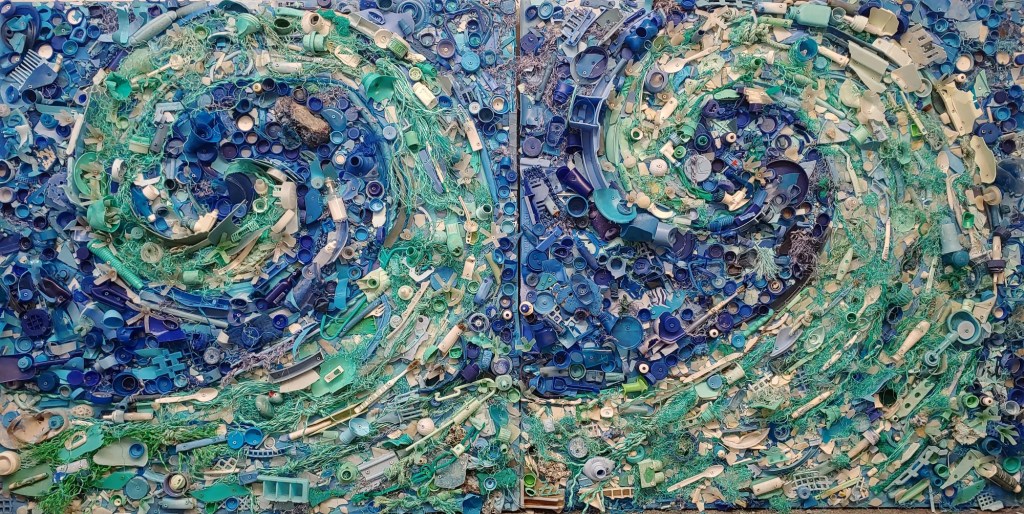
The museum describes it as “a stunning exhibition that transforms ocean debris into impossible-to-ignore sculpture.” The expansive show — spread out across 3,000 square feet in the museum’s second floor gallery — will feature more than 25 marine creatures, all made entirely from waste collected along the coast.
Abi Karkenny, director of exhibits for the museum, takes us behind the scenes and tells us how the exhibit “Washed Ashore: Art to Save the Sea” landed in San Diego. It opened May 22 and is on display through Feb. 28.
 A man walks through a whale’s rib cage sculpture created entirely from ocean debris in “Washed Ashore: Art to Save the Sea,” opening today at the San Diego Natural History Museum. (Washed Ashore Project)
Q: Tell us how this traveling exhibition landed in San Diego.
A: We kept hearing two things from visitors: They want to know more about the ocean, and they’re craving immersive, multisensory experiences.
We connected with Washed Ashore — a nonprofit based in North Bend, Ore., dedicated to creating awareness about marine plastic pollution through art. Together, we saw an opportunity to bring their striking sculptures to San Diego in a way that not only highlights the important issue of plastic pollution but also fully surrounds visitors in the story via suspended sculptures, engaging wall art and hands-on activities.
The timing also felt meaningful. This year marks the 20th anniversary of The Nat’s volunteer Whaler program, making the ocean theme even more fitting.
Q: What was the inspiration behind this exhibition?
A: When imagining new exhibits for The Nat, we kept asking ourselves, “What’s an experience unlike anything else we currently offer?” This question led us to something that feels immersive, art-based and transforms from day to night. We co-created this vision with Washed Ashore. Their sculptures are typically displayed in large outdoor locations, so telling their story in an underwater-themed gallery was a new experiment for them, too.
At the same time, we were inspired by Washed Ashore’s approach to such a critical conservation issue. Plastic pollution can feel overwhelming — more than 8 million tons of plastic enter the ocean each year — but stories rooted in collaborative community work can spark hope. Each Washed Ashore sculpture is brought to life by hundreds of volunteers who collect trash from beaches, painstakingly clean the debris, and work together to craft these charming pieces. It’s a powerful reminder that groups of passionate people can make a real difference.
 The San Diego Natural History Museum’s new exhibition, titled “Washed Ashore: Art to Save the Sea,” opens on May 22 and is on display through Feburary of 2027. It will showcase large sculptures of marine life made from plastic collected from beaches. (Washed Ashore)
Q: In San Diego, it is taking up the museum’s 3,000-square-foot second-floor gallery. Tell us what viewers can expect to see in such an expansive space.
A: Expect to be dropped right into an ocean world. The gallery will envelop visitors — think rippling blue lights, ocean sounds and activity stations. The exhibit features more than 25 marine creatures, each one constructed from bottles, flip-flops, toys, toothbrushes and other debris collected through beach clean-ups. Visitors will wander in a forest of suspended jellyfish blooms, walk through an 18-foot whale “rib cage,” and meet larger-than-life creatures like Finn the mako shark or Dexter the Dungeness crab.
During Nat at Night on Fridays, the experience will go to the next level by transforming into an ocean-themed lounge with themed drinks, food, games and opportunities to chat with nature experts. It’s our version of a “dive bar.”
Q: Because of the many moving parts and the size of the pieces, what was the most challenging logistical aspect of bringing this exhibition to San Diego?
A: Just getting these massive sculptures to San Diego is no small feat! The Washed Ashore team packed them into a U-Haul and took them for a 900-mile road trip down the coast, which is pretty incredible. Luckily, they’ve been bringing their sculptures across the country for more than 15 years, so they’ve got the process down to a science.
On our end, the trickiest part was planning an exhibition around sculptures we couldn’t see or physically touch until the very end. We were designing layouts, lighting and rigging without the sculptures in front of us, knowing we’d have just a few days to dial everything in once they arrived. It made for a fast and nimble installation but also a pretty exciting one.
 The San Diego Natural History Museum’s new exhibition, titled “Washed Ashore: Art to Save the Sea,” opens on May 22 and is on display through Feburary of 2027. It will showcase large sculptures of marine life made from plastic collected from beaches. (Washed Ashore)
Q: What do you hope viewers will take away from seeing the show?
A: We hope people have fun: take in the eye-catching art, feel like they’re underwater, and maybe even enjoy an ocean-themed cocktail along the way. But we also want the message to stick with them. We hope they leave with a real understanding of how plastic pollution impacts wildlife around the world and right here in San Diego, and understand that there’s incredible work underway to solve the problem.
Visitors might be inspired to make small changes of their own, speak up for systemic ones, or join a community effort underway (the exhibit features a wall of upcoming beach clean-ups and other ways to join our partners in fighting plastic pollution!). Most of all, we want people to understand that change isn’t just possible — it’s already happening. The tide is turning, and there’s hope for a cleaner future.
San Diego Natural History Museum presents “Washed Ashore: Art to Save the Sea”
When: Through Feb. 28
Where: San Diego Natural History Museum, 1788 El Prado, San Diego
Admission: $14-$24
Phone: 619-232-3821
Online: sdnat.org