
This is the second installment in a series of stories on the history of dining out in La Jolla, how it’s changed and how it continues to evolve.
As La Jolla’s reputation as a tourist destination and newly formed residential community started to solidify in the 1920s, so did its restaurant scene.
In this installment of the month-long series “Dining Out,” the La Jolla Light looks at how new hotels in La Jolla led to new hotel restaurants, with other eating establishments opening to compete. But later, World War II would have an impact on La Jollans and San Diegans in general and on where and how they ate. From there, cultural shifts further changed what La Jolla diners were seeking.
Dining Out — series Part 1: A look at the evolution of La Jolla’s restaurant scene
“In the 1920s, there were all these subdivisions around La Jolla — the Hermosas, The Shores, the Muirlands — that opened up, so there was a great growth period,” said La Jolla Historical Society historian Carol Olten. “Consequently, hotels were built, such as La Valencia (which opened in 1926) and the Grande Colonial (opened in 1913). These hotels became dining experience destinations for people that were visiting and living here. If you wanted a nice dinner or to take your date out, you would go to La Valencia.”
The early hotel restaurants ranged from upscale to casual.
For example, the Grande Colonial contained a pharmacy called Putnams that had a cafe offering small bites and ice cream. Gregory Peck Sr., father of actor Gregory Peck, was a pharmacist and sold soda floats.
At La Valencia, where the kitchen was far from the dining room, waiters would transport dishes under silver cloches to keep them warm while creating an air of sophistication.
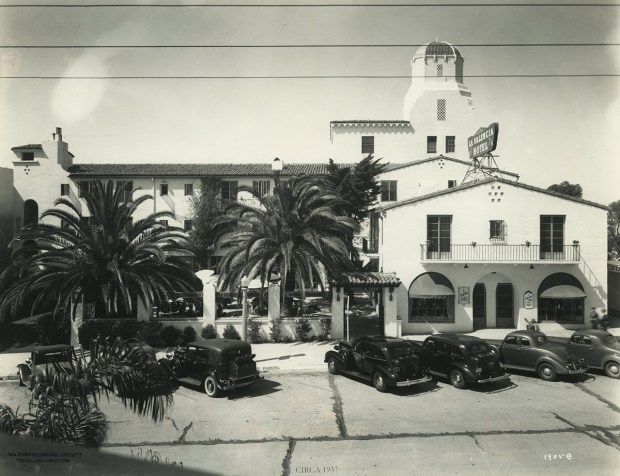 The La Valencia Hotel in La Jolla is pictured in 1937. The hotel turns 100 this year. (La Valencia Hotel)
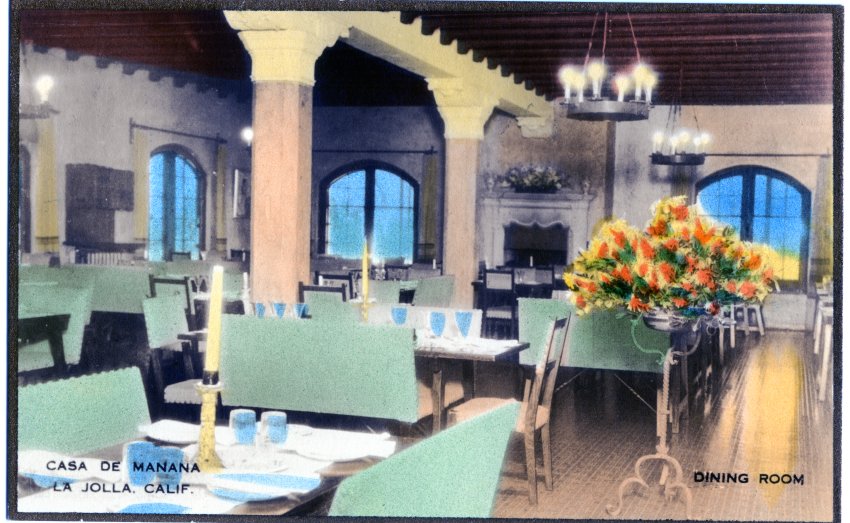
Before it became the senior-living community it is today, Casa de Mañana opened in 1924 as a resort hotel. Its original structure, the main building at 849 Coast Blvd., included several cocktail lounges and a restaurant for guests. The restaurant was considered an upscale place for special occasions such as first dates, engagements and wedding receptions and was popular for celebrity spotting.
Other restaurants soon opened. However, the decade that followed was fairly quiet by comparison.
“The 1930s were a very dull period in La Jolla,” Olten said. “It was a pretty quiet place.”
But World War II changed that in the 1940s.
“We were so close to Pearl Harbor and there was the big blackout [when residents were encouraged to dim their lights and cover their windows with thick black curtains after dark to be less visible to potential enemy attackers],” Olten said. “The blackout was taken pretty seriously because people were scared. People didn’t want to go out as much at night because they felt vulnerable. And we had soldiers staying in local hotels.”
Casa de Mañana opened its doors to members of the Navy coming home from combat, operating the hotel as a rest and recuperation center.
Most restaurants, however, continued to operate normally — at least for those who would venture out to them.
New restaurants opened after the war. Among them was La Valencia’s famed Whaling Bar, which debuted in 1949 and regularly played host to children’s author and La Jolla resident Theodor (Dr. Seuss) Geisel, novelist Raymond Chandler and Hollywood luminaries including Gregory Peck. The nautical-themed bar closed in 2013 and became Cafe La Rue. However, in 2021, plans were announced to bring The Whaling Bar back, and it reopened in February 2024.
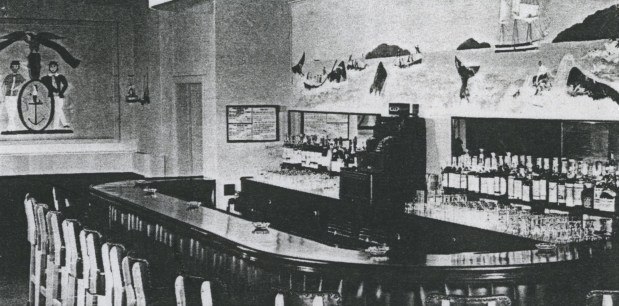 An undated photo shows the La Valencia Hotel’s Whaling Bar in its early days. (La Jolla Historical Society)
More restaurants with international themes began to open as well, Olten said. British influence already was present in the tea rooms that had existed in La Jolla since the early 1900s, but a French restaurant and two German restaurants came in, too.
“France was recovering after the war, and all the big fashion houses were operating again, so French fashion became a thing … and that carried into various aspects of the culture and made us want to have snails for lunch,” Olten said. “People were traveling more and were curious and aware of other food styles … and restaurants kind of went along.”
Verdes El Ranchero, believed to be one of La Jolla’s first Mexican restaurants, opened in 1946 at 7404 La Jolla Blvd. with a focus on homestyle cuisine. The Green family, which bought it in 2009 and added the word “Verdes” (Spanish for Greens) to the name, are celebrating the restaurant’s 80th anniversary.
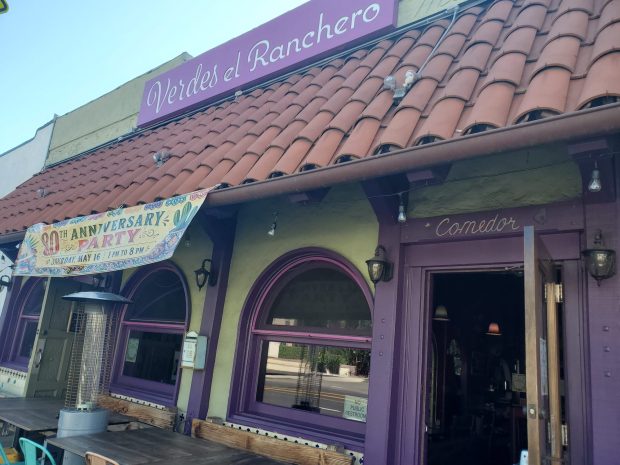 The 80-year-old Verdes El Ranchero restaurant is at 7404 La Jolla Blvd. (Ashley Mackin-Solomon)
With cultural shifts in the transition from the 1950s to the ’60s came “a great change in terms of dining experience,” Olten said.
“The ’50s were very formal and featured cocktail hours,” she said. “It was something you dressed up for. Women wore white gloves and hats when they went to lunch.”
La Jolla was seen as a “conservative, strung-up kind of place,” with a sense of formality in everything from lunch to weddings, she said.
One restaurant that embraced that was the upscale Plaza near La Jolla Boulevard.
“It was one of Raymond Chandler’s favorite places,” Olten said, and also was known to host then-FBI Director J. Edgar Hoover. It closed by the end of the 1950s.
When the ’60s hit, Olten said, “there were all these casual dining experiences that started happening. We still had white-tablecloth restaurants, but they were more of a passing fancy. People were more oriented toward casual experiences.”
Many of the newer establishments had a niche element.
“One restaurant that was very, very important in La Jolla was the Chart House … which was designed by the architect Kendrick Kellogg,” Olten said. “It was a steakhouse that, for some reason, the owners hired surfers as waiters. So they had a reputation for handsome waiters and good steaks. The whole Windansea surf crowd was working there.”
At the same time, a place called the Pour House was a surfers’ hangout with a lot of fistfights, Olten said.
At the Bratskellar, which also opened around that time, “the decor was … very churchy and they had a medieval theme going on,” she said. “The phone booth was in an old confessional taken from a church. The menu was simple. They had really good French wine and they were open until midnight on weekends.”
Olten said she recalls going there for a late-night hamburger, a side of fries and corn on the cob for $2.95.
“You could have a wonderful dinner for less than $10,” she said with a laugh.
Next installment: While many of La Jolla’s earlier restaurants were one of a kind, more chains would join the ranks as the decades passed — with some controversy. ♦