
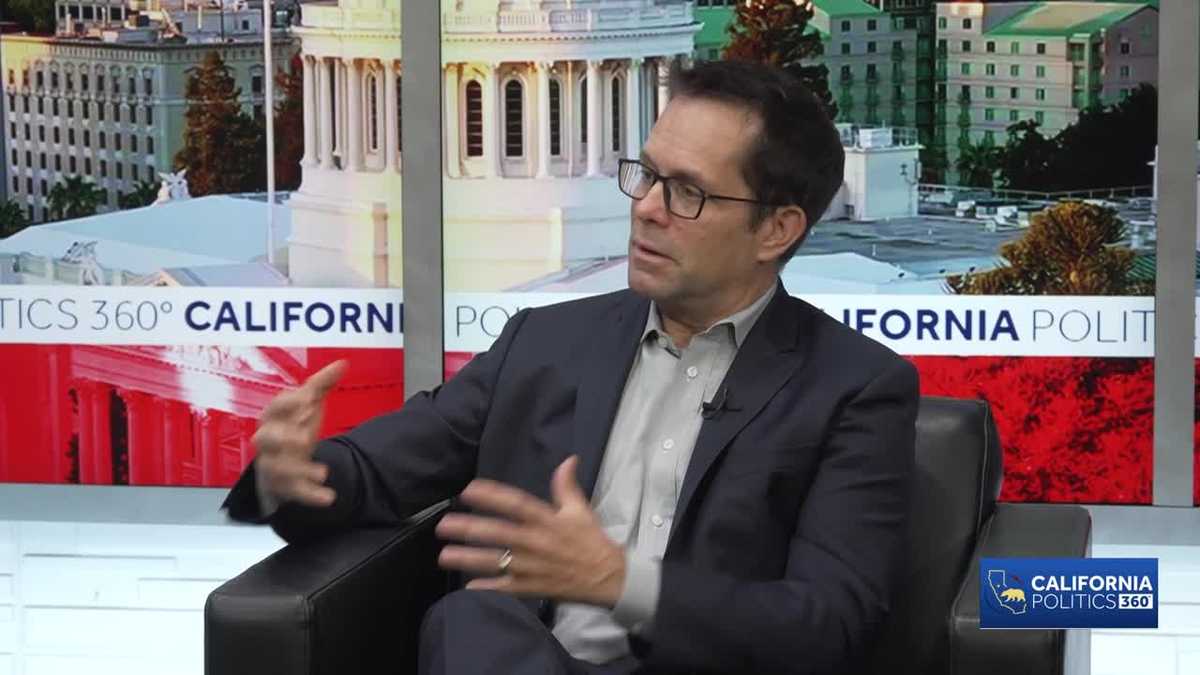
Is California’s new U.S. House map working so far? The man who drew it weighs in | CA Politics 360
Paul Mitchell, thank you so much for making time for us. Thanks for having me. So just what do you make of voter turnout so far? I know we’re still trying to figure out exactly how many ballots have been returned, but what’s your understanding of like who exactly was energized to vote in this election? Well, first off, there is the macro like what is total voter turnout and. As we’ve been saying all along, the turnout we expected was like 37 to 40%, which is roughly like 99.1 million ballots, and if you look at what has been reported so far, it looks like maybe at the high end it’ll be 9.2% something like that, but we’re still talking about turnout that is consistent with other gubernatorial primaries. And when we look at the kind of elections we have, whether it’s presidential general elections, you know, the primaries, the gubernatorial general, the gubernatorial primaries are always the lowest turnout. So, um, you don’t have the presidential race, you don’t have all the national enthusiasm in 2022 is 33% turnout, so that’s just kind of the baseline where we’re at in terms of the total, where we’re at in terms of the composition is still to be determined because we don’t know the full, you know, all the ballots that have that have been cast, but we do know that early on there was *** little bit higher Republican turnout. Um, possibly their ballot was simpler. It was Hilton versus Bianco versus, you know, Democrats who had all these 5 candidates. Then the Democrats were voting later and we’ve seen that already. *** lot of these returns that we’ve gotten out of different counties that reported on Wednesday and Thursday, really Democratic numbers of ballots, and just to stave off any kind of conspiracy theories around this, the way it works is the conservatives generally vote earlier. You have homeowners, older voters that get their PG&E or SMUD bill and they write *** check and mail that thing right back in the same day. They’re used to like getting things in the mail and returning it. Younger voters, renters, you know, uh, lower economic status people, they generally don’t kind of participate in the same way, so they’re generally voting later and voting sometimes in person, and uh it means that we have these different waves of ballots. And they get counted basically in the same order that they come in and so when you have an area like Sacramento, uh, the early voting might be skewing *** little bit more Republican as it gets counted and then the later voting is generally more Democratic, um, and then we also look at the composition based on things like age, you know, *** lot more seniors, maybe half the electorate that cast ballots were seniors, uh, they’re only 25% of the voters. But probably half of the final people who cast ballots, um, and then Latinos interestingly it looks like in the early numbers the Latino turnout was up. And that might be because of this, uh, historic uh uh first election of *** Latino to be governor of California. The only other Latino that ever served as governor in 1875 wasn’t actually elected to be governor. He was appointed and was not put up by his party to be uh the candidate for reelection so uh *** really historic election might have turned out more Latino voters. OK, so just in essence then just to sort of sum up where we’re at right now I mean Democrats waited to vote and those are maybe the bulk of the ballots that we see kind of in this late stage. Yeah, *** lot of Democrats were doing what I was calling ballot clutching. They were looking at this race and one of the things that we know was *** big narrative of this election was this top two election system, and there was *** lot of fear that two Republicans could make the runoff. *** lot of that reality kind of was abated when Eric Swalwell dropped out, reducing the Democratic field, when Trump endorsed Hilton, which created separation there. The math wasn’t really there come election day for two Republicans in the runoff, but voters were still clinging to that thought, and they wanted to vote for somebody who could win. It’s almost like they had this PTSD from past elections where Democrats split up their votes and they don’t end up being successful on election night. Uh, in this election they’re like, we’re not going to do that. We’re going to make sure that we can vote for somebody who can make it to the runoff, and that benefited both Hilton. And Becerra in the late voting and it also meant the voting pattern changed where *** lot of voters were that had previously voted early in past elections were voting later in this election. What do you make of there’s. It’s, I mean, it’s that time of year where people in an election start arguing about the pace of the ballot count, President Trump elevating, you know, some conspiracy theories that the cheat is in essentially to help Democrats in the late stage when, you know, we see like *** Steve Hilton generally leading so far in this result. But just what do you, what do you make of that? I mean, Governor Gavin Newsom even acknowledged he wishes this, this count was faster. Should there be *** second look at some of the laws that do drag this out? Um, so let’s say first off, objectively everybody would like to have election results faster and also objectively if you put *** ton of money into counties to pay for them to really, really, really get huge staffs and try to process these ballots faster, I think we could, that’s just *** budgetary decision. But then at the core of it I think *** lot of the arguments about the late ballots is, uh, disingenuous. You know, um, nobody’s harmed by the late counting. The, the, even the president of the United States, when he’s elected, he’s not actually elected until the electoral college meets, and that is *** lot longer process than what we’re doing counting ballots. Um, also when, uh, you know, Ken Calvert, who is *** congressman from, uh, down in Southern California in the 2022 election. It took weeks and he didn’t get elected. He was not even leading that election until I think day 11. He was behind, behind, behind, and then finally he was leading and nobody on the Republican or Democratic side in that election was complaining about, you know, this late process because what they wanted to do in that election, they did want to make sure all the votes counted. And as *** result of all the votes counting, Ken Calvert got reelected to Congress, so it can go both ways, and it’s just the reality of making sure that we have *** fair election system and, and I try to point out to people, if you were *** voter and you signed your signature like your coffee shop signature on *** ballot and mailed it in, and would you wanna have them just reject it or would you wanna have them contact you to allow you to to sign it? I have *** friend who was in Texas, got *** letter from the county in Texas saying your ballot was not counted because we couldn’t match your signature. In California that wouldn’t have happened. You would’ve gotten *** letter saying you have 10 days to cure your ballot, to resign your ballot. Uh, those kind of things create fairness in the election system. It really emphasizes that every vote counts. Uh, another example, uh, I had *** friend who was, uh, traveling when. Uh, you know, over the election, they had their ballot with them and they were in another county. In California you can drop your ballot off in any county. What does that do time wise? It means that *** voter’s ballot from Humboldt County arrives in Sacramento County and has to be sent back to Humboldt all over the state county registrars are sending ballots around and it’s about making sure that all those ballots count. So there’s security things that are built into the system. Those are what take time in *** lot of cases and, uh, nobody’s harmed by the late process except reporters on deadline. Uh, and reporters bring up this story every election cycle, it seems, but, uh, really in terms of voters they’re benefiting from the fact that there’s all this care taken to make sure all their ballots count, and I don’t think we should remove any of the. Uh, processes we’ve created to make sure every ballot counts. I do think it would be great if we put more investment into more staff to get it done quicker. OK, um, I wanna switch gears to California’s new congressional district maps which everyone knows you helped design and, uh, voters approved through Proposition 50. There is some uncertainty right now with one of the districts that wasn’t targeted congressional district 6, but it was supposed to be an easy Democratic seat. All week we have seen this result of an independent, now one of those targeted Republicans who. Used to be *** Republican, Kevin Kiely, and *** complete Republican outsider leading in that race, likely potentially going on to the November general election. Doctor Richard Penn, the, the Democrat who’s who was in 3rd for most of the week, um, what do you make of that? So, um, in the Prop 50 maps there was congressional District 3 that went from, you know, Roseville all the way up to Mount Lassen all the way down to Death Valley. That district was redrawn to be kind of Lake Tahoe into Sacramento. I like to say Tahoe to Tahoe Park, um, and it was the district that was Kylie’s seat. And so it was drawn in *** way so that it could be *** Democratic pickup to push back on the Republican redistricting or gerrymandering in Texas. Now when we drew that we knew that that district and CD6, which is the neighboring district Roseville, Sacramento to West to West Sacramento, that both those districts were pretty equal in terms of their partisanship. Both of them were like + 10. Kamala Harris won those districts by 10 points, safe Democratic seats, but we also knew that Kylie could theoretically jump into the other district. He actually lives in the other district, this one in Roseville. And so it was *** known known when we drew the map, so there would be two districts plus both safe Democratic seats, and it was unclear which one Kylie would run for. What I don’t think anybody was thinking about was, well, maybe Kylie will re-register as an independent, and he literally did that the day of filing and the strategy for him, which is smart, is I’m gonna run as an independent and there’s *** possibility that. The Republican, single Republican on the ballot that nobody knew who he was because he had an R next to his name, could get the second spot. That is *** clear strategy. It’s *** smart strategy, so credit to Kevin Kiely. Democrats now are in the position where, you know, Dr. Pan, is in 2nd spot and he’s in 3rd spot and then he’s going back to 2nd spot. It’s this trying jostling back and forth about whether or not *** Democrat is going to even make it to the general election. The same fear that Democrats had in the statewide election about two Republicans making the runoff in *** state that’s Democratic. Here’s *** situation where there’s *** Democratic fear of two Republicans, one Kevin Kiely, the other Michael Stansfield, making the general election in *** Democratic seat that Kamala Harris won by 10 points. Were mistakes made. I think that more should have been done during the election to ensure that voters knew. That Kevin Kiely was *** Republican. Because *** lot of the voters maybe West Sacramento, they might not even know who Kevin Kiely is. *** lot of voters in Atomma EA, they just voted for the person with the R next to their name, and more things could have been done to make sure that that didn’t happen. But Kevin Kiely has ***, I mean, he has *** huge social media presence, and I’m not saying that’s the end all be all, but I mean, is there *** possibility that voters could be very loyal to him in that region given that his hometown. You know, was encompassed by. Well, it’s interesting when you look at the data, you know, he won big in the areas that know him where he’s represented that gets weaker and weaker the further you get away from Roseville all the way to West Sacramento where Stansfield beat him by double digits because voters didn’t know him. Now the interesting thing about this is that this top two situation is today’s headache for Democrats. When Dr. Pan, who everybody believes will get that 2nd spot, Democrats and Republicans basically agree that the math is that Dr. Pan will make that 2nd spot. That becomes Kylie’s headache. Because now we go into *** general election. Where Kevin Kiely probably lost almost half of the Republicans. He has to do this dance where he says, I’m an independent. And he, but he needs all the Republicans to vote for him and then try to peel off some Democrats and independents to vote for him in order to overcome *** 10 point Kamala Harris district. But is that possible? I mean, it, it, the possibility of that, does it seem likely, given that this Republican outsider, I mean his. Um, you know, critics will say that, I mean, his first off, he doesn’t have even really like *** formal election photo to begin with. His, his campaign website is *** very ultra religious type, um, yeah, people weren’t voting on him based on the content of his ballot statement, which if people want to read it, it’s rather incredible. But the point is that Kevin Kiely is going to be in *** situation as an independent running. He wants to get all the Republican voters to back him because he used to be *** Republican. He’s supported by Trump in the past and so on. And then he wants to get crossover votes from independents and Democrats. If he had stayed as *** Republican, he would be guaranteed all the Republican votes. Now as an independent, he has to fight for those Republican votes because the data shows that in an election like this, sometimes up to 35% of, in this case, the Republicans who don’t have *** candidate on the ballot will skip that election. So he’s going to have to fight hard now to get what should be his easy base to get and at the same time try to go over here and tell Democrats and independents that he’s not really *** mega Republican. It’s *** tough position. I think he’s in *** worse position. Right now going into the general election than he would have been if he’d stayed as *** Republican stepping outside of CD6 just in general, the the the districts that were targeted, do you think Prop 50 at this point is working just given the, yeah, I mean if you look at the sum of Democratic votes and Republican votes in all these districts that were redrawn by Prop 50, they were, they performed well for Democrats. Um, we will see as an example in the CD 22, the David Valadeo district. Uh, that’s still *** close race between two candidates on the Democratic side, one more moderate, one more progressive, and so the flavor of the Democratic candidate that will be up in the Valadeo district is still to be determined. But uh yeah, the the districts performed the way they should have and the uh districts that were already held by Democrats but really kind of competitive, those districts were bolstered by Prop 50 and we see that in the data too in all those races you can see the Democrats have rather easy general elections now and I mean even in congressional district one. Where James Gallagher does have *** lead. I mean, the assumption is that Democrats who were split among multiple 12, multiple candidates will now coalesce in the general. That’s the assumption, you know, I might be, uh, stepping out of like the party norm in the Democratic side when I say that I think James Gallagher should be elected to the 1st congressional district in that special election. I wish the Democrats hadn’t even fielded *** candidate against him. Um, I think that, uh. You know, filling the remainder of the LaMalfa term after his unfortunate passing, uh, somebody who was mentored by La Malfa and close to LaMalfa, and I think everybody should have just said, look, James Gallagher, go be *** member of Congress, and that’s what’s gonna happen. He’ll get elected in that special election and good for him. But in the newly drawn one that is going to be safely won by former state pro tem Mike McGuire. OK. Has anyone Yet gotten upset with you over circling back to congressional District 6. Anyone upset with you over the map so far in the Democratic Party? No, no, no, no, there’s no, it’s not *** complaint about the maps. Um, I think the challenge is that we had *** lot of candidates who were good candidates running in that district. None of them wanted to concede or bow out, um, and. And there wasn’t really *** strategy maybe that was fully effectuated that would have made sure that no matter which Democrat won that that Michael Stansfield, the Republican who basically had no campaign, wouldn’t just accidentally fall into the second spot. All right, anything else you think we should know heading into this next week of waiting for election results? I think having patience is important. I think when you see people, especially people who aren’t even from California, attack California’s voting system. It’s important to note that you know the the what we have in the time that it takes to get these ballots done is *** huge effort, the biggest effort in the country to count the most ballots in the country and *** huge effort to make sure that election security is maintained, you know, we, uh, have processes in each county to make sure that people can’t vote twice, that, that the election day numbers, you know, and that these vote by mail ballots are all being processed, that people who showed up and said, hey. I moved. I need to re-register that all those registrations are, are, you know, meticulously taken care of and processed and then those votes counted only after the regis after the registrations are confirmed. All that stuff takes time, um, and, uh, you know, if you’re *** candidate, you might need some Tums for the next couple weeks, but, uh, for the, for the voters they should know this is all being done for their votes. All right, Paul Mitchell, we so appreciate your insight. Thank you. Great having you, great being here. Thank you.
Is California’s new U.S. House map working so far? The man who drew it weighs in | CA Politics 360

Updated: 7:24 AM PDT Jun 7, 2026
As some primary election results raise questions around the effectiveness, the man who helped draw California’s new Congressional district maps to help Democrats pick up five more seats is confident the new map will work. The Democratic Congressional Campaign Committee paid elections expert and consultant Paul Mitchell to redraw the state’s maps in a redistricting fight between Texas and California last summer. Voters approved the new maps through Proposition 50 in November. While results so far show mathematically Democrats will likely succeed in the districts that were specifically targeted, some uncertainty has surfaced in a district that was supposed to be an easy one for the Democratic Party. Following the initial ballot count after election day, Democrats up until Friday appeared locked out of a Sacramento-area seat in Congressional District 6. Independent Congressman Kevin Kiley, who left the Republican party earlier this year after his original District 3 was targeted in the maps, was leading the pack. Republican outsider Michael Stansfield had the second most votes until Democratic former State Senator Dr. Richard Pan overtook him on Friday.When asked if anyone in the Democratic Party is upset with him yet for the new maps, Mitchell said no. Mitchell noted there wasn’t a strategy to ensure that Stansfield didn’t move into the second spot. “Were mistakes made? I think more should’ve been done during the election that voters knew Kevin Kiley was a Republican,” Mitchell said, referring to the Democratic Party. “A lot of the voters, they might not know who Kevin Kiley is.” Mitchell said Kiley’s strategy so far has been smart for the primary but said he will struggle to try to win the seat in November. “He has to do this dance where he says, ‘I’m an independent,’ but he needs all the Republicans to vote for him and try to peel off Independents and Democrats to vote for him in order to overcome a 10-point Kamala Harris district.” “This top two situation is today’s headache for Democrats. When Dr. Pan, who everyone believes will get that second spot, the math is that he’ll make the second spot,” Mitchell said. In one of the targeted districts, Congressional District 1, Republican James Gallagher is leading over the two Democrats, State Sen. Mike McGuire and Chico-area educator Audrey Denney. Mitchell acknowledged Democrats assume Denney’s voters will combine with McGuire’s to give a Democrat the long-held Republican seat. Rep. Doug LaMalfa had the seat before suddenly passing away in January. Voters in the district were also asked to decide who would fill the seat for the remainder of his term under the old congressional maps. Voters overwhelmingly picked Gallagher. “I might be stepping out of the party norm on the Democratic side when I say that James Gallagher should be elected to the first Congressional district in that special election,” Mitchell said. “I wish Democrats hadn’t even fielded a candidate against him.” “In the newly drawn one, that is going to be safely won by former State Senate Pro Tem McGuire,” Mitchell said. In the beginning of the interview, Mitchell also talked about how voter turnout so far stacks up against previous statewide elections. He also weighed in on state laws that are known for slowing down ballot counting and what he says could be done about it. You can see his full remarks in the video player above. KCRA 3 Political Director Ashley Zavala reports in-depth coverage of top California politics and policy issues. She is also the host of “California Politics 360.” Get informed each Sunday at 8:30 a.m. on KCRA 3.See more coverage of top California stories here | Download our app | Subscribe to our morning newsletter | Find us on YouTube here and subscribe to our channel | Make KCRA a preferred news source in Google
As some primary election results raise questions around the effectiveness, the man who helped draw California’s new Congressional district maps to help Democrats pick up five more seats is confident the new map will work.
The Democratic Congressional Campaign Committee paid elections expert and consultant Paul Mitchell to redraw the state’s maps in a redistricting fight between Texas and California last summer. Voters approved the new maps through Proposition 50 in November.
While results so far show mathematically Democrats will likely succeed in the districts that were specifically targeted, some uncertainty has surfaced in a district that was supposed to be an easy one for the Democratic Party.
Following the initial ballot count after election day, Democrats up until Friday appeared locked out of a Sacramento-area seat in Congressional District 6. Independent Congressman Kevin Kiley, who left the Republican party earlier this year after his original District 3 was targeted in the maps, was leading the pack. Republican outsider Michael Stansfield had the second most votes until Democratic former State Senator Dr. Richard Pan overtook him on Friday.
When asked if anyone in the Democratic Party is upset with him yet for the new maps, Mitchell said no. Mitchell noted there wasn’t a strategy to ensure that Stansfield didn’t move into the second spot.
“Were mistakes made? I think more should’ve been done during the election that voters knew Kevin Kiley was a Republican,” Mitchell said, referring to the Democratic Party. “A lot of the voters, they might not know who Kevin Kiley is.”
Mitchell said Kiley’s strategy so far has been smart for the primary but said he will struggle to try to win the seat in November.
“He has to do this dance where he says, ‘I’m an independent,’ but he needs all the Republicans to vote for him and try to peel off Independents and Democrats to vote for him in order to overcome a 10-point Kamala Harris district.”
“This top two situation is today’s headache for Democrats. When Dr. Pan, who everyone believes will get that second spot, the math is that he’ll make the second spot,” Mitchell said.
In one of the targeted districts, Congressional District 1, Republican James Gallagher is leading over the two Democrats, State Sen. Mike McGuire and Chico-area educator Audrey Denney. Mitchell acknowledged Democrats assume Denney’s voters will combine with McGuire’s to give a Democrat the long-held Republican seat.
Rep. Doug LaMalfa had the seat before suddenly passing away in January. Voters in the district were also asked to decide who would fill the seat for the remainder of his term under the old congressional maps. Voters overwhelmingly picked Gallagher.
“I might be stepping out of the party norm on the Democratic side when I say that James Gallagher should be elected to the first Congressional district in that special election,” Mitchell said. “I wish Democrats hadn’t even fielded a candidate against him.”
“In the newly drawn one, that is going to be safely won by former State Senate Pro Tem McGuire,” Mitchell said.
In the beginning of the interview, Mitchell also talked about how voter turnout so far stacks up against previous statewide elections. He also weighed in on state laws that are known for slowing down ballot counting and what he says could be done about it. You can see his full remarks in the video player above.
KCRA 3 Political Director Ashley Zavala reports in-depth coverage of top California politics and policy issues. She is also the host of “California Politics 360.” Get informed each Sunday at 8:30 a.m. on KCRA 3.
See more coverage of top California stories here | Download our app | Subscribe to our morning newsletter | Find us on YouTube here and subscribe to our channel | Make KCRA a preferred news source in Google