
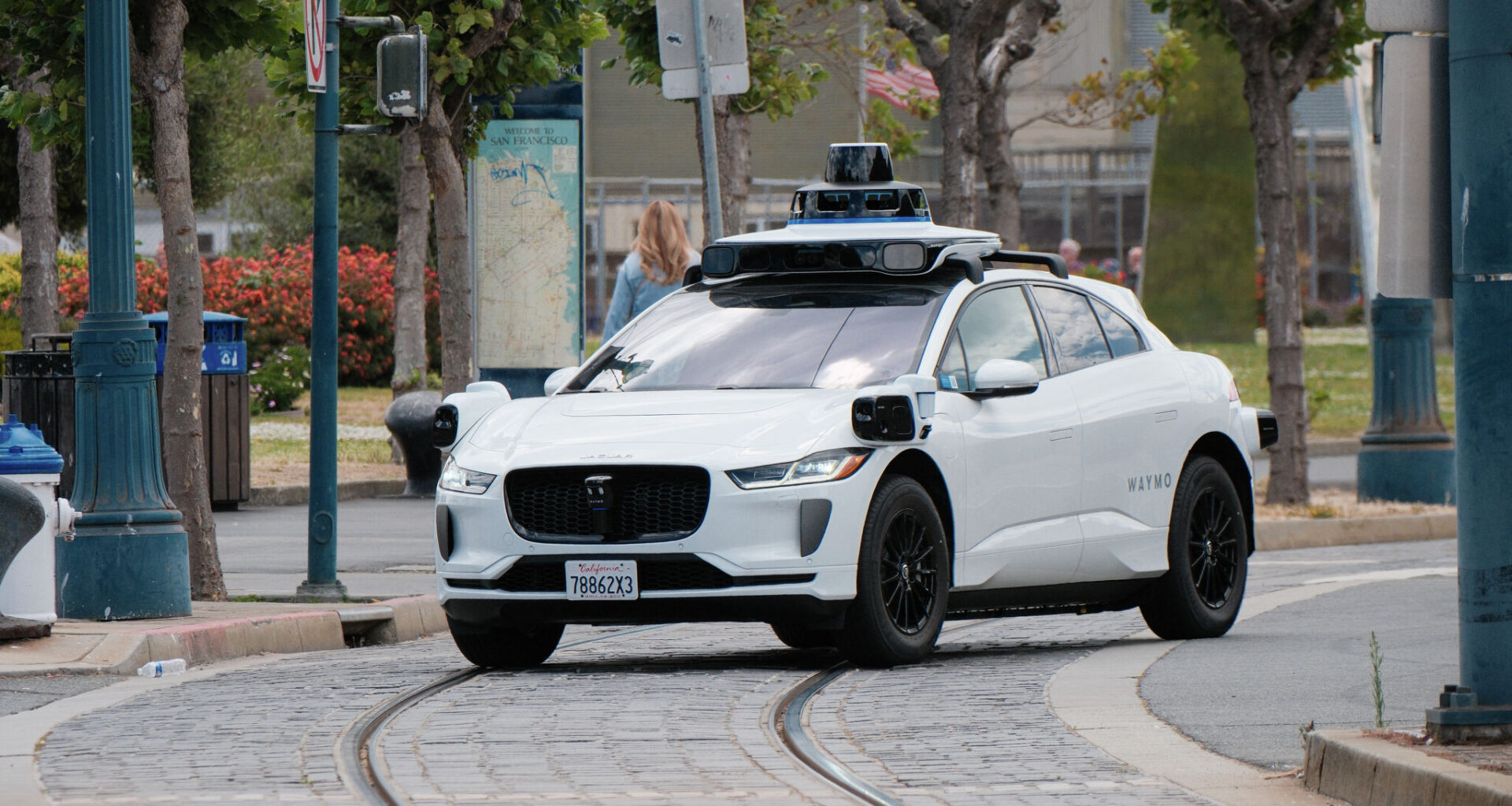
A Waymo car drives on the Embarcadero in San Francisco near Fisherman’s Wharf in 2024. The company’s driverless cars are not accessible to users of power wheelchairs.
Camille Cohen/For the S.F. Chronicle
Waymo’s driverless cars may be technologically impressive, but they are not accessible to many severely disabled riders.
I am a full-time power wheelchair user, disability civil-rights enforcement specialist and shareholder in Waymo’s parent company. My concern is personal and institutional: Waymo’s standard robotaxis do not serve riders who cannot transfer out of medically necessary custom power wheelchairs.
The power wheelchairs I use are complex rehabilitation technology, not foldable mobility aids. They may include tilt, recline, elevating leg rests, specialized controls, pressure-relief seating and postural supports. Many users cannot safely leave them or stow them like luggage.
Article continues below this ad
Pointing riders to a small number of human-driven wheelchair-accessible vehicles does not make the autonomous fleet accessible. It creates a separate, limited service tier for disabled people while nondisabled riders receive the core product.
If robotaxis are becoming public transportation infrastructure, access for power wheelchair users cannot be deferred to a workaround.
San Francisco Chronicle Logo
Make us a Preferred Source to get more of our news when you search.
Add Preferred Source
Waymo should deploy autonomous wheelchair-accessible vehicles at a comparable price, availability and reliability wherever it operates standard service.
Kelsey Maurine Brickl, founder and director, Ghost Light Access, Brooklyn, N.Y.
Article continues below this ad
A model for housing
Regarding “An S.F. affordable housing project cost half as much as usual. Can it be replicated?” (Real Estate, SFChronicle.com, June 2): This project is not only a blueprint for other developments in San Francisco but also cities around the world facing similar challenges of rising housing costs and an aging homeless population.
Aside from the clear financial positives in delivering new housing at a lower cost, we cannot understate the outsized social return on this initial monetary investment, either.
Stable housing for those experiencing homelessness or at risk of it is a much-needed lifeline that removes the need for further intervention.
From healthcare to emergency shelters, all of these services also incur a high cost that can be avoided by addressing the root cause of homelessness — the lack of affordable homes.
Article continues below this ad
Ryan McKiernan, managing director, Fat Macy’s Foundation, London
Oil not worth cost
I am a high school student, and my generation is being forced to live with the consequences of today’s decisions, including the push to open more public lands to oil and gas development.
Drilling in the Arctic National Wildlife Refuge infringes on lands sacred to Indigenous communities. And in the Arctic, temperatures are rising four times faster than the rest of the planet — expanding oil and gas development will only accelerate that.
Guest opinions in Open Forum and Insight are produced by writers with expertise, personal experience or original insights on a subject of interest to our readers. Their views do not necessarily reflect the opinion of The Chronicle editorial board, which is committed to providing a diversity of ideas to our readership.
Read more about our transparency and ethics policies
Supporters of oil and gas lease sales in the refuge claim that drilling will lower energy costs and boost the economy, though those promises may never materialize. New drilling would take years, if not decades, to produce oil and would do nothing to address today’s gas prices.
Article continues below this ad
The government had an Arctic oil and gas lease sale scheduled on Friday. Our federal leaders should speak out in opposition, not sacrifice these lands to the oil and gas industry
Melissa Gonzalez, Thermal, Riverside County