
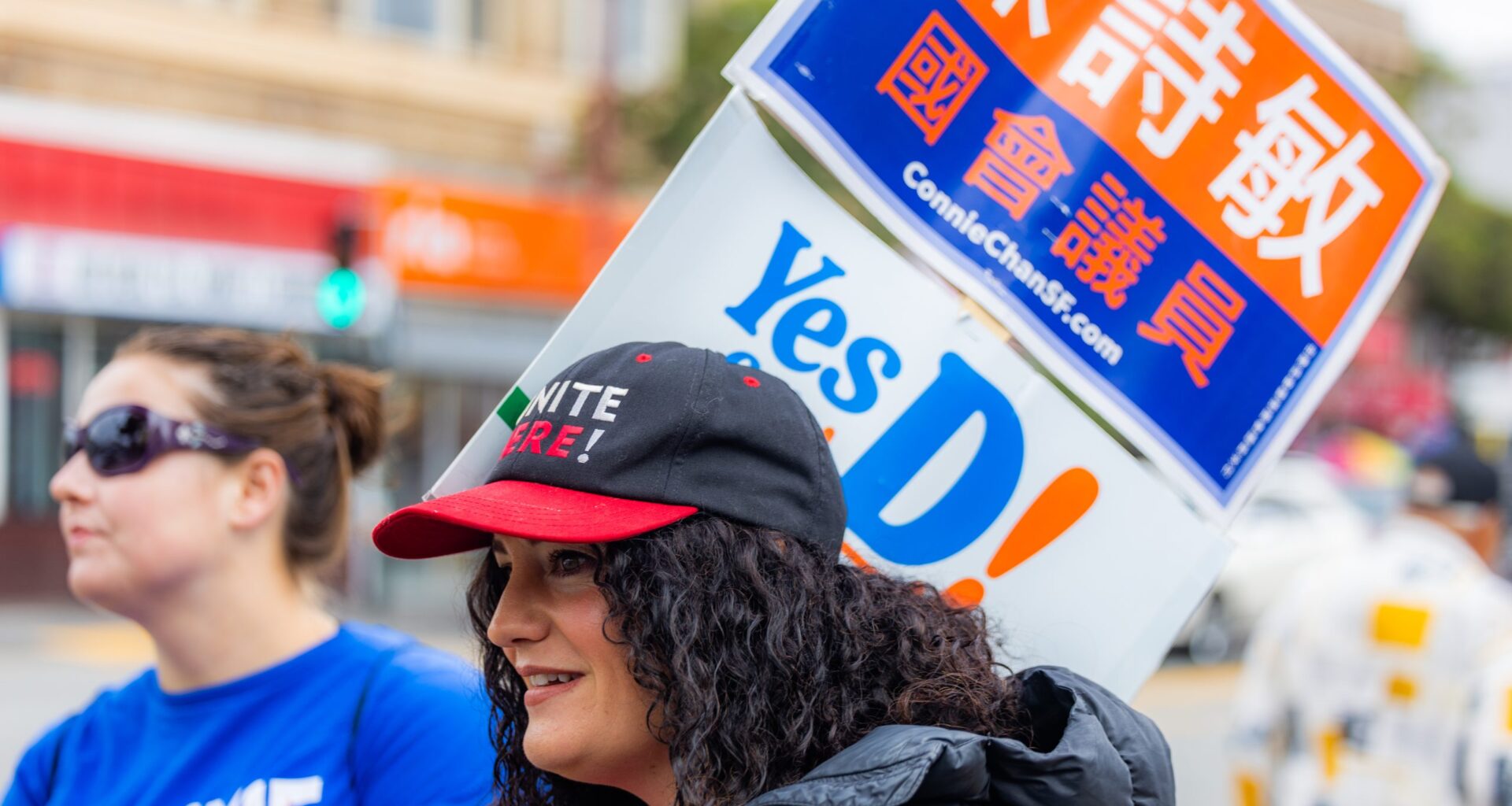
San Francisco’s “Overpaid CEO” tax has failed. The measure would have raised taxes on businesses whose top executive makes more than 100 times more than the company’s median employee, but it is trailing 54-46.
The tax, also known as Proposition D, was placed on the ballot by labor unions to help fill the city’s $600 million deficit. Because of the deficit, Mayor Daniel Lurie has cut programs and laid off city employees. Proponents argued that the new revenue from the tax measure was necessary for maintaining essential city services, such as healthcare, after President Donald Trump cut funding for Medicare.
“The consequences are real,” said Scott Mann, spokesperson for the Yes on D campaign. “The cuts that follow will fall hardest on the people who can least afford it — the patients who depend on our public hospitals, the families who rely on city services, and the workers who make this city run.”
This persuaded a supermajority of the Board of Supervisors to support the measure. But opposing it was Lurie and the city’s Chamber of Commerce. They expressed concern that it would lead to businesses leaving the city or refusing to open up at a time when the mayor has made filling vacant storefronts a priority, particularly in downtown.
“We have defeated Prop. D thanks to voters who have watched the city recover and are not interested in gambling on the progress we’ve made,” said Rodney Fong, president and CEO of the San Francisco Chamber of Commerce.
The campaign opposing Prop. D spent $5.8 million, outstripping the Yes on D campaign, which spent $2.7 million.
Some of that money went to Proposition C, a competing measure that the Chamber of Commerce placed on the ballot. Prop. C kept the city’s tax structure mostly the same, but included language saying if both measures passed, only the measure receiving more votes would go into effect. Prop. C is failing 65-35.
Though Lurie was the face of the No on D campaign, he also opposed Prop. C, arguing that ballot showdowns are counterproductive.
“I am grateful to every voter who waded through another ballot fight featuring two confusing, competing measures and made their voice heard,” Lurie said about the results.
But he also echoed Fong’s argument: “Voters recognize that our recovery depends on creating opportunity through jobs, thriving small businesses, and attracting investment — not making it harder for employers to grow here.”
Mann clapped back. “It’s a sad day for San Francisco when Mayor Lurie partnered with billionaires and corporations who received massive tax cuts from the Trump Administration rather than champion for San Francisco’s best interest as critical cuts loom,” he said.
Though around 20 percent of the ballots still remain to be counted, about two-thirds of the 42,000 remaining ballots would have to break in favor of Prop. D for it to pass.
“Mathematically possible, highly unlikely,” said San Francisco State University political science professor Jason McDaniel.
Though the margin of loss was greater on election night when only about half of ballots had been tallied — 55-45 — since then Prop. D has only managed to lose by less; every single ballot count update has included more no-votes than yes-votes.