
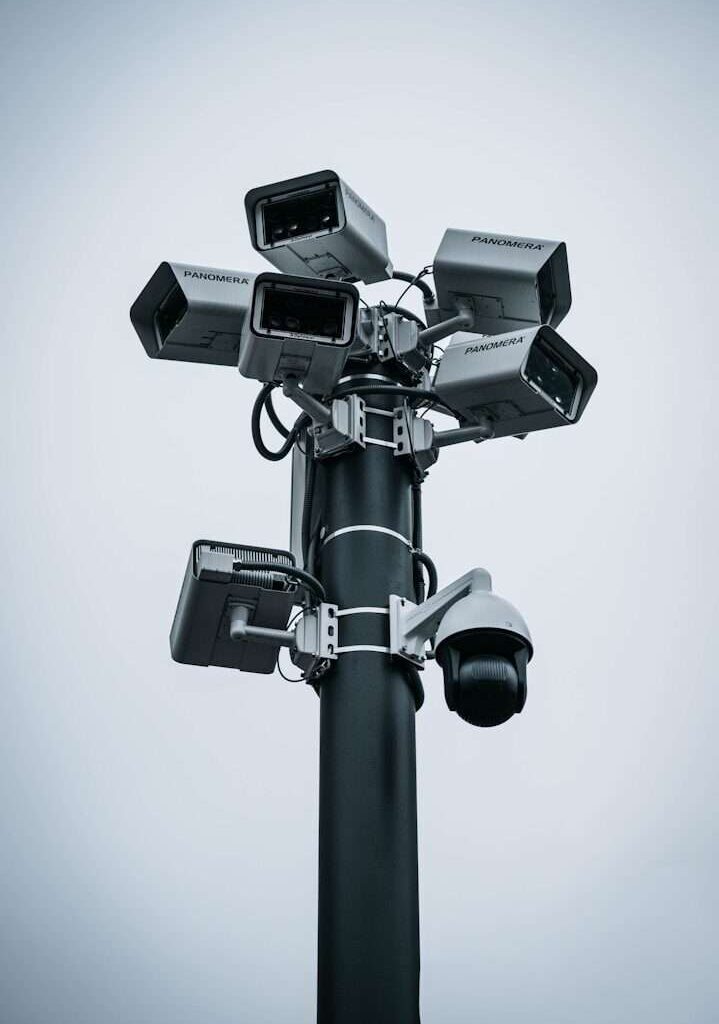
The whole pitch behind automated license plate cameras is that they let understaffed police departments do more with less. Buy the system, point the cameras at the road, and let the technology flag the bad guys so officers can swoop in. That is the sales line. In Oakland, California, the reality turned out to be a lot messier, because the cameras worked so well at generating alerts that the cops simply shut a big chunk of them off.
That is not a typo. Faced with a flood of notifications they had no way to keep up with, Oakland police reportedly disabled the alerts for stolen vehicles and stolen plates entirely. The very feature these systems are sold on became the feature the department could not use.
A Million Alerts and Counting
A newly released Oakland Police Department report lays out just how overwhelming the numbers got. The city’s Flock Safety camera network generated 1,099,837 hotlist alerts during 2025. Of those, more than 620,000 flagged stolen license plates.
That volume is the heart of the problem. The department says it simply did not have the staffing or the resources to respond to that kind of firehose, so the stolen vehicle and plate alerts got switched off. When a tool produces more work than a department can physically handle, the tool stops being a help and starts being noise.
Here is the part that should make any city council think twice before signing a check. The system was bought to make a stretched-thin department more efficient. Instead, it produced a backlog so large that the practical solution was to ignore it.
Sold as a Force Multiplier
This matters because of how these systems are marketed in the first place. Police departments, elected officials, and Flock itself have all described the technology as a way to help understaffed agencies identify suspects and recover stolen cars faster. On paper, that argument makes sense. Oakland PD basically disproved it with the flip of a switch.
That has not stopped the department from giving the cameras some credit. During a recent meeting of the city’s Privacy Advisory Commission, Lt. Gabriel Urquiza described the technology as one piece of a broader effort aimed at reducing violent crime. So the cameras have not been abandoned entirely. They are just being leaned on selectively, which is a quieter way of admitting the original promise did not hold up.
What the Numbers Actually Mean
Not everyone reads the alert totals the same way, and this is where it gets complicated. Some critics highlighted by Oakside.org argue the figures are misleading by nature. A single stolen vehicle can set off dozens of alerts as it rolls past camera after camera over the course of days or even weeks. So a million alerts does not mean a million stolen cars.
One critic, Bryan Culbertson, pushed that point hard, arguing that the volume of alerts actually proves how little the system delivers. By his read, only around 3,000 cars were stolen during the period in question, yet Flock kicked out roughly seventy times that many alerts for officers to sort through. From that angle, the cameras are not catching more criminals. They are burying the department in repetitive pings for the same handful of vehicles.
The distinction turned into a public back-and-forth after Flock Chief Strategy Officer Rahul Sidhu weighed in on social media, acknowledging that the sheer volume of alerts would be tough for any department with limited resources to manage. That is a notable thing for the company to concede, since difficulty managing the output cuts straight against the efficiency angle the product is sold on.
The Real Lesson Here
Strip away the back-and-forth about how to count the alerts, and Oakland’s experience points to a problem that goes well beyond one city. Modern policing technology can generate a staggering amount of data. But data only helps if it is accurate, and even accurate data is worthless if there are not enough officers around to act on it.
That is the trap a lot of departments are walking into. The cameras get installed, the contracts get signed, and the assumption is that more information automatically equals more crime solved. Oakland shows what happens when the information arrives faster than humans can process it. The system does not fail loudly. It just gets switched off in the background while the marketing keeps promising results.
For drivers and residents, that should be the uncomfortable takeaway. A city paid for a surveillance network blanketing its streets, generated over a million alerts, and still found itself unable to keep up with stolen cars. So the question worth asking is a blunt one. If the cameras are watching everything and nobody has time to respond, who exactly is the technology really serving?
Join our Newsletter, follow our Instagram page, and connect with us on Facebook.