
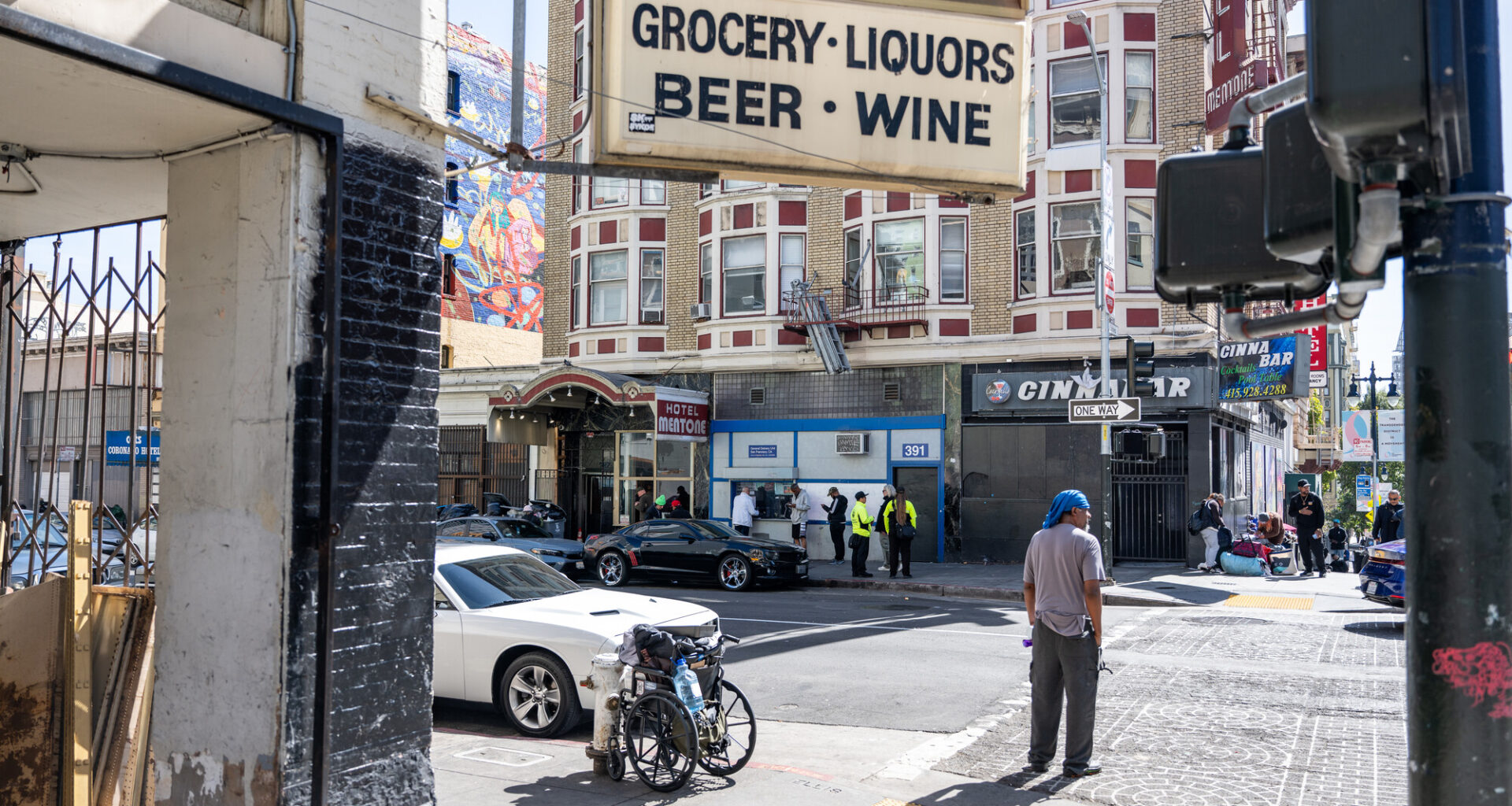
Supervisors said the goal is to explore ways to incentivize other types of businesses to move into the neighborhoods while deterring dangerous activity outside of liquor stores.
Jun 9, 2026
Updated 4:27 pm PT
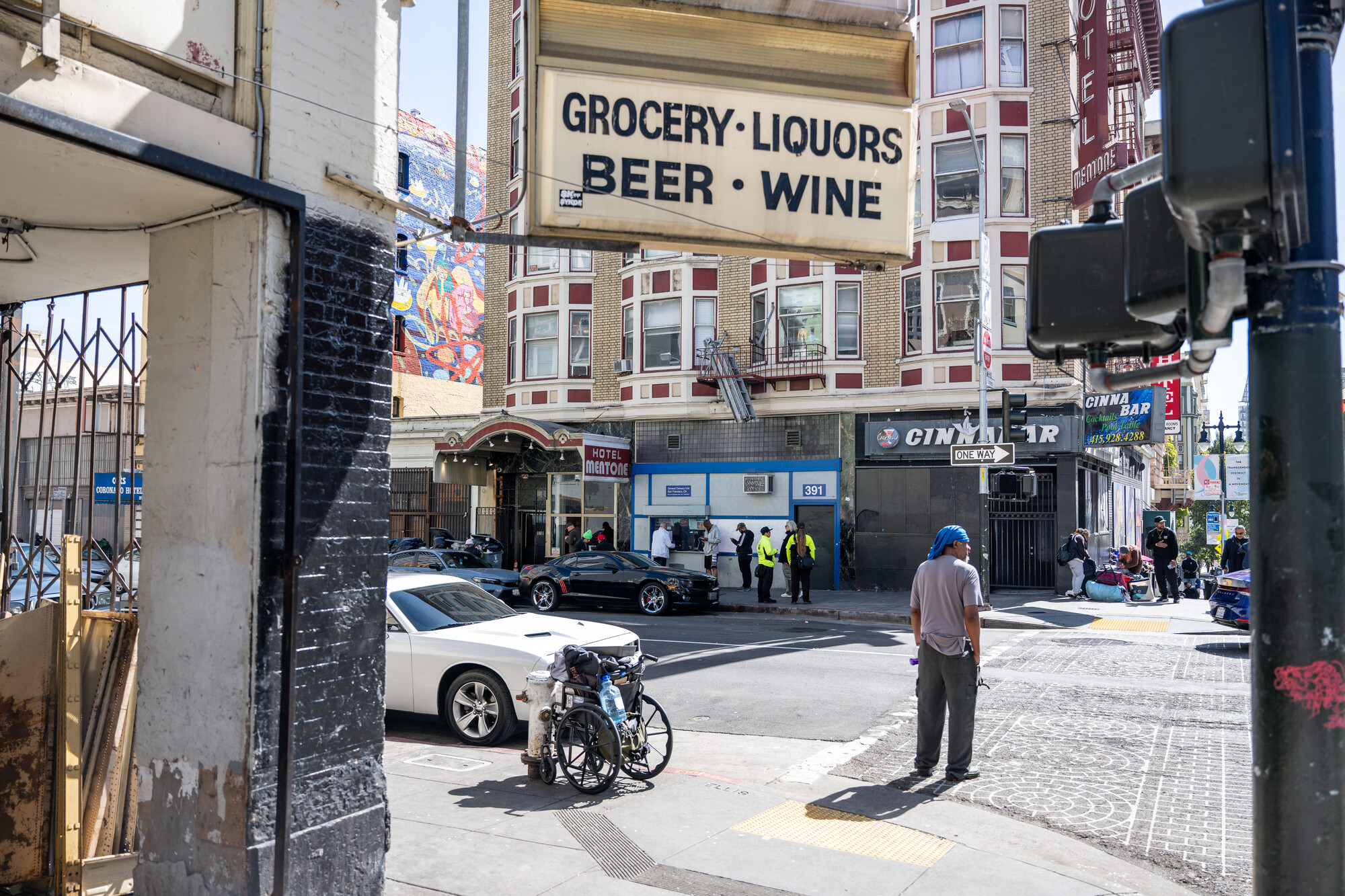
San Francisco’s Tenderloin neighborhood on March 10, 2026. (Beth LaBerge/KQED)
“We know that late-night convenience stores sell tobacco, smoking paraphernalia and have become gathering spots for open-air drug sales and related crime, particularly in the Tenderloin and Sixth Street corridor,” Supervisor Bilal Mahmood, who represents the Tenderloin and is a co-sponsor of the legislation, said at the June 1 supervisor’s committee hearing.
“This is a neighborhood of 3,500 children, and yet we don’t have a wholesale grocery store. We don’t have a toy store,” Mahmood said. “We don’t even have an ice cream store. It’s time to look at how we incentivize these types of businesses to cater to the needs of the children, the families and the immigrants who live there.”
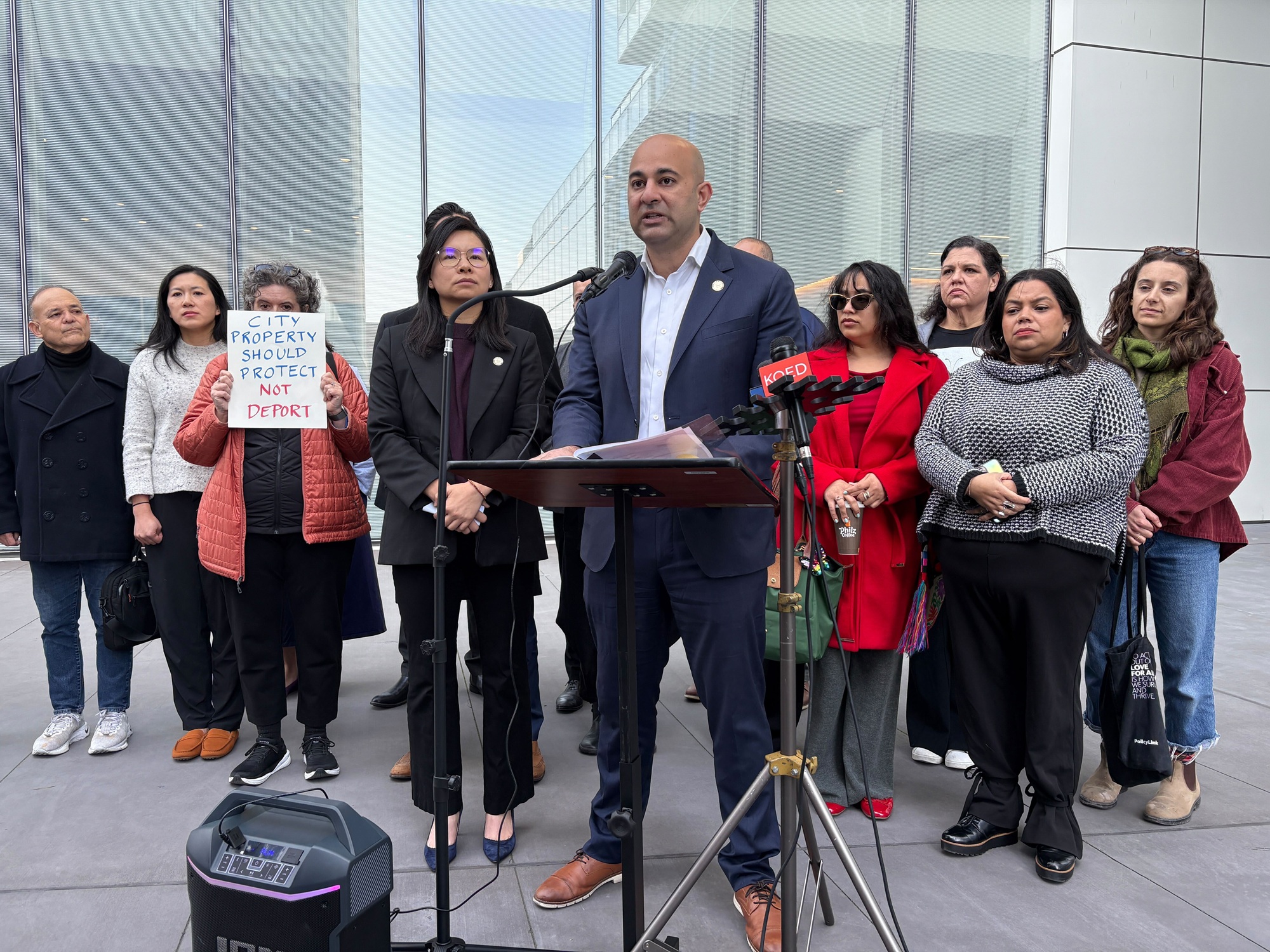 Supervisors, including Bilal Mahmood (center), said the goal for the new restriction is to explore ways to incentivize other types of businesses to move into the neighborhoods while deterring dangerous activity outside of liquor stores. (Sydney Johnson/KQED)
The new zoning regulations do not apply to any existing and open convenience stores, but make it harder for new ones to open up in the specified geographic areas. The city plans to analyze how the zoning rules impact the neighborhood and if permanent changes would be beneficial.
Several residents at the June 1 meeting echoed Mahmood’s sentiments.
“We know exactly who we’re talking about when we talk about these stores. They are not enhancements. They’re not supportive contributors to the neighborhood,” said Kate Robinson, representing the Tenderloin Community Benefit District. “They sell chips and sodas and meth pipes and run illegal gambling rings.”
In May, City Attorney David Chiu filed a lawsuit against the current owners of a convenience store in the Tenderloin, called Corner Store, that was found selling methamphetamine and illegal tobacco products.
“When a corner store turns into a hub for drug activity, it undermines the safety and dignity of the entire neighborhood. I’m grateful to City Attorney David Chiu and his team for continuing to take this issue seriously and using every tool available to protect our neighborhoods,” Mahmood said.
But corner stores serve a critical function for many residents, especially in the Tenderloin, where there is no major grocery store or other amenities that wealthier neighborhoods have. Corner shops often are the primary place where residents can quickly pick up household items and food, and many are run by immigrants, as well.
Those in opposition to the temporary restrictions on new corner stores said it hurts some members of the community without offering any alternatives.
“This measure punishes mainly immigrant business owners for the city’s failure to protect the public and for the state’s failure to ensure public health,” one San Francisco resident named Selma said at the hearing, opposing the legislation. “I don’t see why specifically Arab and immigrant business owners who are struggling to stay afloat need to be punished for the city’s failure.”
In recent years, San Francisco officials have cracked down heavily on liquor and tobacco stores in downtown neighborhoods in an attempt to rein in dangerous street activity and outdoor drug use. In 2024, the city initiated a curfew on stores in the Tenderloin and placed restrictions on new smoke shops in the neighborhood. In 2026, the city extended the curfew to the South of Market neighborhood as well.