
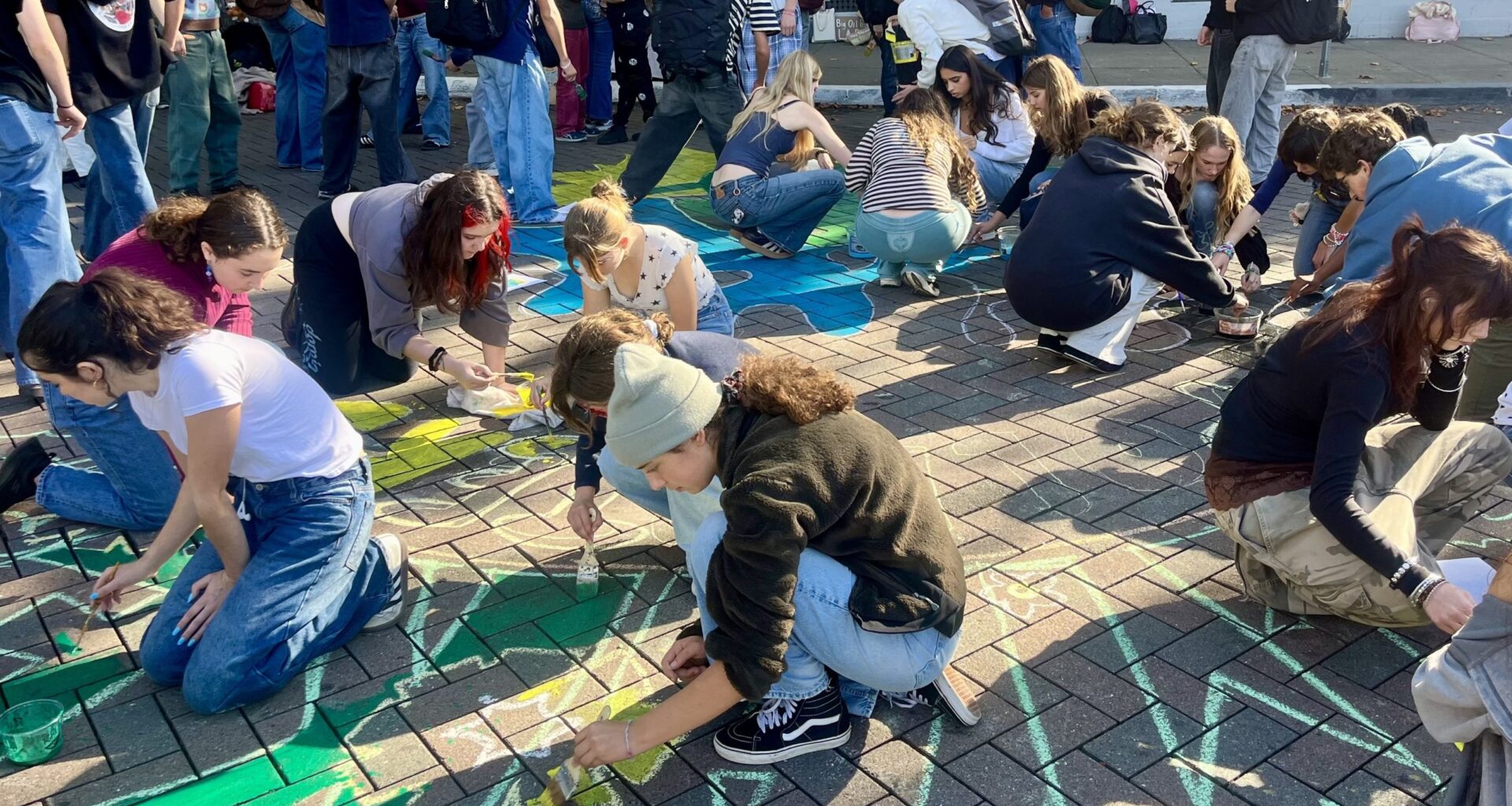
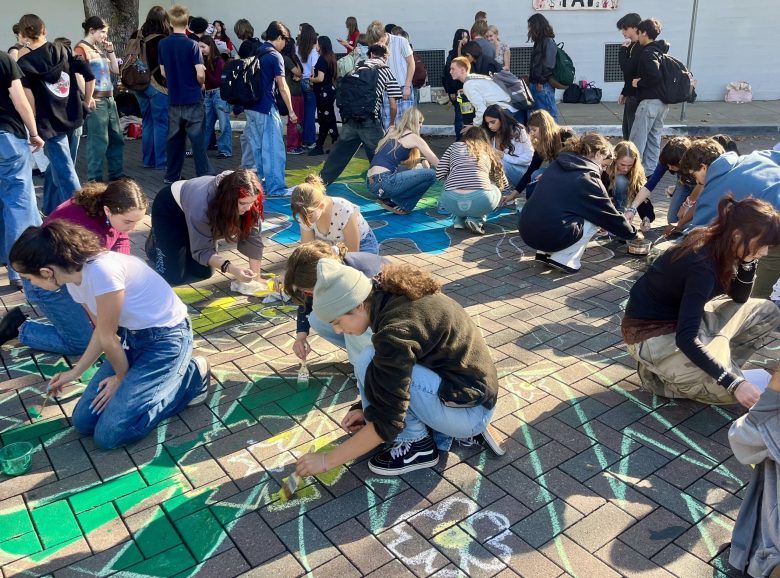
 Berkeley High School students drew murals on Allston Way on Oct. 24 in support of the Sunrise Movement club’s “Make Polluters Pay” campaign. Credit: Vanessa Arredondo/Berkeleyside
It’s been a tough few years for Berkeley youth and activists who see climate change as the central crisis of our age.
The Trump administration has rolled back environmental protections and ramped up subsidies for fossil fuels while blocking clean energy programs and scrubbing information about global warming from public websites. Though this agenda is unpopular, climate change is now near the bottom of issues voters prioritize. California Gov. Gavin Newsom has joined Democrats across the country in talking about climate change less, placing more of an emphasis on affordability and energy security.
In Berkeley five years ago, the school district built one of the nation’s first climate literacy programs — aimed at ensuring all students graduate with an understanding of environmentalism. Now, amid a $10.4 million budget deficit, the Berkeley Unified School District (BUSD) is moving to cut the teaching position that leads the program. The district’s sustainability coordinator, who works to implement all of BUSD’s green goals, is also on the chopping block. (BUSD did not respond to requests for comment for this story.)
Community advocates have been rallying to keep climate and environmental initiatives intact, saying that the school district is walking away from its leadership on a crucial issue at a crucial time.
“It’s hard to see something you put a lot of work into and not know what the future of it is,” said Ellen McClure, the teacher who leads Berkeley’s climate literacy program and whose job is on the line. “Unfortunately, a lot of times these programs, when there are budget cuts, are just some of the first things looked at.”
Bethany Lourie, a science teacher at Ruth Acty who’s taken a lead role in implementing the climate literacy program across the district’s elementary schools, said it’s “devastating” to see environmental rollbacks “on our own turf.” She said her students enjoy her class climate projects and take the learning seriously because they believe “it really matters to the world.”
Berkeley remains a hub of climate activism, with teachers, parents and students mobilizing to safeguard programs and initiatives, and activists adapting their approach since President Donald Trump’s return to power.
The Sunrise Movement club has organized events such as the Make Polluters Pay rally, where students called on local and state leaders to hold major corporate emitters accountable, as well as walkouts to protest immigration enforcement raids.
“We focus on the intersectionality of climate and how that connects to oil corruption in our current government, especially with rising fascism under the Trump regime,” chapter president and BHS junior Ámela Amago told Berkeleyside in April during a climate rally. “Sunrise is a lot more focused on authoritarianism, and it’s so difficult to pass any climate legislation when we’re under the current government.”
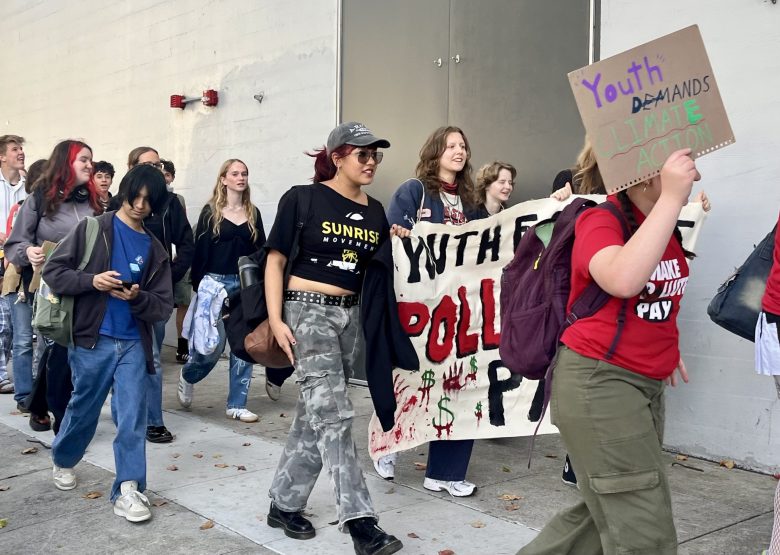 About 100 Berkeley High School students walked out of class on Oct. 24 to support climate justice and denounce authoritarianism under the Donald Trump administration. Credit: Vanessa Arredondo/Berkeleyside
“Our tax dollars are being spent on wars and putting a focus on things that aren’t at all helpful for the planet,” retired Berkeley teacher Martha Cain, a former Berkeley school teacher who has become a climate activist in her retirement and was part of the four-woman team behind the creation of BUSD’s climate literacy program, said in a recent interview. “When Trump was elected, I took to heart the idea of really focusing locally during this time when it’s harder to do something on a federal level.”
Lourie said she has needed to navigate challenging climate conversations in her classroom as the Trump administration slashes environmental protections.
“Kids are aware of it to different degrees,” she said. “You don’t want to project the darkness, but it’s also about making them recognize that these problems are urgent, and we can’t drop the ball.”
The sustainability coordinator was established in 2018 after BUSD created a green plan to be carbon-neutral by 2050, to be non-polluting whenever feasible, and to reduce water usage by 15% by 2030, among other goals.
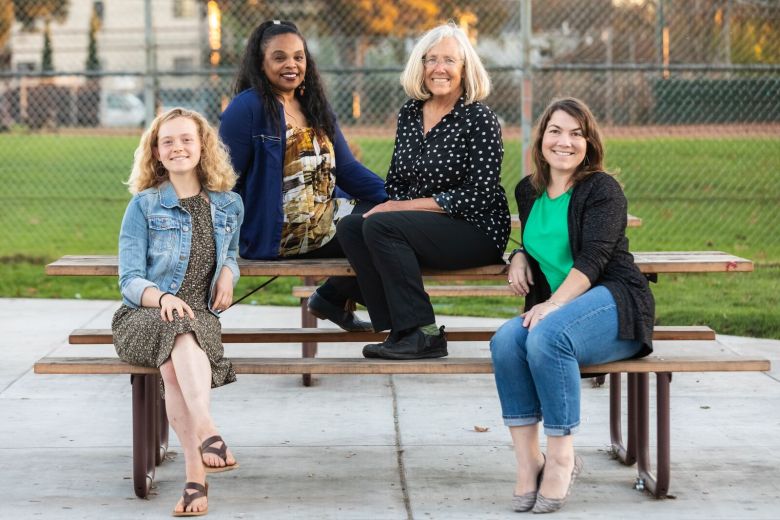 The four-woman team behind the creation of BUSD’s climate literacy program — Ella Suring, Laura Babitt, Martha Cain and Sarah Ranney —in James Kenney Park in Northwest Berkeley on Nov. 11, 2021. Credit: Kelly Sullivan for Berkeleyside
In 2021, Berkeley Unified unanimously adopted its climate literacy framework for teaching human-induced climate change, including its causes and solutions, and who will feel its effects the hardest. The goal is for all students to graduate from BUSD with an understanding of environmental justice issues and how to address them.
The teacher position was created a year later to facilitate the initiative, with funding coming from an Arts, Music & Instructional Materials block grant. That role, once funded at 80% and later reduced to 60% due to cuts, is now at risk of being fully eliminated due to expiring grant funds. BUSD leaders said the climate literacy initiative would return to its original model, in which teachers receive stipends to support the work. Associate Superintendent Jill Hoogendyk said the initiative will continue “but in a different format, and it might not be as big as it has been before.”
The climate literacy teacher position coordinates the K-12 climate curriculum and trains educators to teach environmental justice. The position also oversees districtwide and community programs and collaborations, including climate fairs, green career fairs, professional development conferences for Bay Area educators, and “Fix-it Fests” where people bring in broken items — everything from toasters to sweaters to weed whackers — and get them repaired by volunteers.
(Two other teachers support elementary and high school climate literacy education at Berkeley Unified in addition to volunteers in the climate literacy working group composed of teachers, parents and community members. BUSD also has science teachers, and garden, STEM, and makerspace instructors who spend part of their time participating in the initiative. In the sustainability program, the coordinator works with the district’s maintenance manager.)
More than 100 climate activists, educators and community members signed a letter asking BUSD to maintain the climate literacy teacher position, and students, members of the climate literacy group, educators and community members have lobbied the school board against its proposed cuts.
Vita Wells, founder of the Culture of Repair Project, which funds Fix-It Fests at Berkeley schools, said the teaching position has been key to putting on the popular festivals, which are attended by hundreds of residents. “Over the last three years, community members have put in over 4,000 hours of volunteer effort to support all these activities in the classroom and outside,” she said.
Sisters Olivia and Laura McNally, who are students at Martin Luther King Middle and Ruth Acty Elementary schools, said at the May 27 school board meeting that learning about climate change is important because it will determine their future.
“At my old school, they didn’t teach us at all about climate change, and so as a result nobody cared, and if nobody cares, then nothing will ever happen,” Laura said. “Here we are being taught about it, which means that people are actually working to stop it.”
McClure, who has taught at BUSD for about 12 years, including in the garden and cooking program, said it will be difficult to fully implement the climate literacy initiatives without a dedicated role.
“But we have a really strong community that values this work, and I know that it will continue in some ways,” she said.
“*” indicates required fields