
Asked directly about Black voters who feel disillusioned by the political system, Pan pointed to his legislative record.
“As a person of color, I would tell the voter that I share their frustration and struggle for equality and civil rights,” he said, adding that he authored legislation establishing California’s Racial Equity Commission to address structural racism in state government. “As we work to bend the moral arc of the universe towards justice, I am and will continue to be a strong ally to Black voters.”
In November, Pan will attempt to unify that fractured coalition against Kiley — a candidate who has already demonstrated he can win votes across party lines in a district Democrats specifically designed to flip.
PDI ballot tracker data shows Black voters made up just 3.2% of all returned ballots in CD-06, with a turnout rate essentially flat from 2022 at 41.8%. That small but potentially decisive slice of the electorate will require deliberate outreach from Pan’s campaign heading into the fall.
CD-07: Black Voters Hold the Deciding Hand
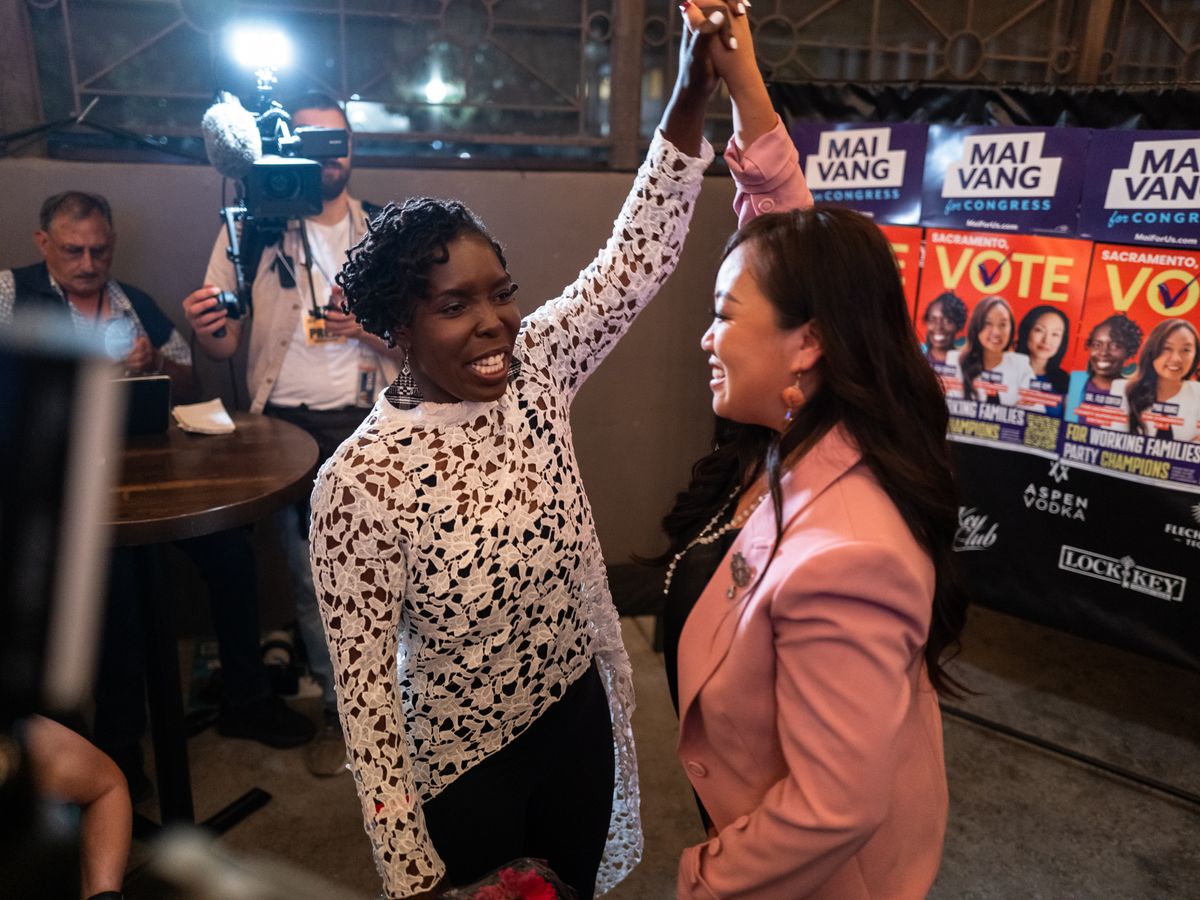
In the 7th Congressional District — covering portions of Sacramento, San Joaquin and El Dorado counties — progressive challenger Mai Vang delivered a primary surprise, finishing first with 31% of the vote and about 62,000 ballots, well ahead of 20-year incumbent Rep. Doris Matsui at 29% with a little more than 58,000 votes.
Vang drew a sharp generational contrast in her election night remarks. “For years, families here have been told to be patient and trust experience because things would get better,” she said. “After twenty years, families are living paycheck to paycheck, people of my generation are no closer to owning a home, and you still can’t afford a doctor visit. That experience is not working for you — that’s a system working for the wealthiest donors and political insiders.”
“This lead shows our message is connecting,” Vang added. “People are tired of leaders who answer to their biggest donors instead of the families they represent. The squeeze on working families doesn’t check your party registration — and neither will I.” Her campaign said it would move immediately into the general election, expanding organizing and drawing sharp contrasts with the incumbent.
Matsui’s campaign said her record and message will resonate across demographic groups. “Doris Matsui will earn support from voters across demographic and partisan lines because she has both delivered on and will lead the fight in the future to stop Trump’s abuse of power, expand access to healthcare, and lower the cost of living,” her campaign said.
PDI ballot tracker data shows Black voters made up 5% of all returned ballots in CD-07, with a turnout rate of 44.7% — up slightly from 44.5% in 2022. That repositions African American civic networks as the decisive swing constituency in the fall. Neither Matsui nor Vang can win without actively competing for Black institutional support.
Vang will need to expand grassroots organizing into mainline civic organizations. Matsui will lean on deep institutional ties built across two decades in Washington.
The Larger Lesson
Taken together, the primary results offer a clear but conditional mandate. Black political power in Sacramento demonstrated its capacity to anchor a winning progressive coalition when mobilized with intentional, community-grounded organizing, as Cofer’s dominant District 1 showing made plain.
But fragmented fields in congressional races showed that individual strength without strategic coordination still produces exclusion.
November will test whether those lessons translate into action.