
Published Jun. 11, 2026at6:00am
Last month, a federal judge in Chicago examined grand jury transcripts that prosecutors had tried to hide. What U.S. District Judge April Perry found was, in her words (opens in new tab), shocking: “I have never seen the types of prosecutorial behavior before a grand jury that I saw in those transcripts.” A federal prosecutor had convened two grand juries to indict protesters against immigration crackdowns. When the first refused to indict, the prosecutor went back for a second try, crossing every ethical line to get the result she wanted. Then other prosecutors tried to cover it up.
More than just one office’s misconduct, this case reveals how expansive grand jury secrecy can be abused. The ethical breaches in Chicago were invisible until Perry happened to shine a light on them. Such judicial secrecy is especially problematic when prosecutors are targeting political enemies, as the Trump administration is doing now.
California offers a road map for reform. Safeguards that would have caught this misconduct already exist here in state court. California requires (opens in new tab) that grand jury transcripts be provided to defendants within 10 days of indictment. California prohibits (opens in new tab) most hearsay testimony before grand juries — prosecutors must call witnesses, not just have an agent summarize a police report. California allows defendants to challenge (opens in new tab) indictments in court, giving judges the power to throw out cases built on insufficient or improper evidence.
Absent such safeguards, the federal judicial system is vulnerable to fracturing into what Ernst Fraenkel, a Jewish lawyer who fled Nazi Germany, called a “dual state (opens in new tab)” — where law applies to ordinary citizens as usual and in parallel becomes a weapon used against political opponents and scapegoats. Fraenkel documented how the Nazi regime maintained courts for regular business while creating a separate system for persecuting dissidents. That’s the warning signal here: When prosecutors target protesters and political enemies, they don’t just bring weak cases — they manipulate the process itself. And because U.S. grand jury proceedings are secret, this abuse is often invisible.
As an elected prosecutor, I saw firsthand the importance of transparency and accountability. I recently wrote (opens in new tab) about federal grand juries rejecting Trump administration prosecutions of protesters, members of Congress, and political opponents. I celebrated it as democracy working and called for transparency reforms, arguing that grand juries can function as meaningful checks only if they operate in sunlight. The Broadview Six case in Chicago demonstrates exactly why. It shows what happens when grand juries resist and how politicized prosecutors respond behind closed doors.
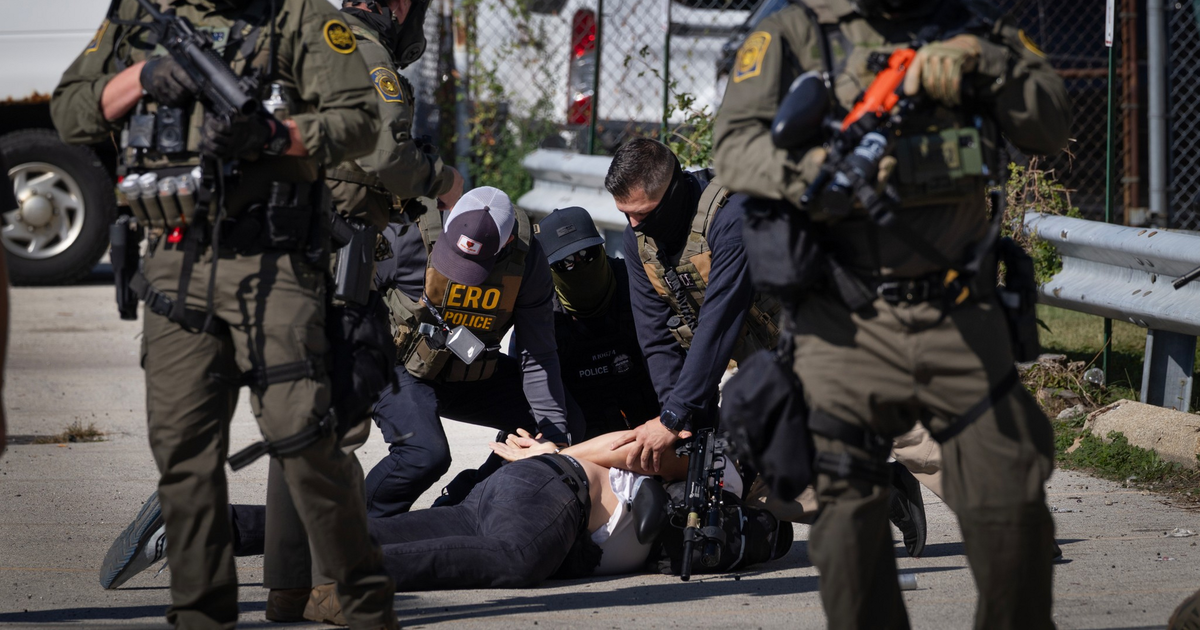
The Broadview Six (opens in new tab) were protesters at an Immigration and Customs Enforcement facility in suburban Chicago. The group included a Democratic congressional candidate, an Oak Park trustee, and a Democratic ward committeeman. Federal prosecutors charged them with surrounding an ICE vehicle and scratching “PIG” into the paint, though no defendant was accused of causing specific damage.
The first grand jury refused to indict. Assistant U.S. Attorney Sheri Mecklenburg convened a second. According to unsealed transcripts, she vouched for the strength of evidence, telling jurors what she thought rather than letting them decide. When grand jurors questioned the prosecution’s theory, she told them they could leave. She had improper communications with a grand juror outside the proceedings. Several jurors objected and walked out. Testimony ended abruptly and had to restart the next day. Eventually, the second grand jury indicted.
Before any of this came to light, Mecklenburg left the U.S. attorney’s office in February for a position with the Senate Judiciary Committee, where her role included helping to appoint federal judges. But her former colleagues took steps to conceal what had happened in the Broadview Six case, shielding her conduct from the public eye.
When defense attorneys asked for transcripts from the Chicago grand juries, prosecutors strategically redacted them to hide the misconduct. When the defense pushed harder, prosecutors dismissed the felony conspiracy charge and declared the transcripts “moot.” When a defense attorney suggested problems with the grand jury proceedings, prosecutors blasted him for “histrionically” speculating.
The cover-up unraveled quickly. After Perry exposed the misconduct, Mecklenburg was fired (opens in new tab) from her Senate Judiciary Committee position. Additional grand jury cases (opens in new tab) from the Illinois U.S. attorney’s office have come under scrutiny, suggesting that the abuses in the Broadview Six case were not an aberration but a practice. Both Illinois senators have publicly called (opens in new tab) for U.S. Attorney Andrew Boutros to resign. This is no longer one prosecutor’s misconduct. It appears to be an office-wide failure.
 Demonstrators protest a surge in ICE activity in Broadview. | Source: Scott Olson/Getty Images
And this isn’t isolated to Illinois. It’s part of a documented pattern (opens in new tab) of Trump administration prosecutions targeting political speech, from immigration protesters to members of Congress to political opponents like New York Attorney General Letitia James. When prosecutions are political, prosecutors feel pressure to “get” the indictment. That’s when misconduct is more likely. That’s when the dual state emerges. And that’s when transparency becomes essential.
Here’s the good news for Californians: The safeguards requiring transparency in state court work. They’re why California grand juries actually screen cases rather than rubber-stamp them. They’re why the kind of misconduct that infected the Broadview Six case would be hard to hide in California state court. And they’re a model for federal reform: mandatory transcripts, judicial review, restrictions on hearsay and illegally obtained evidence, a ban on grand jury shopping after an initial decision against indictment, public reporting of such no bills, and real consequences for prosecutorial misconduct — not just apologies after the cover-up collapses.
Have thoughts on this story?Start the conversation
Additional protections are worth pursuing. As San Francisco’s district attorney, I expanded public data portals that redefined what prosecutor transparency could look like and fought to root out complicity with police misconduct, systemic overcharging, and wealth-based discrimination. That work becomes impossible when prosecutors abuse their power in secret.
Fraenkel’s “dual state” didn’t begin with genocide. It began with a legal system that functioned normally for most people while creating parallel mechanisms for unfairly prosecuting political enemies. Most Germans could ignore the construction of the unchecked extra-judicial system — which Fraenkel called “the prerogative state” — because it didn’t touch their lives. Until it did.
Secret grand jury misconduct targeting protesters today becomes infrastructure for suppressing all dissent tomorrow. Without transparency, this pattern will only accelerate. California has laws establishing the alternative — grand jury transcripts within days, real witnesses, judges empowered to throw out a tainted case. I ran a prosecutor’s office under those rules, and they don’t obstruct justice; they make it legitimate. Providing transparency in federal courts isn’t a mere technicality — it’s a defense against authoritarianism.
Chesa Boudin is the executive director of UC Berkeley’s Criminal Law & Justice Center and former district attorney of San Francisco.