
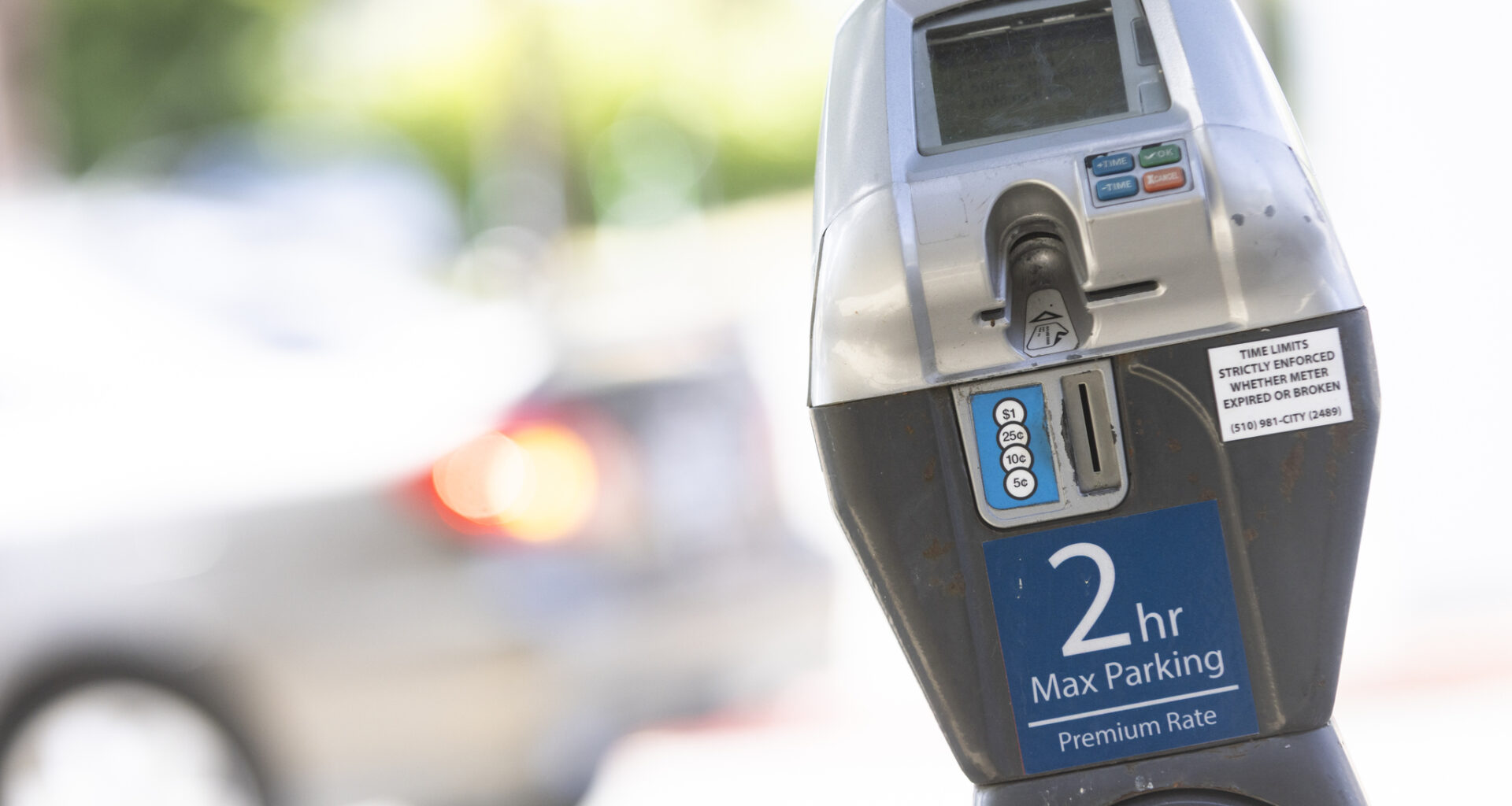
Parking your car in Berkeley could soon be more expensive after the City Council approved a range of rate hikes designed to offset a looming budget shortfall.
On Tuesday, the Berkeley City Council voted 8 to 1 to approve the citywide parking updates that include extending the end of paid parking from 6 p.m. to 8 p.m., charging drivers for Sunday parking, adding new meters in busy city corridors and introducing cashless meters. The measure also increases costs for residential parking permits and creates a new tiered system that charges residents more if they register multiple cars.
The new changes are expected to go into effect sometime after July 1, but the city has not provided a specific launch date, according to Berkeleyside. The city plans to have a pilot period where drivers will be given warning citations instead of full fines.
The ordinance is scheduled for a second and final vote later this month.
The combined rate increases, which include increases for street sweeping and parking violations, are expected to bring in an annual increase of $5.3 million, according to Elliott Schwimmer, senior transportation planner for the city of Berkeley.
Wahid Amiri, Berkeley Public Works interim director, said in a May 19 letter to the council that the parking changes would offset city debt brought on largely by the nearly $40 million Center Street Garage and other city expenses. He wrote that enforcing parking meters on Sundays would mirror other Bay Area cities, like Walnut Creek and San Francisco. He said charging for parking in the evenings and on Sundays would also help increase parking turnover, helping out businesses.
“This lack of active management results in high occupancy, which discourages vehicle turnover, harms local business access, and increases ‘cruising’ for spaces, a major contributor to localized traffic congestion and greenhouse gas emissions,” he wrote on May 19.
The city already increased parking prices from $.50 to $.75 an hour to $1.50 an hour on March 1 to address declining funds in the city’s meter parking fund, but Amir said that change wasn’t enough to move the financial needle due to the increasing maintenance cost for parking meters.
Schwimmer said during the Tuesday meeting that coin jams and printer failures are “our top causes of meter downtime.” He said that moving to non-cash payments would save about $95,000 in annual costs. Schwimmer said that aging meters would be replaced with tap and pay units that will accept payment via credit card and eventually use Clipper cards, which could be reloaded at retail locations and allow people without credit cards or smartphones to use the meters. Schwimmer said the city would roll out cashless hardware within the next three to five years.
City Council members also approved adding 30 new pay stations in high-demand commercial areas that currently have no meters, which include Hopkins Street and Fifth Street, and several blocks along San Pablo Avenue corridor. Schwimmer said that adding meters to the high-demand areas would encourage car turnover in target areas that are generating congestion.
Parking tickets were approved to go up from $43 to $64, while street sweeping fines would jump from $49 to $73.
The City Council also voted to implement a graduated fee schedule for residential parking permits that would go into effect May 1, 2027, for 2028 permits. Permit prices would go up from $85 per vehicle to $100 for the first car, $125 for the second car and $150 for a third car. The measure is intended to make it easier to find parking, reduce greenhouse gases, and improve turnover for local businesses, Schwimmer said.
Councilmember Rashi Kesarwani, who voted for the changes Tuesday, said that the measure is a “necessary change” and has been a “long time coming.”
Councilmember Ben Bartlett, who voted against the changes, said he was concerned about relying on parking enforcement to raise money for the city, calling it “regressive in nature” at a time when “people are being nickel and dimed everywhere they turn.” He said that while the city had a large deficit, he worried that the new parking changes could hurt small businesses more and dissuade locals from visiting them.