
For The Union-Tribune
Vibrant masses of orange California poppies, yellow daffodils, purple irises, blue California lilacs, yellow Mexican sundrops and vivid flowering trees and plants of many hues: Spring bursts with a riot of color throughout the 2-plus-acre Olivenhain garden of Stephen and Susan Root, located in the easternmost community of Encinitas known for its large properties. A multitude of colorful California native and Mediterranean-climate plants surround the home and pool, line pathways and cover slopes.
The garden, the passion project of owner Stephen Root, has evolved over the last 14 years with the vision and guidance of prominent local garden designer and neighbor Nan Sterman.
His dream, Root explained, was to replace his tired, overgrown landscape with a garden filled with “a greater variety of plants that were low-water, low-maintenance, with a lot of color.”
Recognized by the San Diego Horticultural Society as their 2021 Horticulturist of the Year, Sterman is known to readers of The San Diego Union-Tribune for her monthly gardening column. While developing a warm, continuing partnership, filled with laughter and banter, she has realized Root’s ideal of a beautiful, colorful, meaningful yet waterwise, sustainable garden.
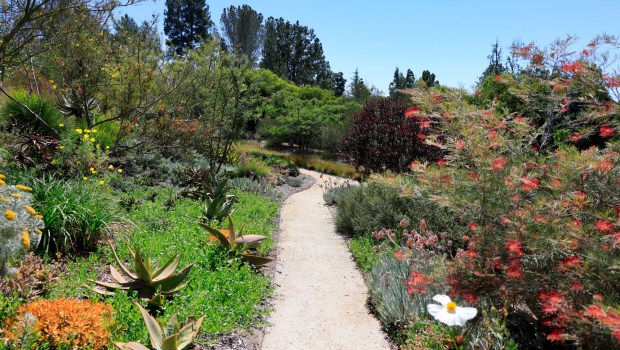 Walkways wind through the property of homeowners Stephen and Susan Root in Olivenhain, in eastern Encinitas. It has rocky slopes, a meadow, an orchard and more. (K.C. Alfred / The San Diego Union-Tribune)
In 1987, Root and his artist wife, Susan, were fortunate to snag one of the last two parcels in an Olivenhain development started in the 1970s that had gone into bankruptcy. They spent a year working with an architect designing and building their 4,000-square-foot southwestern contemporary-style family home with large picture windows overlooking the garden. Construction required contouring the property and importing 120 truckloads of fill dirt just to create a building pad.
Root, then in his 30s and an attorney with a busy civil litigation practice and two young sons, had always been interested in gardening; however, after building the house, he realized he didn’t have the resources or attention to create the expansive garden he wanted. Instead, he hired a landscape architect who designed a functional yard filled with fast-growing, relatively inexpensive trees, shrubs and plants to cover the raw land, previously filled with chaparral, and to provide privacy screening.
The result was a garden characterized by eucalyptus, olive, carrotwood, crape myrtle, acacia and pepper trees along with plumbago, pride of Madeira, oleander, ivy and other species readily available in the 1980s.
By the early 2010s, after 30 years, the garden was mostly gnarled hedges and invasive ground covers: badly overgrown, tired, overly thirsty and ready for a total overhaul.
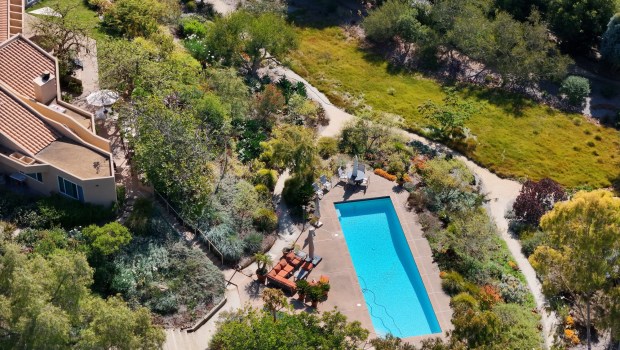 The vast garden also became a growing experience for Nan Sterman as a designer, and it became a laboratory for her book. (K.C. Alfred / The San Diego Union-Tribune)
Root met Sterman about 2012 at the Encinitas Garden Festival, which she chaired for 12 years. He had gained inspiration from the local gardens he had seen on the festival’s tours and knew he was ready to make significant changes. Sterman, a Duke University-trained botanist and respected garden journalist and educator, was only a few years into her garden design practice. She had worked primarily on smaller projects when Root invited her to view his garden.
“They had all this property with tons of potential,” Sterman said. “This is 2-plus acres and we’ve done this section by section. They asked me to help them with one section to start with. I didn’t have any idea they wanted anything more than that. If they’d said, ‘Help us with the whole 2 acres,’ I probably would have run the other direction, because it was just such a big undertaking.”
Before she started working on the redesign, Root explained his wishes for a colorful, waterwise garden, Sterman’s longtime specialty.
“I pretty much gave her free rein. There were only a few things, like keeping the patches of grass, that I said I wanted. I really respected her knowledge of plants. She has the most encyclopedic knowledge of anybody I’ve ever met.”
Root and his wife also wanted to screen out views of their own pool and solar panels from their home along with adjacent houses, as their prior hedges and trees had done.
The separation of the garden into sections or rooms occurred naturally, Sterman explained. They didn’t need to do any further contouring of the garden, other than shoring up some of the paths, which are covered in decomposed granite or DG.
“I divided the spaces up by how the areas felt to me — this is an intuitive process. I often start by standing in one spot and looking for visual borders — those borders naturally define a ‘room.’ Other times, rooms are defined by topography (slopes and valleys) or by function (swimming pool, entry),” she said.
Ultimately, she split the garden into six separate sections, with each requiring one to two years to complete, often with a year or two in between, depending upon Sterman’s availability to undertake a new large project, Root explained. Early on, they installed a drip irrigation system, now with 48 stations that he can control from his phone.
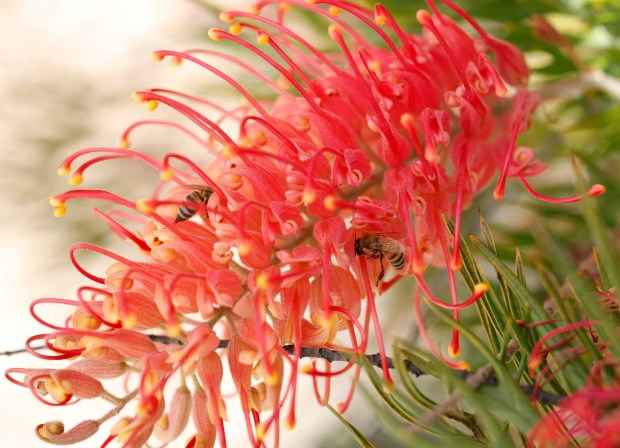 Grevillea ‘Superb.’ (K.C. Alfred / The San Diego Union-Tribune)
In 2013, they began the first section in the lower garden below the house. In the former children’s play area, they removed massive quantities of overgrowth but, at Susan’s request, retained the grassy area for their anticipated future grandchildren’s play space. They removed the children’s sandbox and replaced it with a patio dining set. Sterman replanted the adjacent beds with an array of native plants in a “hot” color palette of reds, oranges and yellows. Among the plants she selected for this area were several types of agave, aloe, alstroemeria, ceanothus and salvia, as well as dozens of other drought-resilient plants.
For the second phase about two years later, she redesigned the pool area, removing the heavy wrought-iron fence and thick oleander hedge and replanting again with a mainly hot palette — yellow Calylophus (Mexican sundrops), white Matilija poppies, red sedum, orange Grevillea and California poppies, and yellow palo verde trees. Giant agaves, lomandra, aeoniums, aloes, blue grasses and sages covered the slope from the house to the pool. Sterman chose fast-growing native toyon and lemonade berry trees to replace the screening the removed hedge had provided.
Farther along the path in the garden’s coolest part, she sited an orchard of 13 fruit trees. She separated the multiple varieties of citrus at one end from the stone fruit and apple trees at the grove’s other end because they require different watering schedules.
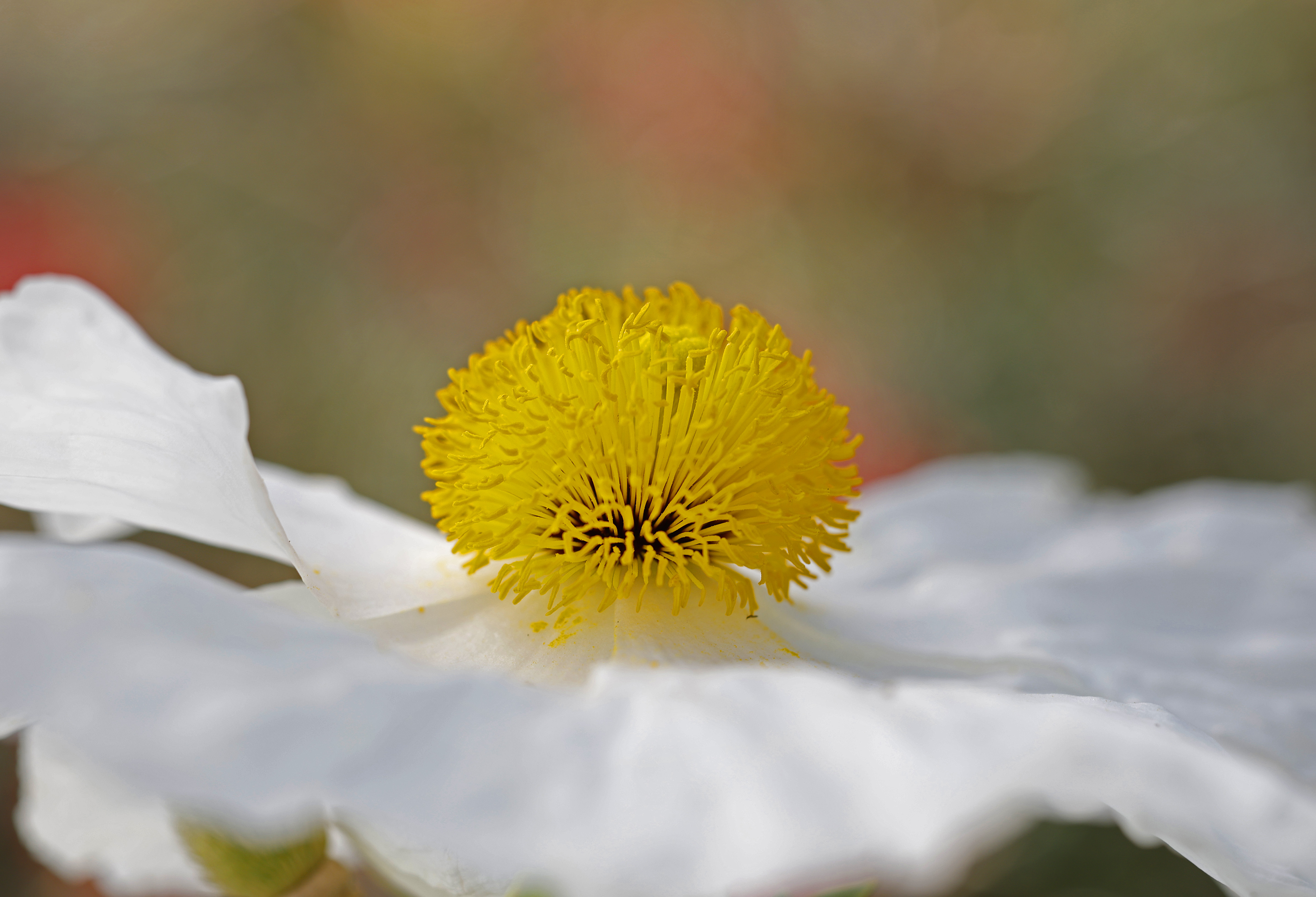
Matilija poppy. (K.C. Alfred / The San Diego Union-Tribune)
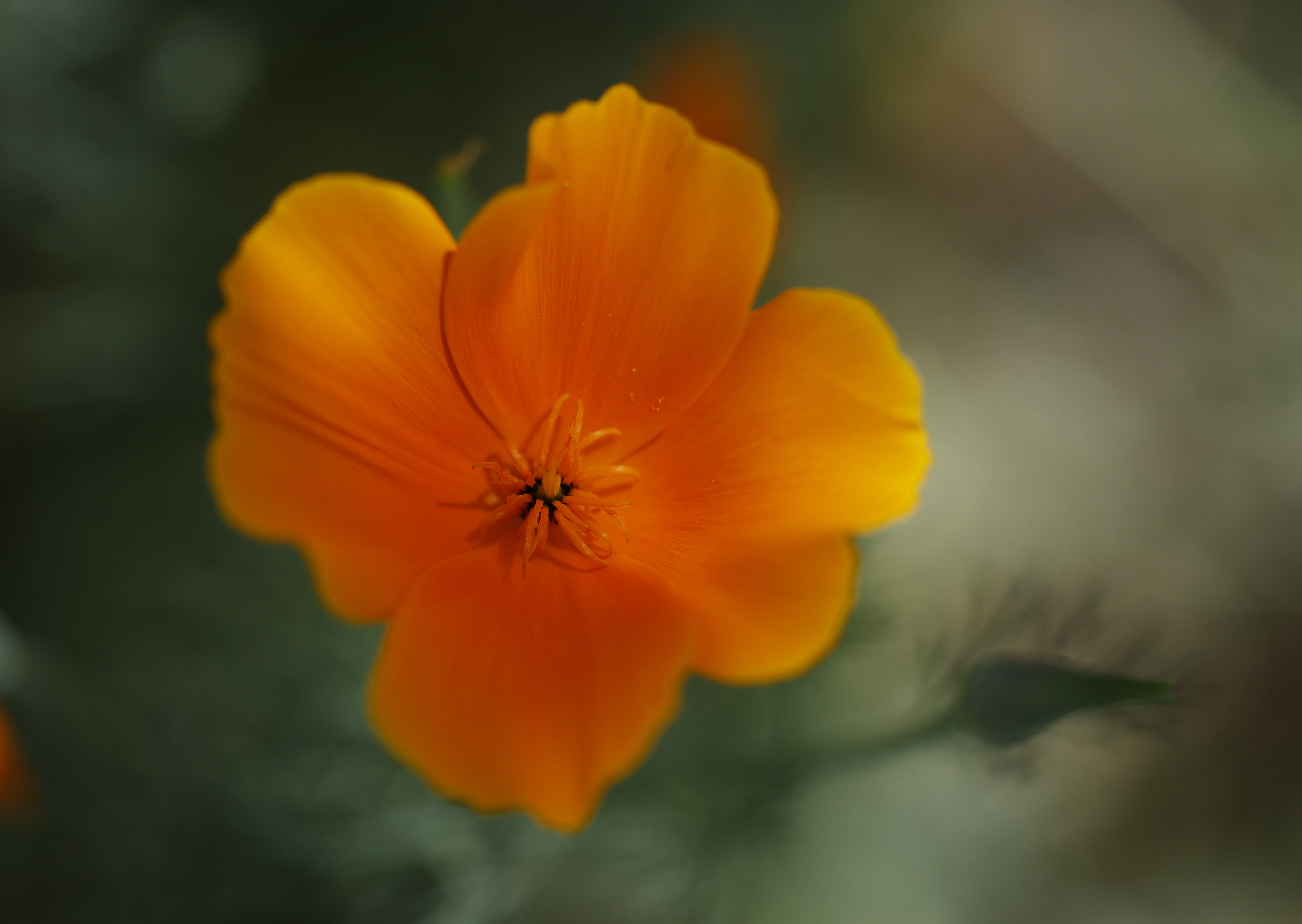
California poppy. (K.C. Alfred / The San Diego Union-Tribune)
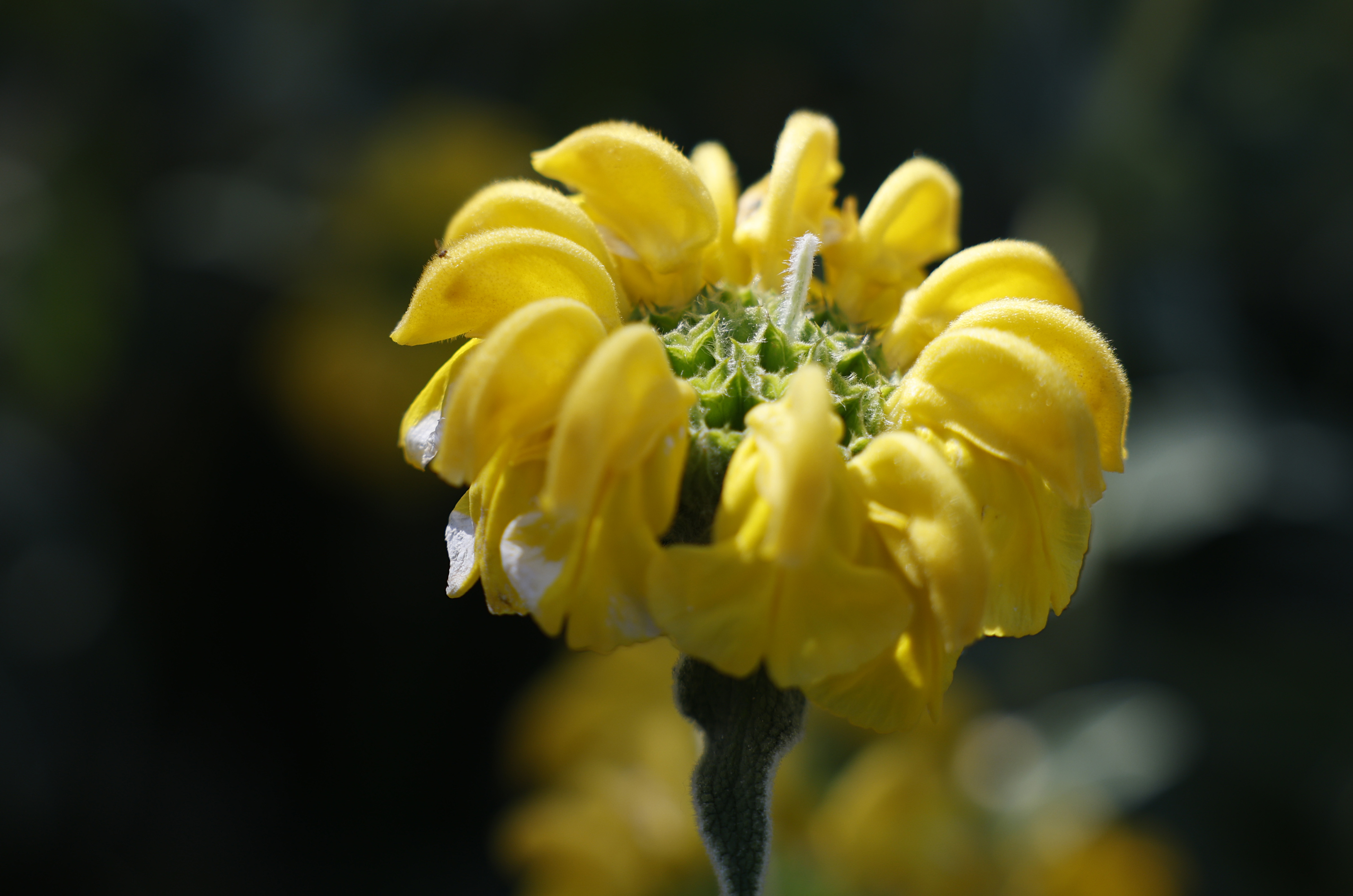
Jerusalem sage. (K.C. Alfred / The San Diego Union-Tribune)
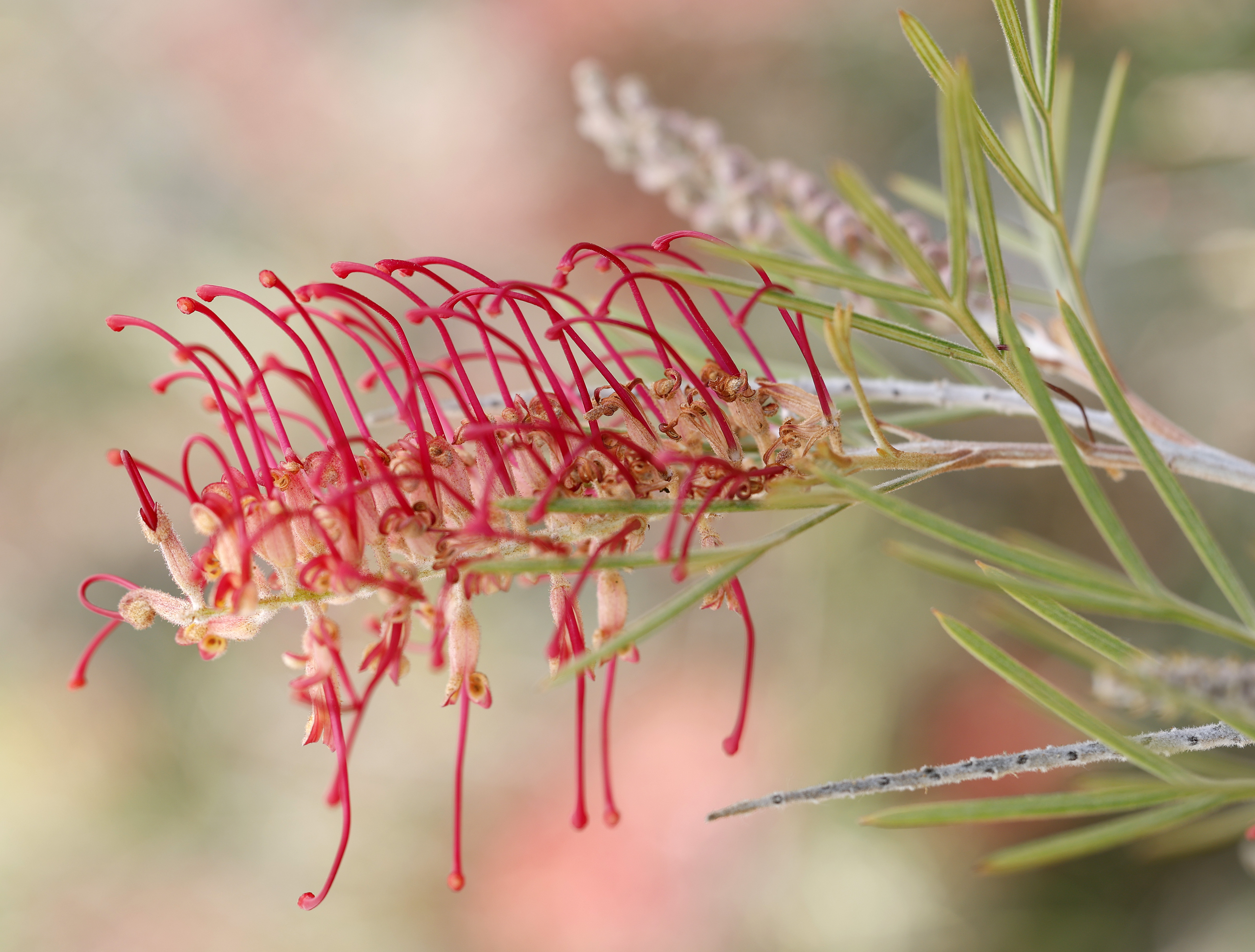
Grevillea ‘Spirit of Anzac.’ (K.C. Alfred / The San Diego Union-Tribune)
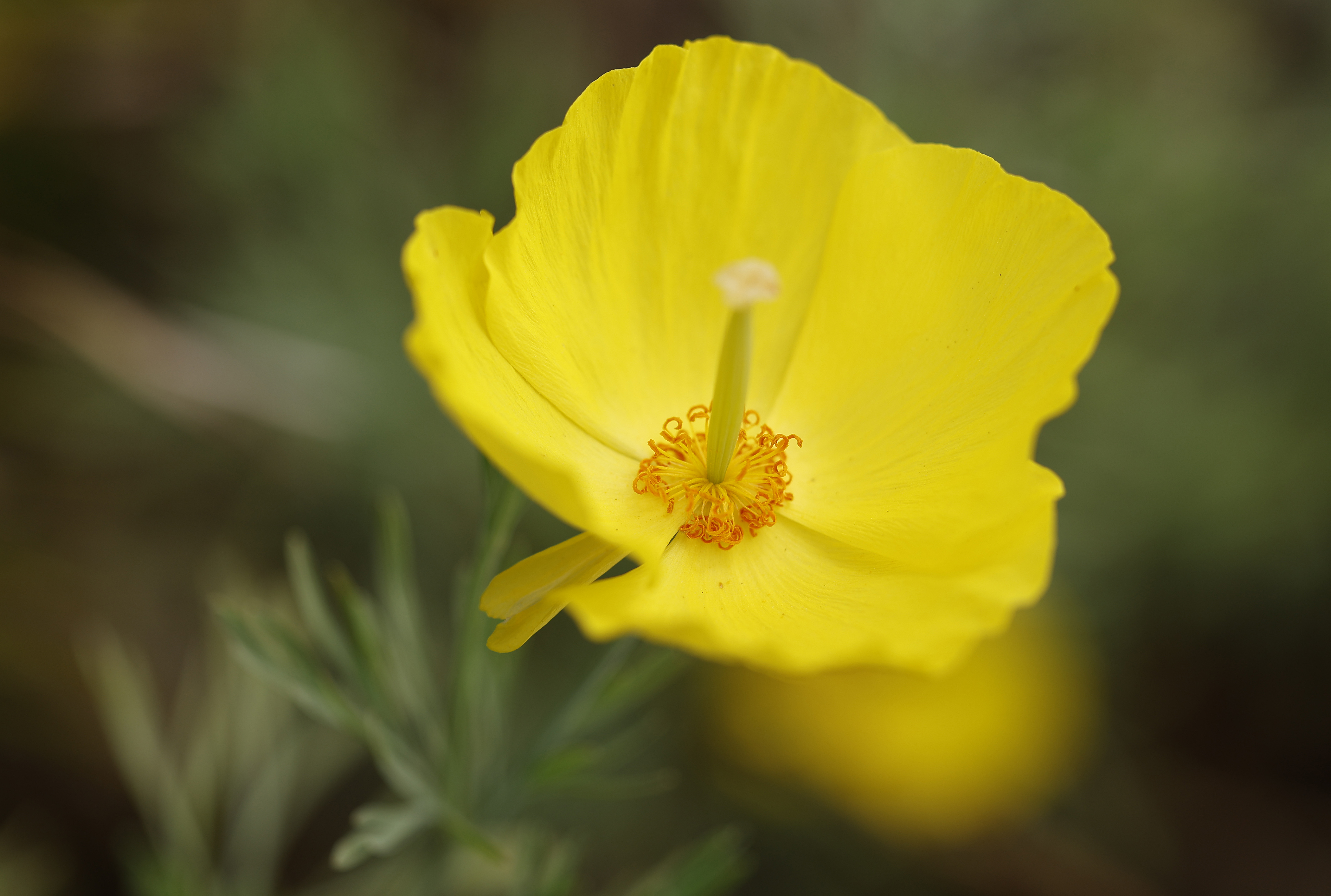
Mexican tulip poppy. (K.C. Alfred / The San Diego Union-Tribune)
Show Caption
1 of 5
Matilija poppy. (K.C. Alfred / The San Diego Union-Tribune)
The nearby meadow, surrounded by mixed Mediterranean-climate and native plants, includes the recent addition of a brilliant red-flowering, Australian-developed Grevillea ‘Spirit of Anzac.’ It thrives in its chosen spot, a beacon for honeybees.
In early spring, the meadow — like the sloping rock garden fronting the house — fills with California poppies. Neither Root nor Sterman knows how the poppies arrived, because they weren’t present in the old garden and weren’t planted in the new.
“I am not sure how the seeds got there. Maybe they had been there for decades but were shaded out by the dense vegetation. It’s a head-scratcher for sure,” she said.
Sterman repeated the process for the third phase, the lower kitchen garden, so-called because the kitchen overlooks this planted slope at the rear of the house. This involved removing another overgrown hedge and installing a fence to protect the Roots’ dogs from coyotes. She hid this behind massed mixed natives and Mediterranean plants of varying heights.
For the fourth phase, focused on distinguishing the home’s front and back entrances and installing an appealing garden visible from the front windows, Sterman challenged herself to do something different.
Replacing her typical hot color palette, she opted for softer shades of blue, blue-gray, pinks, roses and purples. Building upon the existing blue-gray olive and rose crape myrtle trees marking the front entrance, she selected vivid purple irises plus variegated lavender, chalk dudleya, blue-toned agave, purple-leaved vitex and rose-blooming buckwheat she discovered on San Miguel Island. And, to fill the view from the front window, she planted early spring-blooming daffodils and pink-flowering Albizia or mimosa trees.
The final two phases were the slope facing the front of the house and a scenic lookout at a property high point. These were challenging areas to replant because they were steep, rocky and covered in gnarled pride of Madeira. Sterman, after much contemplation, decided to use natives but didn’t develop a detailed plan. Instead, as usual, she laid out the plants with the landscape contractor.
“At some point, I said, ‘I’ve got to wing this.’ I ordered a ton of plants. The landscape contractor and I started in one corner and worked our way through. It’s almost all rock, with maybe a couple of inches of soil,” she said.
She used lots of repetition with the natives, leaving a few existing plants that were interesting and worked. Highlights include a pink-flowering chaparral mallow, rarely seen in gardens, a white sage valued by Native Americans and the buckwheat Sterman found in San Miguel Island, plus several new oaks.
Her gamble paid off. Most took hold, but some she later tagged for replacement during her annual winter visit to the garden to identify struggling or dying plants.
For the final section, Sterman wanted to create a small patio as a destination, which Root thought his family would never use. Rocks from the property surround the patio with its benches and firepit, located atop a trail through the native-planted front slope. The site has become one of his own and his granddaughters’ favorite spots.
“This is one of my regular spots on my meditation tour every evening,” Root explained.
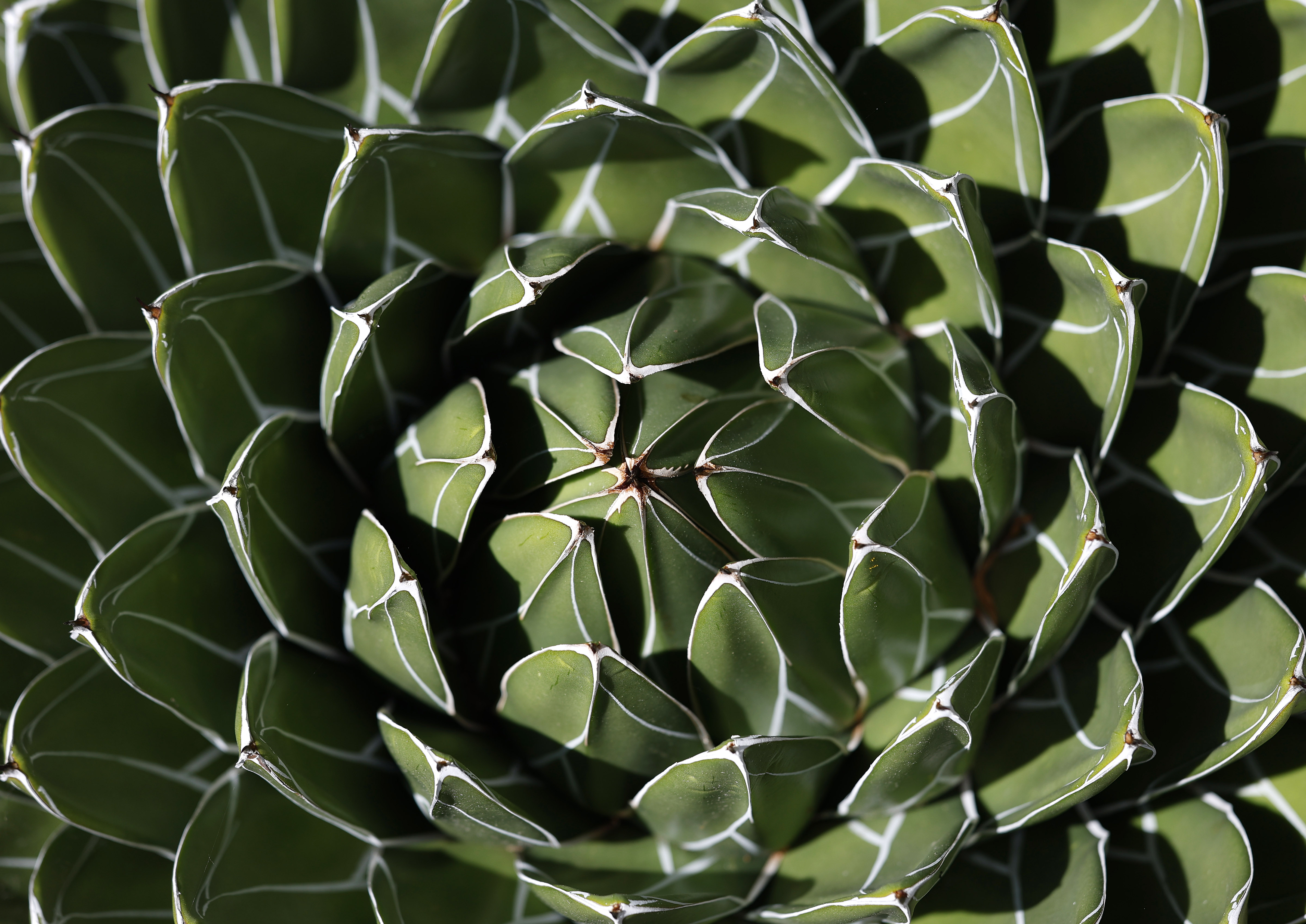
Agave victoriae-reginae. (K.C. Alfred / The San Diego Union-Tribune)

A variety of plants and trees surround the pool. (K.C. Alfred / The San Diego Union-Tribune)
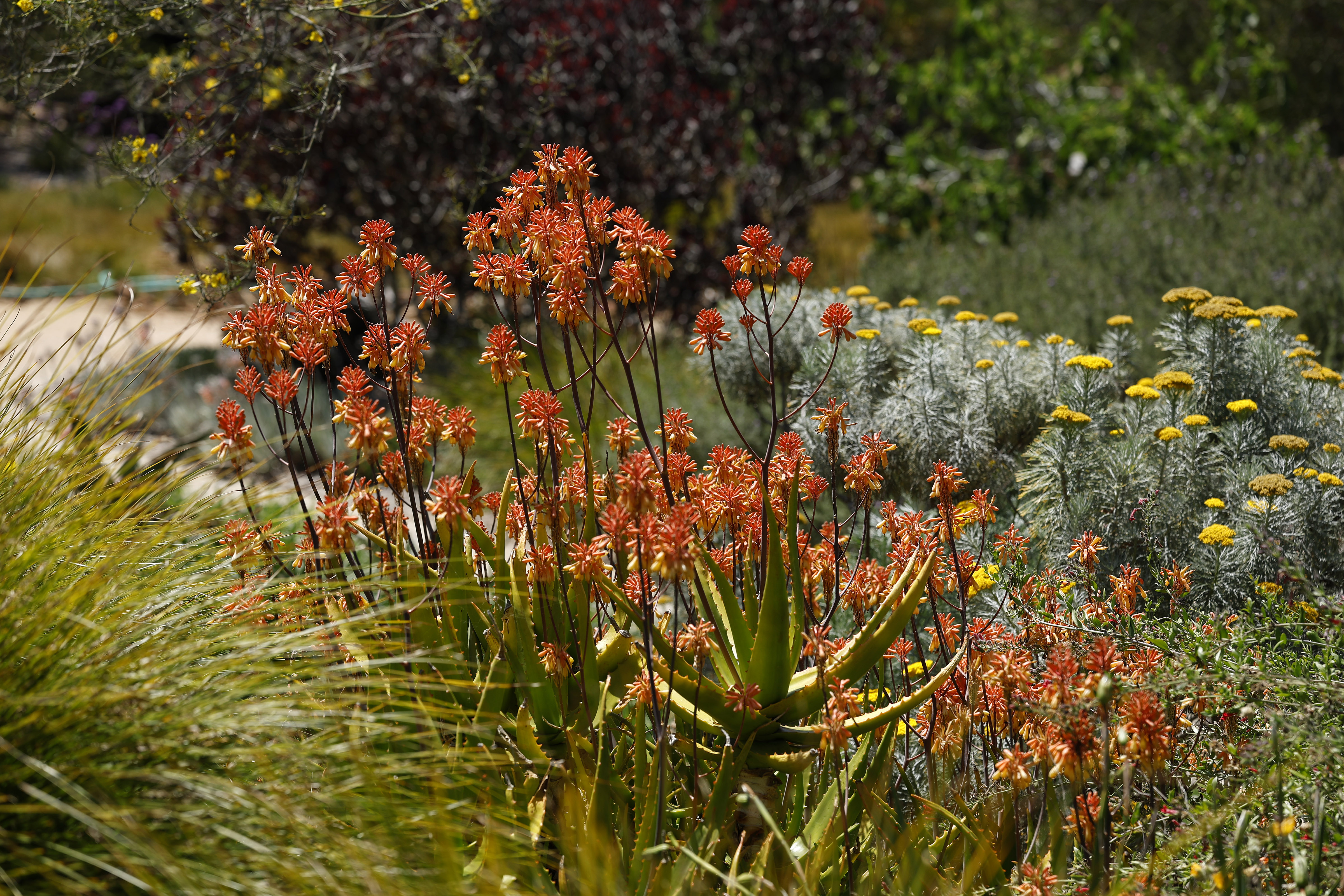
Aloe camperi. (K.C. Alfred / The San Diego Union-Tribune)
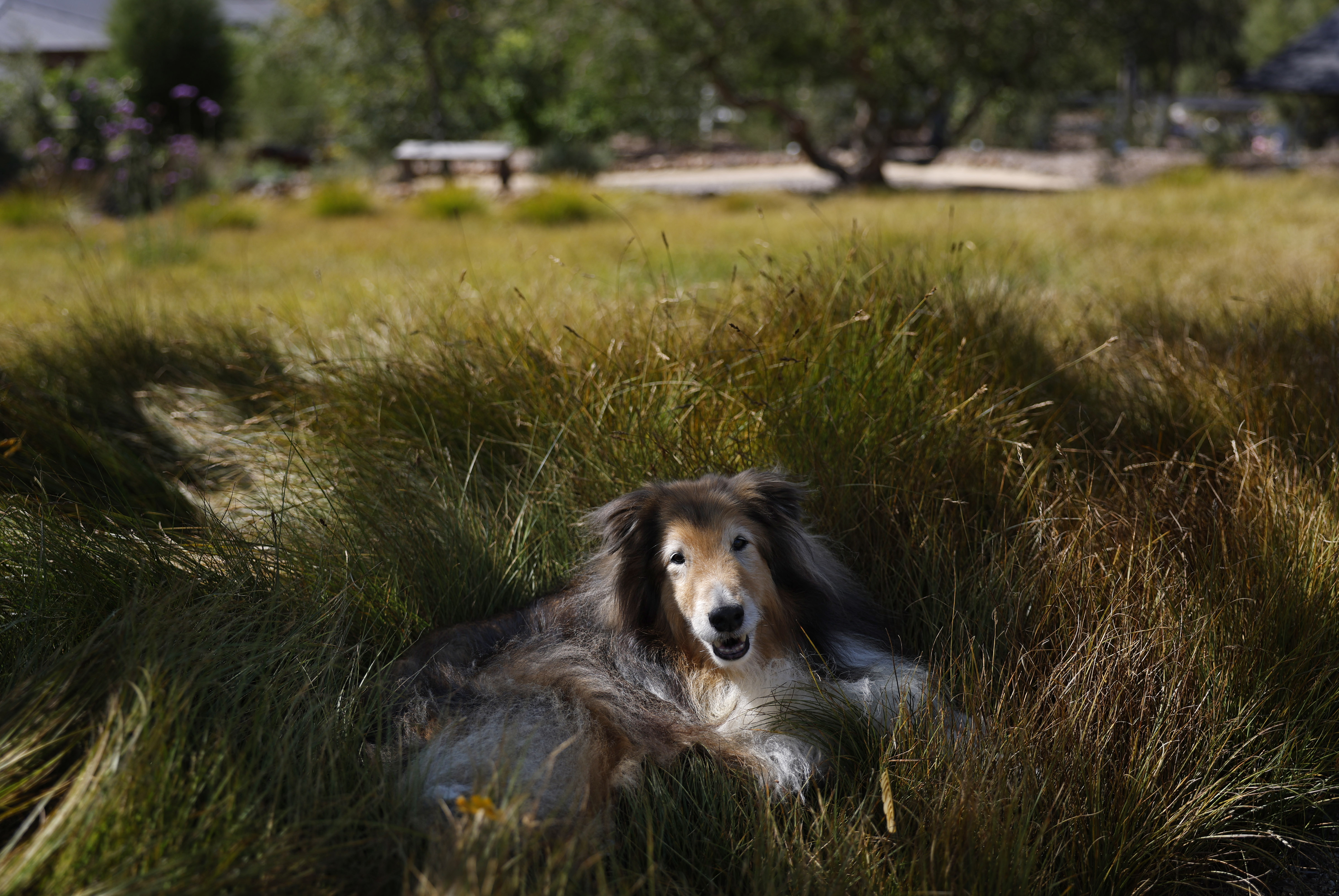
Family dog Curry finds a shady resting spot on a bed of Carex praegracili, or field sedge. (K.C. Alfred / The San Diego Union-Tribune)
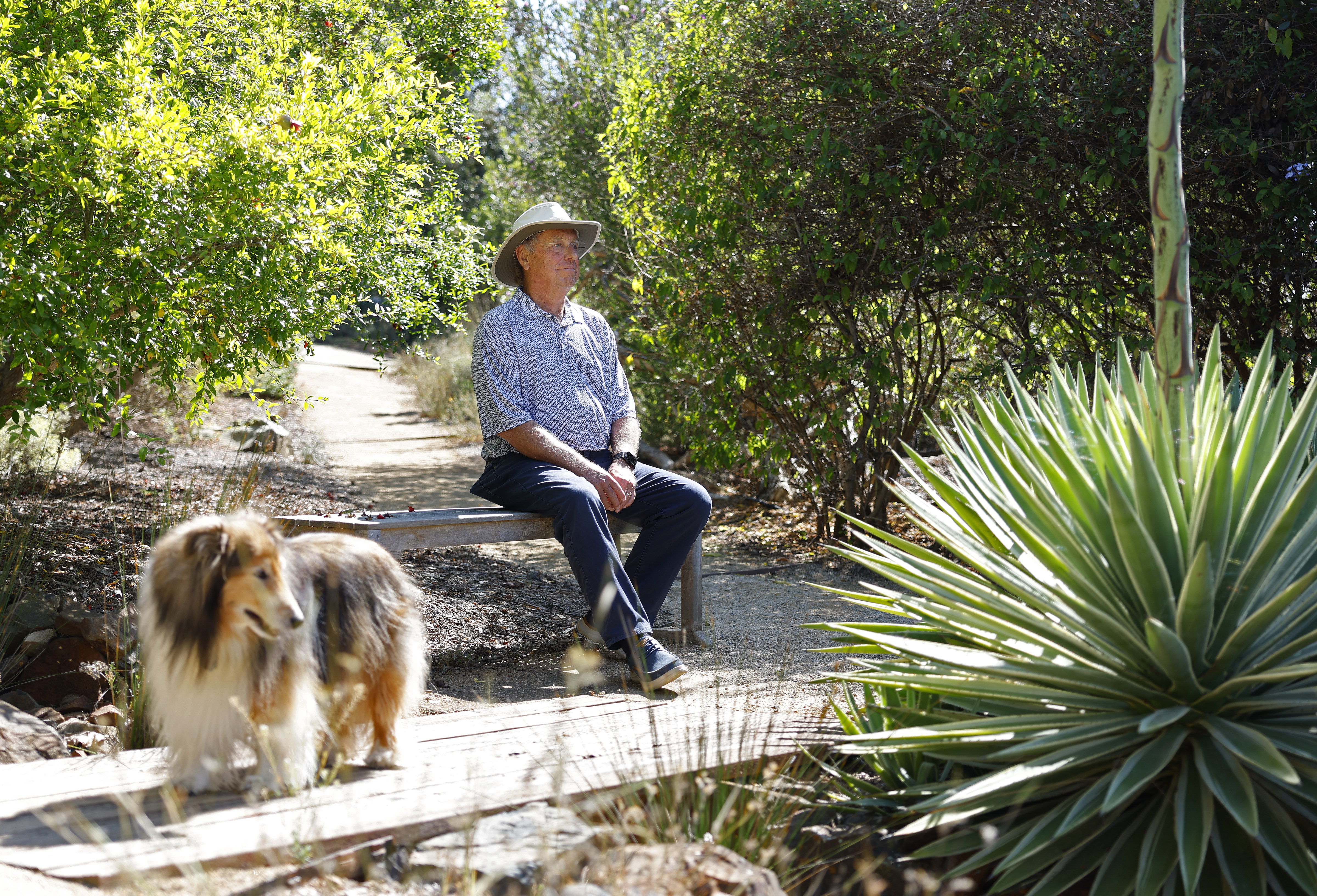
Stephen Root sits on one of the several benches in his garden, as dog Curry lingers nearby. There are multiple spots to sit and enjoy the garden. (K.C. Alfred / The San Diego Union-Tribune)
Show Caption
1 of 5
Agave victoriae-reginae. (K.C. Alfred / The San Diego Union-Tribune)
Now that the garden is complete aside from normal plant replacements, Sterman recognizes it as the expression of her own evolution and growth as a garden designer as well as changing views on waterwise gardening.
“When I first started as a garden designer I was really focused on using natives, but I didn’t have a lot of experience using them quite yet, because they weren’t popular. Then, while I was working on my book, ‘Hot Color, Dry Garden,’ I was working here. This garden became a laboratory for the book,” Sterman said.
She explained that while developing Root’s garden, many newly available drought-resilient plants came on the market, many from the similar Mediterranean-climate regions of South Africa, Australia and Chile. Few other designers had discovered them yet.
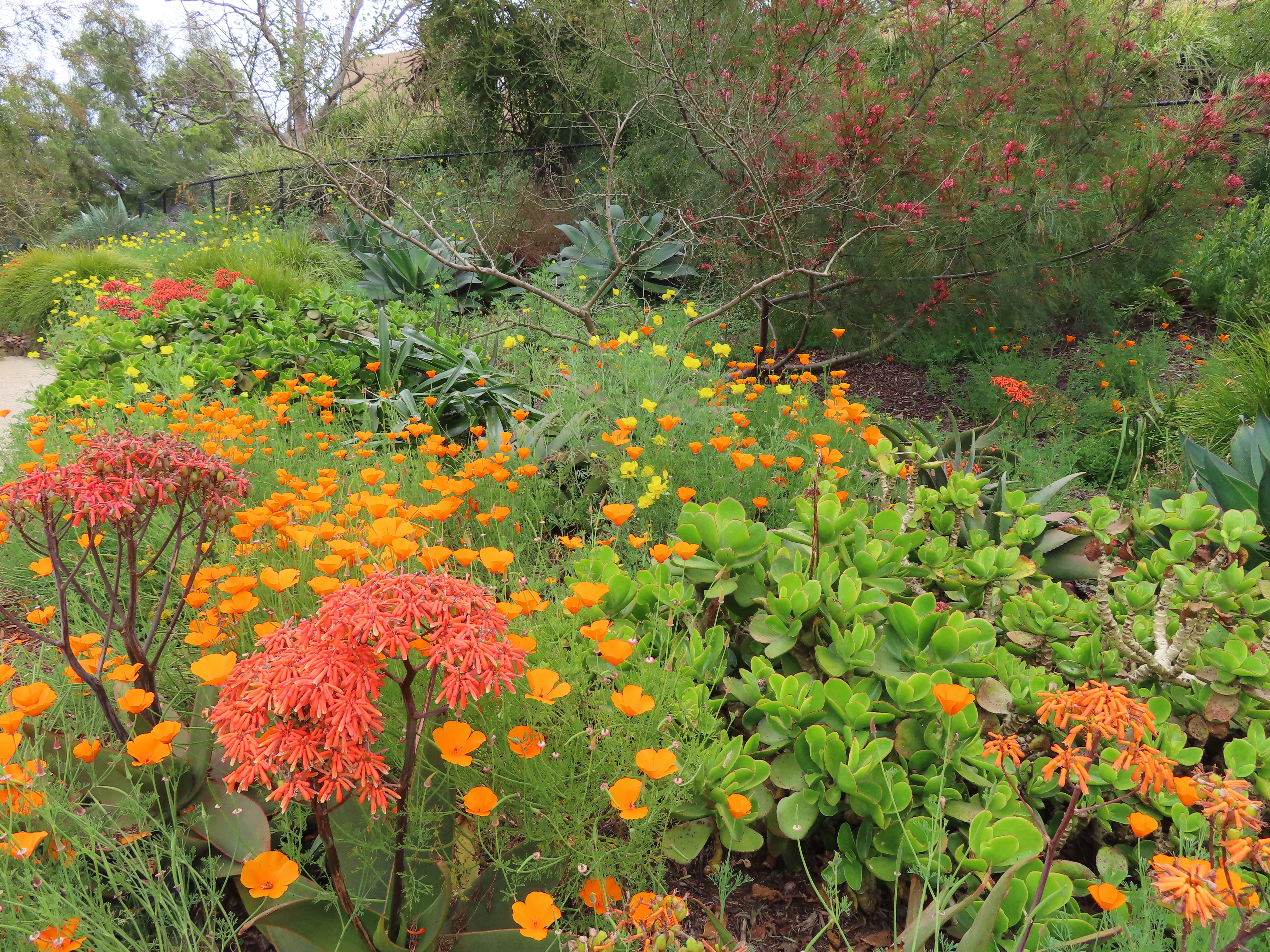
California poppies and coral aloe add color to a walkway below the house, in this image taken during spring bloom. (Nicole Sours Larson)

Brilliant purple iris greet visitors at the entrance to the path to the Root home, in this photo taken during a spring garden tour. (Nicole Sours Larson)
Show Caption
1 of 2
California poppies and coral aloe add color to a walkway below the house, in this image taken during spring bloom. (Nicole Sours Larson)
“It gave me an opportunity to use those plants and use my imagination in how they would work together. One thing I’ve learned over the years, that when you design a garden and you look at it on paper, and when it’s first planted, you see what it is today. I’m not thinking about today. I’m thinking about it 20 years from now, how tall and wide plants will grow,” she added.
Root is delighted with the results of his partnership with Sterman, creating the garden of his dreams.
“The garden keeps getting more and more beautiful as the plants grow and they blend with each other. It’s what we call ‘naturalize.’ And I enjoy it more than I had ever imagined. That’s why I have little benches three or four spots around the yard and visit around sunset. Almost every day I’ll go out there. It’s like my one-hour meditation time. I just go around, sit in different spots and enjoy it,” Root said.
Nan Sterman is a garden designer, educator, journalist and the host of “A Growing Passion” on public television. Contact her through waterwisegardener.com.
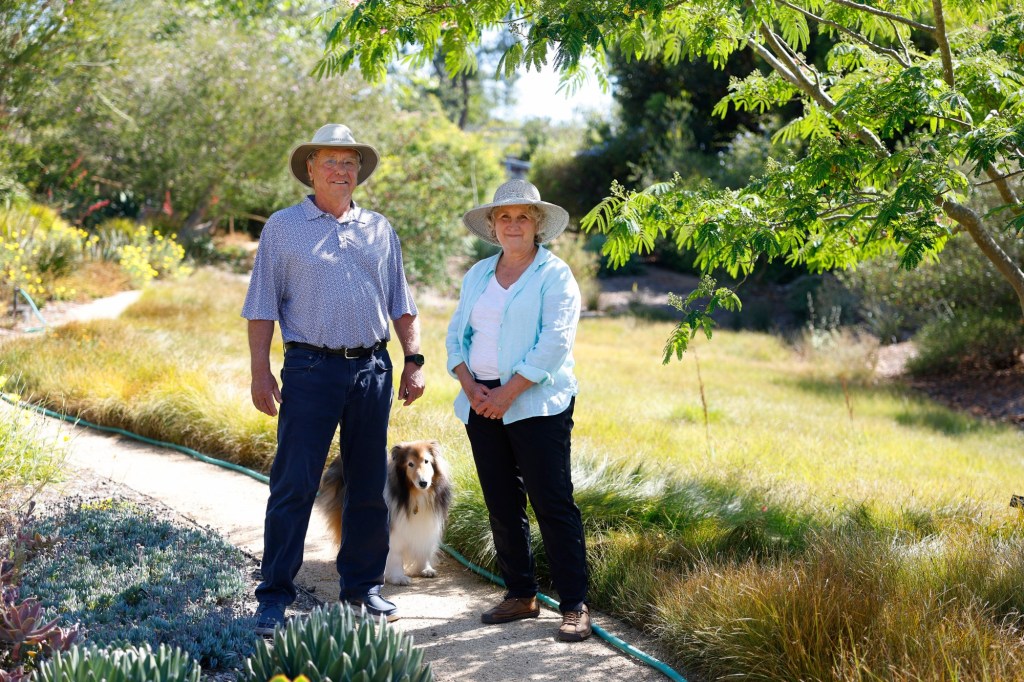
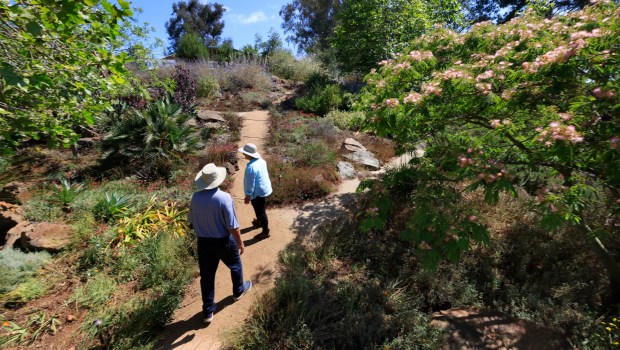 Garden designer Nan Sterman and homeowner Stephen Root walk the now-completed garden with its mature plantings. (K.C. Alfred / The San Diego Union-Tribune)