
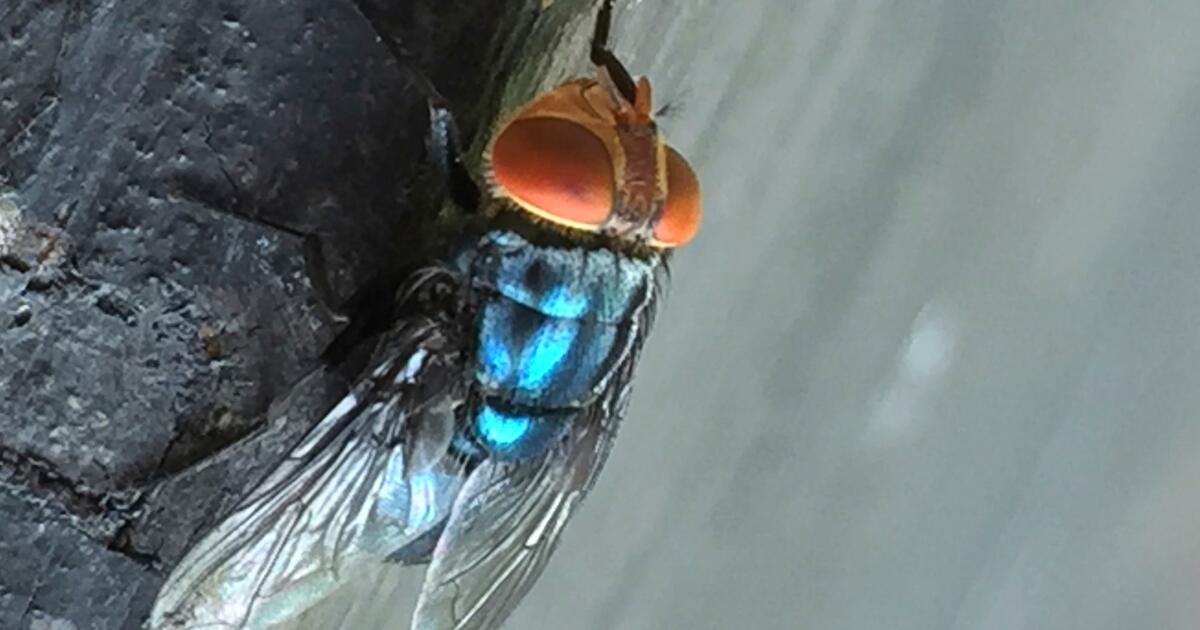
The New World screwworm, a parasitic fly, is making an unwelcome comeback this summer, 60 years after it was officially eradicated from the United States.
You’re reading the Essential California newsletter
L.A. Times reporters guide you through the most important news, features and recommendations of the morning.
By continuing, you agree to our Terms of Service, which include arbitration and a class action waiver. You agree that we and our third-party vendors may collect and use your information, including through cookies, pixels and similar technologies, for the purposes set forth in our Privacy Policy such as personalizing your experience and ads.
My colleague Karen Garcia, who has been reporting on the pests, told me all about the flies’ flesh-eating babies while she microwaved her lunch in the Los Angeles Times newsroom.
Unlike most maggots, which feed off decaying organic matter such as rotten food or roadkill, screwworm larvae feast upon live flesh and burrow into open wounds, she told me over her carnitas and white rice with cilantro.
Bon appétit!
Screwworms pose a deadly threat to wildlife and livestock and have, in the past, devastated the American cattle industry. As of Friday, no screwworm cases have been reported in California — a state that’s home to 5 million head of cattle, about 6% of the national herd — but their reemergence in other parts of the country has set off alarm bells across the agricultural industry at a time when beef prices are already on the rise.
The first cases
On June 3, the U.S. Department of Agriculture announced the first confirmed screwworm case after a 3-week-old calf in South Texas, near the U.S.-Mexico border, was found to have maggots “in its umbilical area.”
Since then, federal officials have reported eight more cases in Texas and New Mexico: five heads of cattle, two goats and one dog.
The California Department of Food and Agriculture on Thursday announced tightened restrictions on animals — including domestic pets such as cats and dogs and rabbits — entering the state from screwworm-affected places. The animals must be inspected by a veterinarian who provides a statement saying they are free of screwworm and to obtain a California entry permit, among other requirements.
Not for the squeamish: The basics of screwworm infection
Female screwworms lay their eggs — up to 200 to 300 at a time — in open wounds and bodily orifices such as the nose, ears, mouth or genitals, according to the Centers for Disease Control and Prevention. Human infections are rare but possible.
The eggs hatch into maggots that “eat live tissue, causing a worsening, often painful and foul-smelling wound,” per the CDC. If not treated early, the infection can cause extensive tissue damage or death.
The most horrifying fact Garcia shared was that a wound as tiny as a tick bite or a scratch can attract a female screwfly to lay her eggs.
She said humans are most at risk of being infected if they live near or work with livestock or if they travel to a place where the flies are present, such as South America or the Caribbean.
Ew. What was done about them in the past?
After a 1965 outbreak in the American Southwest, livestock producers in the U.S. and Mexico established a joint program for the eradication of the screwworm on both side of the border.
Scientists developed what’s called a sterile insect technique, exposing male screwworm flies to gamma radiation to make them infertile and then releasing them into the wild, where they began breeding with females.
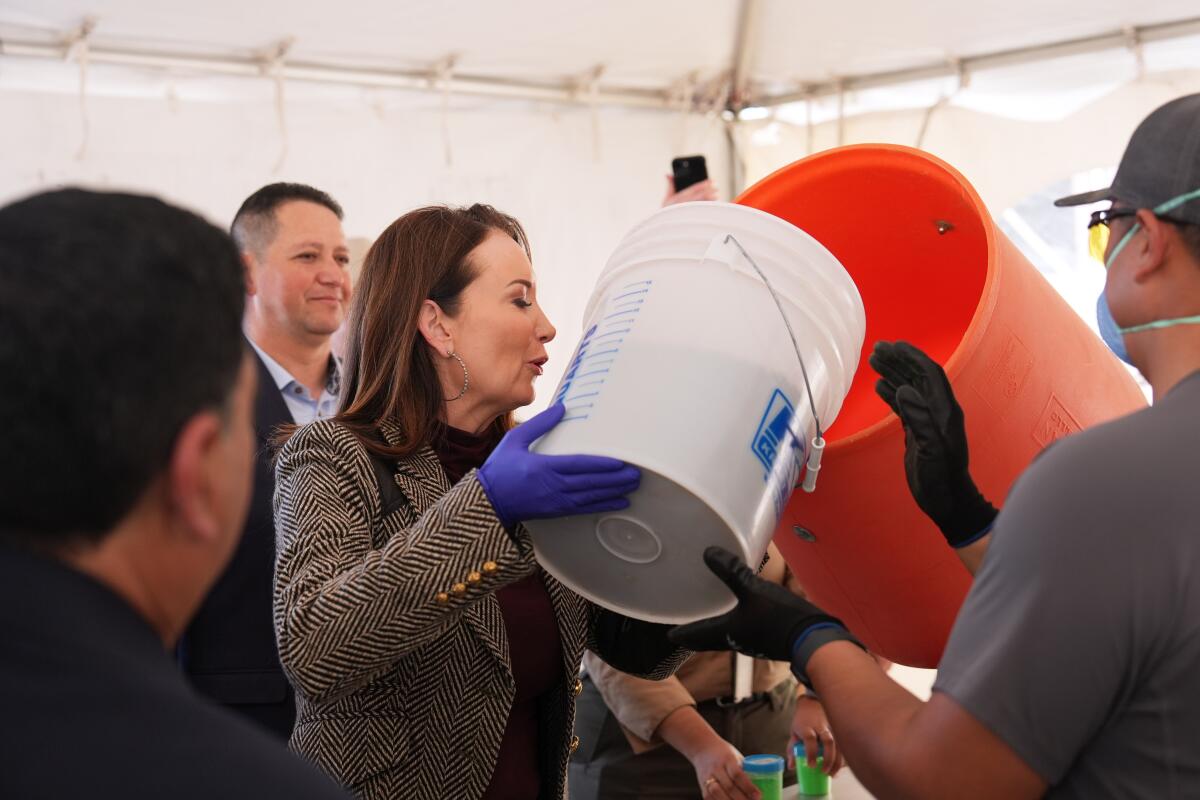
U.S. Secretary of Agriculture Brooke Rollins, center, at the opening of a New World screwworm sterile fly production facility in Edinburg, Texas, to combat the northward spread of the flesh-eating parasite.
(Eric Gay / Associated Press)
Since female New World screwworm flies normally only mate once, the “population progressively reduces and is, ultimately, eradicated,” according to the USDA.
The U.S. was declared free of indigenous screwworms in 1966, though cases have occurred in people and animals arriving from places where the flies still exist.
Garcia reported that the screwworm is endemic in South America and parts of the Caribbean and has been steadily moving north from Central America to Mexico since 2023. The federal agriculture department says it has actively monitored the fly’s movement. As of Friday, there were more than 2,000 active cases in Mexico.
Screwworm and beef prices
The arrival of the screwworm is “disrupting the transportation of animals and threatening to squeeze margins further for the struggling beef industry,” Bloomberg reported.
The U.S. cattle herd, with some 86 million head, is the smallest it has been since 1951, in large part because of drought and elevated production costs. That has raised the price of beef.
In May, American consumers paid an average of $7.064 for a pound of ground beef — up to 13% higher than a year earlier, according to the U.S. Bureau of Labor Statistics.
The screwworm is now threatening to make your burgers even more expensive.
Today’s top stories 
(Eric Thayer/Los Angeles Times)
Los Angeles Mayor ElectionWorld Cup 2026Trump Administration policies and reactionsThe U.S. and Iran are close to a deal to end their war, officials say. The emerging deal would reopen the Strait of Hormuz, ease sanctions and release frozen Iranian assets, potentially calming energy markets roiled by blocked Gulf shipments and a U.S. naval blockade.There are fewer ICE raids in Trump’s quiet crackdown. However, harsher rules are pushing immigrants to leave.Crime, courts and policingWhat else is going onThis morning’s must readOther must readsFor your downtime 
(Ron De Angelis/For The Times)
Going outStaying inL.A. Timeless
A selection of the very best reads from The Times’ 143-year archive.
Have a great day, from the Essential California team
Hailey Branson-Potts, staff reporter
Hugo Martín, assistant editor, Fast Break desk
Kevinisha Walker, multiplatform editor
Andrew J. Campa, weekend writer
Karim Doumar, head of newsletters
How can we make this newsletter more useful? Send comments to essentialcalifornia@latimes.com.