
Leader of California Assembly elections committee defends state’s process | CA Politics 360
Assembly member Gail Peleran, thank you so much for making time for us. Thanks for having me. Just as *** former county clerk and elections official, how do you think this election has gone so far? I think it’s gone extremely well. I think our 58 counties performed with great speed and security and transparency and. I hear turnout is probably going to be *** record high for *** primary as well, so that’s always reassuring as well that the voters are engaged in casting their votes and making their voice heard. And what do you make of the reaction from some voters, people who had been hoping perhaps like in Los Angeles that *** Spencer Pratt they wish would have gotten through. The president of the United States claiming that our election was rigged and just potentially just this broader sense of *** potential lack of confidence in our system. What’s your response to that? Yes, I think that that narrative has been, been put out there, and I don’t like to give it any oxygen. I think that it’s absolutely. You know when people vote, there’s winners and losers, and that is the beauty of our democracy and um I think it’s important that people have access to voting. I think it’s important that the elections officials are doing their due diligence to make sure that every eligible voter who’s cast. Ballot that ballot goes through scrutiny. The signatures compared on the envelope. If you voted in person, there’s *** big audit that goes on as far as the in-person voting as well. So when an elections official certifies that statement of vote, attests to the fact that these votes have been counted accurately. They have done all their due diligence and all their audits and all the work that they need to do to verify that result. Could there be any changes to give *** broader range of people though in the state more confidence in the process? I think that for the most part voters do feel confident in how their ballot is counted and that, and I do encourage people if they have any questions to go down. And meet with your county elections official, tour the votes, the voting locations, tour the elections office, see the process that they have as far as what happens when ballots come in and how they get processed, how they get counted, how they get recounted, and an audit that is done where every contest is manually recounted, so that process takes time. There’s 4 people that sit down to do that where 1%. reads the vote. Another person observes it, and two people record. So it’s *** very diligent, very time consuming process to ensure the accuracy of the vote. But has it always been this time consuming? I mean, you were an elections official in Santa Cruz County. I mean, has it always taken this long? It’s, you know, I don’t think it’s taken that long. I think it takes as long as necessary to ensure an accurate vote count and the The fact that we are sitting here on what is it now, the 8th day after the election, I think last night, *** week after the election, the media outlets have declared winners. So I feel like that’s pretty efficient, and we have passed legislation assembly Member Berman did *** bill last year that basically stated that these ballots need to be counted within 10 days. Elections officials rose to that occasion and made that happen. I have *** bill that was passed and signed into law, AB 626 that allows that male, male ballot voter who likes to sit at home, talk to family, and vote their ballot, but they want to make sure that ballots counted election night and maybe they like to wait until the very last day to get the latest in what’s happening in the field of who their selections are that they can now walk into *** polling site and they could be signed in as an in-person voter. And that ballot they voted from home can be put directly into the ballot box. So not every county can do that. I think LA is working on developing the tools to do something similar, but I know Placer County embraced this legislative idea and this new law that we have, and they implemented it, and I think they had 16,000 voters take advantage of that, and they were able to shave 3 days off their canvas, but I don’t think you’re ever going to be able to say. We’re gonna have election results on election night unless we totally change the way California votes. I don’t know if you’ve had *** chance to see the New York Times editorial board that came out today, um, it, I mean, was titled that California’s excuses are damaging faith in government and that the state should look for ways to build confidence and avoid practicing what they, and I quote the editorial board ineptitude, voluntary ineptitude. Your response to that? I mean these are your neighbors, these are your community members that are serving in the polls and doing this work, giving up their day, giving up their week to ensure that you have access to voting. So, uh, and there’s plenty of editorials that have different opinions about the process that we have the the work that we’ve done in. California to ensure that voters are enfranchised and not disenfranchised, so I think there’s just lots of opinions out there, but I stand behind our elections officials here in in the state of California, and I stand behind the voters that have done such *** great job in turning out and making their voice heard, and they deserve to. To go to sleep at night knowing that their vote was counted accurately and that it is uh secured and that it is accessible to people no matter what is your um you know if you’re *** person with *** disability, we want to make sure that you have access to voting that you can vote *** ballot independently and privately and if you’re in the military and serving our country overseas, your ballot gets to be voted and returned as well. Yeah, I mean people are getting their ballots weeks before the election and there is some criticism of California being willing to accept postmarked ballots that were postmarked on election day for another week out and in this New York Times editorial board there’s *** national conversation about Congress maybe making election day there’s *** court case as you mentioned out of Mississippi. I mean, uh, would you be opposed to election day being considered the national deadline for ballots? You know, I think that that would result in having to do *** lot more voter education and that if somebody is mailing *** ballot and wants to wait until that last day to get all the information and you’re somebody who’s not home where you can drop it off in *** county Dropbox and you have to mail it that will disenfranchise that voter and uh there’s but even if that voter has that ballot for weeks like has had I mean weeks to figure this. Everybody has the leisure and the time to be able to dedicate to voting that ballot. Some people, it does take them time. Sometimes there’s emergencies that come up. I have *** friend who her mother in Ohio had *** medical emergency and she had to fly out of town and she took her ballot with her to go deal with her mother’s emergency and she was able to drop that ballot in the mailbox in Ohio and it reached us here in Santa Cruz County. We were able to count it because it was received on time, so things happen. We all don’t have the luxury of time and so also our taxes are, you know, when we pay our taxes we have until the postmark on the last day to file. So this is something that people are used to and we’re not alone. There are 14 other states that do this postmark role, but certainly when Watson, the decision out of Mississippi comes out, we’re anxiously awaiting that opinion and understanding how that’s going to impact California and we will respond accordingly. I know the governor, the legislature has made clear there’s going to be some sort of budget money going toward helping this whole situation in November. What are you specifically looking for and hoping for in this state spending? Well, let me just say elections, county elections offices are are underfunded as of today, doing the work they’re doing as of today, and um and requiring them to do more work is going to cost more money. And um and the budget request I did was also around voter education and outreach because we don’t know what’s going to come our way, we don’t know what laws are going to change, we don’t know what executive orders are going to come down or what direction the US United States Postal Service is going to have as far as who’s going to get to receive *** ballot by mail and who is not. So there’s so much uncertainty right now that I think it’s really important that we have money set aside so we can. Appropriately educate voters and get them the information they need so they can have their voice heard and their ballot counted. So what exactly does that look like? Is that giving the money to like nonprofits? Is it for the state to like provide advertisements? What, what exactly? I think it’s *** multiple of pieces. I think the Secretary of State should certainly use. The funds I know county elections offices could also use the funds to be able to do their voter education and outreach through social media, through, you know, working with their local groups and organizations that are trusted messengers to get out the vote, so preparing materials that are in multiple languages so people understand how the laws have changed or whether the Rules have changed or how best to return your ballot. I know in this last election I was telling people that to not mail their ballot anytime after *** week before the election because I wanted to make sure that it did get into the hands of an elections official by 8 p.m. election night because I was uncertain what kinds of actions would take place in this election, so. I think voters need to be aware that we’re in ***, we’re living in extraordinary times that we can’t always predict what is going to happen, so we need to be ready to pivot and shift and to adjust our practices and behavior accordingly. I know in addition to the 35 million for education and outreach, the California Voter Foundation is also hoping for 55 million to help those counties with equipment, space, and staff. Is that something you’re supportive of? Oh sure, I mean getting counties. Money absolutely, but we’re also in June with the November election and uh I mean there’s no time to redesign *** ballot envelope for example those have already been ordered um and as far as purchasing more equipment, I mean sometimes it takes 6 months to get this equipment in tested, verified, and secured and ready to do the work that it needs to do. So, um, you know there’s certainly ways that money can be utilized to improve the elections process and not only the experience for voters. But also for the work that the elections officials are doing, so it’s absolutely welcomed. Yes, Governor Gavin Newsom, I mean, he’s also said he wishes this count were faster. He’s worried. I mean, he called it in May that there would be this rhetoric around our election system and that the Trump administration would essentially do what they ended up doing this past week, and then, you know, the Secretary of State, when, when I asked her, can we expect this election to be faster than in years past, she said, well. Uh, and we’ll, you know, we’ll get the votes in, the counts in when we do. What do you make of, is there *** disconnect between the Secretary of State and the governor from, from your perspective? I mean, you’re *** totally outside body from this. So what do you, what do you, Is there *** difference? We all want results faster. We all wanna know. We all wanna know who the winners are and who’s, who’s not. And that’s and as an elections official, *** former elections official, I know I wanted to be done with the work myself. I don’t want it to linger on and but the reality is that you know the observers are there, people are there watching the process taking place. I know LA, they’re they’re processing 200,000 ballots *** day. And and we have counted now over 8.6 million ballots, and I think we’re down to 744,000 so I don’t think those margins now are wide enough where we know who is going to be going on to November or who’s won *** local contest and who has not, so. Um, you know, there’s, there’s lots of different opinions and emotions around elections and there are some counties, Sacramento County for example, who, you know, they updated their numbers on election night, took *** break, came back Friday, took *** break, nothing Monday, came back Tuesday. I mean, should counties, you know, be doing what LA essentially did and process these daily to help? Well, I think the Berman bill did talk about more frequent updates of vote counts and, um, again I, I. I don’t think election officials are taking *** break necessarily. I think they’re continuing to do the work that they need to do, whether it’s auditing the precincts or the vote centers or doing the manual recount or, you know, checking the signatures coming in on the ballots or processing the provisional same day voter registration, making sure this voter did not also vote in another county to verify that everything is done legitimately and accurately. So I think the elections officials are really The heroes in this where they’re working nonstop to ensure *** safe and accurate and as expeditious as possible vote count. To be clear, I didn’t mean like *** break. I meant *** break from from the updates, but um in terms of just again looking at the budget, this is ***, I mean the time of year where all this is worked out. I mean you all haven’t landed on *** number yet. No, we’re continuing to advocate and to push for the number that we feel is necessary in this election and um. You know, but there’s, yeah, we shall see. OK. Anything else you think we should know about in this space? You know, I just think it’s important to know that, um, you know, California feels very strongly about ensuring that voters are enfranchised and that they have every opportunity to make their voice heard and for voters. There, you know, make sure you’re registered, make sure you’re registered at the correct address and check your voter status online through the Secretary of State’s website. Sign up for ballot tracking so you know when that ballot’s in the mail and, and be prepared to vote and have your voice heard and take advantage of voting in person or take advantage of the law that I did that allows you to walk in and. Be turned into an in-person voter. So you know elections are *** human process, you know, we’re all involved in this, and I think that we all need to be working toward that same goal to ensure that our ballots, that our elections are as safe and accurate and transparent and accessible and timely as possible. All right, Sunlen Member Peron, we really appreciate your time. Thank you so much. All right, be well.
Leader of California Assembly elections committee defends state’s process | CA Politics 360

Updated: 8:25 AM PDT Jun 14, 2026
The leader of the California Assembly’s Elections Committee defended the state’s elections system despite criticism this week from some voters, the president and various national media outlets including The New York Times. “I think it’s gone extremely well,” said Assemblymember Gail Pellerin, D-Santa Cruz, who served as a county elections official for decades before being elected to the State Assembly. She made the remarks during an interview on California Politics 360. “I think our 58 counties performed with great speed and security and transparency, and I hear turnout is probably going to be a record high for a primary as well. So that’s always reassuring as well that the voters are engaged and casting their votes and making their voice heard,” she said. Elections officials across California faced criticism after it took nearly a week to tabulate the results of the Los Angeles mayor’s race to give media outlets enough information to call the winners of the race. A similar situation happened with the governor’s race, which took a week before the race was called. Experts have said more conservative and Republican voters turned in their ballots early, while many Democrats waited until the last minute to vote. When asked about concerns from people on social media and claims from the president of the United States that the state’s election was rigged, Pellerin said, “I don’t like to give it oxygen.” Pellerin didn’t directly respond when asked if any changes could be made to state law to give a broader range of people more confidence in California’s ballot counting process. “I think that for the most part, voters feel confident in how their ballot is counted and that, and I do encourage people to, if they have any questions, to go down and meet with your county elections official, tour the voting locations, tour the elections office, see the process that they have as far as what happens when ballots come in and how they get processed,” she said. The Supreme Court is expected to decide if laws in 14 states should be invalidated that allow ballots to be received after Election Day if they are postmarked on Election Day. California law allows ballots post-marked on Election Day to be received by county officials until a week after the election. “I think that would result in having to do a lot more voter education,” Pellerin said when asked about the situation. “If somebody is mailing a ballot, and wants to wait until that last day to get all the information, and you’re somebody who’s not home where you can drop it off in a county drop box and you have to mail it, that will disenfranchise that voter.” Pellerin confirmed budget negotiations are ongoing to determine how much money the state will provide to help with elections moving forward. Pellerin has proposed to use $35 million for outreach and education. When asked how exactly that money would be used, she confirmed it could be used by the Secretary of State’s office, county elections officials and nonprofit groups to inform voters about how laws have changed and the best ways to return a ballot and to return it early. The California Voter Foundation has also requested $55 million for county elections offices to help with space, equipment and staffing. When asked if she would be willing to approve the money, Pellerin said “getting counties more money, absolutely.” “But we’re also in June with the November election,” she continued. “There’s no time to redesign a ballot envelope, for example. Those have already been ordered. And as far as purchasing more equipment, I mean, sometimes it takes six months to get this equipment tested, verified and secured and ready to do the work that it needs to do.” Pellerin also talked about the dynamic between Gov. Gavin Newsom and the secretary of state, she also addressed the inconsistency among counties when it comes to processing ballots. You can watch the full conversation in the video player above. KCRA 3 Political Director Ashley Zavala reports in-depth coverage of top California politics and policy issues. She is also the host of “California Politics 360.” Get informed each Sunday at 8:30 a.m. on KCRA 3.
The leader of the California Assembly’s Elections Committee defended the state’s elections system despite criticism this week from some voters, the president and various national media outlets including The New York Times.
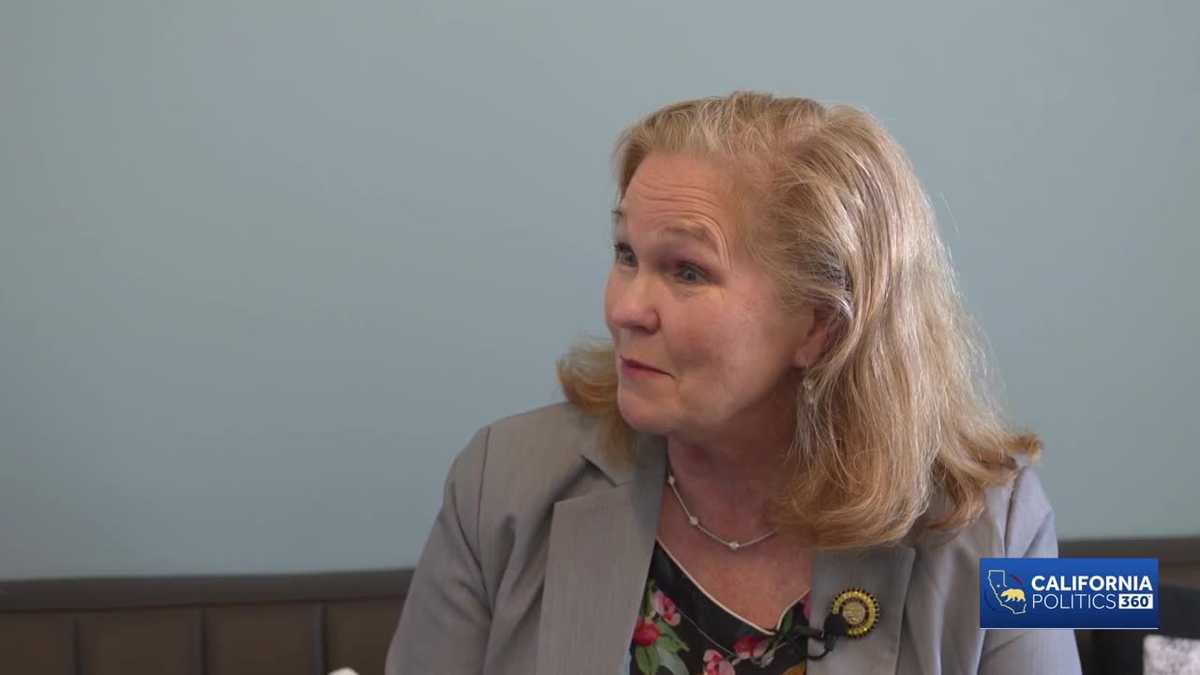
“I think it’s gone extremely well,” said Assemblymember Gail Pellerin, D-Santa Cruz, who served as a county elections official for decades before being elected to the State Assembly. She made the remarks during an interview on California Politics 360.
“I think our 58 counties performed with great speed and security and transparency, and I hear turnout is probably going to be a record high for a primary as well. So that’s always reassuring as well that the voters are engaged and casting their votes and making their voice heard,” she said.
Elections officials across California faced criticism after it took nearly a week to tabulate the results of the Los Angeles mayor’s race to give media outlets enough information to call the winners of the race. A similar situation happened with the governor’s race, which took a week before the race was called. Experts have said more conservative and Republican voters turned in their ballots early, while many Democrats waited until the last minute to vote.
When asked about concerns from people on social media and claims from the president of the United States that the state’s election was rigged, Pellerin said, “I don’t like to give it oxygen.”
Pellerin didn’t directly respond when asked if any changes could be made to state law to give a broader range of people more confidence in California’s ballot counting process.
“I think that for the most part, voters feel confident in how their ballot is counted and that, and I do encourage people to, if they have any questions, to go down and meet with your county elections official, tour the voting locations, tour the elections office, see the process that they have as far as what happens when ballots come in and how they get processed,” she said.
The Supreme Court is expected to decide if laws in 14 states should be invalidated that allow ballots to be received after Election Day if they are postmarked on Election Day. California law allows ballots post-marked on Election Day to be received by county officials until a week after the election.
“I think that would result in having to do a lot more voter education,” Pellerin said when asked about the situation. “If somebody is mailing a ballot, and wants to wait until that last day to get all the information, and you’re somebody who’s not home where you can drop it off in a county drop box and you have to mail it, that will disenfranchise that voter.”
Pellerin confirmed budget negotiations are ongoing to determine how much money the state will provide to help with elections moving forward. Pellerin has proposed to use $35 million for outreach and education.
When asked how exactly that money would be used, she confirmed it could be used by the Secretary of State’s office, county elections officials and nonprofit groups to inform voters about how laws have changed and the best ways to return a ballot and to return it early.
The California Voter Foundation has also requested $55 million for county elections offices to help with space, equipment and staffing.
When asked if she would be willing to approve the money, Pellerin said “getting counties more money, absolutely.”
“But we’re also in June with the November election,” she continued. “There’s no time to redesign a ballot envelope, for example. Those have already been ordered. And as far as purchasing more equipment, I mean, sometimes it takes six months to get this equipment tested, verified and secured and ready to do the work that it needs to do.”
Pellerin also talked about the dynamic between Gov. Gavin Newsom and the secretary of state, she also addressed the inconsistency among counties when it comes to processing ballots. You can watch the full conversation in the video player above.
KCRA 3 Political Director Ashley Zavala reports in-depth coverage of top California politics and policy issues. She is also the host of “California Politics 360.” Get informed each Sunday at 8:30 a.m. on KCRA 3.