
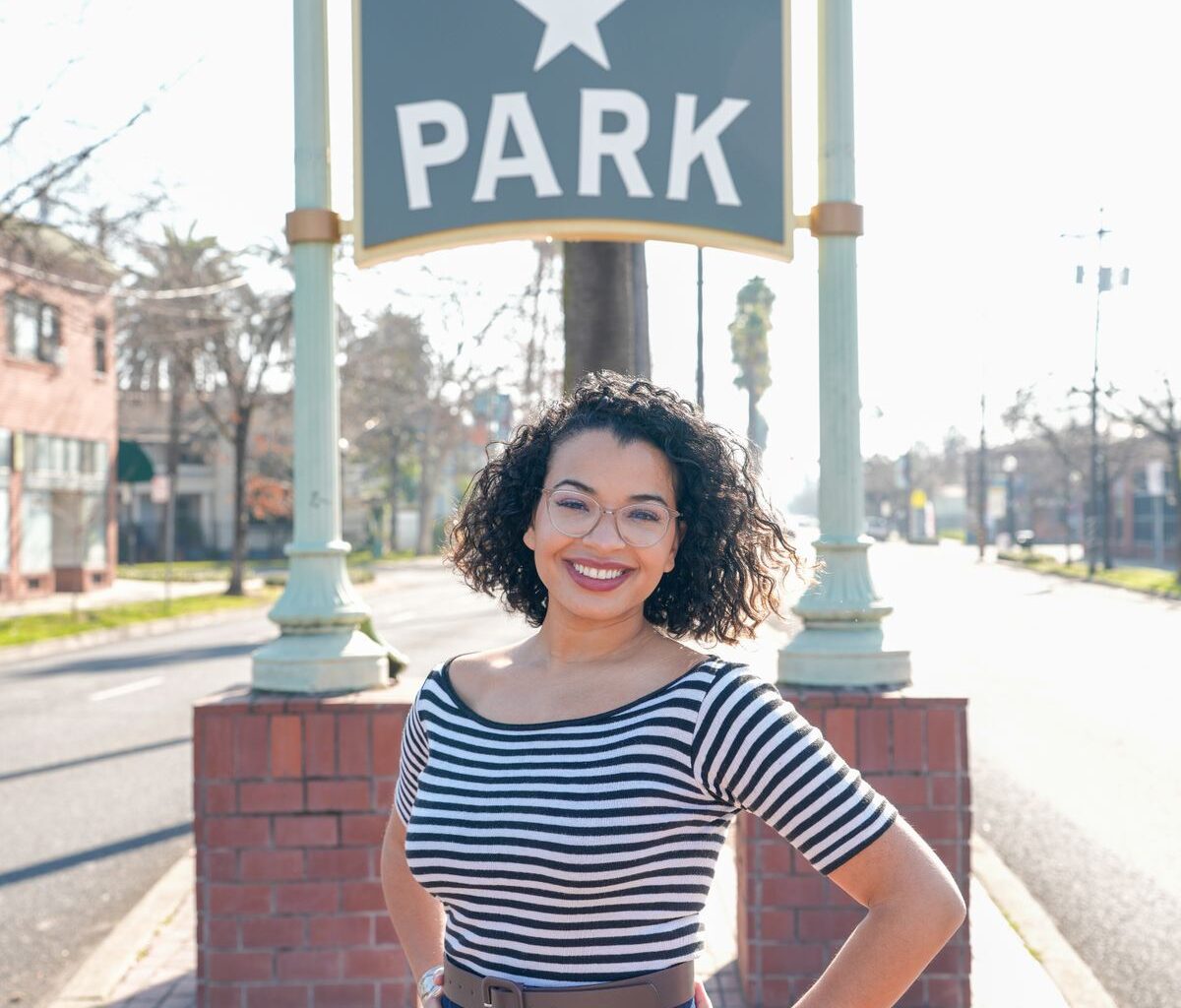
Donette, 39, is the director of government affairs at EdVoice, an education advocacy organization working to improve public education for children from low-income communities. Before that role, she spent years both in and out of the classroom teaching in Ghana, New Orleans and Oakland. She has worked at a nonprofit dedicated to placing Black male teachers in classrooms, lobbied on behalf of the California-Hawaii NAACP, led a citywide initiative on Black student achievement at a large urban school district, and led family and community engagement as a community organizer, among other roles.
The following Q&A has been edited for clarity and length.
What exactly does the Sacramento County Board of Education do, and where does its actual authority lie?
A lot of people look at the county board and assume it has the same functions as a local school district, but it is actually quite different. You can think of its role as translation and advice rather than direct, day-to-day force over local classrooms. For instance, when we receive a state grant, or a new bill passes saying we need to implement a certain type of professional development, the county office is the entity that translates that into local action and offers that training to the districts.
The county office runs the court and community schools. These schools are inside our juvenile halls and serve some of Sacramento’s most vulnerable young people, including those who are incarcerated, those who have been expelled, those in the foster care system, those who are unhoused, and those on probation. We also review local district plans to make sure public dollars are actually connecting to measurable student outcomes.
The county’s role is focused on advising and training. We look at audits and data, point out where things need to improve, and offer strategies, techniques, and training to help districts get there.
You currently lead the race, but about two thirds of voters split their support among your opponents. How do you plan to represent all voters and earn the trust of those who chose someone else?
I am extremely humbled by the results. This was not a blowout, and I think that represents the fact that people in different neighborhoods have their own lived experiences, different understandings of what this board does, and different visions for how to improve outcomes for children in Sacramento. Operating with humility and a spirit of curiosity is essential in this work. I want to say on the record that I have deep respect for all of my opponents, who ran while balancing work, health challenges, and family responsibilities.
What I heard consistently while door-knocking across all neighborhoods is that families actually want the same basic things. They want children who can perform basic skills and read on grade level. They want schools that are safe, both physically and psychologically. They want public dollars handled responsibly with transparency and budget accountability, especially given some of the issues our local districts have experienced. And they want students to graduate with options, like career pathways that set them up for a successful future.
I want to build genuine relationships with the organizations that backed my opponents, working respectfully with them because they know what their communities need.
Literacy was a major focus of your campaign. What concrete steps do you plan to take to improve reading rates, and what does the board’s oversight allow you to do?
Currently, only 42% of third graders in Sacramento County read on grade level, which is a crisis. With a new county superintendent coming in, I have to be cautious about committing to exact administrative plans, because that person will have their own vision that I want to support.