
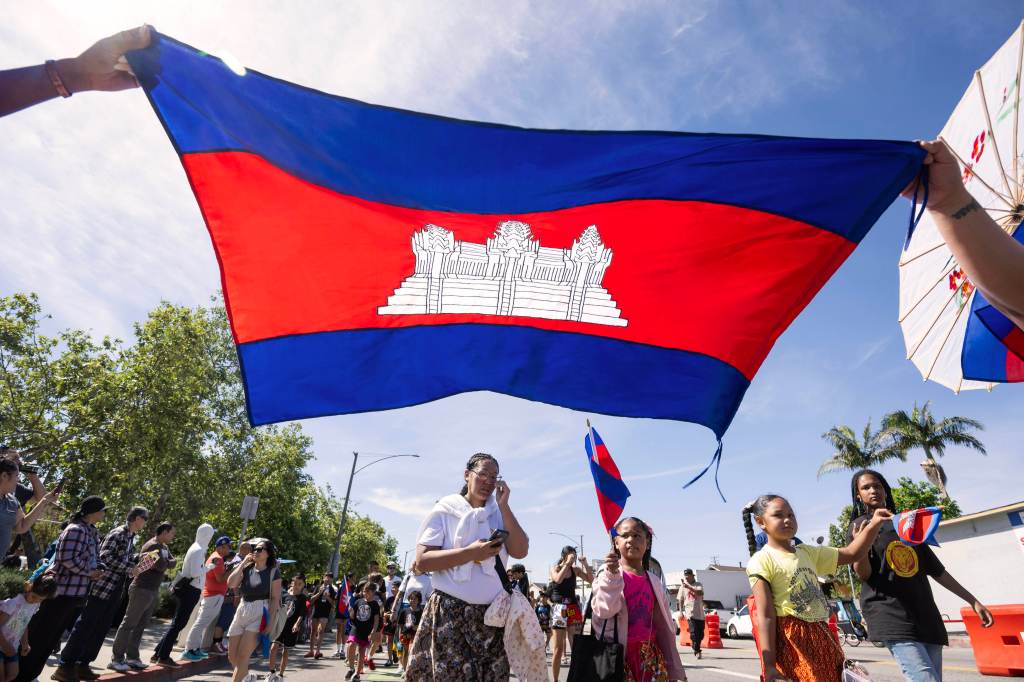
Expanding culturally responsive services, strengthening mental health support, addressing food and economic insecurity, and advancing community safety efforts are some of the public health needs that Long Beach’s Cambodian Community Health Needs Assessment has identified.
The Health and Human Services Department presented the findings of the assessment to the City Council on Tuesday, June 16.
Findings from the assessment will be used to understand the health and social needs of Cambodian residents in Long Beach and Signal Hill, assess the impacts of the COVID-19 pandemic, and inform culturally responsive and equitable programs, according to the staff presentation.
“I would like to note that we also included Cambodian residents in Signal Hill due to the interconnectedness of the Cambodian community across cities,” Nicole Sun-Andre, Cambodian health equity coordinator, said during the council presentation. “Some Cambodian residents live in Signal Hill, but work, worship, access healthcare and community programs in Long Beach, where Khmer-speaking resources are more accessible.”
The health department initiated the assessment in November 2023, working closely with community partners, including Cal State Long Beach’s Center for Health Equity Research, United Cambodian Community, Families in Good Health, CAM-Scholar and an academic partner at Cal State Dominguez Hill, according to the staff report.
From spring to summer 2024, the health department surveyed Cambodian residents in Long Beach and Signal Hill. The survey gathered both numbers and personal stories about health care access, mental health, financial stability and overall community well-being, according to the staff report.
Listening sessions with the community were delayed in 2025 from the beginning of the year to early summer because of increased concerns about immigration enforcement and changes in national politics, according to the staff report. This change helped make sure the sessions were sensitive to residents’ safety and experiences. These discussions helped shape the final assessment and will guide the city’s future plans and decisions.
The assessment collected 447 surveys, both in Khmer and English, followed by community listening sessions. The sample included 18- to 92-year-old Cambodians; one-third were full-time workers and nearly 20% had less than a high school education, Sun-Andre said. About one in five respondents lives in multifamily dwellings, with an average household size of four people.
“Language access issues, intergenerational homes and economic stability were also found in the assessment,” Sun-Andre said. “These demographics emphasized the need for culturally and linguistically relevant services.”
The assessment identified five major areas that consistently came up as top concerns for Cambodian residents, including healthcare access and utilization, mental health and emotional well-being, housing stability and food security, economic security and employment, and community safety and discrimination.
Access to healthcare is a significant issue for Cambodian residents.
About 70% reported having health insurance, mainly through Medi-Cal or Medicare. But insurance does not equal access: 38% experienced a lack of support during the COVID-19 pandemic, leading to missed appointments, 65% reported having a regular doctor or primary care provider, and about 26% said they use traditional healers because of familiarity and trust.
“Together, these findings suggest that access is not just about coverage,” Sun-Andre said. “It’s about whether care is affordable, fits into people’s lives, and feels accessible and (welcoming) when they seek it.”
Other concerns identified through the survey include mental health issues among Cambodian residents. About 33% of respondents reported persistent feelings of stress, worry or nervousness — but of those who felt they needed care, according to the staff report, just 25% sought mental health services.
The survey also found high reports of intergenerational trauma linked to lasting mental health impacts from those who experienced and survived the Cambodian genocide, according to the report.
“Respondents often rely on family, faith and community leaders for support,” Sun-Andre said, “underscoring the need for culturally affirming mental health approaches and addressing both intergenerational trauma and community-based healing.”
Housing and food security are also an issue, with 38% of those surveyed reporting that they skip meals because of financial hardship — a challenge that is worsened by lack of public transit options to grocery stores, according to the report.
The health assessment also found that many Cambodian residents have been impacted by COVID-19, with 38% of respondents reporting that they had no one to help them navigate healthcare access during the pandemic.
“These experiences highlight the importance of safety, belonging, and trust as part of health equity,” Sun-Andre said, “not just services or programs.”
Impacts of anti-Asian racism and discrimination are also a problem, with one in four respondents reporting that they experienced or witnessed anti-Asian hate.
“Many community members describe feeling unsafe, even doing simple things like grocery shopping or taking the bus. One respondent shared, ‘I don’t feel comfortable leaving my house because of hate crimes against Asian communities,’” Sun-Andre said. “Another said, ‘We need more protection for our elders who take the bus.’”
There are five key recommendations for changes to city programming and policies as a result of the survey, including:
Expanding culturally and linguistically responsive services.
Enhancing community-based, trauma-informed mental health programs.
Addressing the community’s food insecurity and strengthening economic supports.
Prioritizing emergency preparedness and chronic disease prevention programs.
Confronting anti-Asian racism and promoting community safety.
The city has launched a steering committee, which held its first meeting in May, to help guide the health department’s efforts to implement findings from the health assessment, and ensure Long Beach keeps a line of communication open with the Cambodian community moving forward.
“They’re (the steering committee) doing the direct work with community, and they’re hearing the day-to-day (issues), so whatever their recommendations may be, that’s what we’re going to utilize to continue to guide us to doing this work,” Sun-Andre said, “while always emphasizing amplifying community voices through this process.”
With guidance from the steering committee, the health department will also use the assessment’s findings to help determine which community projects and initiatives should be funded, the staff report said.
“I look forward to hearing the progress of the steering committee prioritizing the issues as we narrow down what programming could look like, but I think that we also know that we’re going into a time where there’s going to be more budget constraints,” Sixth District Councilmember Suely Saro said. “So I think, more than ever, partnership is going to be so crucial, not only amongst other departments, but also with our community members as organizations that we work with.”