
The full-scale San Francisco wedding — the one with the $80,000 venue, the 180 guests, the eight-foot floral installation behind the head table — is having a quiet identity crisis. Not because it’s gone away. It hasn’t. But because a growing share of the city’s most interesting couples are looking at the math, looking at their actual relationships, and choosing something else entirely.
They’re getting married at City Hall. Or on the Marin Headlands at sunrise with twelve people. Or at a small wine country property with their parents and best friends. Or in their own apartment with a single witness and a bottle of champagne and a JP. The category goes by different names — civil wedding, intimate ceremony, micro-wedding, elopement — but the underlying instinct is the same. They’ve decided that the size of the wedding has very little to do with the size of the marriage, and they’d rather spend the freed-up budget on the things that actually shape the day.
The flowers are one of those things.
If you’ve been to a City Hall wedding in the last two years, you may have noticed something. The bouquets are getting better. Significantly better. The composition is tighter, the palette more disciplined, the photographs more striking. Couples who are spending almost nothing on the venue (the City Hall ceremony fee is, famously, under $200) are quietly spending $400 to $800 on a single, beautifully composed bouquet. The math, when you do it, is interesting. A traditional full-scale wedding might spend $4,000 on florals across the venue, the bouquets, and the boutonnieres. A small ceremony might spend a quarter of that — on a single bouquet that becomes the entire visual identity of the day.

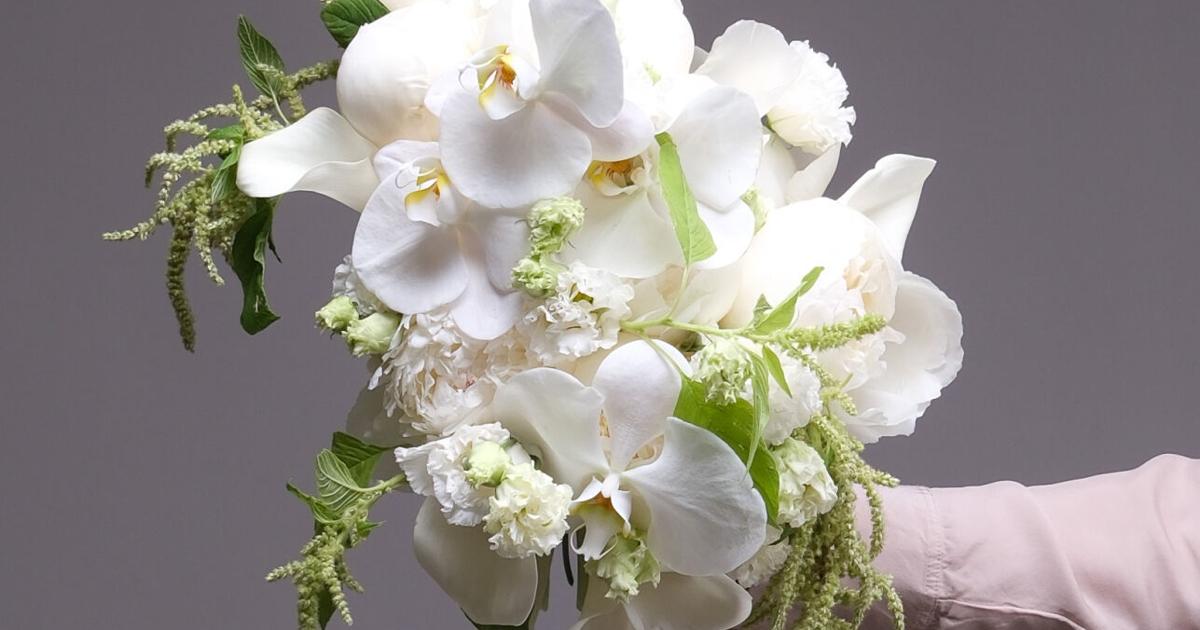
This is the territory where Flower Icon, a luxury florist based in SoMa, has built a real expertise. The studio’s wedding flower collection is, in some ways, the perfect resource for the new small-wedding economy — designed not only for the traditional larger reception but, increasingly, for couples whose entire wedding will fit in a single beautifully composed bouquet. These are pre-composed bouquets and arrangements, designed by hand, arriving with the palette and shape and architecture already worked out. For a couple planning a Tuesday-morning City Hall ceremony followed by lunch at Wayfare Tavern, there is no need to brief a florist for a six-month custom design process. There is the bouquet, ready. The couple shows up, picks it up, and walks into one of the most beautiful days of their life with a single sculptural object that does the floral work of an entire traditional wedding.
What makes this work is that small does not mean low quality — and the smartest of the small-wedding couples understand this immediately. The bouquet for a City Hall ceremony is, in a way, more important than the bouquet for a 200-person reception, because it is doing more visual work per square inch of photograph. With no centerpieces, no installation, no bridesmaid bouquets, the single bridal bouquet is the floral story of the day. It will appear in every single photograph from sunrise to sunset. It will be held in front of the rotunda, on the steps of City Hall, at the lunch table, in the back of the cab on the way home, on the kitchen counter the morning after. It will live, for that day, as the visual anchor of an entire life-changing event.

A bouquet doing that kind of work has to be composed with discipline. Compact, decisive, sculpturally balanced. Capable of being photographed from any angle. Built within a single palette so that it doesn’t compete with the dress or the venue. Substantial enough to register in a wide shot, but small enough to hold comfortably for several hours. These are the constraints that the studio’s small-ceremony bouquets were built for.
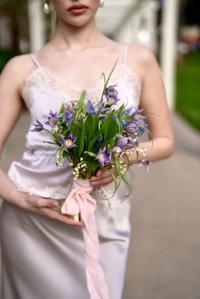
The same principle extends to private elopements. A couple eloping to the Marin Headlands at sunrise will often bring two bouquets — one for the bride, one for the boutonniere — and nothing else. A couple having an intimate wedding at a private Wine Country property might commission three or four arrangements: bouquet, two centerpieces for the lunch table, and a small composition for the welcome table. The economics of these orders are dramatically different from a full wedding, but the design discipline required is, if anything, higher. Every object is doing more work.
The cultural moment is unmistakably here. Young couples who would have, ten years ago, defaulted to the elaborate traditional wedding are now actively asking themselves what they actually want the day to feel like. For an increasing number of them, the answer is intimacy plus considered beauty. They’re spending the saved money on better photography, a better dinner, the trip to the airport for the honeymoon they could only have afforded by skipping the 180-person reception. And they’re spending it on flowers that don’t compromise.
Small wedding. Big bouquet. That’s the rule. It turns out it always was.