
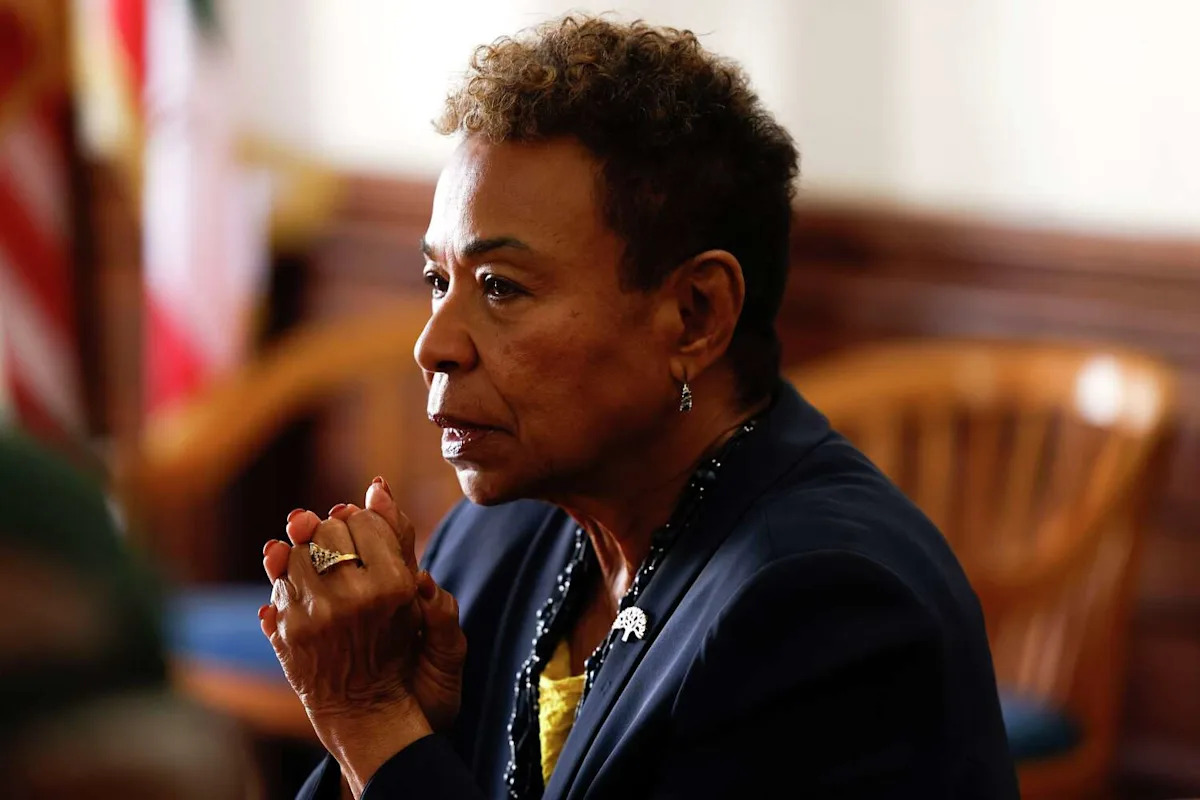
Oakland voters will decide in November whether to give Mayor Barbara Lee more power, after she cast a rare tie-breaking vote Tuesday night to place a major overhaul of the city’s charter on the ballot.
The proposal, one of the most consequential efforts to remake Oakland’s government in decades, would move the city closer to a strong-mayor system by giving the mayor veto power over City Council actions. The eight-member council could still override a veto with six votes.
The measure would also give the council new oversight tools, including an independent budget and legislative analyst’s office and power to compel witnesses to testify, as San Francisco’s Board of Supervisors did with PG&E executives following the outages this winter.
The charter reform measure will appear on the same November ballot in which voters will decide whether to give Lee a full four-year term. It will also test whether Lee’s agenda can gain traction with voters after they rejected a parcel tax she had strongly supported earlier this month.
“This measure is not about me – and it’s not about any of us in this chamber,” Lee told the council. “It’s about whether the people of Oakland get to decide the future of their own government.”
The council deadlocked 4-4, with Council President Kevin Jenkins and council members Charlene Wang, Rowena Brown and Carroll Fife voting to place the measure on the ballot. Council members Janani Ramachandran, Noel Gallo, Zac Unger and Ken Houston opposed it. Lee then broke the tie – a power she rarely uses.
The vote followed a tense debate over who should wield authority at City Hall. Several council members warned that the proposal could diminish their role in running the city and the ability to respond to constituents. Even some who supported the measure did so reluctantly, but argued that voters should have the final say.
It remains to be seen if Oakland voters are ready to put more trust in the mayor. The last Oakland mayor elected to a full term, Sheng Thao, was recalled by voters in 2024 and later indicted on federal corruption charges. Thao has pleaded not guilty.
But Lee has said that the strong mayor initiative is necessary to resolve the city’s current model of governance, which she argues has created competing lines of authority within the city.
Most California cities operate under one of two models: a council-manager system, in which an elected council sets policy and appoints a city manager to handle day-to-day operations; or a strong-mayor system, in which the mayor holds veto power and appoints core city officials.
Oakland briefly operated under a strong-mayor system from 1998 to 2004, after then-Mayor Jerry Brown successfully got voters to pass a trial strong-mayor system. But he wasn’t able to make the system permanent and, in 2004, voters passed a hybrid charter system. The mayor acts as chief executive and appoints the city administrator, but cannot vote on council matters except to break ties. She proposes a budget, but ultimately the council makes a final decision on it. The city administrator manages city departments and reports to the mayor, yet is also charged with implementing the council’s directives.
Subscribe
There’s more to San Francisco with the Chronicle. Subscribe today for just 25¢.
This article originally published at Mayor Barbara Lee used a rare power. Now Oakland voters may decide whether to give her more.