
David Duong, one of the Oakland businessmen indicted for allegedly bribing former Mayor Sheng Thao, is accusing federal agents of building their case against him on the word of a witness with a “decades-long history of fraud.”
In a court filing late last week, Duong’s attorneys also accused the FBI of withholding key information from the judge who signed off on a search warrant of Duong’s house last year. The motion was first reported on by KQED.
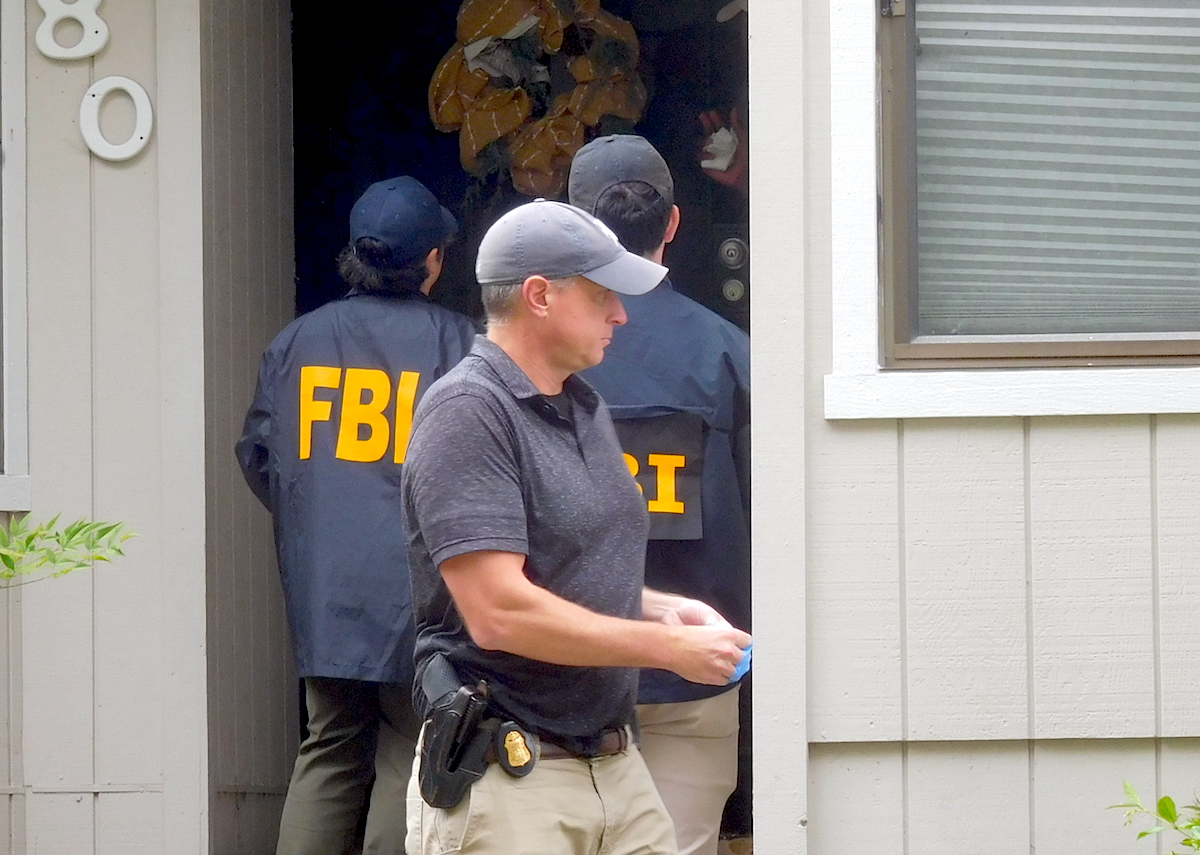
In June 2024, federal agents raided the home of former Oakland Mayor Sheng Thao and her partner Andre Jones, and the homes of David and Andy Duong, the owners of California Waste Solutions, the city’s curbside recycling company. Earlier this year, federal prosecutors unsealed indictments against all four, accusing them of orchestrating an elaborate bribery scheme.
It’s clear from the indictment that the feds’ case relies heavily on information from a person referred to by prosecutors as “Co-Conspirator 1.”
Based on public records and interviews, Co-Conspirator 1 is understood to be Mario Juarez, a Fruitvale businessman and East Bay political insider.
Duong wants to suppress the evidence collected from the June 2024 search of his business, home, car, and person, and any evidence that was obtained from a warrant for his cellular phone records. He argues that these searches were based on a shoddy case and a witness — Juarez — who is “fundamentally unreliable.”
Toward that end, Duong is asking a federal judge to let his attorneys question the FBI agent who obtained the search warrant that allowed the feds to seize numerous boxes of evidence from his home and offices. Federal agents require approval from a judge before they can execute a search warrant. To get approval, they need to submit an affidavit explaining why they think a crime has occurred.
That FBI’s affidavit has not been made public, but Duong and his attorneys have reviewed it, and they refer to the 80-page document extensively in the new motion.
According to Duong, the judge who signed off on the search warrant might not have done so had the FBI included information about Juarez and other details in their possession.
“Motivated by revenge against the Duongs”
The story that federal prosecutors tell about David Duong is that he was at the center of a scheme in late 2022 and 2023 to bribe Thao to obtain homeless housing contracts worth tens of millions for the company he and his son, Andy, and their business partner, Juarez, founded.
The bribery scheme began during the 2022 election, the feds allege, and during the final weeks of the campaign, the Duongs and Juarez arranged for attack ad mailers to go out to voters, undermining Thao’s main rivals. In exchange, Thao allegedly agreed to provide favors to the Duongs, including promising to have the city purchase shipping container houses from Evolutionary Homes that would serve as temporary homes for the unhoused. The city never purchased any units, and the partnership dissolved after a series of squabbles between Juarez and the Duongs.
The FBI learned about this alleged scheme while investigating whether Juarez defrauded the printing company that produced the election mailers, according to Duong’s motion. The Alameda County District Attorney filed a fraud case against Juarez in January 2024 but dropped it earlier this year, calling it a “wobbler.”
According to Duong, the feds’ version of events is wrong. The 24-page motion his attorneys filed last week attempts to pick holes in the case.
Duong’s attorneys wrote that the FBI’s search warrant affidavit “contains no documentary evidence connecting David Duong to the alleged bribery scheme.”
Duong’s attorneys summarized some of what the FBI spelled out in their affidavit as reasons to believe a crime had been committed. This included text messages between Andy Duong and Juarez about the 2022 election mailers, discussions between the two about payments for the mailers, a $120,000 payment a company owned by the Duongs made to Juarez, which Juarez later repaid. Communications between Juarez and Jones were also detailed in the affidavit, and in one, Juarez allegedly wrote: “David Duong called Sheng 3 times without a return call, is she ok?” The FBI also described evidence of a March 2023 meeting between David and Andy Duong, Thao, and Juarez.
Duong’s attorneys argued in the new motion that the FBI’s affidavit “alleges that David Duong may have had dinner with Thao, Jones, and Co-Conspirator 1 (though it does not claim that anything illegal was discussed); that David Duong may have received a call from Jones about submitting a bid to the city for the sale of container homes (with no allegation of a bribe discussion); that David Duong had been involved with a contract between Evolutionary Homes and Jones (with no evidence that he did so in furtherance of a scheme).”
None of this is enough to have warranted a search of Duong’s home, his attorneys say. “The affidavit contains no documentary evidence connecting David Duong to the alleged bribery scheme.”
Duong’s attorney also highlighted Juarez’s potential reasons for accusing others of wrongdoing. In the FBI’s affidavit, according to Duong’s attorneys, an agent disclosed that Juarez “‘appears to be motivated by revenge against the Duongs and a desire to obtain protection from law enforcement from the Duongs.’”.
In response to an interview request, Duong’s attorneys, Edward Swanson and August Gugelmann, shared a statement on behalf of David Duong.
“As we explain in the motion, the government built its case against David Duong almost entirely on allegations from a known fraudster with a grudge against the Duong family. The government violated Mr. Duong’s constitutional rights when it failed to disclose its cooperator’s full background and false statements in the warrant applications.”
Juarez did not respond to questions from The Oaklandside.
Duong claims Juarez lied to police about a shooting
In attempting to call Juarez’s credibility into question, Duong’s attorneys also highlighted a June 9, 2024 shooting that took place outside his home days before the FBI raids.
According to Duong, the FBI incorrectly framed “the shooting as an attempt to murder Co-Conspirator 1 that was orchestrated by the Duong family because the Duongs allegedly had learned that Co-Conspirator 1 was cooperating,” with investigators.
The shooting took place three days after Juarez spoke with the FBI, according to Duong’s recounting of the affidavit, which is partly why agents believed it was coordinated by the Duong family.
The FBI did not immediately respond to questions for this story.
The affidavit also includes a toll analysis of phone calls — showing the time, duration, and other data — between Andy Duong and a phone associated with someone identified as J.T., who allegedly has “a violent criminal history.” The FBI, according to Duong’s attorneys, believed they could have been communicating about the shooting.
However, Duong’s attorneys argue that the affidavit omits evidence that Juarez falsely portrayed the shooting as a targeted attack, versus “a chance encounter between strangers” or an attempt to burglarize Juarez’s car. To support this claim, Duong’s attorneys claim that the affidavit does not explain how the Duongs could have known that Juarez met with the FBI or was cooperating in the investigation.
The motion also argues that the FBI’s affidavit omits evidence that Juarez initiated the shooting and that the incident could have been a random car break-in.
The FBI’s affidavit omitted key details about Juarez’s history of being accused of fraud, Duong says
Duong’s attorneys say that the FBI included, in a footnote, information about Juarez’s background, including prior arrests for theft, embezzlement, battery, battery of a spouse, and inflicting injury on a spouse or child. (Most of these were dismissed, and none resulted in a conviction.) A police report was also filed against Juarez in 2024 by an individual who accused him of failing to repay a loan of $250,000, but that has not resulted in criminal charges.
Even so, Duong’s attorneys claim that the affidavit did not share other details that they believe seriously undermine Juarez’s credibility in the bribery case.
According to Duong’s attorneys, Juarez has been a party to approximately 33 lawsuits in Alameda County between 1992 and 2022. They argue some of these lawsuits should have been referenced in the FBI affidavit so that the judge could better assess Juarez’s credibility before relying on his claims to approve searches of Duong’s home.
One of the cases cited by Duong’s attorneys was from nearly two decades ago, when two individuals loaned Juarez $210,000 for a biodiesel fuel project. After one of the individuals raised concerns about their dealings with Juarez, Juarez allegedly responded by filing a police report accusing that person of assaulting him.
Duong’s attorneys say Juarez has a pattern of falsely accusing business partners of crime and that he is doing the same to the Duongs.
Duong also claims that the affidavit omitted “many other cases” where there is purportedly evidence that Juarez engaged in fraud. This includes a case where Juarez allegedly defrauded the city of Oakland. In 2006, Oakland sued Juarez for bad faith and breach of contract for allegedly withholding over $30,000 in payments from collections of unpaid judgments. According to Duong, Juarez reportedly had to pay $31,942.
Juarez, according to Duong’s attorneys, was the subject of a 2016 money laundering probe by the FBI and San Francisco U.S. Attorney’s Office.
Duong’s attorneys argue that all of this information and more should have been disclosed to the judge who evaluated the search warrant. Its absence in the affidavit was “reckless at best,” they wrote.
Federal Judge Yvonne Gonzalez Rogers will consider Duong’s request, which could result in what’s called a Franks Hearing, where the FBI agent who authored the search warrant affidavit and others could be called on to testify. If the judge agrees with Duong’s attorneys, some or all of the evidence obtained during last June’s raids of Duong’s home, place of business, vehicles, and other property, as well as cellphone data, could be suppressed, meaning prosecutors can’t use it against him.
“*” indicates required fields