
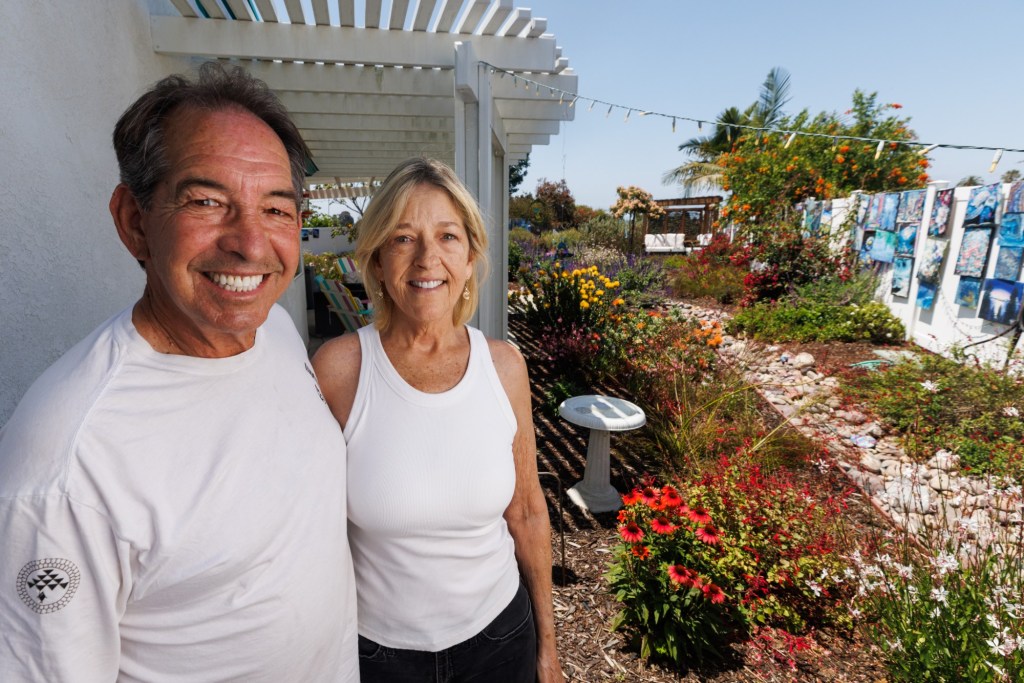
For The Union-Tribune
It’s the entrance from the street that creates anticipation for seeing just what’s in the backyard.
There’s going to be a lot — an extravagant palette — of color. The plants will have low water needs. And it’ll be just a little eccentric. Oh, and did I mention all the color?
Homeowners Julie and Chris Wilhelmy, who are in residential real estate, only reinvented their garden in August 2024. In less than two years, it’s matured into a space they can relax into. At the entrance off the cul-de-sac, you’re hit with purple, pink, red and white geraniums; marigolds; sea lavender; a huge Vitex agnus-castus, or chaste tree; and across the decomposed granite path to the house, an even larger camellia bush, which Chris Wilhelmy said was the only original planting left.
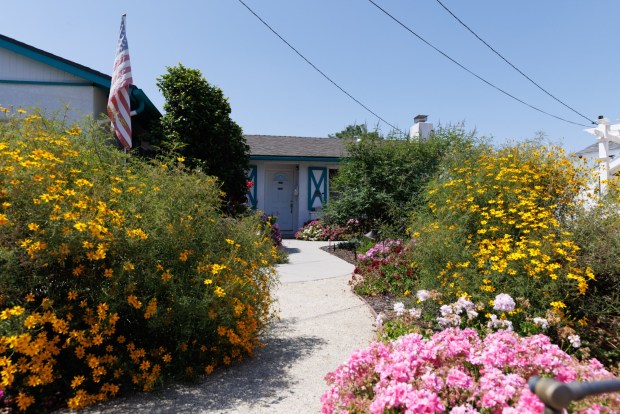 Curving walkways thread through blooming shrubs in the front yard of Chris and Julie Wilhelmy’s Clairemont home. (Kristian Carreon / The San Diego Union-Tribune)
“It was planted probably in 1962 as a small shrub,” he explained. “It has pink and whitish blooms that start in November and go all the way through March.”
By the house is a profusion of alyssum and yarrow, and planters thick with magenta, pink and white impatiens. There’s also a stand of tall cannas by the camellia. The northern exposure gives all these plants plenty of shade in the afternoons but still bright light.
Interspersed among the front-yard plants are shallow bird baths with copper discs inside, said to keep algae from forming. Even in the dead of winter, Chris said, the birds enjoy the water. On the right is a wide swale lined with river rocks, mostly in their natural state but with the occasional gathering of painted rocks, courtesy of artist Julie.
Unless you need to go into the house by the front door, you’ll find it irresistible to follow the wide DG path around the right side of the house to the back. And there’s the main course to the front’s delightful appetizer. What immediately captures attention are the pincushion plants — in dramatic yellows and oranges. Beyond is a spacious, kind of wild garden with curving paths, a continuation of the swale, a couple of comfy cabana seating areas the couple found at The Home Depot — one overlooking the garden, the other facing out to Tecolote Canyon — and white fences lined with what seem to be hundreds of Julie’s paintings, which she started working on via online classes during the pandemic. Yes, they’re fully exposed to the elements and sometimes blow into the neighbors’ yards, but Julie is just happy to have them out to be enjoyed. Throughout the backyard are more bird baths and the painted rocks, which Julie decorated with paint markers she bought on Amazon while she was recovering from lung cancer last winter.
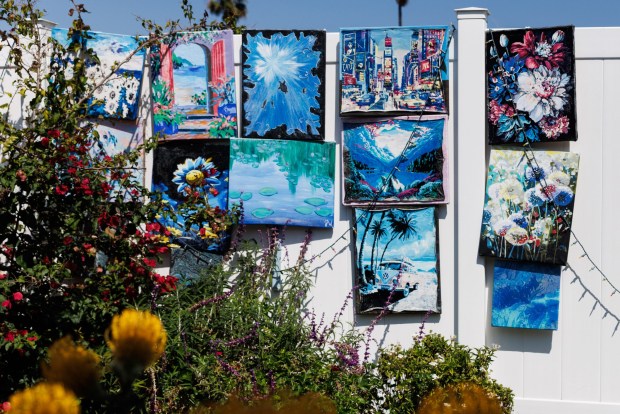 Julie Wilhelmy began creating artwork during the coronavirus pandemic. She displays it on a fence, even out in the elements. (Kristian Carreon / The San Diego Union-Tribune)
In other words, there’s a lot to take in and many visitors have done that; the garden was a stop on the recent Clairemont Outdoor Living & Garden Tour.
Chris explained that when they moved in in 1995, the outdoor space was a “Heinz 57 lawn.”
“It was every kind of grass and weed you can imagine,” he said. “It was terrible, and there was a wall that went all the way around this in a funnel, so whenever it rained, it filled with water. The idea of the original owner was that it would channel out like a canal, but it didn’t work, and it flooded into our house. So we got rid of all of that.”
Chris lowered the lawn, and moved it around a little bit, and then put in other grass. He has a picture of his son mowing the lawn with him with his toy mower. With a young child, it was a great space for tossing a football or playing outside. But once his son went on to college, that part of their life ended.
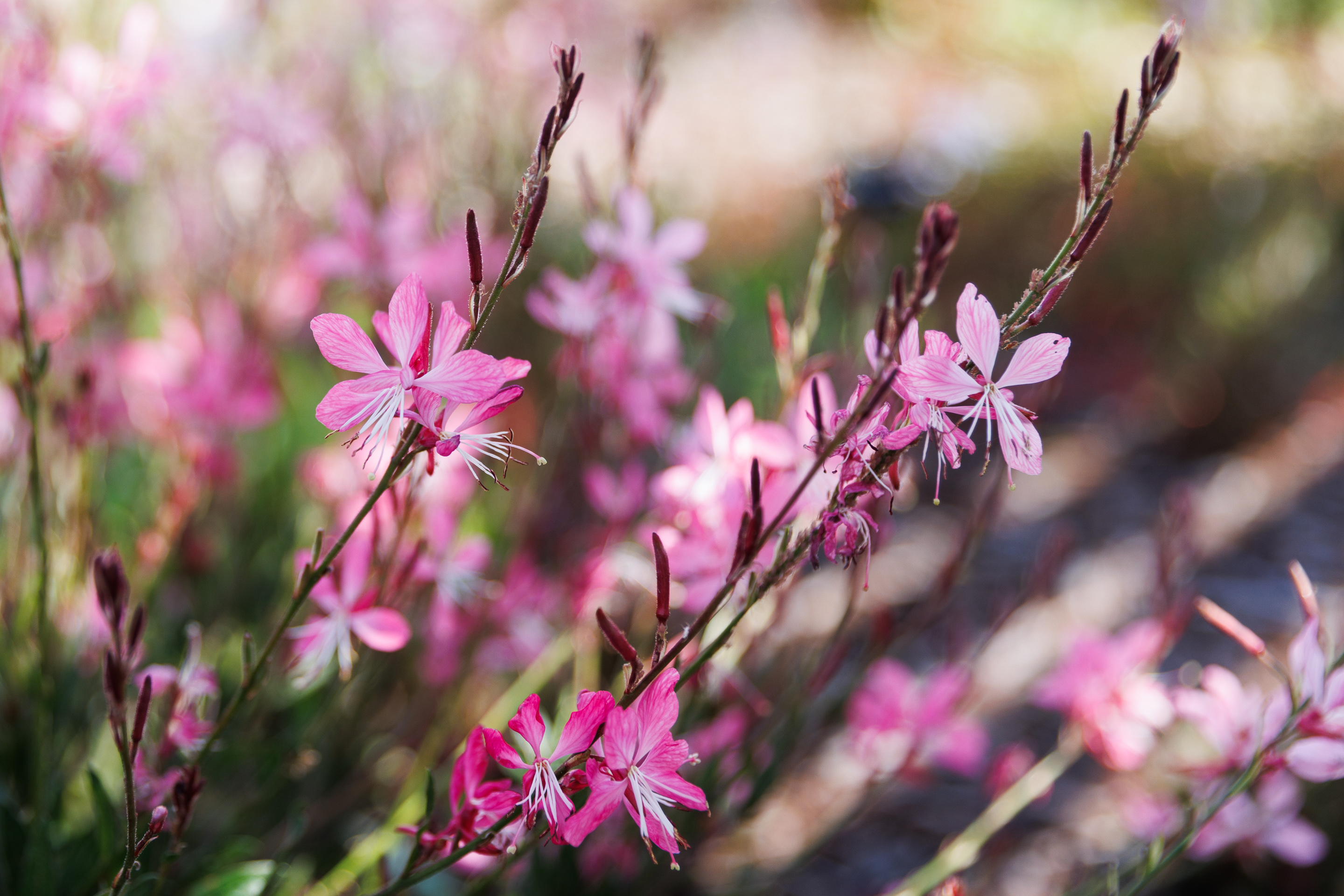
‘Little Janie’ flowers were planted in honor of Chris Wilhelmy’s mother, Jane, who was an avid gardener. (Kristian Carreon / The San Diego Union-Tribune)
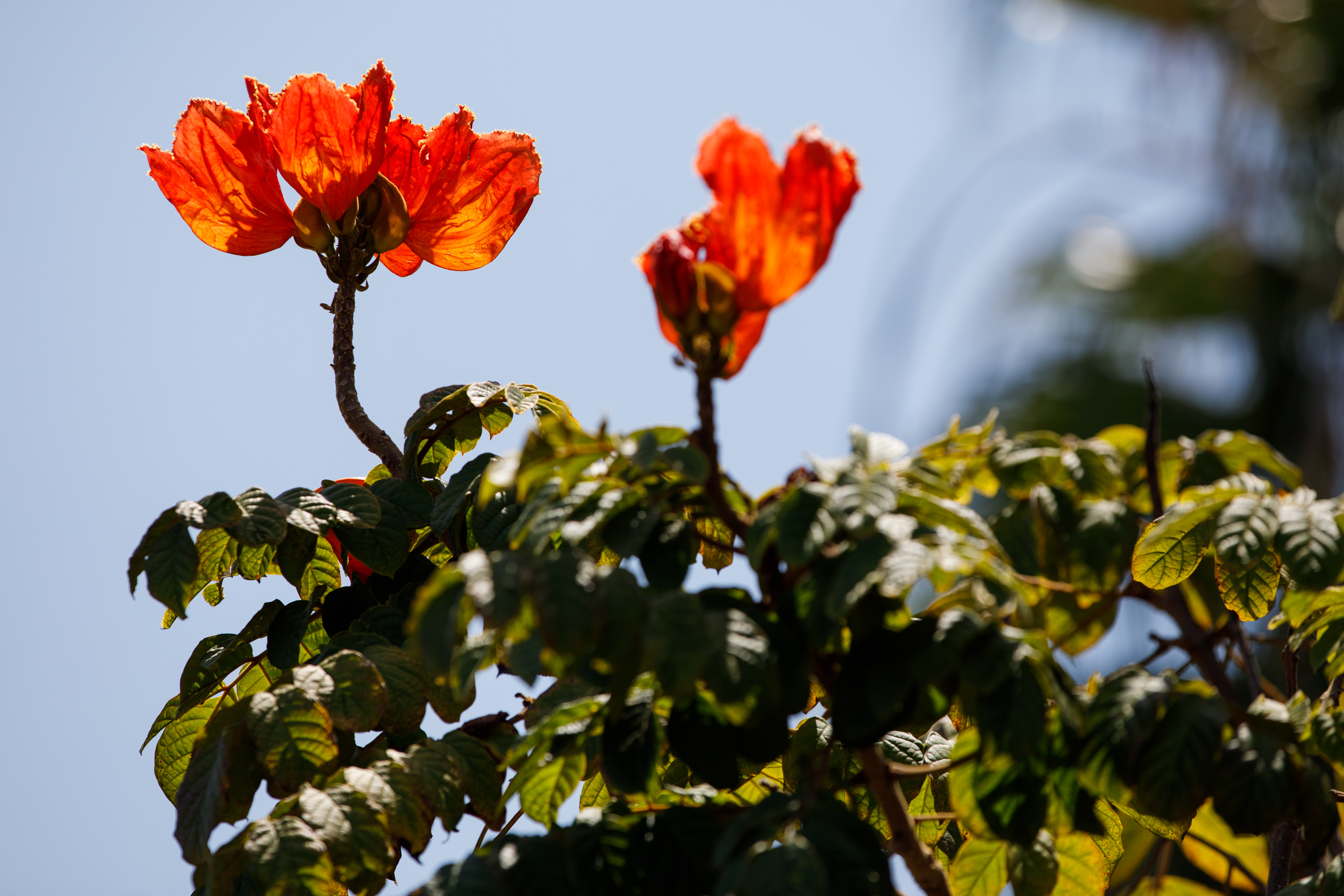
An African tulip tree in bloom. (Kristian Carreon / The San Diego Union-Tribune)
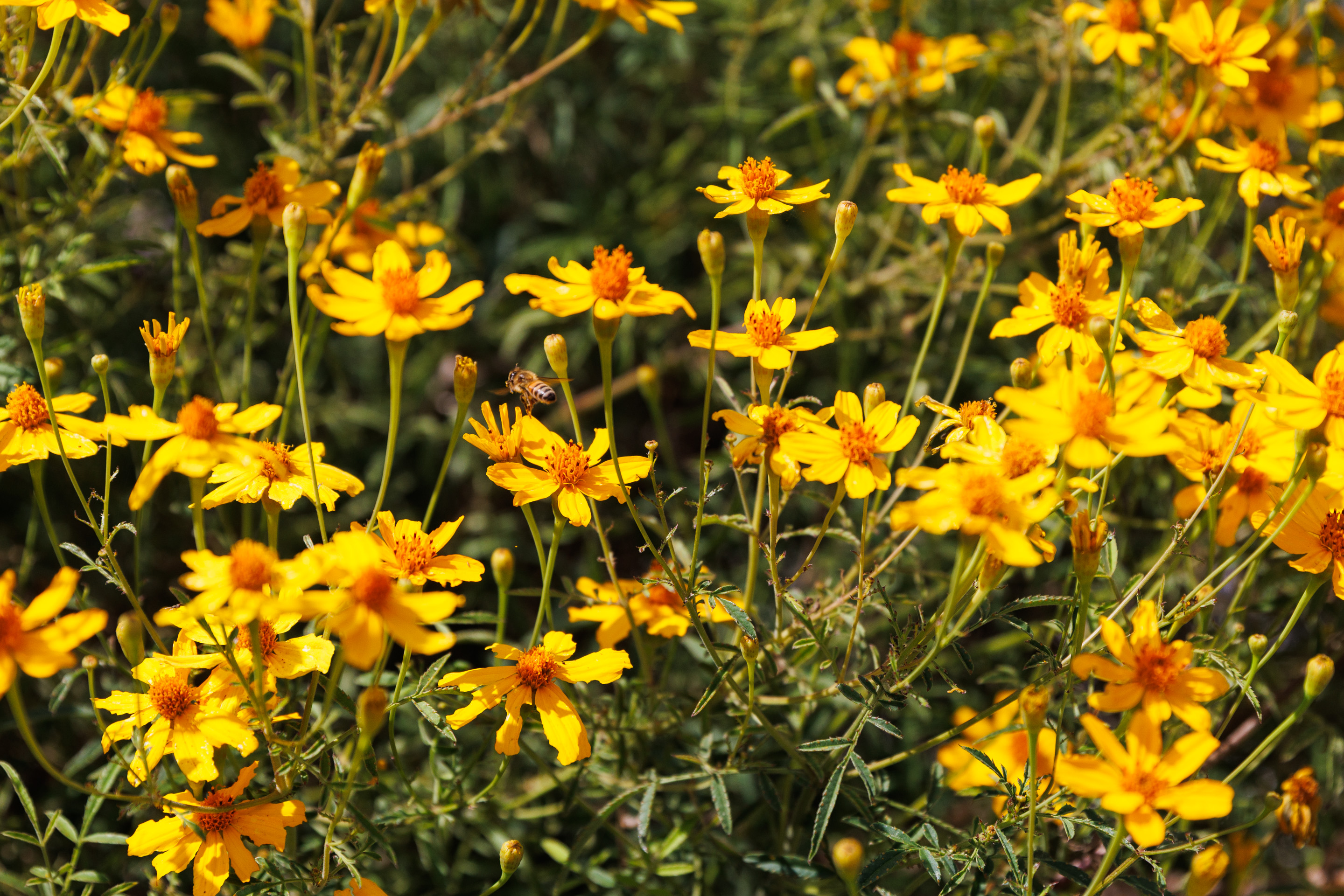
Mexican marigolds in the front yard. (Kristian Carreon / The San Diego Union-Tribune)
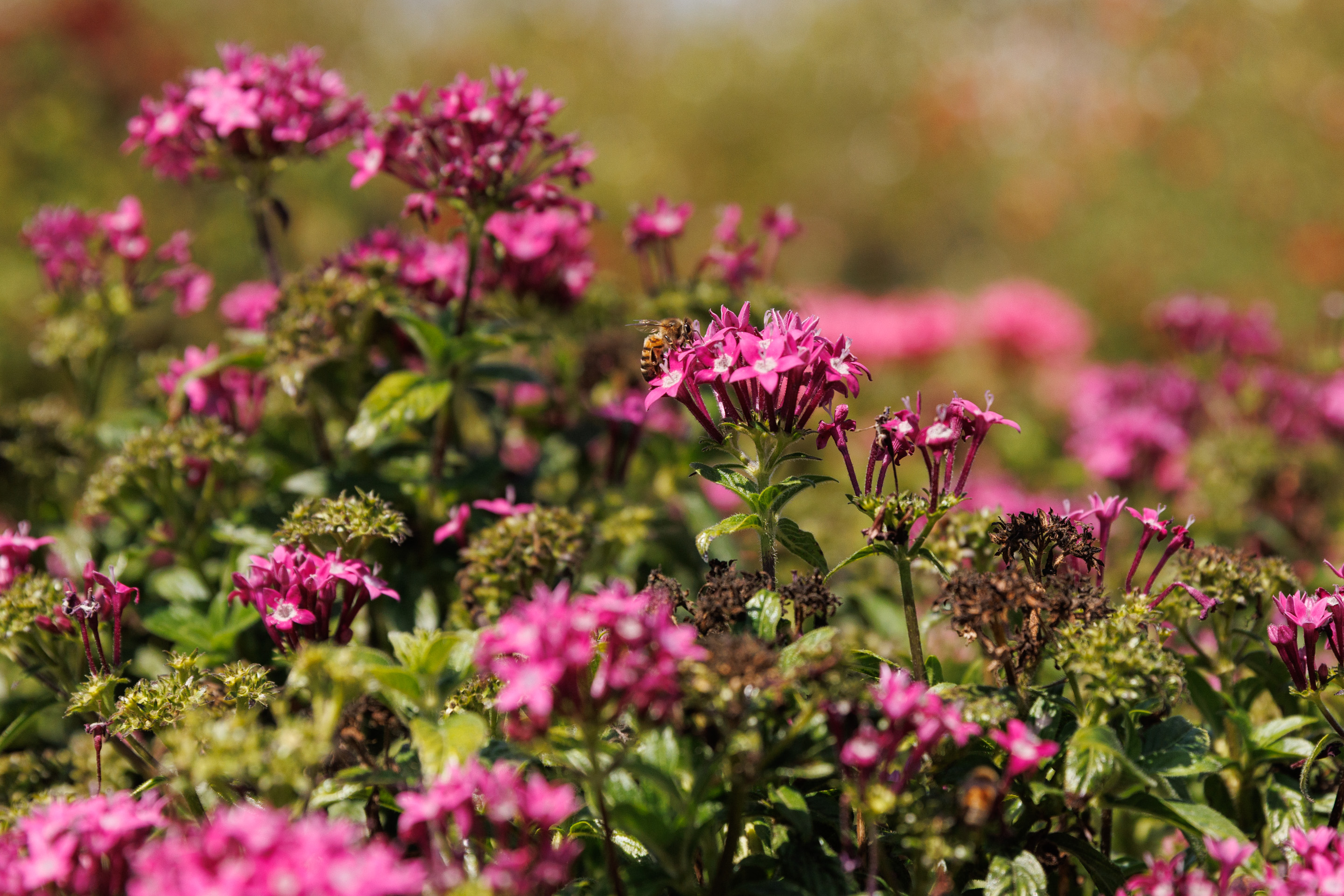
Egyptian star clusters. (Kristian Carreon / The San Diego Union-Tribune)
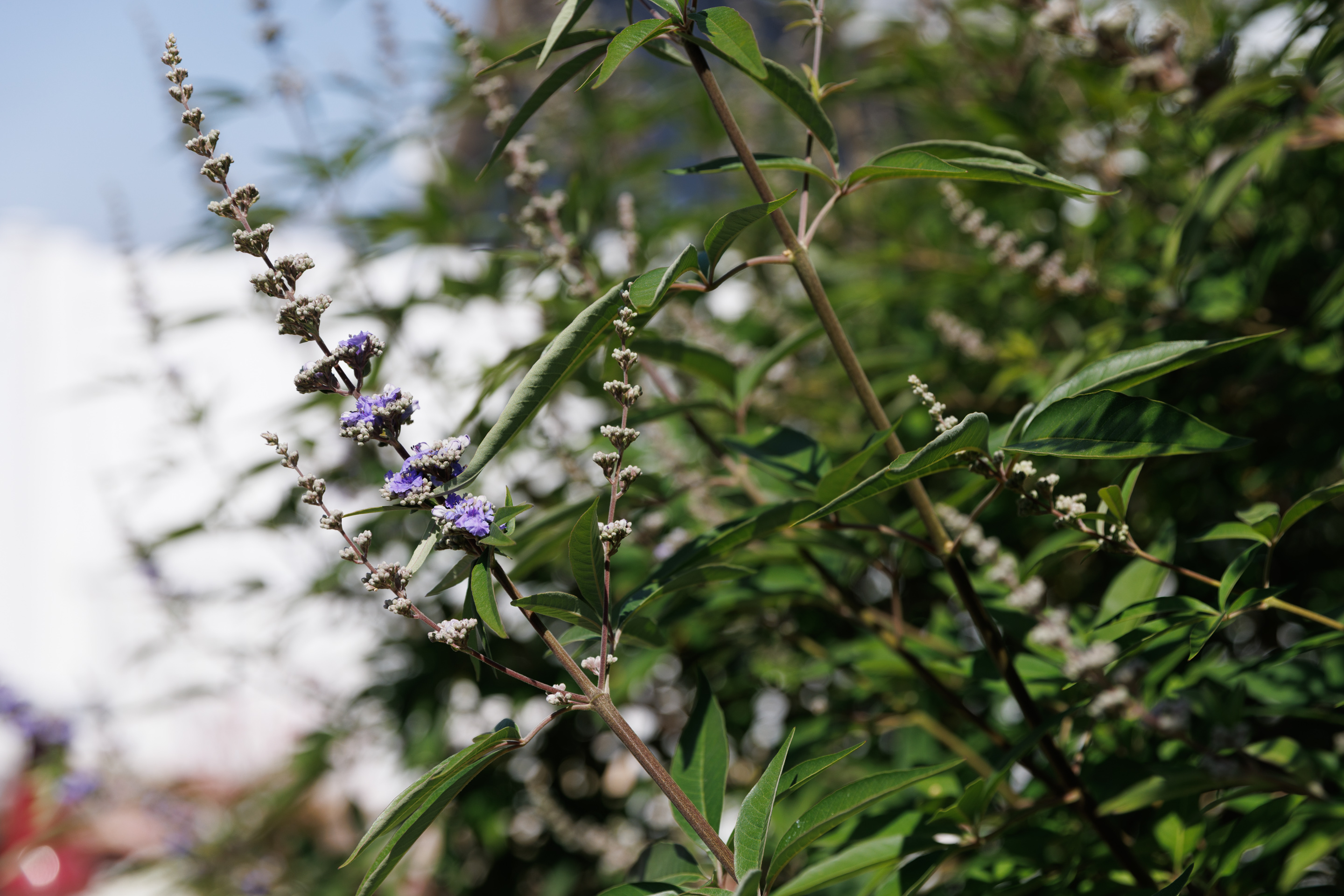
Flowers beginning to bloom from a Vitex chaste tree. (Kristian Carreon / The San Diego Union-Tribune)
Show Caption
1 of 5
‘Little Janie’ flowers were planted in honor of Chris Wilhelmy’s mother, Jane, who was an avid gardener. (Kristian Carreon / The San Diego Union-Tribune)
“We weren’t throwing the football around anymore, any of that stuff,” he recalled. “So I was taking care of the lawn, but that was about the only time I went out into the yard. I was done with it. It was just all grass. It was beautiful grass. But it was boring.”
It was also hugely expensive. Before they pulled the lawn, they were getting bimonthly water bills of $700. Now it’s $150 to $200, thanks to the types of plants they have and the drip irrigation that is used much less often now that the plants are established.
Back in 2024, Chris said he contacted the city of San Diego’s water department about the rebate they were offering to remove lawns.
“It was $3 per square foot, up to 5,000 square feet,” added Julie. “We got a $15,000 rebate. And then I also learned that there were rebates for water barrels, gutters, sprinklers, anything that was conserving water, and the only thing was that you had to have stormwater retention so that water didn’t run off.”
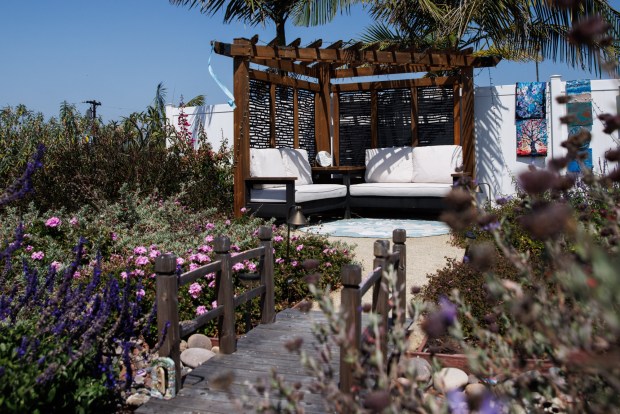 The garden cabana at Chris and Julie Wilhelmy’s home. Their other cabana, called the “sunset cabana,” faces west. (Kristian Carreon / The San Diego Union-Tribune)
And that’s where the swales came in.
“Our lot is 11,700 square feet and that area collects a lot of water,” said Chris. “So that was a real challenge to figure out: How am I going to contain that much water?”
He did it. He had originally graded the lawn. At that time, when there was rain, you could see where the puddles were and he followed the line of the runoff, which back then he directed to avoid the house and go out onto the street. When it came time to design the swales, he was able to scratch out lines for swales that would still protect the house but also keep any rain water contained to the property to seep into the ground instead of running out into the street.
The Wilhelmys hired Doug Kepner from Del Mar Landscapes as the general contractor. They also hired an expert to help choose and site the plants.
“We only had a couple of rules: We wanted no grass and nothing pokey like cactus,” Julie said.
But the first list of plants she gave the couple included a lot of that, and after some additional meetings that didn’t go well, they let her go.

Julie Wilhelmy began decorating rocks after her lung-cancer surgery during the winter. (Kristian Carreon / The San Diego Union-Tribune)
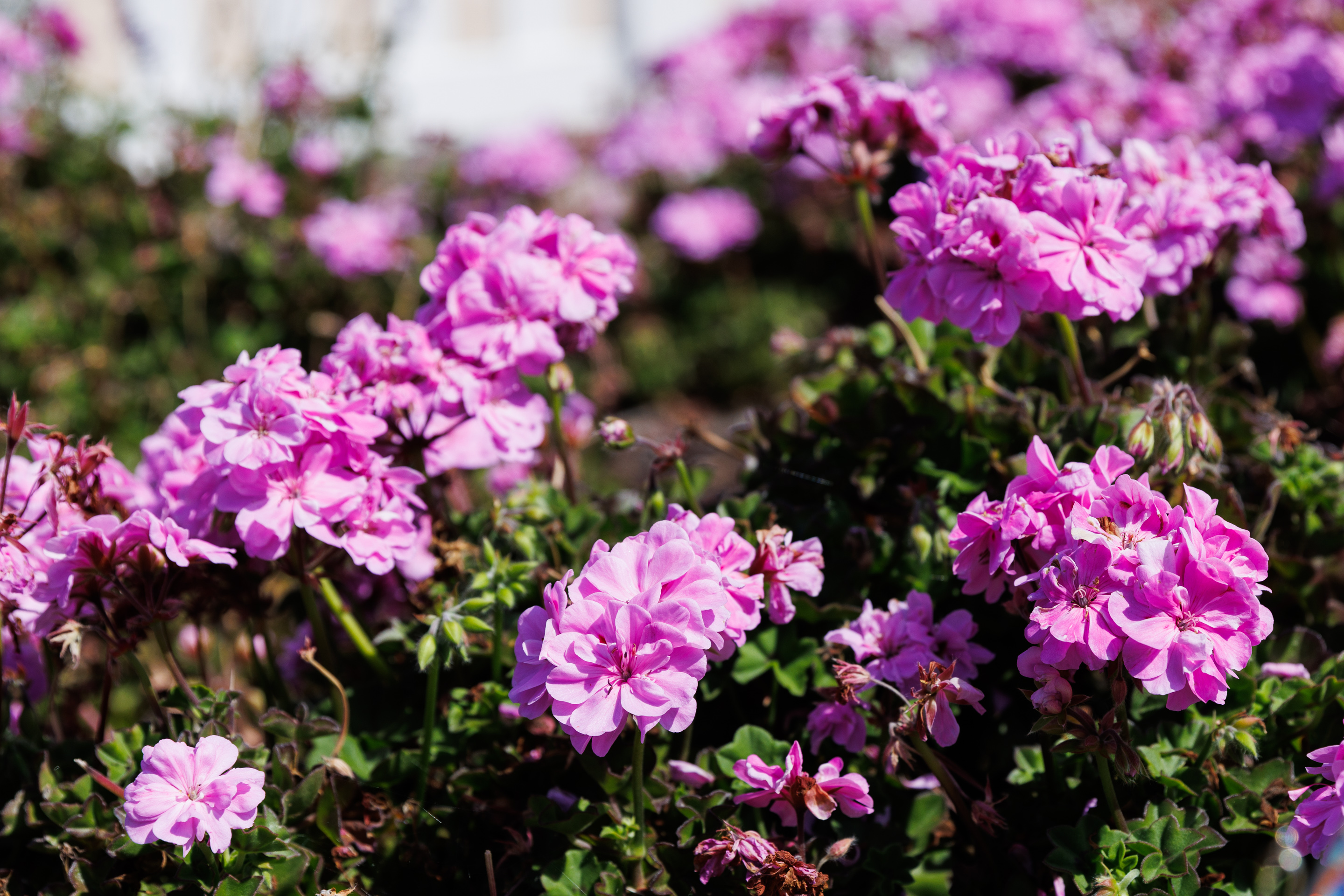
Hardy, low water and available in many hues, geraniums were an easy plant pick. (Kristian Carreon / The San Diego Union-Tribune)
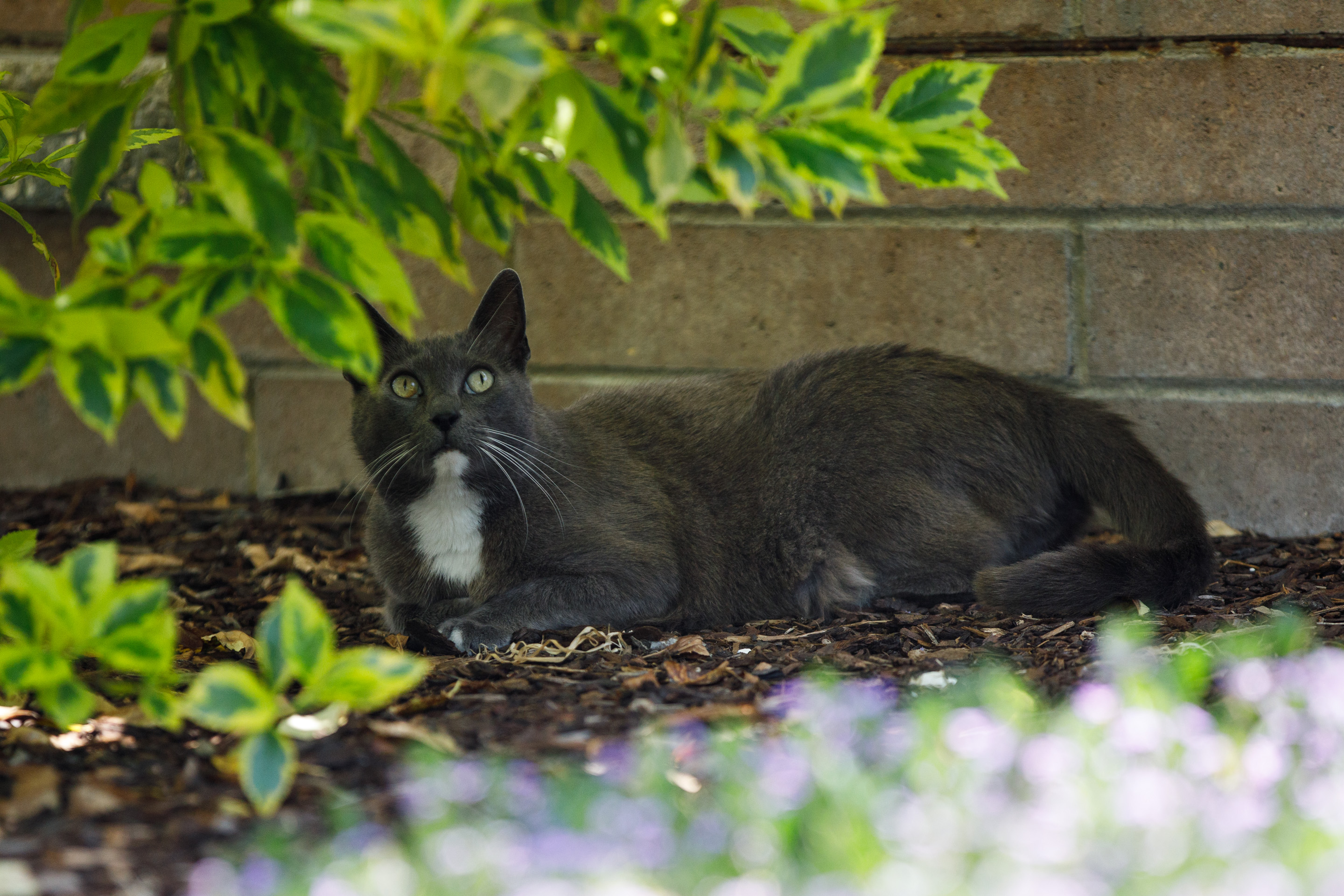
Curly, a stray cat, lounges in the garden. (Kristian Carreon / The San Diego Union-Tribune)
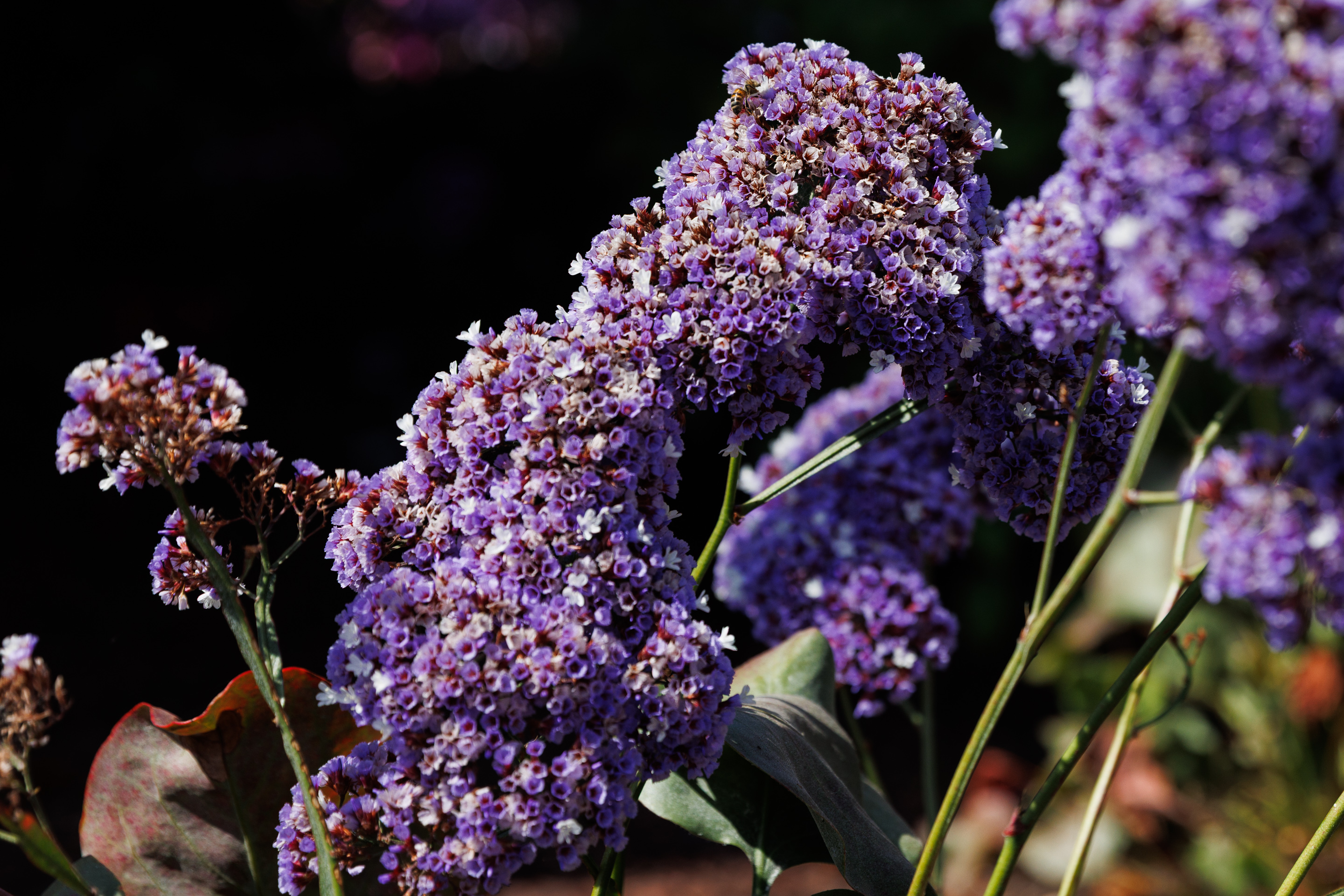
Sea lavender. (Kristian Carreon / The San Diego Union-Tribune)
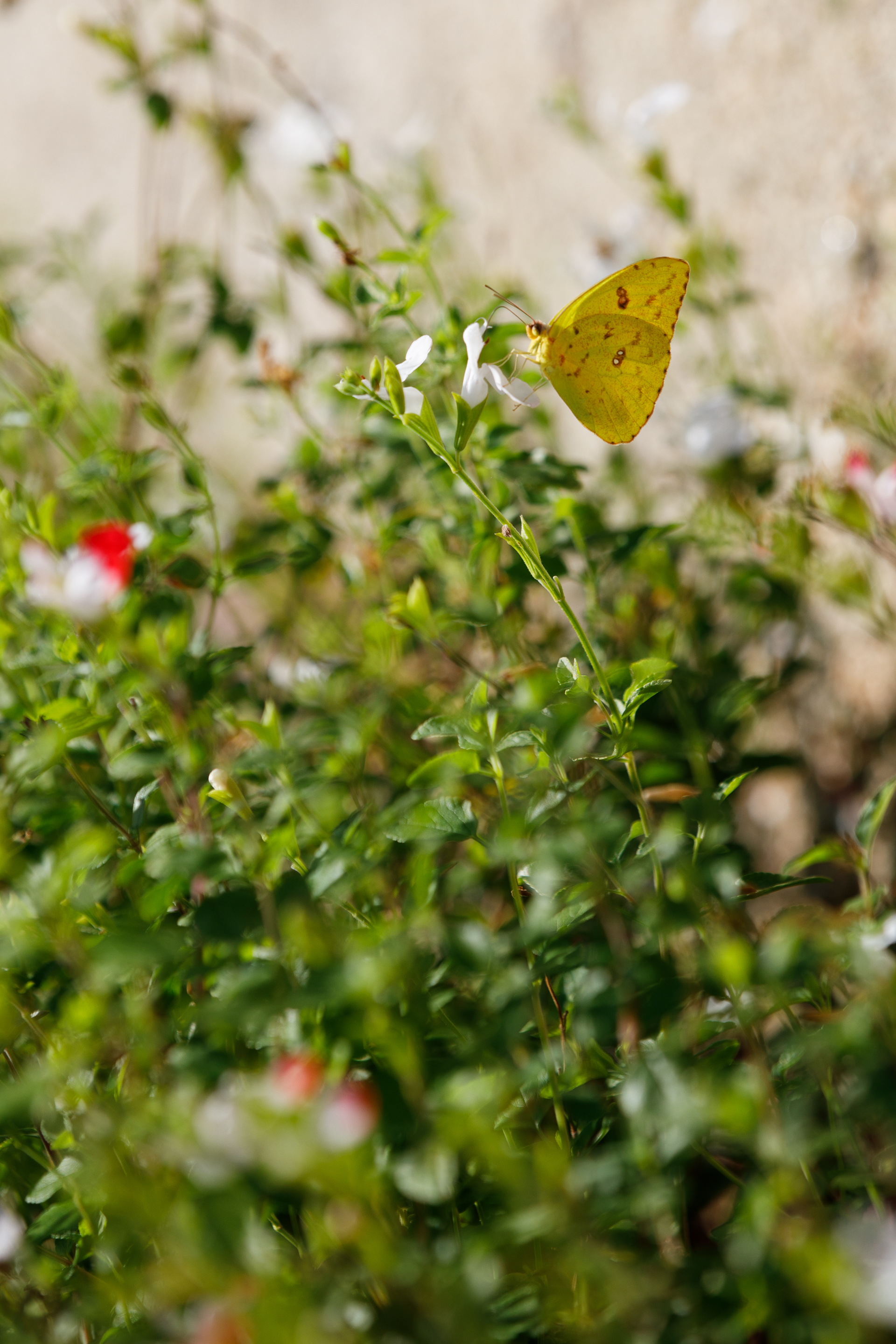
A cloudless sulphur butterfly rests on a “hot lips” plant. (Kristian Carreon / The San Diego Union-Tribune)
Show Caption
1 of 5
Julie Wilhelmy began decorating rocks after her lung-cancer surgery during the winter. (Kristian Carreon / The San Diego Union-Tribune)
Since Chris’ origin story includes construction and landscape work on residential communities, he decided to trust his instincts and experience, and the couple did research on low water but colorful plants.
“We had an idea about geraniums,” said Chris. “You can see them all over the side of freeways and not getting any water and they do fine.”
So, geraniums made their list.
“And then I went to Moon Valley Nursery’s website, and I just started looking at plants, the salvias, this Vitex.”
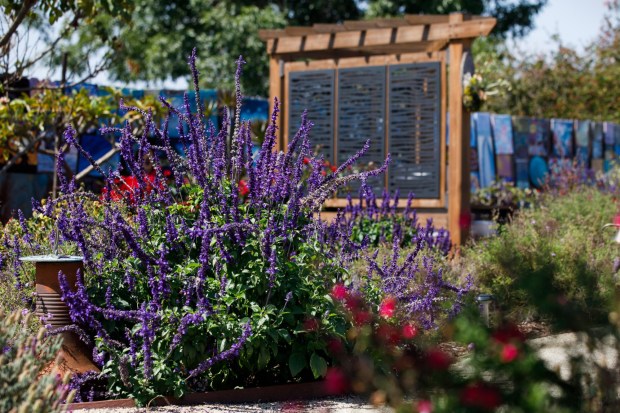 Blue ‘Mystic Spires’ sage is planted all around the backyard at the Wilhelmy home. The plant is a favorite of pollinators. (Kristian Carreon / The San Diego Union-Tribune)
“We wanted things that flowered,” added Julie. “I like that hotel look. I know it’s really manicured, but I like it when you go to hotels and/or Disneyland, and it’s just colorful.”
And when it’s not colorful, Julie said, pointing to the Vitex agnus-castus, which is deciduous, she creates color — making little painted clay butterflies that she attaches to branches.
But so much of what they found keeps color in the garden year-round, even if some rotate through the seasons.
Along with color, the Wilhelmys were careful to check out how big the plants they wanted would get, how much they’d sprawl, and they made decisions based on that. Instead of more mature plants in large containers, they chose those in 1-gallon pots, which also made them more affordable. Because they were working with Del Mar Landscapes, they could shop for plants at wholesale nursery Everde Growers, off of Governor Drive. They also shopped for plants at Walter Andersen Nursery and Green Thumb Nursery.
Of course, doing it that way meant they had to be patient. Would those plants ever grow?
“All you saw was mulch with these tiny little plants,” Julie said, joking.
But they did grow, of course, and some grew so much that there’s been some crowding. Plus, Chris explained, Everde made a mistake with one plant.
“I wanted Cleveland sage, which is native to San Diego,” he recalled. “I think we had on our list four or five of them, and then they brought this other sage, which is out here sprawling all over the place, but in a 1-gallon pot, you can’t tell. They all look the same. But three of them are the wrong plant.”
One of the big successes has been those pincushion plants.
“When the mist expires, they get more bees than anything in the yard,” Julie said. “Every one of the plants is just loaded with them. And we get a lot of butterflies.”
Then there are the blue ‘Mystic Spires.’ These sages are profoundly indigo blue, verging into purple, and also draw the pollinators thanks to their fragrant tubular flowers.
The couple found white ‘Whirling Butterflies’ (Gaura lindheimeri) and a matching pink variety called ‘Little Janie.’ The latter drew Chris’ attention since his mom, who was a big gardener, is named Jane.
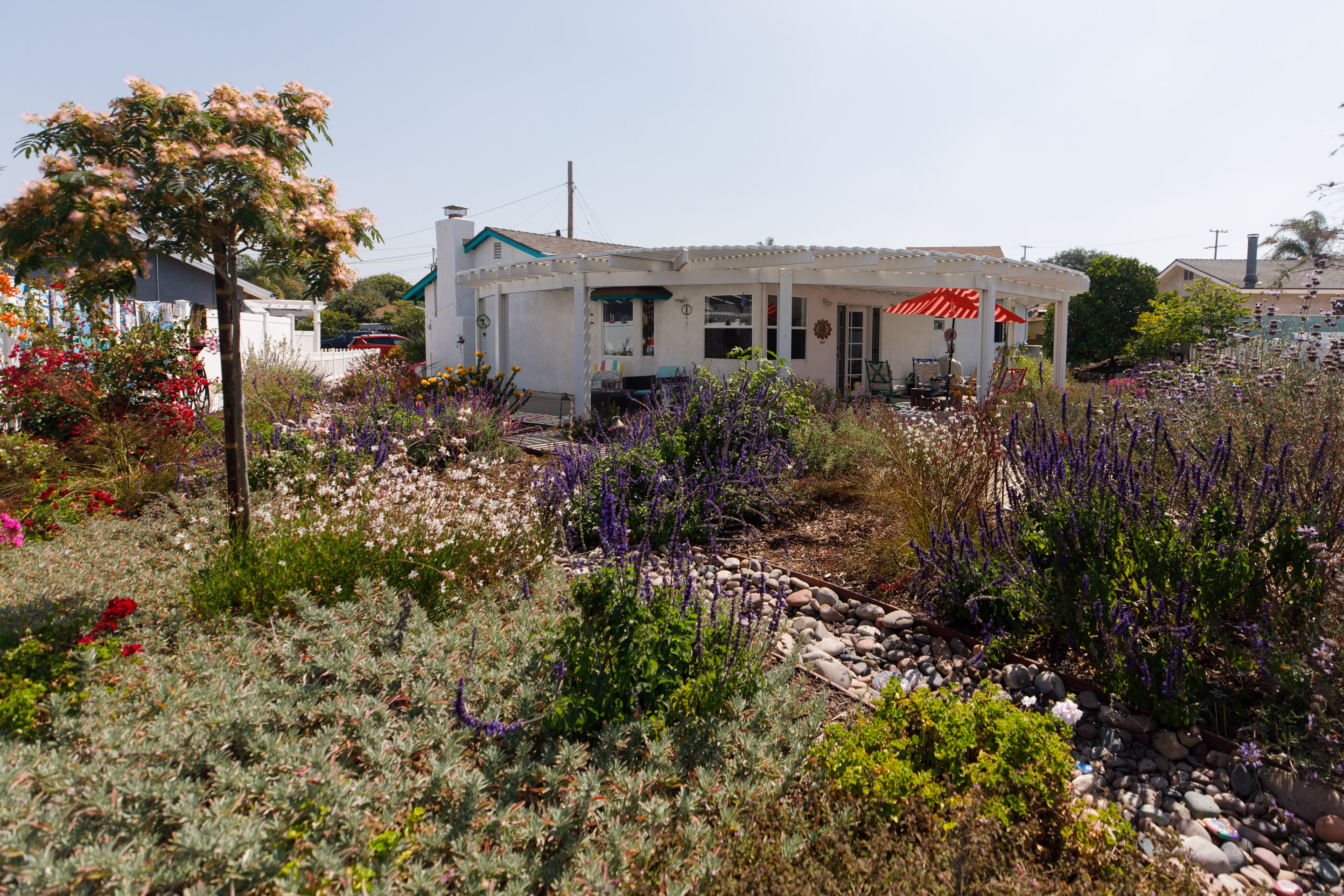
Rock swales were a key part of the renovation. The channels help retain rainwater that is routed to plants and keep runoff out of the street. (Kristian Carreon / The San Diego Union-Tribune)
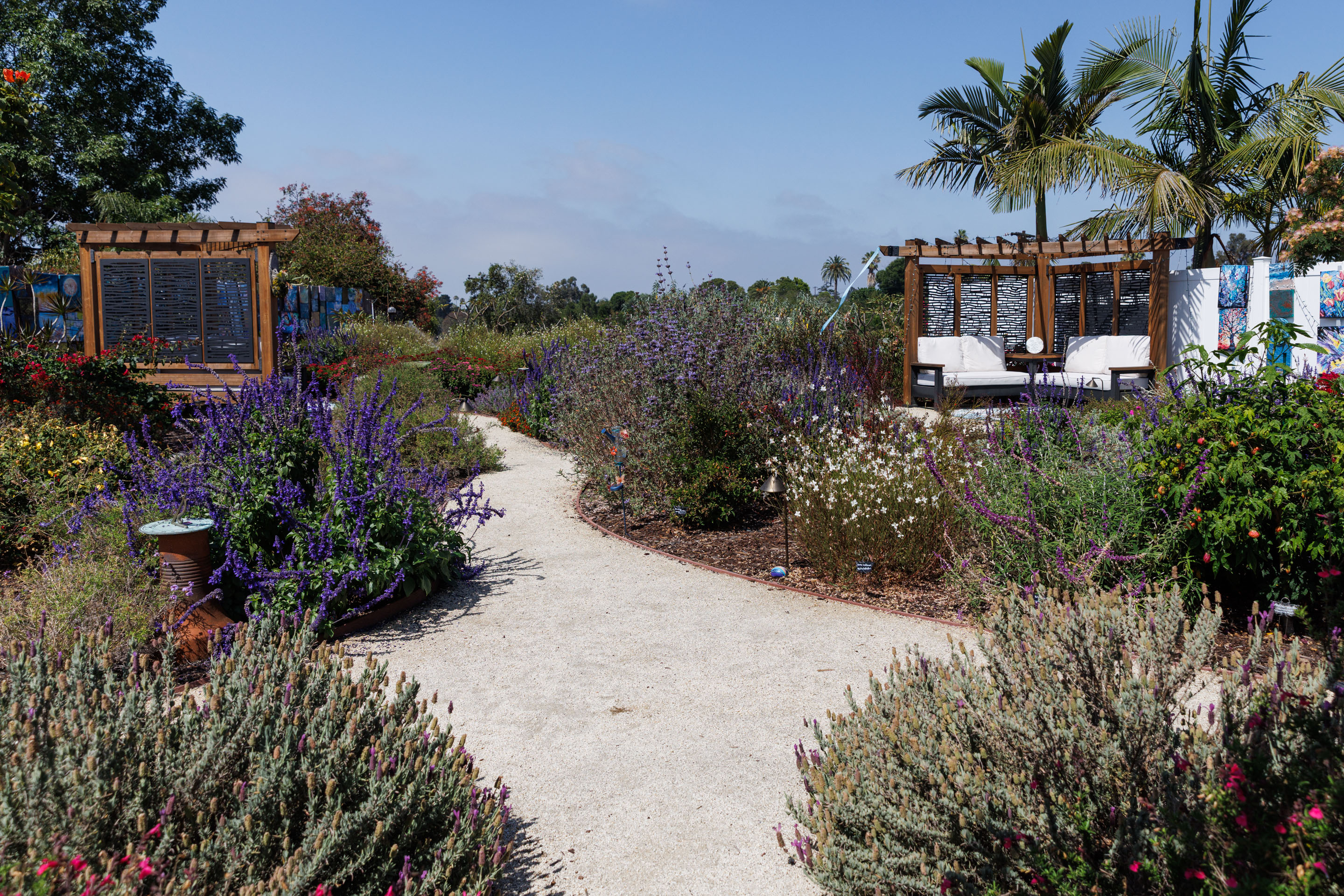
A view of the backyard shows two cabanas, one that faces west for sunset views and the other that faces the garden. (Kristian Carreon / The San Diego Union-Tribune)
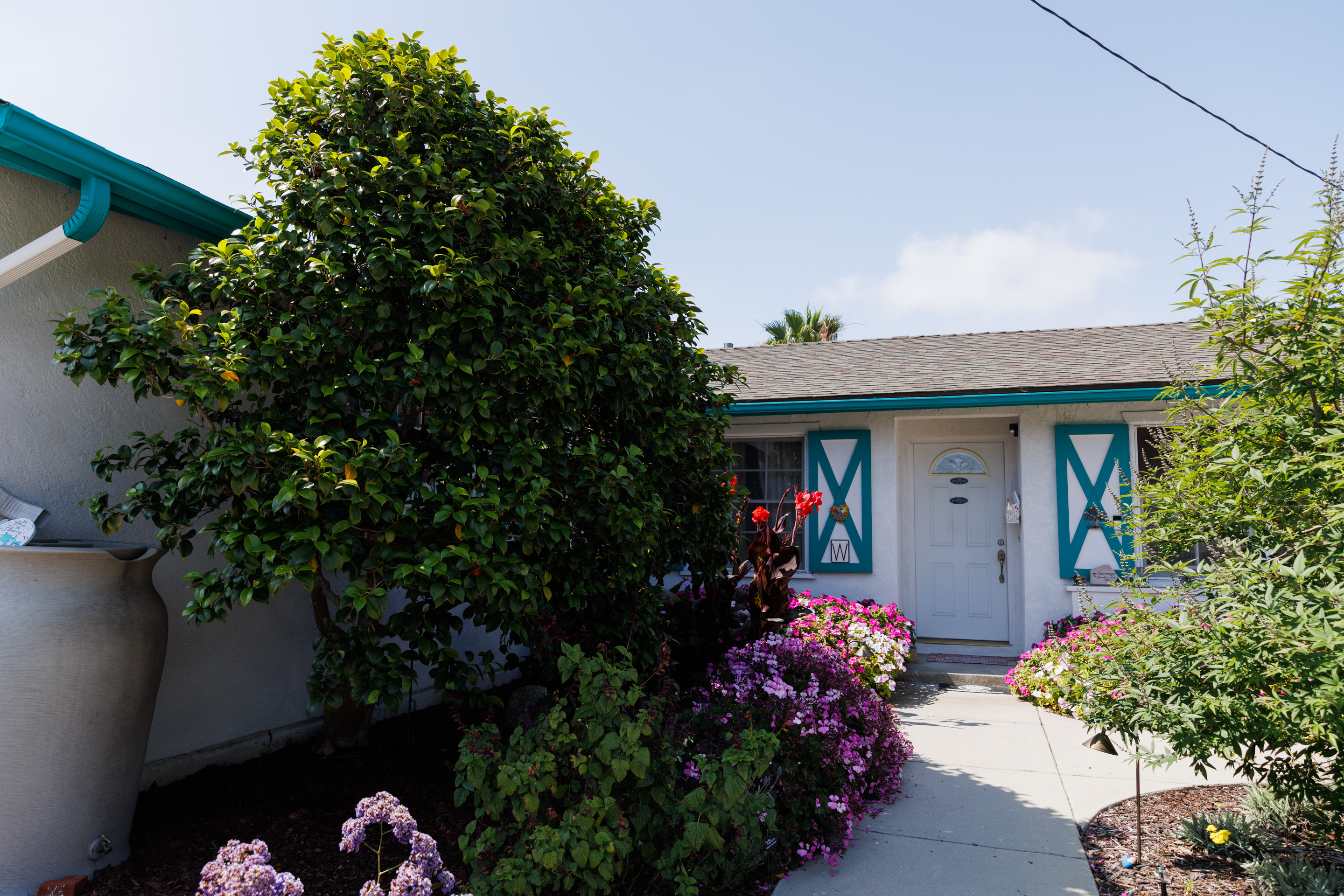
A camellia tree in the front garden. (Kristian Carreon / The San Diego Union-Tribune)
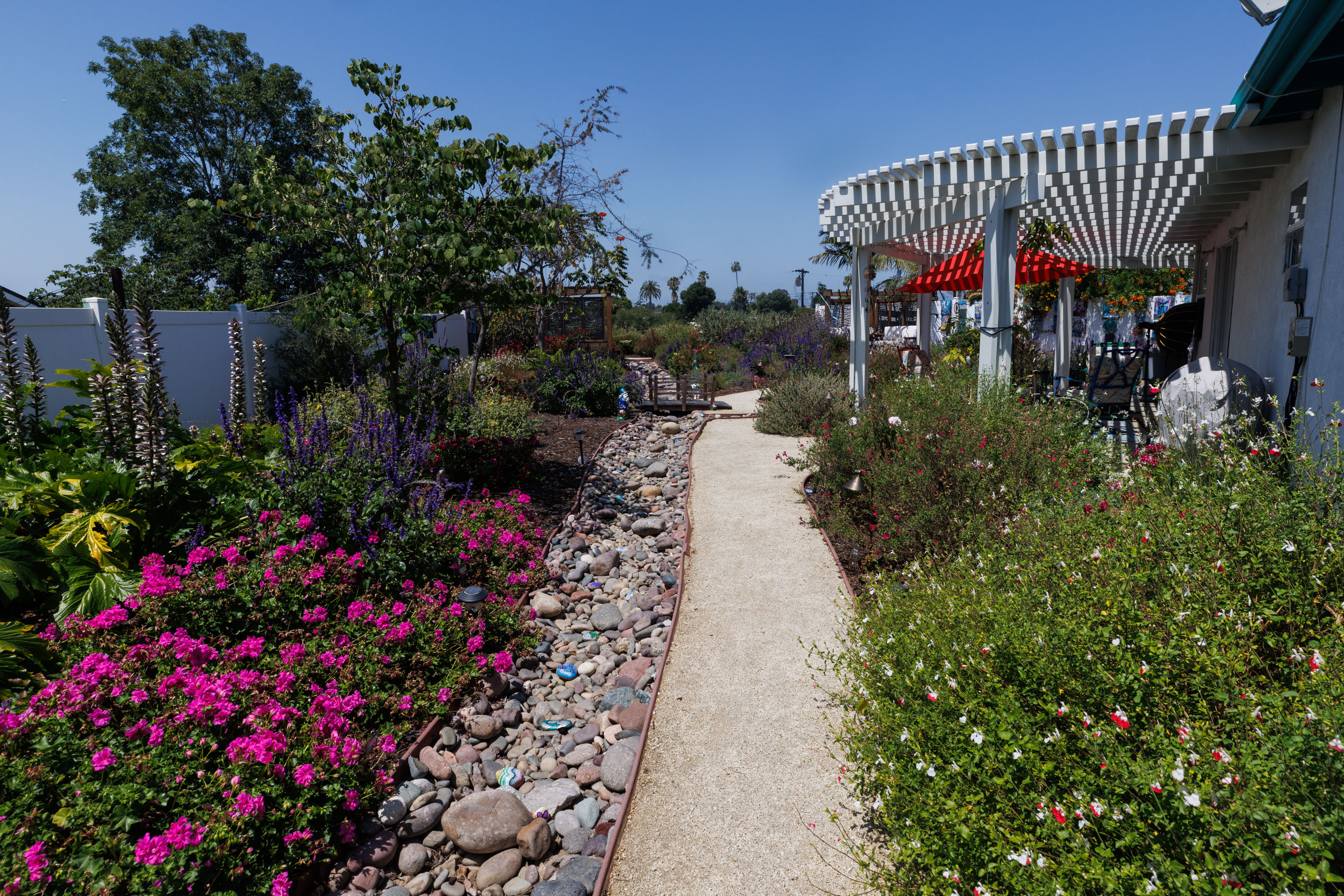
The side yard. (Kristian Carreon / The San Diego Union-Tribune)
Show Caption
1 of 4
Rock swales were a key part of the renovation. The channels help retain rainwater that is routed to plants and keep runoff out of the street. (Kristian Carreon / The San Diego Union-Tribune)
One highlight of the garden doesn’t actually belong to them: Their next-door neighbor has a Tecoma stans plant, or yellow bells, and Tecoma “Orange” so large they’re hanging over the fence. The colors are brilliant, and their gardener is under strict orders not to touch them. They’re a favorite of the hummingbirds in the garden.
One of the plants I was drawn to was the Abutilon hybridum, or Chinese lantern. The red flowers hang down and have the shape of little lanterns protected by maple-shaped leaves. Sometimes, said Julie, you’ll see the lanterns shake.
“They’ll move and then vibrate. There’s a bee up there but you can’t see it. It’s trying to gather pollen.”
But that’s hardly all. In the garden are a variety of sages, including yellow-flowered Jerusalem sage, autumn sage, Mexican sage and friendship sage. There are coneflowers, English lavender, dragon trees, Bougainvillea, foxtail ferns and — out at the edge of the garden near the canyon — Plumeria.
The couple also created a space on the other side of the house for edibles — avocado and blood orange trees, Meyer lemons, lettuces, pineapples (planted from the tops of what they bought at the market), kale and red onions.
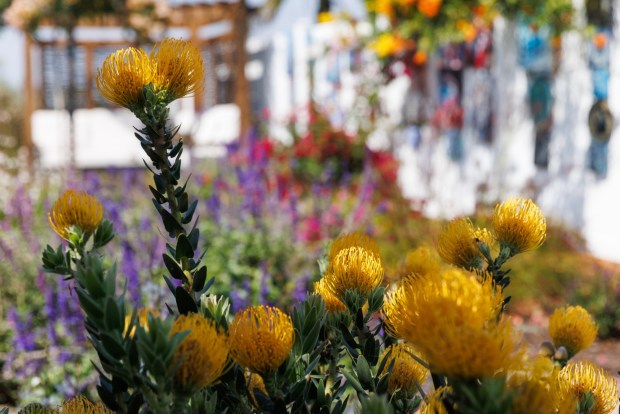 ‘Flame Giant’ pincushion plants offer striking color. (Kristian Carreon / The San Diego Union-Tribune)
The couple has some color tips for gardeners in decision-making mode. The most important to them is to pair colors that go well together, such as pinks, blues and purples.
“Yellows and reds or yellows and purples sometimes do not go together,” Chris said. “Yellows and pinks definitely do not go together.”
They didn’t do a lot of red in the front because, as Chris described it, “It’s a halting color.”
Instead, use lavenders, pinks and whites to draw people in. In fact, he added, whites are called the peacemaker in the garden.
“So if you have colors that are clashing, stash a white in there. It all gets harmonious right there,” he said. “That’s why we have the ‘Whirling Butterflies.’ They just create a little harmony in that little spot, because they interrupt that pink and purple.”
Repetition of colors and the plants themselves create a sense of cohesion, they noted.
What the Wilhelmys have done, as they described it, is created a “staycation sanctuary.”
“We love to travel, but at the moment we just can’t afford to be away for too long because we don’t have anyone covering us in our business,” Julie said. “We wanted a place where we literally come outside and we stroll through the garden, like we’re strolling through the grounds of a hotel. It’s our staycation.”