
Cal Fire is a critical part of keeping California safe from wildfires, and part of that responsibility falls on the Cal Fire Aviation program, which is made up of hundreds of personnel to keep its fleet of 68 aircraft mission ready. McClellan Airport is where Cal Fire Aviation is headquartered, and it is where I took a look at some of the aircraft that they use to keep California safe. The first aircraft that I saw was the UH-1H Super Huey.SPECIFICATIONSCRUISE SPEED: 126 MPHBUCKET CAPACITY: 324 GALLONSFIXED TANK CAPACITY: 360 GALLONSCREW: ONE PILOT, TWO HELITACK CAPTAINS AND EIGHT PERSONNELThe Super Huey has been in the Cal Fire fleet for over 40 years as the frontline copter for helitack crews. It can carry eight firefighters for quick deployment in remote areas and then support their efforts by dropping water on the fire. The Super Huey will carry either a bucket that can be filled with water by dipping into a local lake or pond, or a tank that uses a fixed snorkel with a strainer on the end to suck up water like a straw. One of these would likely be one of the first responders you would see at a wildfire. The Super Huey has been the workhorse for Cal Fire for a long time, but now they have something newer.In 2018 funding was secured for the purchase of 12 Sikorsky S70i Helicopters. The Cal Fire Hawk can fly faster to the scene, carry more water to fight the fire, and it can carry more personnel as well. SPECIFICATIONSCRUISE SPEED: 160 MPHCAPACITY: 1,000 GALLON FIXED TANKCREW: ONE PILOT, TWO HELITACK CAPTAINS, AN OPERATIONS SUPERVISOR AND UP TO NINE PERSONNELThe biggest difference between the Fire Hawk and the Super Huey is the measure of safety. With its dual engines it can carry a bigger payload and even fly at night with the aid of night vision goggles. It has a large 1,000-gallon fixed tank that can be filled by hovering over a body of water with a retractable snorkel. It also has a fixed hoist for air rescue missions which is really important if fire fighters need to be pulled out of a life-threatening situation. The Super Huey and the Cal Fire Hawk are the rotary-wing aircraft in the Cal Fire inventory. Next we move to a fixed wing aircraft, the Grumman S-2 Airtanker.SPECIFICATIONSCRUISE SPEED:270 MPHCAPACITY: 1,200 GALLONS OF RETARDANTCREW: ONE PILOTThe Grumman S-2 Airtanker is the most numerous aircraft in the Cal Fire fleet with 23 operating units. This plane is used to reach farther and faster to remote areas to help keep small fires small. Each season the S-2 is strategically placed at bases throughout the state where it would be likely to reach fires within twenty minutes or less. These aircraft are agile, maneuverable, and with their 1200-gallon tank can pack a punch. It also has the ability to adjust the amount of retardant it can drop depending on the size of the fire. Cal Fire has been using the S-2 Airtanker since the 1970s, and with recent upgrades of modern, powerful turboprop engines, the reconditioned S-2s are better equipped to continue their fight to keep California safe from wildfires.These are just three of the six types of aircraft that Cal Fire has in its arsenal of aircraft. Coming up I will explore some tactical aircraft as well as the larger C-130 Airtanker.This story was produced for our 2026 Wildfire Ready special report. See our full Wildfire Ready guide here.
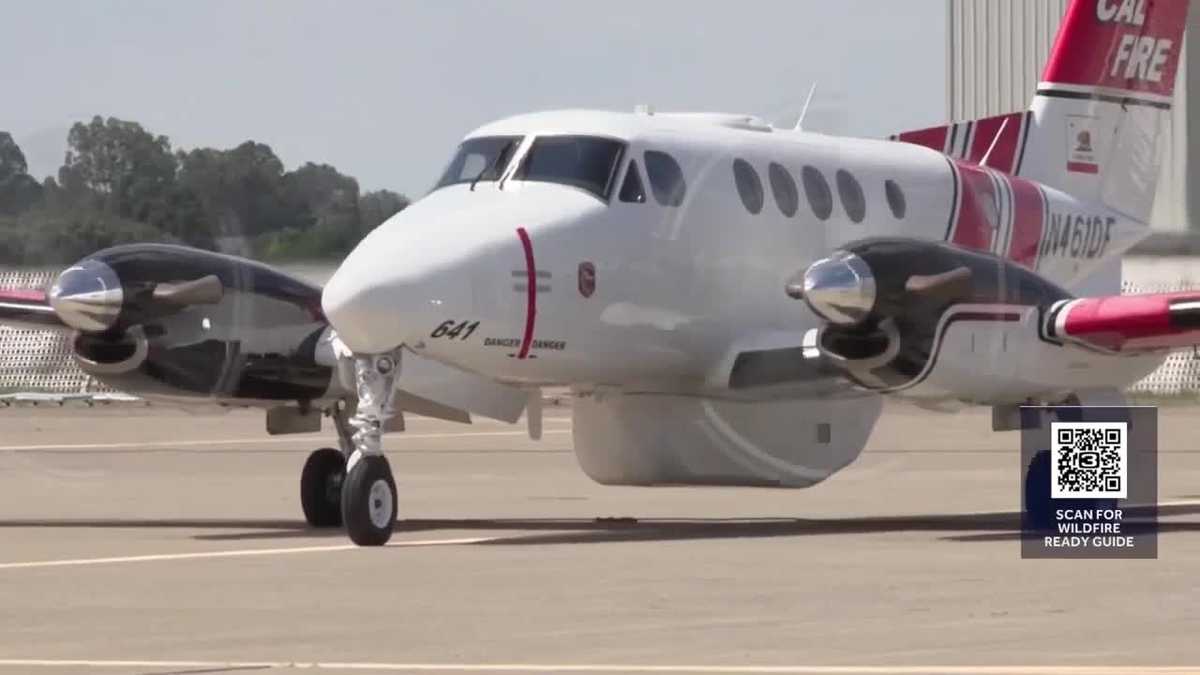
Cal Fire is a critical part of keeping California safe from wildfires, and part of that responsibility falls on the Cal Fire Aviation program, which is made up of hundreds of personnel to keep its fleet of 68 aircraft mission ready.
McClellan Airport is where Cal Fire Aviation is headquartered, and it is where I took a look at some of the aircraft that they use to keep California safe.
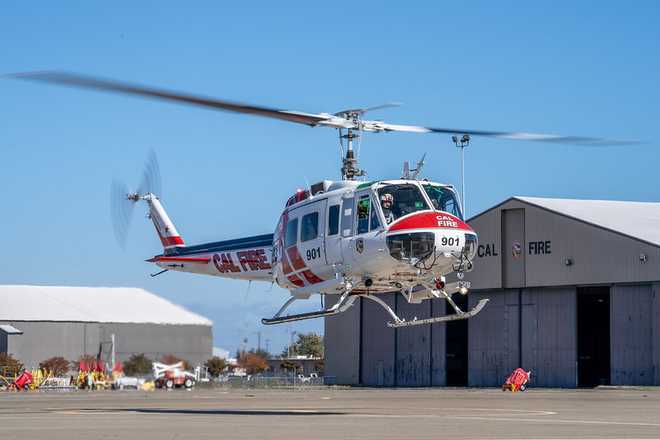
The first aircraft that I saw was the UH-1H Super Huey.
Cal Fire
UH-1H Super Huey Helicopter
SPECIFICATIONS
CRUISE SPEED: 126 MPH
BUCKET CAPACITY: 324 GALLONS
FIXED TANK CAPACITY: 360 GALLONS
CREW: ONE PILOT, TWO HELITACK CAPTAINS AND EIGHT PERSONNEL
The Super Huey has been in the Cal Fire fleet for over 40 years as the frontline copter for helitack crews. It can carry eight firefighters for quick deployment in remote areas and then support their efforts by dropping water on the fire. The Super Huey will carry either a bucket that can be filled with water by dipping into a local lake or pond, or a tank that uses a fixed snorkel with a strainer on the end to suck up water like a straw. One of these would likely be one of the first responders you would see at a wildfire.
The Super Huey has been the workhorse for Cal Fire for a long time, but now they have something newer.
In 2018 funding was secured for the purchase of 12 Sikorsky S70i Helicopters. The Cal Fire Hawk can fly faster to the scene, carry more water to fight the fire, and it can carry more personnel as well.
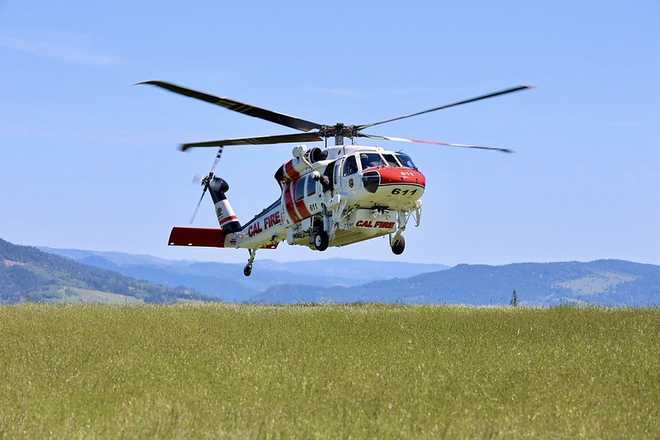
SPECIFICATIONS
CRUISE SPEED: 160 MPH
CAPACITY: 1,000 GALLON FIXED TANK
CREW: ONE PILOT, TWO HELITACK CAPTAINS, AN OPERATIONS SUPERVISOR AND UP TO NINE PERSONNEL
The biggest difference between the Fire Hawk and the Super Huey is the measure of safety. With its dual engines it can carry a bigger payload and even fly at night with the aid of night vision goggles. It has a large 1,000-gallon fixed tank that can be filled by hovering over a body of water with a retractable snorkel. It also has a fixed hoist for air rescue missions which is really important if fire fighters need to be pulled out of a life-threatening situation.
The Super Huey and the Cal Fire Hawk are the rotary-wing aircraft in the Cal Fire inventory. Next we move to a fixed wing aircraft, the Grumman S-2 Airtanker.
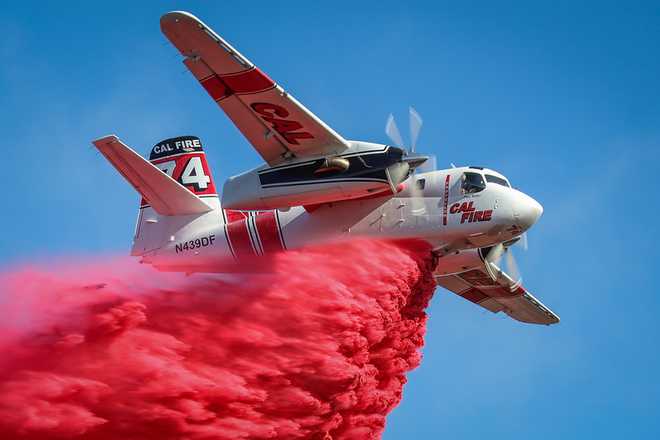
SPECIFICATIONS
CRUISE SPEED:270 MPH
CAPACITY: 1,200 GALLONS OF RETARDANT
CREW: ONE PILOT
The Grumman S-2 Airtanker is the most numerous aircraft in the Cal Fire fleet with 23 operating units. This plane is used to reach farther and faster to remote areas to help keep small fires small. Each season the S-2 is strategically placed at bases throughout the state where it would be likely to reach fires within twenty minutes or less. These aircraft are agile, maneuverable, and with their 1200-gallon tank can pack a punch. It also has the ability to adjust the amount of retardant it can drop depending on the size of the fire. Cal Fire has been using the S-2 Airtanker since the 1970s, and with recent upgrades of modern, powerful turboprop engines, the reconditioned S-2s are better equipped to continue their fight to keep California safe from wildfires.
These are just three of the six types of aircraft that Cal Fire has in its arsenal of aircraft. Coming up I will explore some tactical aircraft as well as the larger C-130 Airtanker.
This story was produced for our 2026 Wildfire Ready special report. See our full Wildfire Ready guide here.