
It’s 7 a.m. on a Saturday in 2006, and I’m a bleary-eyed pre-teen coaxed out of bed by the promise of warm donuts. My dad has just clocked out of his graveyard shift nearby, and my family is headed to one of our favorite spots along Route 66: The Donut Man.
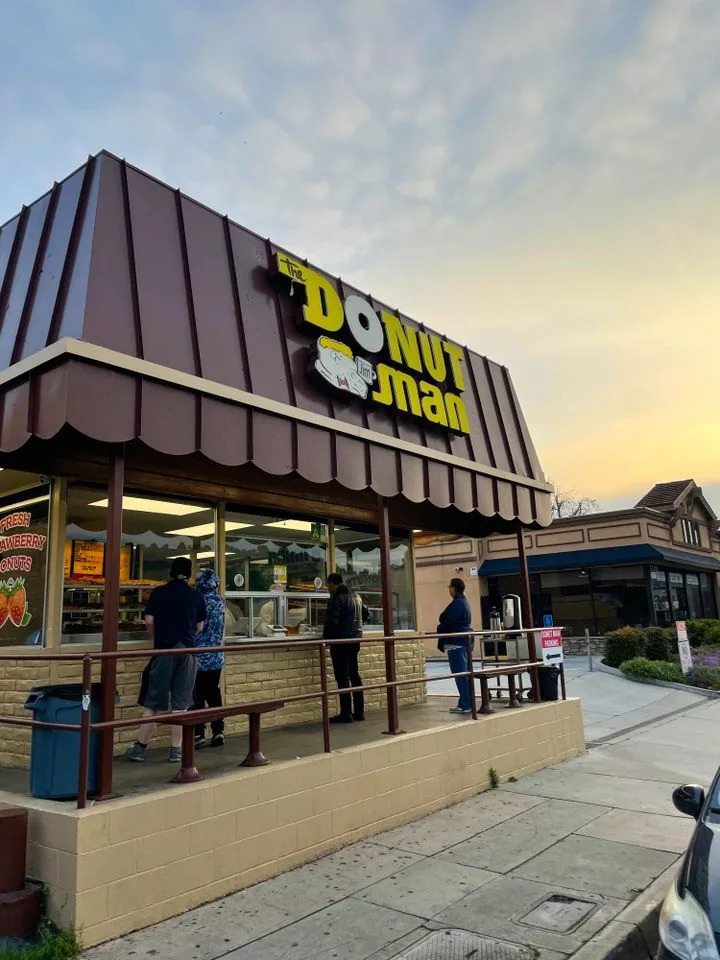
The 24-hour, seven-day-a-week donut shop has the markings of a beloved hole-in-the-wall: a plain brown awning, a waft of sugar greeting the line wrapping around the building, and windowside service where visitors can spot every donut as it’s hand-shaped and fried. The regulars know each other—and the shop’s storied history.
Credit: The Donut Man
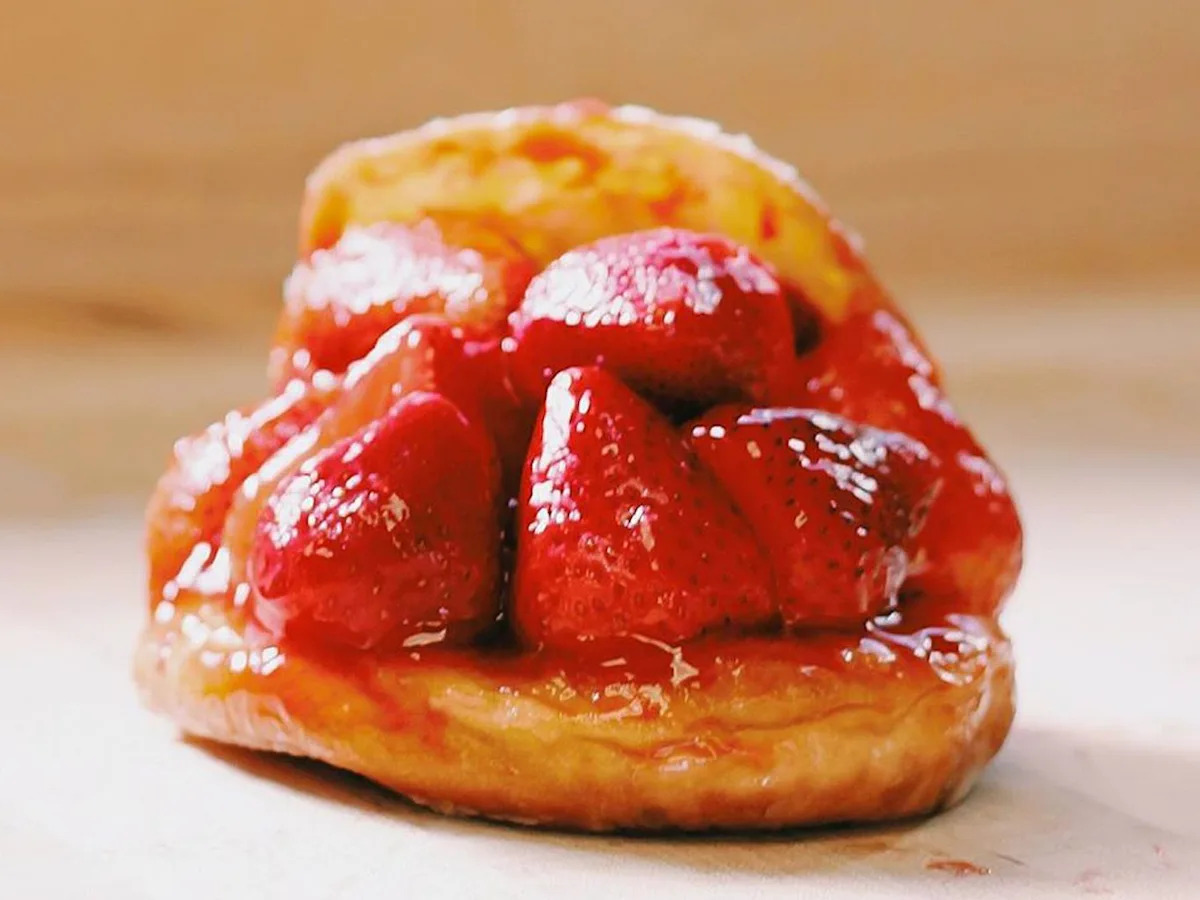
After standing in line, we are rewarded: glossy strawberries, sandwiched between puffy, glazed dough. We settle on a nearby bench overlooking Route 66 and feast.
My family didn’t often share meals together—the nature of my father’s job made that challenging. Spots like The Donut Man were our dining room.
Owner Jim Nakano grew up in Boyle Heights, but was forced to move to an internment camp in Arizona at age 2. When his family returned to California, they moved around Southern California before Jim served in Vietnam, then settled in Glendora, where he worked as a salesman. Then, he decided he wanted to open a business.
His wife Miyoko pointed him toward donuts. “When Jim and his wife were discussing businesses to open, his wife was saying that she loved hot donuts,” said Aaron Wearp, The Donut Man’s general manager. “That was Jim’s motivation to look at the industry.”
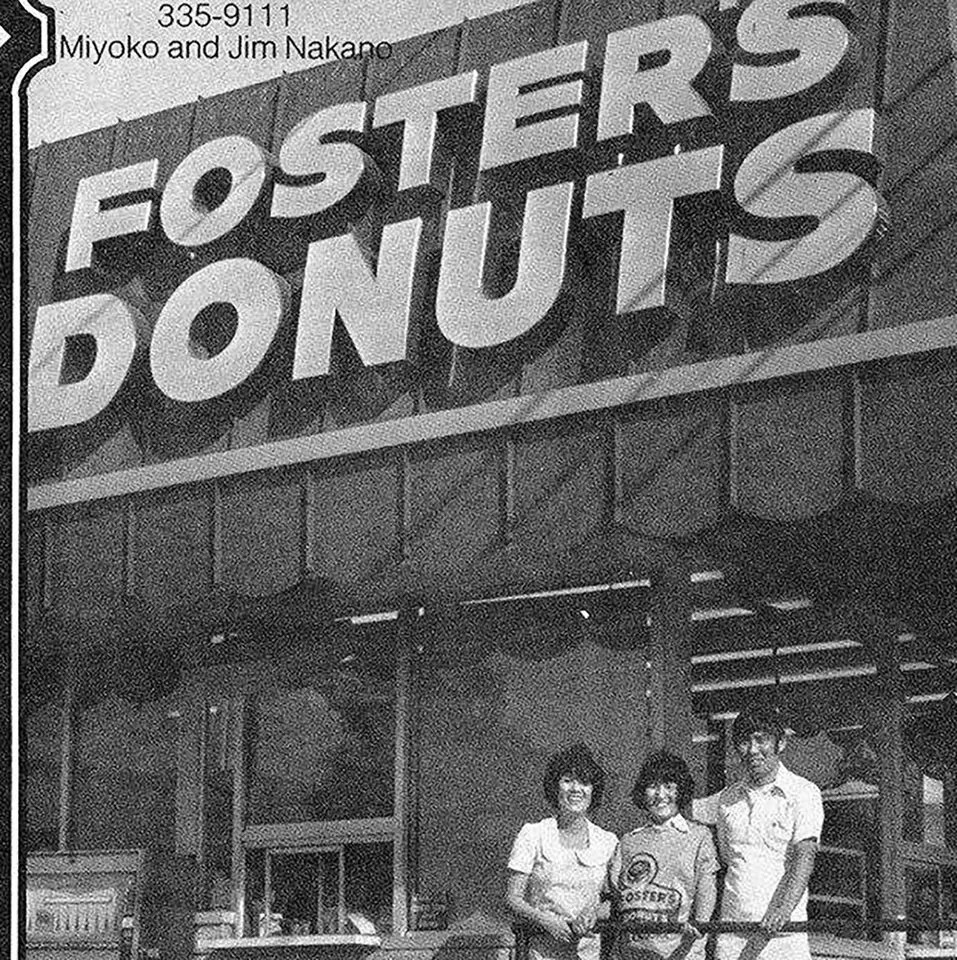
In 1972, Jim and Miyoko opened a Foster’s Donuts franchise. By the 1980s, Jim bought out the shop—his expression of freedom and the American Dream. The shop’s name came from the neighborhood: while Jim debated what to call the shop, a young girl greeted him as “Mr. Donut Man.” That was that.
Credit: The Donut Man
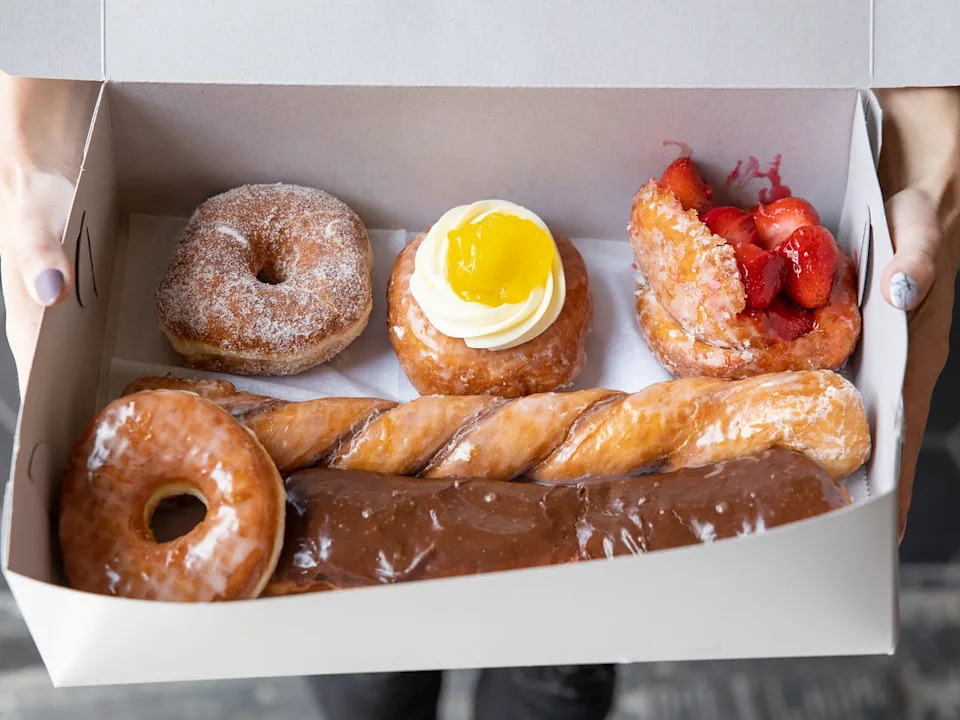
The strawberry donut of my childhood didn’t arrive until a few years later. It began with a particularly abundant strawberry crop. “Jim’s family was very into the produce markets in Los Angeles,” explained Wearp. “Jim had acquaintances who ran local strawberry farms, and one day, one of them came by and asked if Jim could use any. That got Jim’s wheels turning on making a strawberry donut.”
Between trips to pick up berries from local family-owned farms, he tested the recipe until he found the balance that wasn’t excessively sweet.
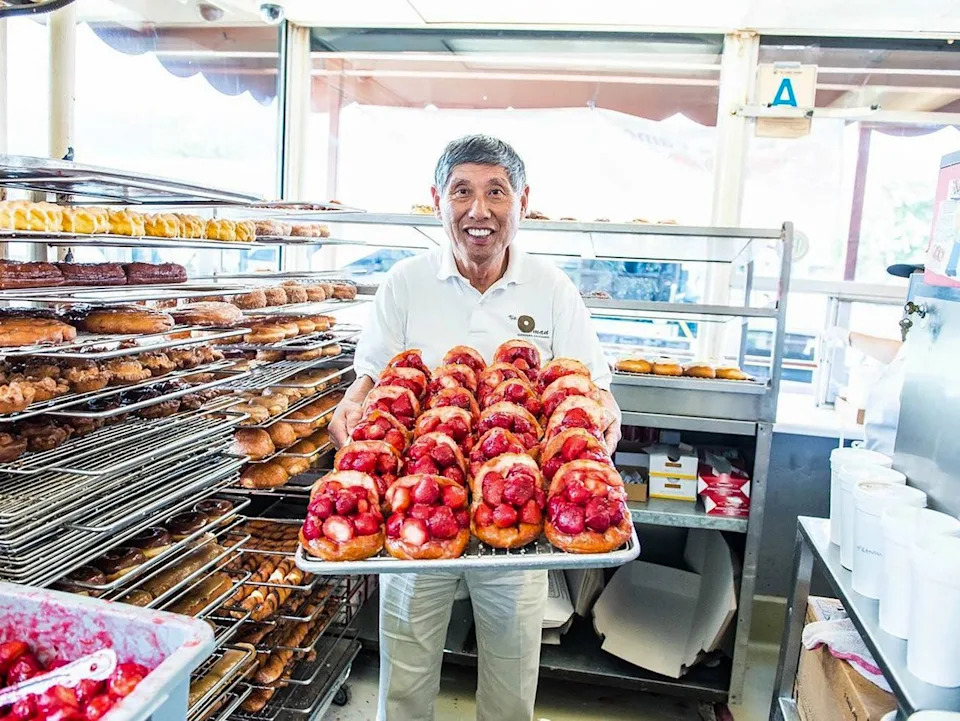
Fifty years later, the strawberry donut has become the destination of foodie pilgrimages. It’s available seasonally and made with fresh strawberries sourced from the Los Angeles Produce Market. A sister peach donut, another nod to California’s farming community, was added to the menu a few years later and only appears in late summer. That was another of my father’s favorites after a long night at work.
Credit: The Donut Man
“One of my goals is to have the same donut—the same tasty donut your grandparents had in 1972, or your parents had in the ’80s and ’90s,” said Wearp. “We’ve planted a flag and want customers to have the same donut they got as a kid.”
“Some of my first college memories were being in a car full of friends along Route 66, marveling at being able to get donuts 24 hours a day,” said Adam Cozens, the face behind Instagram’s @MemesOfGlendora and a regular for more than two decades. “The Donut Man gets Glendora on the map. If you talk about Glendora to anyone, The Donut Man is the first thing they say.”
Albert Thomas has been visiting biweekly for years. “I suppose you can thank the original owners for the building that puts the product front and center to the customer, so that a quick drive-by along Route 66 lets you spy what’s sold out. The large sign in the window announcing the seasonal donuts reinforces the idea of freshness and a special treat.”
“Walking up to the building is like visiting a great-grandfather: you know it’s old and built in a way that it doesn’t care if it’s convenient or not to visit. But you love it and concede that it’s all part of the charm. You press up against that wall to make way for people leaving with boxes of donuts, and you forget the customer shuffle,” continued Thomas.
Credit: The Donut Man
The landscape along this stretch of Route 66 has changed considerably since the Nakano family took a leap on their American Dream. But their business has not. Every donut is still shaped, fried, and glazed by hand, in full view. The strawberry donut still remains a favorite and a sign of the area’s connection with local farmers. Some employees have been there since the early ’90s. The community still builds traditions around the shop. Jim, now in his late eighties, has stepped back—though he still pops in and consults.
“I think we’re part of the fabric of Route 66. There’s family business all up and down it,” said Wearp. “Being on Route 66 can sometimes offer you the chance to experience what life was like 20, 30, 40 years ago.”
Our family’s dining room—the bench alongside Route 66, where we balanced sticky donuts on our laps—is still there. My dad may no longer be donning his work uniform after a 12-hour shift, and I may no longer be a moody teenager, but the core memories sandwiched between the warm dough still remain.
Read the original article on Allrecipes