
Summary
A CNN journalist attended a five-day men’s retreat in California to understand its efforts to address male isolation.
The $5,000 camp run by life coach Lori Jean Glass requires participants to openly share traumas and vulnerabilities.
The experience revealed how disconnected men are seeking community but rarely make time for meaningful conversations with friends.
AI-generated summary was reviewed by a CNN editor.
Sonoma, California —
Have you ever had someone stare right into your soul?
It’s not a pleasant experience. I felt a loss of control; my stomach lifted and pressed against my chest like that moment of weightlessness, right after takeoff, when a plane slows its rate of climb and settles into an ascent.
“I feel like we’re missing whatever you’re wanting to connect on,” the woman across from me said — life-coach talk for “I see through your bullsh*t.”
She held my eye. There was no point holding back. It was time to let it all out.
It was day three of an eye-opening week, and I was having an intense, one-on-one treatment session. On camera. And soon, I’d be sharing even more with a group of men I’d met 72 hours earlier.
I was in California to cover a story: a five-day, male-only retreat in Sonoma, in which a group of dudes unpack and reframe their relationships to masculinity. It’s an interesting concept – but what makes it unique is that the camp is founded and run by a woman, life coach Lori Jean Glass, and her team of predominantly female coaches.
She began her career working in a licensed treatment facility and then started running women’s retreats under her coaching company, called Pivot. Now, she offers male-only camps too. And they feel especially important now — because men, we keep hearing, are in crisis.
I’ve read a stream of coverage about the “manosphere,” a loosely defined ecosystem of defiant young men who have coalesced around a confrontational and often misogynistic worldview, and the connected problems of male isolation and loneliness that erupted during the pandemic and never subsided.
What I hadn’t heard much about was a solution. Was anyone helping men open up to each other? To pull confused men away from toxic influences? How do you reach them? Should you even try? And was this – an expensive five-day escape in northern California – really the answer?
So I traveled to Sonoma, alongside CNN Senior National Correspondent David Culver, to find out.
But there was a catch. Glass agreed to let us observe her camp, but only if we participated ourselves. If we wanted to know what happened inside these closed retreats, we’d need to go through the process alongside the other men. And we did. We cried, we bonded, and we confessed secrets and traumas we’d kept buried for years.
The experience taught me plenty about the silent men’s mental health crisis, and the people working to provide an antidote to the manosphere. But it also became the most immersive and personal work assignment I’d ever had. It challenged my own understanding of my psyche, of masculinity and my role as a journalist. I learned – and revealed – more about myself than I ever expected.
As a journalist, I’d always been taught not to make myself the story. I’ve always followed that premise. I’ve stayed out of the way.
But some stories can’t be told like that. Occasionally, to get to the heart of something, you need to experience it for yourself.
I was skeptical about this project. Glass is a life coach, and most of her team are not trained psychotherapists. California is the spiritual home of New Age health practices. I wondered whether the environment could, in fact, be harmful. What if men were being told to rip open wounds that couldn’t be patched together by the end of the week?
WE WANT TO HEAR FROM YOU
We want to hear about positive male communities that you’ve observed or experienced. What made them different? Use the comments section at the bottom of this story to share your perspectives. Our reporters – Rob Picheta and David Culver – will be responding to your questions and thoughts.
David and I arrived after a two-hour drive from San Francisco and met Glass. She seemed a little nervous about our presence, as if she might be getting cold feet about our participation at the last moment. But it was too late to change course: The other men were about to arrive.
Glass asks participants not to use their phones at the camp, so I left mine in the car – which, for most journalists, feels a bit like losing a limb. We introduced ourselves to the other participants. And then the small talk ended. Not wanting to waste a moment of this expensive experiment, these men started sharing almost immediately.
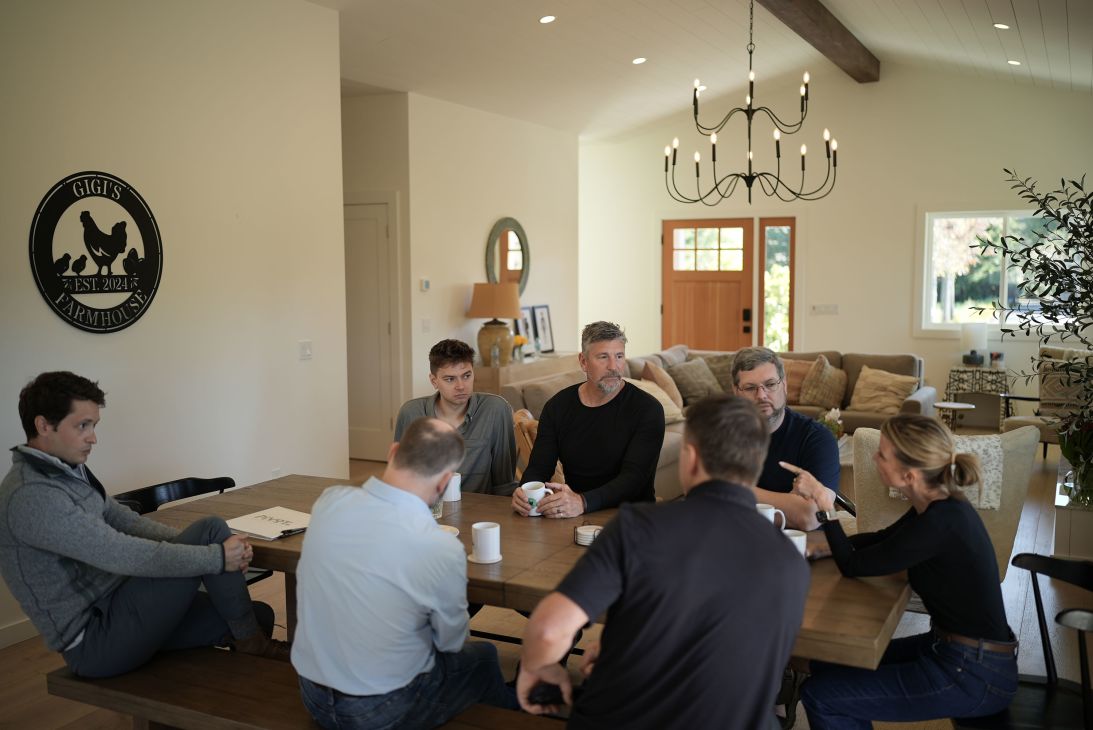
Matt told us he was grieving the loss of his father, a former NFL player and college football coach. Jason recently lost his wife to breast cancer and was coming to terms with her death but also the death of his own identity as a caregiver. Geoff was concerned about his children departing for college, leaving him and his wife as empty nesters. And all three wanted to relate better to their identity as men; to understand what that role even means, and how they can define it for themselves.
We brought our own baggage, too. Both David and I were raised as Catholics, and in our teenage years, we both resisted our sexualities, hiding ourselves from an environment where we felt unwelcomed. Being gay shaped my concept of masculinity as a teenager; manliness became a trait others naturally possess, but one I had to learn. I began code-switching, and even today, my voice might drop an octave when I’m chanting at a soccer game or when I introduce myself to a group of guys at a party.
It seemed I wasn’t alone. On day two of the camp, Glass put forward some ideas about masculinity. One prompted a lengthy discussion: “Most men today are confused about what it means to be a man.”
“You have labels like ‘toxic masculinity’ that people throw around,” Geoff said. “What does that even mean?”
Glass truly believes her project can work for anyone, but participants need to take the first step and open up.
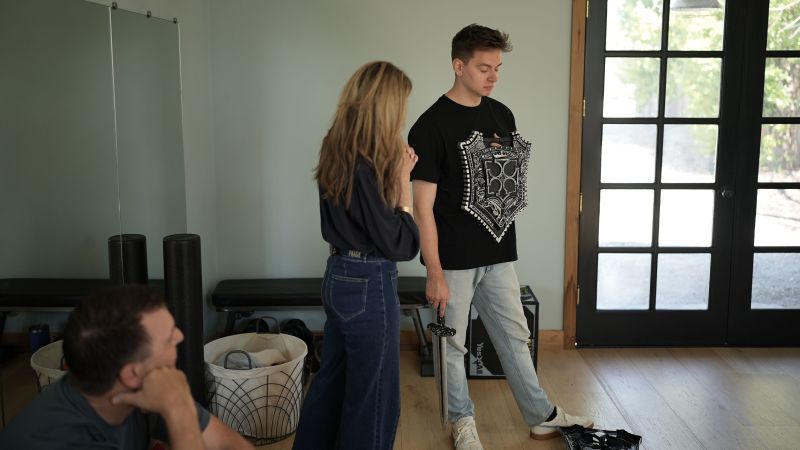
That took me a while. For two days, I held back; I shared a few perfunctory details about my life, but I resisted the invitation to go deeper. So David gave me some advice: talk to Glass, one-on-one. He’d just come out of a session with her that had changed his entire opinion of the project. She was “like a mind reader,” he told me.
I experienced a similar feeling myself in that makeshift therapy room, my chair pointed directly at hers, as she saw through my facade. There’s no doubting her unique ability to connect with people; she pulled my troubles out of me quicker than anyone I’d ever met. Our photojournalist – who, to maximize confusion, is also called David – was filming our interaction, and I began the session aware of his presence. By the end, I’d forgotten about it entirely.
A few hours later, I was standing in front of the group, on a proverbial baseball diamond that represented the four stages of my life – child, teen, challenged adult and healthy adult, in Glass’s parlance. The eyes of the room fixed on me as I voiced the anxieties and fears that stem from each part of my past. I discussed my childhood, my struggles fitting in at school and a recent heartbreak that shook my self-esteem.
There was nowhere I wanted to be less than that baseball diamond. But I’d watched the other men do the same routine: Matt sorted through his complicated feelings about his father; Jason reckoned at last with his grief; and Geoff realized he’d been avoiding some painful conversations with his wife. They’d been open and reflective with David and me, never once complaining about a CNN crew witnessing them at their most vulnerable. I felt like I owed it to them to do the same.
So around the diamond I went. My child said: “Where are you? Why does it have to be like this?,” as I untangled the complicated experience of having two loving but vastly different homes. My teen said: “I want to belong,” as he voiced the insecurities of adolescence and the need to fit in. As a challenged adult, I said: “I’m running out of time,” and discussed the self-imposed pressure of hitting my professional and personal goals.
And as a “healthy adult,” on home plate, I reflected on all those worries in a better, more confident way. “I’m doing fine. I’m right where I need to be. I matter.”
The exercise was painful. I felt self-conscious and shy, and I had to fight back tears more than once. But it was so helpful that the next day, I asked to do it again. I’d reflected overnight about what I’d shared and realized I had more to say: I wanted to purge myself of every lingering anxiety while I had a friendly, captive audience.
This time, I talked about my past relationships and my time at school. Visions came to me as I went: I saw my father’s old home and my teenage bedroom, places where my worries and behaviors took hold. By the end, I felt like I’d emptied the tank: I’d said everything I felt I needed to say. And before I could catch my breath, I was engulfed in hugs by the other men.
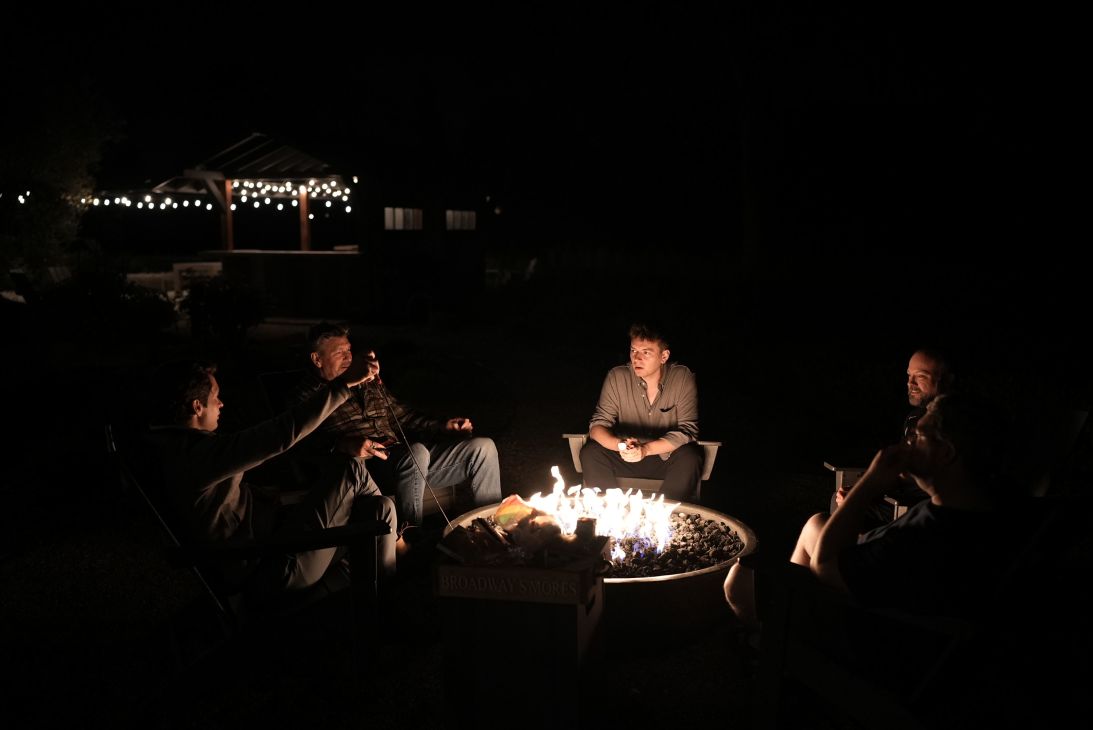
At times, walking the tightrope between being a journalist and a participant was complicated. David and I were working. These men weren’t our friends: they were subjects in a story we were covering.
And yet we developed meaningful relationships with each one. Our openness helped them open up to us. And I discovered that, despite a three-decade age range and wildly different backstories, we had plenty in common.
All five of us came through the door wanting control. Matt and Jason wanted control over their grief; Geoff wanted control of his family dynamic; David and I wanted to control the story. We all wanted control of our emotions, our relationships, our lives. But in this moment and in this space, all of us lost control. And that, it turns out, was the point.
I know more about these men than several of the male friends I’ve had for years. David and I had never worked together; by day three, we felt like our relationship stretched back decades. There’s a library’s worth of studies that tell us men aren’t making friends and have lost the ability to connect. In this house, they did.
As the week-long retreat wound towards a conclusion, David and I spoke at length with Glass.
Our experience had been positive – enlightening, even – but I was still grappling with a few questions. We’d gotten extremely deep, and fast. But should we? But what if a wound opened here can never be healed?
“We don’t tell people that we are going to completely heal them,” Glass told us. “That’s not on our website.”
Glass spent years learning psychological theories and her own approach is rooted in transactional analysis, a school of thought that emphasizes the importance of childhood, adolescence and adulthood in shaping how we relate to ourselves.
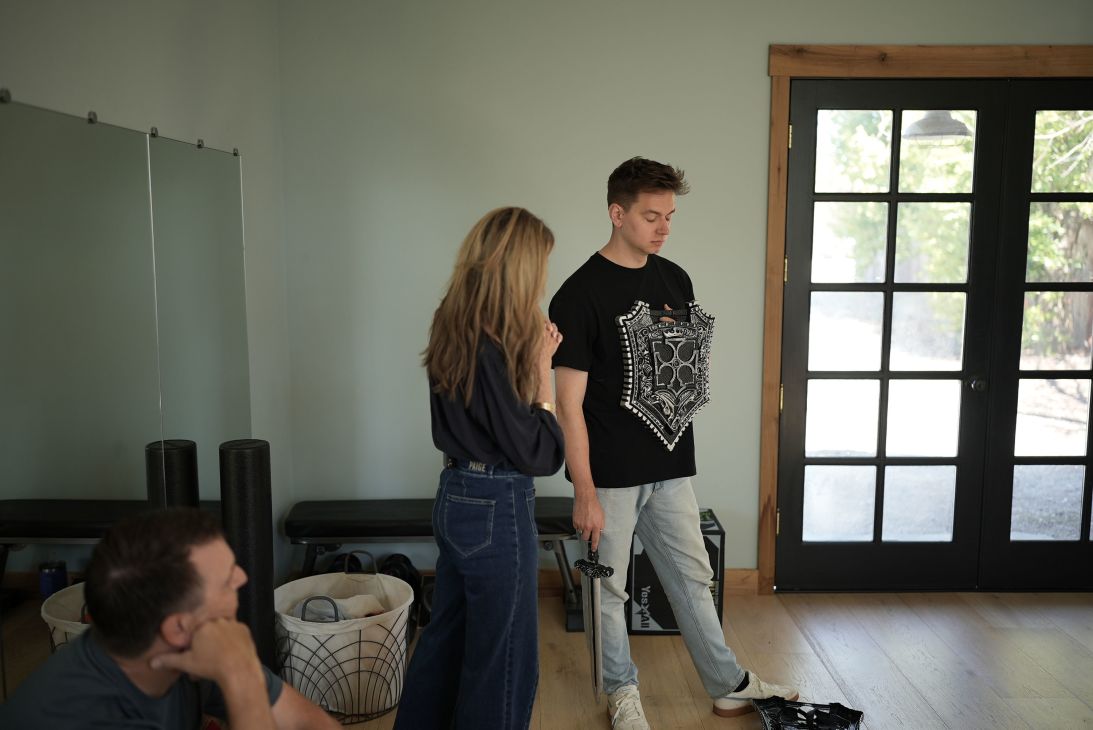
But I probed Glass on whether this camp, which costs more than $5,000 to attend, can really make a difference outside of these walls.
“It can, for some,” she said. She doesn’t want the camp to be a retreat for only rich men. Her company recently became a nonprofit; she hopes to win grants that allow her to offer scholarships to more men.
The next evening, as I waited for my flight home in an airport restaurant, I felt emotionally lighter. But I also felt the mundanities of life returning to my mind, and I wondered whether the past week could truly change my perspective going forward. I slipped very quickly into my old patterns; looking for problems to solve, tasks to complete, things to keep me busy.
The manosphere, like most societal buzzwords, can mean whatever you want it to mean. Some use to it describe the most boisterous group of antagonistic influencers. Louis Theroux probes these men in his recent Netflix documentary “Inside the Manosphere,” in which a parade of influencers boast about their net worth, their “one-way monogamy” arrangements and their domination over their female partners. I watched it on my flight home: If there was a polar opposite to the place I’d just experienced, it was this.
But the irony is that the manosphere is really no sphere at all. Most of the men who fall under the influence of its leaders do so precisely because they’re lacking community. “Men are missing men,” one of the coaches, Deb, told me. They have no network, and they crave in-person connection. The “sphere” is actually a vacuum.
I can relate. I live in a huge city, work a demanding and fulfilling job, and I’m fortunate to have a big group of male friends. And yet months can pass before I see them. Dinners are scheduled for six weeks from now. We vent to each other over WhatsApp about our terrible NFL teams, but we rarely make time for proper conversations.
It’s precisely this disconnection that Glass’s camp seeks to change. She’s trying to get men talking to each other, bonding, and sharing – whether they like it or not. It doesn’t sound like a revolutionary idea. But for those five days, it felt like one.