
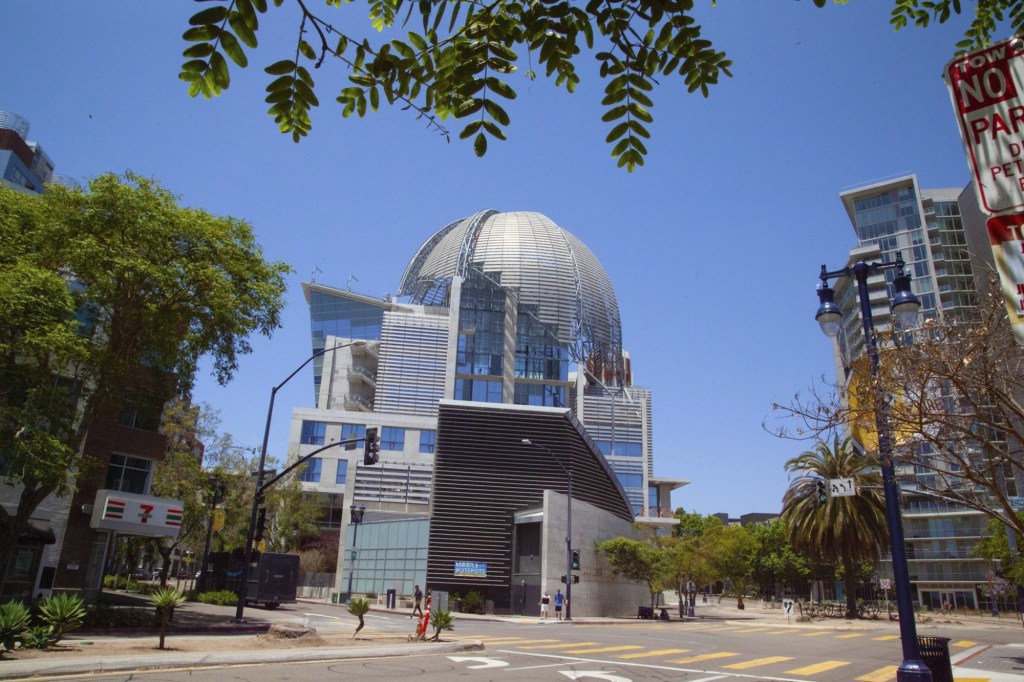
Libraries are more than places to borrow books. They are cornerstones of public life: accessible, trusted and embedded in every neighborhood. Across San Diego, public libraries remain places where patrons build their work skills, search for jobs and build community. Also, every day they serve as frontline support centers for our most vulnerable neighbors — people navigating housing instability, disability, trauma, mental illness or substance abuse.
In partnership with the San Diego Public Library, nonprofit organization Townspeople provides safe, affordable and supportive housing solutions to individuals experiencing homelessness and living with complex medical needs. While public conversations often focus on homelessness as a single issue, communities are strongest when support systems are designed to meet a wide range of needs. Libraries play a unique role because they are trusted, accessible spaces where people can find help, connection and opportunity.
A recent study of visitors and staff at the San Diego Public Library highlighted the importance of sustained presence and rapport. One librarian described a county Health and Human Services worker who showed up five days a week and built relationships with patrons over time. Through persistence, patience and trust, one individual eventually entered a substance abuse treatment program and secured temporary housing. That story reflects what service providers know well: People move toward stability through relationships. Libraries are one of the few public spaces where individuals can return daily without stigma, cost or appointment.
The same study found that one-third of unhoused library patrons reported living with a physical or mental disability. Librarians described daily encounters with patrons experiencing mental health challenges, trauma and housing instability. These are not occasional disruptions but part of the everyday reality of public service work in our libraries. In a city where thousands of people experience homelessness, San Diego’s public libraries have quietly become first responders.
At the San Diego Central Library @ Joan Λ Irwin Jacobs Commons, when a patron falls asleep in a chair, librarians gently wake them to check on their well-being. With so many San Diegans navigating health and housing challenges, that simple act can be lifesaving.
When we focus only on individual circumstances, we risk overlooking a broader reality: With rapidly rising housing costs, more people simply cannot afford to stay housed. Housing instability often begins with familiar challenges: a rent increase that outpaces income, a landlord deciding to sell or a health issue that disrupts work. In a high-cost region like San Diego, the line between stability and instability is thinner than many realize.
That is where libraries come in. They are already doing what many systems struggle to do: reaching people early, building trust and connecting them to support before a crisis worsens. In recent years, that role has become increasingly intentional. Nearly 7 in 10 library patrons and 93% of library staff surveyed supported having a permanent social worker onsite. That vision is already taking shape at The Hub at the San Diego Central Library, a response center offering direct assistance to unhoused families and individuals navigating their path to permanent housing.
What is happening inside our libraries is not meant to replace the housing system but support it. For many, a library is the first place they can access a computer, charge a phone, complete a job application or connect with someone who can guide them toward housing resources.
That first connection matters. Townspeople often works with individuals who begin their journeys in the library — meeting there to search for affordable housing options, apply for rental assistance, or find employment. By serving as first responders, public libraries help prevent crises from escalating and reduce strain on emergency rooms and law enforcement. This is not only a compassionate approach, it is a practical approach.
Ending homelessness in San Diego will require urgency, consideration, collaboration and long-term commitment. If we want solutions rooted in dignity and real pathways to housing, we must recognize and support the quiet first responders in our own neighborhoods.
Libraries are critical infrastructure in a city working to help everyone thrive. For many individuals seeking stability, opportunity, or a path home, libraries are not the endpoint; they are the entry point.
Get involved in supporting public libraries by signing up for the Library Foundation SD’s advocacy newsletter.
Stewart is the CEO of the Library Foundation SD. Peterman is executive director of Townspeople and a trustee for Library Foundation SD.