
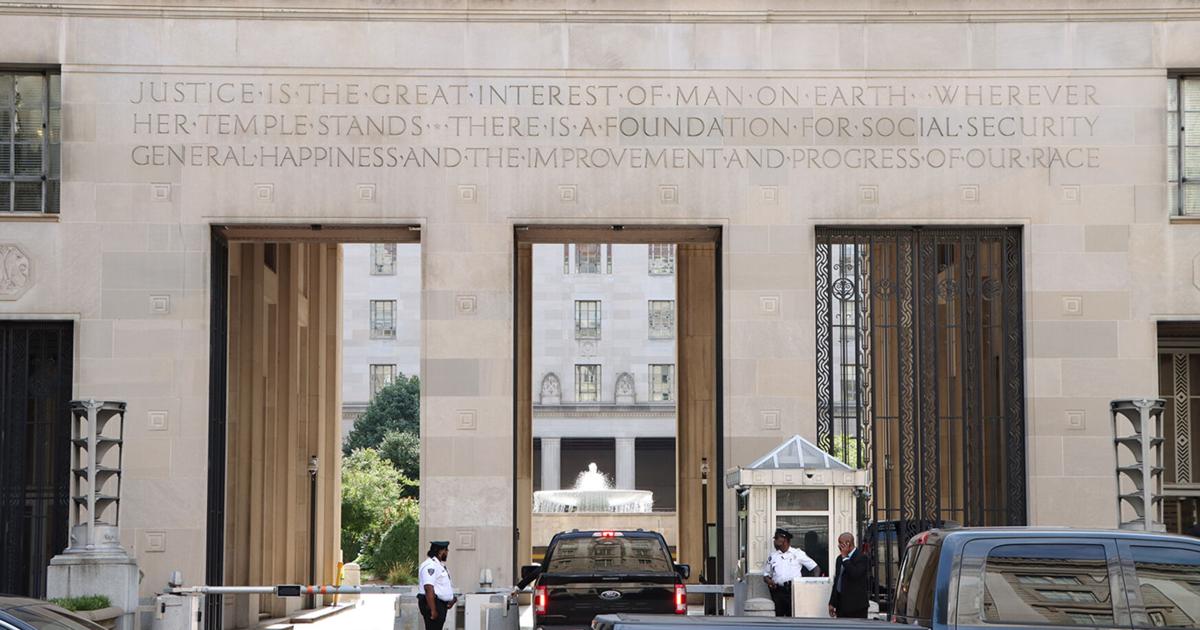
The U.S. Department of Education will be offloading responsibility for student civil rights enforcement and disability programs to other federal agencies. The department has shrunk drastically over the last year, and advocates worry this could upend how disability is treated and further stall discrimination investigations for students.
Much of the Office for Civil Rights, which investigates civil rights violations and protects students from discrimination, will shift to the Department of Justice. The responsibilities of the Office of Special Education and Rehabilitative Services will largely move to the Department of Health and Human Services. OSERS administers funding for special education programs and guarantees equal rights for students with disabilities.
While the details of the interagency agreement are vague, director of the Edley Center on Law & Democracy Catherine E. Lhamon said the shifts are sure to slow down civil rights claims.
In 2025, the education department resolved 30% fewer discrimination complaints compared to 2024 — after Secretary of Education Linda McMahon shuttered most regional civil rights offices, including San Francisco’s.
“An agreement to further slow down the work is unconscionable,” Lhamon said in an email.
The DOJ will investigate civil rights complaints, including those related to sexual harassment, racial discrimination and disability accommodations.
David Hinojosa, co-director of litigation at the National Center for Youth Law, said the OCR was once a “neutral arbitrator” between complainants and universities. The DOJ doesn’t have the same trustworthiness, according to Hinojosa.
Last September, the Department of Education launched an investigation into UC Berkeley and several other California universities for alleged antisemitism. UC Berkeley turned over the personal information of roughly 160 students and faculty as part of the investigation. Hinojosa said he doesn’t expect these investigations to change under the new restructuring.
“The Office of Civil Rights and the Department of Education and the Department of Justice have been infiltrated and politicized,” Hinojosa said. “For many of the universities that are experiencing these one-sided investigations, we don’t expect much difference coming from the Department of Justice.”
Jada Yang, co-chair of the ASUC Disabled Students Commission, said moving disability programs from an education space to the HHS is “nerve-wracking” because it could change disability from an identity to something that needs to be fixed.
While Yang is concerned about the shift and its potential to slow down discrimination cases or services for students, she said she’s seen the UC Berkeley administration committed to serving disabled students.
“UC Berkeley has been really good, especially with this past year … to really assure disabled students and allies that we are one of their priorities in the budget and supporting our services and programs is at their forefront,” Yang said. “(But) the nature of what’s going on — it just shows to me that disabled students can be seen as separate from the rest of the education system.”
These shifts further shrink the Department of Education, which President Donald Trump has committed to close. Last year, McMahon began transferring the department’s responsibilities and funds to other federal agencies through interagency agreements, including most Title I funding, the Fulbright-Hays Program and now special education and civil rights.
Fully dissolving the Department of Education requires an act of Congress, but through interagency agreements and mass layoffs, McMahon has initiated a reduction in force, impacting nearly 50% of the department workforce.
“I think the Trump administration wants parents and families to have to fend for themselves and not be able to rely on the federal government to intervene with the appropriate support,” Hinojosa said. “They’re abandoning those responsibilities.”