
It was a day before UC Berkeley’s incoming student housing deadline, and I was glued to the ’gram.
A thoroughly curated Instagram post — featuring five photos of me and a caption that’s so quirky that it might just be basic — had gone up on one of the UC Berkeley class of 2030 pages.
Immediately, the DMs piled up, and I began to wonder why exactly I had chosen to self-market. I swiped through my post for the umpteenth time, growing increasingly divorced from the images I’d once loved.
Maybe the choice to post was a rational means to an end: to win the roommate-rat-race, to emerge from the whole superficial ordeal having earned a little certainty. Maybe I had a fear of loneliness. Or perhaps, I harbored a deep mistrust of Oski and the housing gods — so much so that I, like many incoming freshmen, attempted to helicopter-parent my future.
As I stared down the stream of near-identical posts from the five-plus popular UC Berkeley 2030 accounts, I couldn’t help but wonder if maybe, just maybe, I opted in to this communal stress because something inside told me it was compulsory — a kind of false obligation that betrays a not-so-quiet whisper of self-doubt.
Now that I’ve secured the proverbial cheese (a roommate) and reached a new height of self-depreciation, it all seems so incredibly ridiculous. Everyone’s “down for a night in or a night out,” everyone’s looking for roommates and friends. Prom pics, hiking pics, mirror selfies, sports action shots … attempts at self-delineation blend into absurd mush.
But zooming out, a moderately disturbed laugh turns to an ugly cry.
During peak roommate search season (April 10-25, by my estimate), incoming UC Berkeley students might find themselves paying to fast-track getting posted on Instagram upon submitting their carousel of photos to third-party applications. Lines can reach more than 500, and some students will pay as much as $25, or even more, to move to the front.
On an IGotIn app anonymous messaging board, incoming freshmen reported paying $15 for the “express” option. Several waited over a month after paying to be featured on the @berkeley2030_ Instagram page, which boasts more than 10,000 followers.
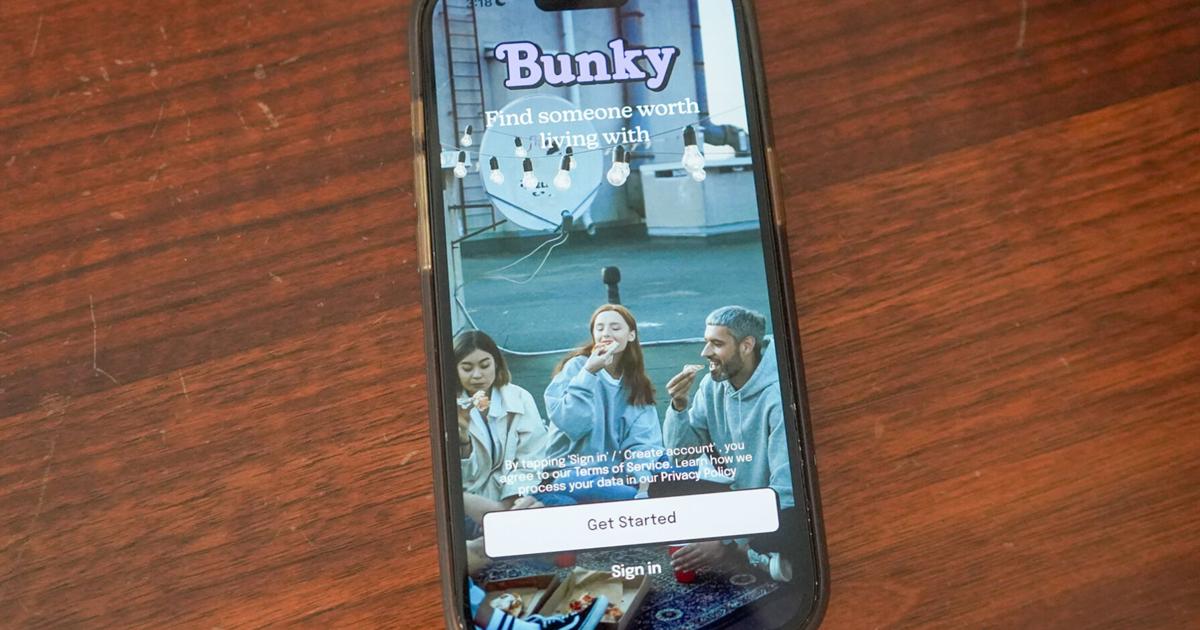
Apps such as MeetYourClass, IGotIn, ZeeMee and Bunky provide networking services to incoming UC Berkeley students and beyond.
Aiming to entice users with both the promise of a compatible roomie and the far more abstract comforts of validation and community, IGotIn lauds itself as a platform for “real college connections,” and MeetYourClass claims to “understand the importance” of reaching the “right students” pre-move-in day. In tandem with this student-centric approach, MeetYourClass markets to colleges by identifying the potential for students to become an “organic content engine” for the school, suggesting that new students’ social media presences may attract applicants.
Bunky, an app that reaches more than 700 colleges in the US, claims to “match lifestyles,” acting like a dating app for potential roommates. A significant section of its Instagram-based marketing relies on playful fear-mongering. Recent @bunky.co posts include “Things Your College Roommate Might Do That Will Drive You Crazy,” “Things Every Freshman Regrets By The End of Their First Year” and “How to Ruin Your Freshman Year of College” — slide three reads “go random on your roommate.” Other posts feature Pinterest-esque pics of roommates and friends (mostly white girls) enjoying spontaneous, laughter-filled lives with a backdrop of pastel, matching bedding.
These apps bank on the appeal of an idyllic freshman year, complete with the trappings of wealth, social homogeneity and permanent interpersonal validation. And their message is clear: Making pre-college connections is an absolute must.
But is it really?
In an era where roughly 94% of Gen Z uses at least one social media platform per day, it can be difficult to imagine a world without networking at one’s fingertips. Whether participating or merely observing, we are constantly inundated with self-marketing across platforms, to the point that it seems normal. Grasping for the “real” and “right,” we are held captive in cycles of presentation and reformation. Small alterations to ever-fluctuating, hegemonic definitions of attractiveness and personability can contribute to instability of identity.
And while it is an innate instinct to search for security among the unfamiliar, we search prematurely and in all the wrong places. Our perceptions of belonging can quickly toxify as they become attached to a highly deceptive digital space, wrought with posturing.
Simply, it becomes a paradox of choice. When presented with overwhelming abundance, we become discerning to a fault, holding out for “better” options. Small attributes can become automatic deterrents when there is such an excess of profiles to peruse, contributing to an illusion of scarcity. Broadened avenues for connection inversely narrow and specify the search, resulting in prejudgments that harm the self and the potential community.
Alongside this predicament exists a human gravitation toward those who are similar to ourselves. Subconsciously, humans seek out mirrored relationships in which similarities in hobbies, lifestyle, ideology or appearance reinforce the validity of one’s interior identity. While this is not an inherently harmful predisposition, making judgments solely based on superficial factors is. Safety and stagnation are easily confused, potentially limiting development in the long run.
And isn’t college supposed to be a place to access new and different perspectives?
It should be. But the frenzied search for connection doesn’t reflect so well on our priorities as a student body. Before new Golden Bears even arrive on campus, they are primed for competition and self-preservation. Building relationships requires social capital in the form of a resume-like bio and proof of acceptable aesthetics — see LinkedIn and nearly every dating app ever.
This is strikingly comparable to the notoriously taxing competition to secure club membership, top grades, internships and jobs within the UC Berkeley community, where scarcity is not so imagined. A generational anxiety surrounding social status and professional success is only amplified by social media.
In feeding into this shallow world, we are desensitized. We experience the accumulation of posturing, the growth of social homogeneity and the loss of identity. Superficial online interaction becomes the arbiter of our belonging.
It’s not as if we can effortlessly opt out of these systems, but we can consciously attempt to detox.
Here’s where I (hypocritically) tell you to refrain from bankrolling the systems that profit off our insecurities — in other words, limit your engagement with the incoming class of 2030 accounts. Online and off, check yourself when you find you’re judging bite-sized, surface-level representations of people. Maybe practice sitting with that looming fear of loneliness until it isn’t so gripping.
Remember that not so long ago, a random roommate was the default, and new students had no choice but to build their bonds face-to-face. Perhaps they went radically analog and knocked on dorm doors, hung out in common rooms and actually attended Golden Bear Orientation events.
Though I’m (admittedly) not so seasoned in college socializing, I can say that following your passions makes connections come easier. Attend events held by on-campus organizations! Strike up conversation on the topics you care about and let the friendship bloom from there.
Through it all, channel the truest version of yourself. I promise, it’ll all work out OK.