

OAKLAND — When town officials said they wouldn’t pursue an ordinance to stabilize rents for mobile home lots, Rhonda West started collecting signatures to get the issue on the ballot.
She did it. But then she learned she needed to start over.
On Monday, West, 63, sat outside Dollar General greeting everyone who passed: “Good morning. Are you a registered voter of Oakland?”
“I hear that in my sleep,” she joked.
West and fellow organizers collected more than enough signatures to get lot rent stabilization on the ballot before they learned the paperwork officials gave them wasn’t valid. Petitioners had to start from scratch to get the 375 signatures they need, plus extras for insurance.
West’s mobile home park lot rent has increased by more than half since November 2024, and other parks in Oakland are seeing similar increases. West owns her home, but she and her neighbors face eviction if these increases continue.
 Rhonda West, an Oakland mobile home park resident, collects signatures outside a Dollar General store in Oakland on Monday. West is trying to gather enough signatures to place a mobile home rent stabilization ordinance on the ballot. (Anna Chadwick/Staff Photographer)
Purchase this image
She and fellow residents began by asking for a moratorium on lot rent, which passed, and an ordinance to stabilize rent. The town then disbanded a committee to resolve health and safety issues in the parks, and the town manager scolded residents for speaking to the press.
Since she got the correct petition on June 15, West has spent most days collecting signatures. She took a few days off when she threw her back out, but she’ll go anywhere she can walk to.
West can be found collecting signatures at Buddies Grocery, Sunrise Bagel, Subway and Dollar General. So far, she has collected more than 180 signatures on the correct forms, and with the organizations helping her, she’s got over 300.
West said she’s had almost no opposition from residents. At the polls on Election Day, she collected the required signatures on the incorrect forms.
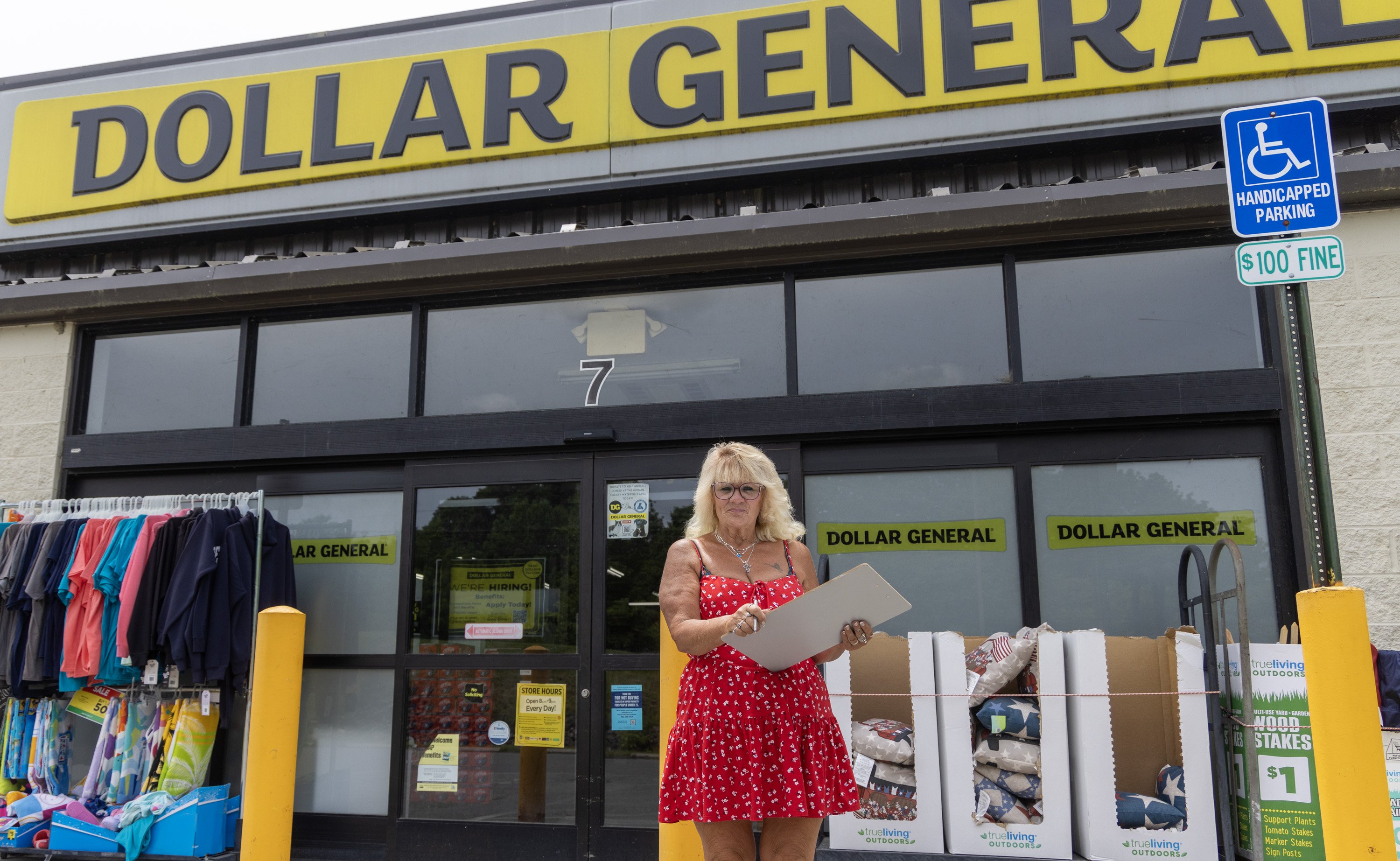 Rhonda West, a resident of an Oakland mobile home park, holds the petition she is using to collect signatures Monday outside the Dollar General in Oakland. West is gathering enough signatures to place a mobile home rent stabilization ordinance on the ballot after town officials told her she had used the wrong petition form and must restart the process. Because she does not drive, West said she cannot return to collect signatures from people who previously signed the invalid petition. (Anna Chadwick/Staff Photographer)
Purchase this image
When she found out the collected signatures wouldn’t be counted, West was devastated.
“I stood there and cried,” West said. “I busted my ass. I was so proud of myself, to find out everything I did was (for) nothing.”
If she could drive, West would knock on doors to find those who signed the incorrect petition. Instead, she collects signatures on foot.
Town Manager Kelly Pinney-Michaud and Town Clerk Kathy Paradis said they printed the ballot question a Maine People’s Alliance representative emailed them on the form where petitioners collect signatures.
But the petition didn’t include a paragraph at the top, which explains the purpose of the petition. It should have stated that if the council doesn’t enact the proposed ordinance within 15 days of the petition being certified, the question would be put on the ballot at the next general election, among other conditions.
Petitioners are also required to have a copy of the ordinance they hope to enact, which the town did not provide.
Pinney-Michaud said this isn’t the town’s fault, and Paradis said it was a miscommunication. Caroline Clark, a fellow with the Maine People’s Alliance, which is working toward lot rent stabilization across the state, wrote that the form being incorrect was a “clerical error.”
Jana Spaulding, a spokesperson for the Maine Department of the Secretary of State, wrote in an email that since the petition and issue are municipal, it would be the local officials’ responsibility to ensure the language on the form is correct.
Oakland’s town charter states that “The Clerk shall provide the petitioner(s) with the appropriate forms with the proposed question as provided by the petitioner(s).”
“Town offices have the resources to figure out if what they’re doing is the correct thing or not. This is a legal document,” said state Rep. Cassie Julia, D-Waterville.
West “did all this work already and has to start over again because of somebody else’s mistake,” Julia said. “The somebody else whose job it is to not make this mistake.”
Until recently, West thought she had until Friday to collect signatures. But the town said she should have until Aug. 15. Regardless, West is confident she can get the job done.
“I think the town not standing behind its people is disgusting,” West said. “They were against us from the beginning. They still are. It’s sad.”
While the town has made progress toward a health and safety ordinance for mobile home parks, which will have its first reading July 1, some town officials said they would not support a rent stabilization ordinance.
Town Councilor Bob Nutting said he would not have voted to support such an ordinance, and it made sense to him to leave the question to a citizen’s initiative.
 Oakland Town Manager Kelly Pinney-Michaud. (Morning Sentinel file)
Pinney-Michaud, the town manager, said she thinks any kind of rent freeze would be too much.
“We can’t go and tell Home Depot they’re selling their paint for too much, or Buddies Groceries that they’ve got to come down on their chicken pot pie,” Pinney-Michaud said. “It’s an overstep of government.”
Oakland’s next Town Council meeting is set for 6 p.m. Wednesday at 15 Fairfield St. The first reading and public hearing for the health and safety mobile home ordinance is planned at 5:30 p.m. July 1 at 15 Fairfield St.