

Wineries and tasting rooms in Ramona have weathered a number of obstacles in recent years, from the increasing cost of goods and supplies to the county’s evolving requirements for live music performances.
The latest challenge is perhaps the biggest one. The County of San Diego Planning and Development Services in recent months has been sending notices to wineries that all processing buildings must meet commercial building codes and have a commercial building permit — something few of the wineries have.
Sue Robinson, president of Ramona Valley Vineyard Association and co-owner of Correcaminos Vineyard and Winery, said the requirement is going to be costly for many wineries.
“This is very expensive and not every winery is going to be able to do it,” Robinson said. “Of 40-plus tasting rooms and wineries, only about five now meet the legal requirements.”
Community leaders and winery owners have long touted the importance of the wineries in Ramona in providing a boost to its economy and drawing tourists to local businesses.
“When a winery cuts back or closes, the losses don’t stop at the property line,” said Elaine Lyttleton, co-owner of Hatfield Creek Vineyards and Winery in Ramona, one of the wineries recently cited for building compliance issues.
In a letter to Planning and Development Services last year, she detailed some of the benefits local wineries provide to the county economy, and pointed out some potential problems with having fewer of them.
“Wineries are economic anchors for rural San Diego County. They preserve farmland, prevent sprawl, draw visitors and sustain dozens of interconnected small businesses,” she wrote.
 Before the county’s tiered winery ordinance, many local wineries used the buildings they already had on their properties for wine processing. San Diego County is now enforcing requirements that those buildings be up to commercial code, which can lead to extensive renovations. (Regina Elling)
Among the county requirements for wineries are fire sprinkler systems, which many buildings have to be retrofitted to accommodate, an ADA-compliant restroom and paved parking accessibility.
The Planning and Services Department is working with owners of 15 wineries on compliance-related cases in Ramona, according to county officials, with several cases going back to 2006.
Officials declined to name the wineries involved.
This crackdown on building code compliance at wineries grew out of the hearings for the county’s Winery Ordinance Update, which followed a number of complaints in 2024 about live music and entertainment being held at several local wineries without proper entertainment licensing, officials said.
“While we do not have a proactive compliance program, we do respond to complaints from the public,” Tom Christensen, communications specialist for the county, said in a June 12 statement. “Prior to and during the recent Winery Ordinance Update approved by the Board of Supervisors in Spring 2026, (Planning and Services) received complaints related to live music and increased attention to open compliance cases at wineries,” Christensen said.
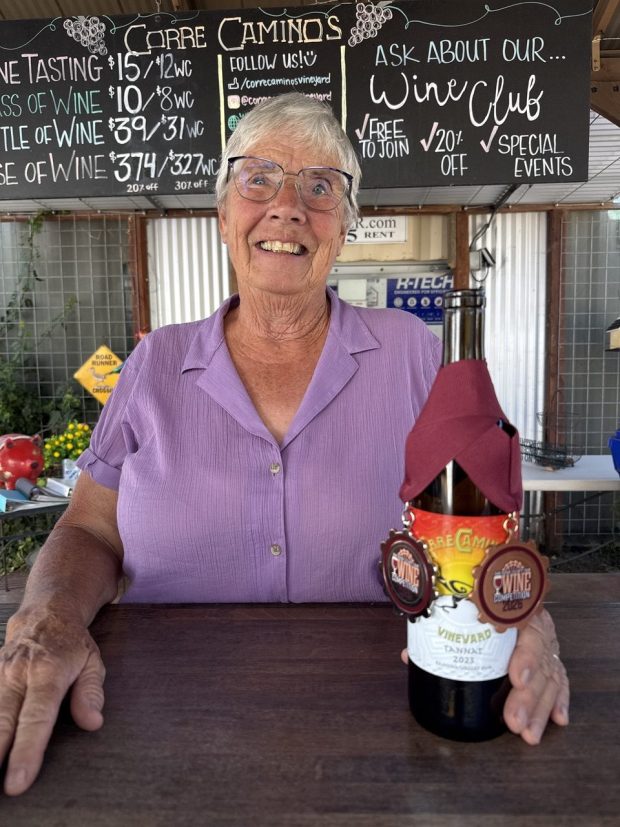 Sue Robinson, Ramona Valley Vineyard Association
president, who co-owns Correcaminos Vineyard and Winery in Ramona with her husband, Doug Robinson. (Regina Elling)
A number of winery owners have stated they were unaware they needed commercial permits when they started their business, prior to the 2010 amendment to the San Diego County Zoning Ordinance that created various tiers, including the Boutique Winery Tier, Robinson said.
The ordinance initially allowed small properties to use their land to process grapes, open public wine tasting rooms and conduct retail sales, without needing a costly discretionary permit, as long as strict rules were followed on production limits and estate grape requirements, she said.
Prior to the ordinance, since the wineries were located on retirement properties or small family farms, the owners often made use of the structures they already had on site, she said.
“At that time, the wineries were never considered commercial in that sense, and many people used their barns, garages, or whatever buildings they had available for their needs,” Robinson said.
However, the 2010 ordinance did require winery owners to obtain building permits to officially convert existing residential and agriculture structures into commercial grade or build new structures, she said.
“I understand we are businesses and there should be some standard but the way it’s now being required has caught many people off guard. It’s unfortunate we weren’t told earlier, as very few wineries have commercial building permits,” Robinson said.
Lyttleton was one of the winery owners caught off guard, after receiving notice from county Code Enforcement on April 2 that they had to “close the winery immediately or convert our agricultural building to commercial code,” she said.
She and her partner Norm Case didn’t believe their buildings needed to meet commercial codes when they opened in 2006, she said.
Their ag building was constructed by the couple in 2011, after receiving a permit from the county to do so, she said, but the structure is no longer used for winery production.
Lyttleton has pushed back on the compliance codes, arguing that they contradict the “by right” intent of the Tiered Ordinance, and that when they built the agricultural building for their winery, they were never told they also needed a commercial permit.
The couple also pushed back because they have been taking steps to close their business since 2003, when they stopped making wine and sold all their grapes to another winery.
“Norm is in his 80s and I’m nearly 80, and it was becoming too much,” Lyttleton said. “We had a plan to slowly wind down and continue to operate our tasting room and sell our remaining wine over the next couple of years.”
“We were just marching along, believing we were doing what we were supposed to do,” she said.
Since receiving the notice, Lyttleton said she lobbied code enforcement to accept her original plan to remain open and continue to sell her wine inventory without converting the existing ag building to commercial code.
“Finally, code enforcement agreed to the plans, but with changes,” she said.
The changes include “removing all evidence of the word winery, and any references to wine, wine tasting and being open to the public.”
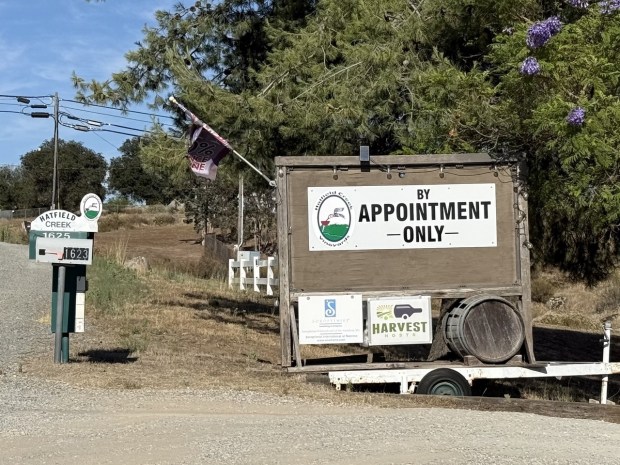 Hatfield Creek Vineyards and Winery, owned by Elaine Lyttleton and Norman Case, is now open only by appointment, and will close by the end of December. (Regina Elling)
The winery can be open “by appointment only,” and must be closed by the end of December, she said. Their wine can only be sold to wine club members, existing customers, wholesale or to invited guests, she said.
“The county is unwilling to grandfather in existing wineries operating under prior ordinances and has made it very difficult to achieve what we wanted to do anyway, which is to close our business,” Lyttleton said.
Winery closures prompted by the commercial building code issue are something the RVVA hopes to discuss with county officials.
“We would like a standardized program to allow wineries to remain in business while they try to meet the requirements instead of being forced to immediately close,” she said. “At least give people some time to get into compliance and not just shut them down.”
Michael Mellano, chief science officer for Mellano & Co., a family-owned floral production and distribution operation, and past president and current board member for the San Diego County Farm Bureau, is also working to create “breathing room” for local winery owners.
“We’re trying to get clarity on the situation and work with the county to figure out what options are available to solve the problems,” he said.
Mellano said part of the problem is determining the origin and original intent of the building code ordinance.
The Farm Bureau is investigating “if this is a state law or an interpretation of county law, what kind of latitude the county has, and if there is a difference in public-facing areas and areas not visited by the public,” he said.
Christensen said in his statement that the goal of Planning and Development Services is “always to help property owners bring their properties into voluntary compliance.”
Mellano said the Farm Bureau hopes to have a resolution with the county that can meet the needs of the majority of winery owners within the next six to eight months.
“The county does want to find solutions, and we’re hopeful we can find viable options to minimize the problems and find ways for owners to stay compliant without going out of business,” he said.