
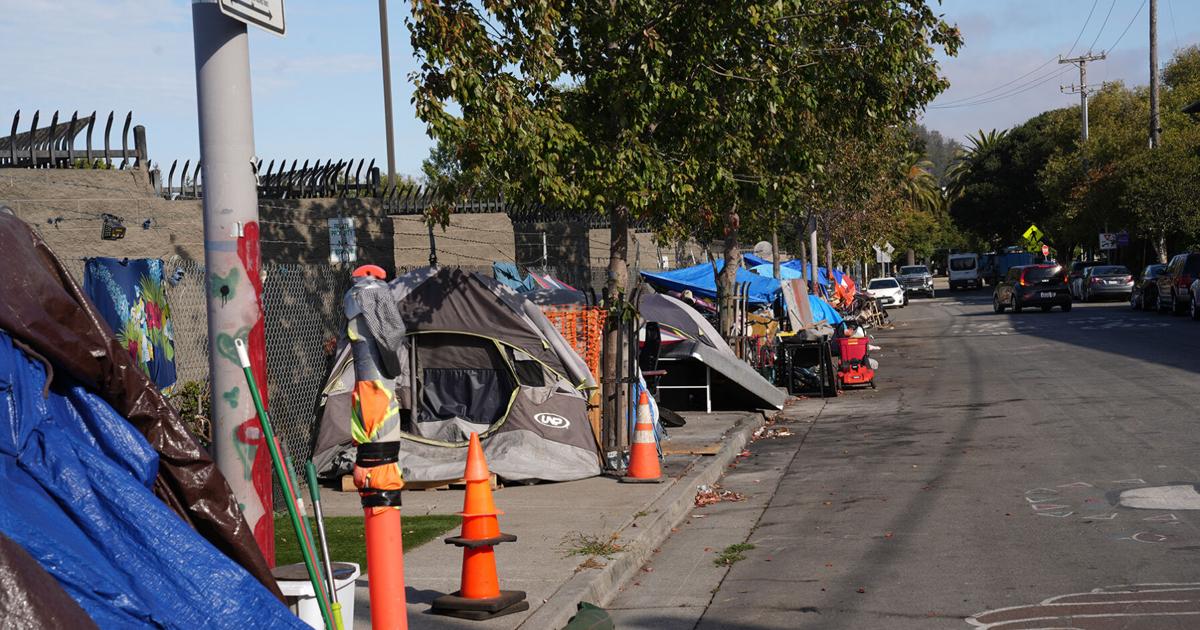
A new data report from Berkeley’s Homeless Response Team shows an increase in successful placement in shelters for participants who are unhoused, citing an increase in shelter capacity brought online this year in collaboration with Alameda County.
However, the report also warned that with the fiscal cliffs shelters are facing, in combination with the city’s general budget deficit, the current rate of placements may not be sustainable and could result in a decline in successful outcomes.
The Homeless Response Team, or HRT, is run by the city and aims to help place residents who are unhoused in shelters and permanent housing. HRT also cleans and closes encampments that pose health risks.
The recent data states that 55% of participants who are unhoused working with HRT were enrolled in a shelter — an increase from only 25% in November 2025 — and another 3% have been placed in permanent or temporary housing.
The report also showed that 91% of participants received a Coordinated Entry housing needs assessment, which is required before participants can be placed in permanent and temporary housing queues.
However, while 84% of assessed participants were eligible for housing queues, only 5% of eligible participants received housing placements.
The report cites that the lack of housing placements is in large part because placements are under the jurisdiction of the county, and not the city, which can only refer eligible participants.
“Permanent supportive housing (PSH) is a finite, county-administered resource with long waitlists; even PSH-eligible participants typically wait months to years for a placement,” said city spokesperson Seung Lee in an email. “Shelter is what the HRT can directly connect people to in the meantime.”
Margot Kushel, a researcher at the UCSF Benioff Homeless and Housing Initiative who has studied Berkeley encampment solutions including the RV buyback program, said a “lack of affordable housing is the crux of homelessness,” and that a large reason eligible individuals haven’t been placed is there is little housing available.
Additionally, the report found that in the past six months there have been “meaningful inflows” of residents from neighboring areas participating in HRT services.
Twenty-one new participants reported being from Oakland, while 16 were from Contra Costa County. Fourteen were from other parts of California, and 17 new participants reported being from Berkeley.
Kushel said some of this flow is linked to displacement of residents from encampments in neighboring areas, and that “there needs to be a recognition of this in policymaking.”
“This points out one of the very real problems with displacement policies that push people away from their communities,” Kushel said in an email. “People don’t disappear, they need to be someplace.”
Using California State Encampment Resolution Fund dollars, Berkeley has opened four noncongregate motels — shelters that provide low-density, private rooms for residents — since 2022.
The report stated that this increase in housing stock for unhoused residents “helped move some of Berkeley’s hardest-to-serve unsheltered population indoors.”
However, the motels are now facing a multimillion-dollar fiscal cliff. In combination with the city’s general budget deficit, the report said that this fiscal climate could make it difficult to open new shelter programs, and that there could be a decline in positive outcomes.
Lee added that one motel — the Campus Motel — is at risk of closing without additional funding, and that the city is working with the motel’s operators, Insight Housing, to identify funding opportunities.
To aid this, the report proposes that the city advocate for Berkeley to receive an “appropriate share” of Measure W sales tax funding from Alameda County.
Lee said the city asked the county to direct Measure W funds toward projects which increase permanent supportive capacity, continue shelter programs, expand targeted homelessness prevention programs and provide resources to prevent displacement.