
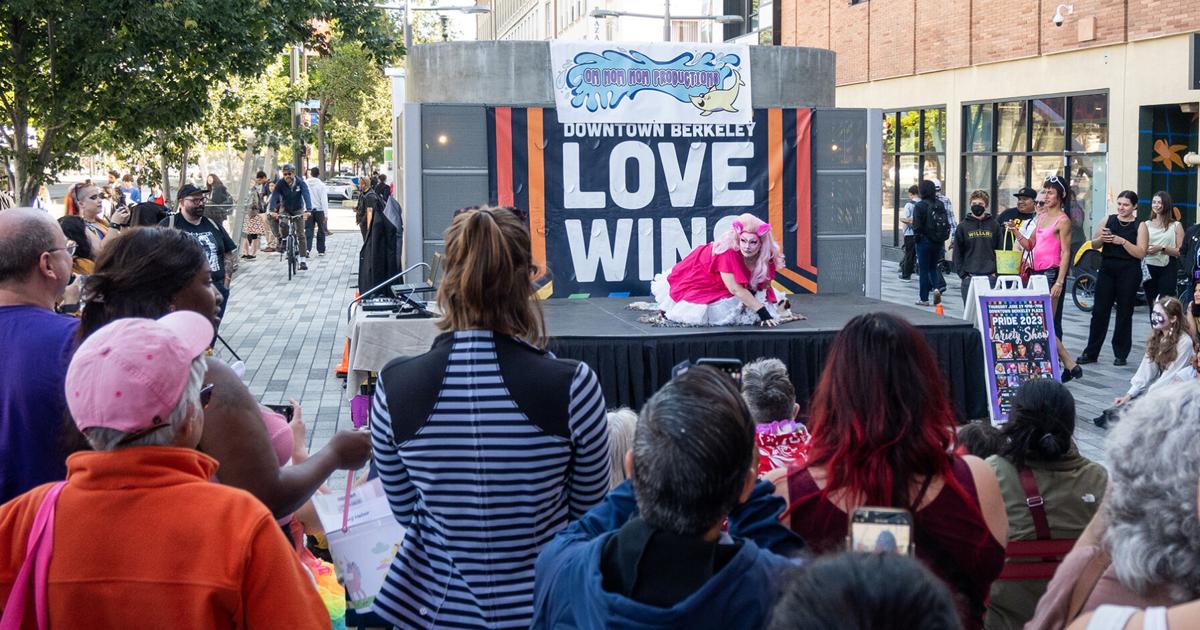
Student drag performer, Princess Europa, characterized the UC Berkeley drag scene as relatively small, but “a tight-knit group of people.” That group has grown out of an annual campus show, which provides a unique opportunity for students to perform while reflecting on the wide scope of drag today.
Since first getting her start performing at the UC Berkeley UNITY show, Europa, who uses her drag name to protect her identity, said she has gone on to do a variety of performances across the East Bay.
“It was definitely a liberating experience. … You step into whatever persona you craft for yourself,” said UC Berkeley student and first-time UNITY show drag performer Lia Le-Nguyen. “It can be completely different from how you act in your day-to-day life. It’s pure escapism.”
A student in the UNITY theme program, a residential program focusing on LGBTQ+ education and community building, Le-Nguyen was first encouraged to do a Michael Jackson-themed performance as a dare from their friends.
Nora Network, another student drag performer who prefers to remain anonymous through drag, added that while the UNITY theme program does include students participating in the themed housing, the drag scene is diverse, including students from a range of backgrounds.
“I think a lot of people are doing drag for the first time and watching drag for the first time in that room,” Europa said. “I think it’s a good gateway for people who are interested in drag who are at the university to get gigs in the community and start working.”
Ahead of the show, the campus Gender Equity Resource Center holds workshops to allow students to foster an understanding of the history of drag as well as more technical elements of performing, such as drag makeup workshops.
“Queering Drag,” one of the workshops held this year, asked students to think and reflect on the roots of drag, an artform that Em Huang, Director of LGBTQ+ Advancement & Equity at the Gender and Equity Resource Center, said is not limited to binary terms.
Part of the inspiration for the workshop, Huang said, was the fact that drag has been historically represented in the media as being exclusively performed by gay men. Huang added that many transgender individuals had a complicated relationship with drag; however, they noted that they believe that has changed — “that is not where we are at anymore.”
When Huang started working with the UNITY theme program, their goal was to allow people to use drag as a safe space to express themselves however they see fit.
“Having many trans students share that they found a space to express gender in ways that felt good for them and allowed them to engage with drag without being policed around their gender identity was very meaningful to hear,” Huang said.
Huang added that some students found drag to be an affirming space to explore and come to realizations about their own identities.
“Drag is rebellion,” Network said in an email. “Drag allows people to subvert the gender roles imposed upon them by our society. It’s a political statement in itself, especially in this day and age, where queer and trans people are facing such widespread scrutiny and discrimination.”